Questions · Page 1 of 2

[1 Mark Question Answer]

🎯

Test yourself on this topic

50 questions · timed · auto-graded

Question 11 Mark
What is meant by the term 'electromotive force' of a cell?
Answer
When no current is drawn from the cell i.e. when the cell is in open circuit, the potential difference between the terminals of the cell is called its electromotive force (or e.m.f).
View full question & answer
Question 21 Mark
Can a transformer work when it is connected to a D.C. source? Give a reason.
Answer
No, a transformer cannot work on a d.c. source. With a d.c. source, there will be no change in magnetic flux linked with the secondary coil.
View full question & answer
Question 31 Mark
Name the principle on which a transformer works.
Answer
A transformer works on the principle of electromagnetic induction.
View full question & answer
Question 41 Mark
Explain the meaning of the term kilowatt hour.
Answer
'kilowatt-hour' is the commercial unit of electricity. One kilo-watt hour is the electrical energy consumed by an electrical appliance of power 1 kW when it is used for 1 hour. 
View full question & answer
Question 51 Mark
If a fuse contains a 5 A fuse wire and the voltage is 240 V, what is the maximum power (wattage) which may be taken from the circuit?
Answer
Maximum power that can be taken, P =VI = 240 x 5 = 1200 w.
View full question & answer
Question 61 Mark
What is the criteria for selecting a fuse wire?
Answer
A fuse wire shou Id have high resistance and low melting po int.
View full question & answer
Question 71 Mark
Can you find the magnitude of current using Fleming's right hand rule?
Answer
No, we cannot find out the magnitude of current using Fleming's right hand rule; we can find only the direction of induced current.
View full question & answer
Question 81 Mark
When do you use (i) Fleming's left hand rule, and (ii) Fleming's right hand rule?
Answer
(i) Fleming's left hand rule is used to find out the direction of Lorentz force on a conductor. (ii) Fleming's right hand rule is used to find out the direction of induced current in a conductor.
View full question & answer
Question 91 Mark
What is electromagnetic induction?
Answer
The phenomenon of producing an induced e.m.f in a conductor or conducting coil due to changing magnetic flux is called electromagnetic induction
View full question & answer
Question 111 Mark
In household circuits, is a fuse connected in series or in parallel?
Answer
A fuse is always connected in series, in household circuits.
View full question & answer
Question 121 Mark
A dynamo converts one from of energy into another. Name the two forms of energy.
Answer
A dynamo converts mechanical energy into electrical energy.
View full question & answer
Question 131 Mark
Which type of current does a generator with commutator produce?
Answer
A generator with commutator (D.C. generator) produces D.C. current.
View full question & answer
Question 141 Mark
How does an alternating current differ from the direct current?
Answer
An alternating changes its direction after equal intervals of time but direct current does not change its direction.
View full question & answer
Question 171 Mark
What do you mean by A.C.?
Answer
If the current changes direction after equal intervals of time, it is known as alternating current (A.C.).
View full question & answer
Question 181 Mark
Name the material used for making fuse wire.
Answer
An alloy of lead and tin is used for making fuse wire.
View full question & answer
Question 201 Mark
Can a copper wire be used as a fuse wire?
Answer
No, a copper wire cannot be used as a fuse wire as it has low resistance and high melting point.
View full question & answer
Question 211 Mark
What do you mean by direct current?
Answer
If the current flows along the same direction with time, it is called a direct current (D.C.).
View full question & answer
Question 221 Mark
What do you mean by a solenoid?
Answer
If a conducting wire is wound in form of a cylindrical coil whose diameter is less in comparison to the length, the coil is called a solenoid.
View full question & answer
Question 241 Mark
What is the usual colour code followed for connecting live, neutral and earth wires?
Answer
Colour code for live wire is red, neutral wire is black and earth wire is green.
View full question & answer
Question 251 Mark
Explain the meaning of the statement 'the current rating of a fuse is 5 A'.
Answer
The current rating of a fuse is 5 A' means that the maximum safe current permitted to flow through it before it breaks down is 5A.
View full question & answer
Question 271 Mark
Where is the main fuse in a house circuit connected?
Answer
The main fuse is connected between the kWh meter and distribution board of the house circuit. The main fuse is connected in the live wire.
View full question & answer
Question 281 Mark
The marking on an electric bulb reads; 200 V, 60 W. What does it mean?
Answer
It means that if the bulb is lighted on a 200V supply it consumes 60W electrical power or 200J of electrical energy converts into heat and light in 1 second.
View full question & answer
Question 291 Mark
Name the physical quantity which equals the product of voltage and current.
Answer
The physical quantity is electric power.
View full question & answer
Question 311 Mark
State the commercial unit of electrical energy.
Answer
Kilowatt-hour is the commercial unit of electricity.
View full question & answer
Question 321 Mark
Name the unit which a consumer pays as the cost of electricity.
Answer
Consumer pays the bill in kilowatt-hour.
View full question & answer
Question 331 Mark
Name the commercial unit of electrical energy.
Answer
Kilowatt-hour is the commercial unit of electricity.
View full question & answer
Question 341 Mark
Name the physical quantity that represents the ratio of potential difference and current.
Answer
The physical quantity is 'resistance'.
View full question & answer
Question 351 Mark
What do you mean by a circuit diagram?
Answer
A diagram indicating how various components in an electrical circuit have been connected using symbols for those components is a circuit diagram.
View full question & answer
Question 361 Mark
What is the function of a step-up transformer?
Answer
Function of a step-up transformer is to increase the a.c. voltage and decrease the current.
View full question & answer
Question 371 Mark
What do you mean by conductance of a conductor?
Answer
Conductance of a conductor is the reciprocal of resistance of that conductor. Its unit is mho.
View full question & answer
Question 381 Mark
What are the SI units of specific resistance?
Answer
The SI unit of specific resistance is ohm-metre (Ωm)
View full question & answer
Question 391 Mark
Define resistivity of a metal.
Answer
The resistivity of a material is the resistance of a wire of that material of unit length and unit area of cross-section.
View full question & answer
Question 401 Mark
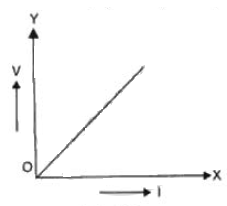
A graph is plotted taking p.d. along y-axis and electric current along x-axis. Name the physical quantity that represents the slope of this graph (Fig.).
Image
Answer
The slope of the graph (dV/dI) gives the value of resistance.
View full question & answer
Question 411 Mark
What do you mean by an equivalent resistance?
Answer
An equivalent resistor is that resistor which when replace any combination of resistors the current through the circuit is not altered or changed.
View full question & answer
Question 421 Mark
Does Ohm's law hold good for semiconductors and electrolytic solutions?
Answer
No, Ohm's law does not hold good for semiconductors and electrolytic solutions.
View full question & answer
Question 431 Mark
Define one ohm.
Answer
Resistance of a conductor is said to be 1 ohm, if 1 ampere current flows through it, when the potential difference across its ends is 1 volt.
$1 \mathrm{ohm}=\frac{1 \text { volt }}{1 \text { ampere }}$
View full question & answer
Question 441 Mark
What do you mean by a rheostat?
Answer
A rheostat is a device used in electric circuit to regulate current without changing the voltage source. It is also called variable resistance.
View full question & answer
Question 451 Mark
What is the role of a key in an electric circuit?
Answer
A key acts as a switch in an electric circuit. It helps to open or close the circuit as required.
View full question & answer
Question 481 Mark
What is an ammeter? How is it connected in a circuit?
Answer
The instrument used to measure electric current is called an ammeter. It has a low resistance and is always connected in series.
View full question & answer
Question 491 Mark
What happens to the resistance if the conductor is made thinner?
Answer
If the conductor is made thinner, electrons get smaller area of cross-section to flow and it therefore, offers a large resistance.
View full question & answer
Question 501 Mark
What are the conditions under which charges can move in a conductor?
Answer
Charges move in a definite direction in a conductor when a potential difference is applied across the ends of the conductor.
View full question & answer
[1 Mark Question Answer] - Physics STD 10 Questions - Vidyadip