Questions

[5 Mark Question Answer]

🎯

Test yourself on this topic

8 questions · timed · auto-graded

Question 15 Marks
Differentiate between the following:
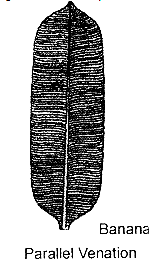
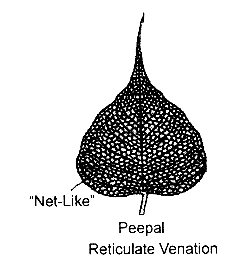
Parallel venation and reticulate venation
Answer
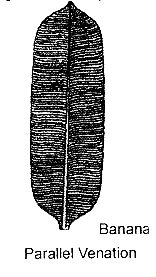
Parallel Venation
  1. In parallel venation, veins on the leaf lamina run parallel to each other in a leaf.
  2. Example: Leaves of a banana plant, coconut leaf.
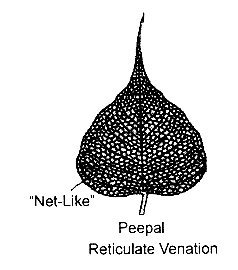
Reticulate Venation
  1. In this type of venation, veins on the leaf lamina are arranged in a net-like a pattern,
  2. Example: Leaves of mango, Peepal, and rose plant.
View full question & answer
Question 25 Marks
Differentiate between the following:
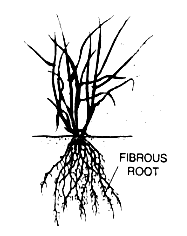
Tap root and Fibrous root
Answer
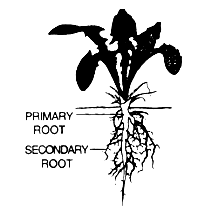
Tap root
  1. This root has one main primary root with many side secondary roots.
  2. It is found in dicot plants.
  3. e.g. mango, pea
Fibrous root
  1. These roots are clusters of the same thickness and size, arising from the base of the stem.
  2. It is found in monocot plants,
  3. e.g. maize, wheat
View full question & answer
Question 35 Marks
Explain some of the modifications of leaves found in plants.
Answer
Sometimes, the complete leaf or a part of the leaf is modified to perform a special function.
Some of these modifications include:
1. Leaf tendril:
In the case of certain weak stemmed plants, leaves or leaflets are modified into wiry, coiled structures called tendrils. They are sensitive to touch. As they touch any object, they coil around it and support the plant to climb up. Eg., Sweet pea (upper leaflets are modified into tendrils).
2. Spines: Leaves are modified into spines to reduce water loss, like cactus. In prickly poppy, leaves bear spines on the margin.
3. Scale leaves: In some plants, like onion and ginger, thin and dry or thick and fleshy scale leaves are present. Their function is to protect buds.
View full question & answer
Question 45 Marks
Give an example of the following and draw generalized diagram for the same:
Parallel venation and reticular venation
Answer
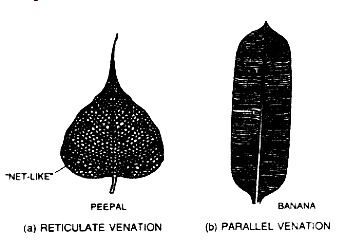
Parallel venation:
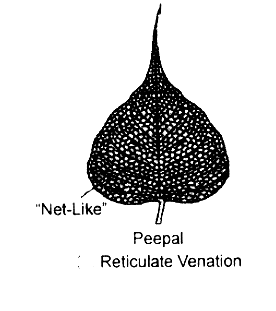
In this type of venation, veins run parallel to each other, e.g., banana, grass, maize, and wheat leaves (monocot plants).Reticulate venation: In this type of venation, veins and veinlets are irregularly distributed in the lamina, forming a network, e.g. peepal, mango and guava leaves (dicot plants).
View full question & answer
Question 55 Marks
Give an example of the following and draw generalized diagram for the same:
Simple leaf and compound leaf
Answer
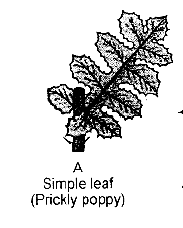
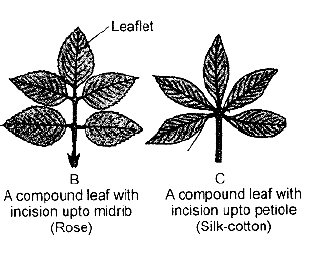
Simple leaf:
In a simple leaf, the lamina is undivided and is a single piece, e.g. mango, banana, banyan, etc.compound leaf: In a compound leaf, the leaf blade or lamina is divided into smaller units called leaflets e.g., rose.
View full question & answer
Question 65 Marks
Answer the following in short.
What is venation? State its various types.
Answer
The arrangement of veins and veinlets on the lamina of a leaf is called venation. The venation is of two types:
(a).Reticulate venation:Veins are arranged like a network,
e.g. Leaves of mango, Peepal, and guava.
(b). Parallel venation: Veins run parallel to each other.
e.g. Leaves of banana, grass.
View full question & answer
Question 75 Marks
Differentiate between the following:
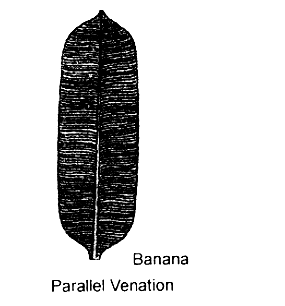
Parallel venation and reticulate venation
Answer
Parallel Venation
  1. In parallel venation, veins on the leaf lamina run parallel to each other in a leaf.
  2. Example: Leaves of a banana plant, coconut leaf.
Reticulate Venation
  1. In this type of venation, veins on the leaf lamina are arranged in a net-like a pattern,
  2. Example: Leaves of mango, Peepal, and rose plant.
View full question & answer
Question 85 Marks
Match the definitions with the terms. All the terms will not be used.
Definition Terms
1. Parts of the flower that produces pollen grains a. petiole
2. Green leaf-like structure protecting the inner parts of flower b. anther
3. Root system where side roots develop from a main primary root c. ovules
4. Fusion of the male reproductive cell with the egg cell d. calyx
5. Parts of a flower that develops into seeds e. tap root
6. Points on the stem at which leaves arise f. internodes
7. Ripened ovules g. fertilization
h. seeds
i. nodes
Answer
Definition Terms
1. Parts of the flower that produces pollen grains b. anther
2. Green leaf-like structure protecting the inner parts of flower d. calyx
3. Root system where side roots develop from a main primary root e. tap root
4. Fusion of the male reproductive cell with the egg cell g. fertilization
5. Parts of a flower that develops into seeds c. ovules
6. Points on the stem at which leaves arise i. nodes
7. Ripened ovules h. seeds
View full question & answer
[5 Mark Question Answer] - BIOLOGY STD 6 Questions - Vidyadip