Questions

[2 Mark Question Answer]

🎯

Test yourself on this topic

37 questions · timed · auto-graded

Question 12 Marks
Answer the following question:
Give the advantages of using symbols instead of names of elements or compounds.
Answer
1. Symbols increase scientific communication across the world.
2. Symbols help to make equations and data shorter and concise.
3. Symbols are helpful for Scientists as it would take time and paper to do their job.
They had to write out the full name of every element instead of its symbol
View full question & answer
Question 22 Marks
Write the molecular formulae of compound lead sulphide.
Answer
Formula of Lead Sulphide is PbS.
Symbolic Combing Power:

$Pb_2S_2$ PbS
Here the subscript number is same.
View full question & answer
Question 32 Marks
Write the molecular formulae of compound hydrogen sulphide.
Answer

Compounds Hydrogen sulphide is formed of elements hydrogen (H), Sulphide (S).
Symbolic Combining Power :

Formula is $H_2S$
View full question & answer
Question 42 Marks
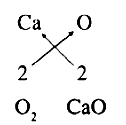
Write the molecular formulae of compound calcium oxide.
Answer
Compound Calcium oxide is formed of elements calcium (Ca) and oxygen (O)

Symbols combining power Here the subscript number is same $Ca_2$​​​​​​​ Formula of calcium oxide is $CaO$
View full question & answer
Question 52 Marks
State the number of atoms of $CaCO_3$
Answer
$CaCO_3$​​​​​​​ has atoms of
Calcium 1 atom in number
Carbon 1 atom in number
Oxygen 3 atoms in number
The name of the compound is Calcium Carbonate.
View full question & answer
Question 62 Marks
State the number of atoms of $HNO_3$​​​​​​​
Answer
$HNO_3$​​​​​​​ has atoms of
Hydrogen 1 atom in number
Nitrogen 1 atom in number
Oxygen 1 atom in number
The name of the compound is Nitric Acid.
View full question & answer
Question 72 Marks
State the number of atoms of $H_2SO_4$​​​​​​​
Answer
$H_2SO_4$​​​​​​​ _has atoms of
Hydrogen 2 atoms in number
Sulphur 1 atom in number
Oxygen 4 atom in number
The name of the compound is Sulphuric Acid.
View full question & answer
Question 82 Marks
State the number of atoms of $C_6H_{12}O_6$
Answer
$C_6H_{12}O_6$ has atoms of
Carbon 6 atoms in number
Hydrogen 12 atoms in number
Oxygen 6 atoms in number
The name of the compound is Glucose.
View full question & answer
Question 92 Marks
Mention three gaseous elements and write their molecular formulae
Answer
Three gaseous elements molecular formulae. Atoms in one Molecule
Hydrogen $H_2$ $2$
Oxygen $O2$ $2$
Chlorine $Cl_2​​​​​​​$ $2$
View full question & answer
Question 102 Marks
Why are the symbols and formulae of substances important?
Answer
Importance of symbols and Formulae:
Symbols and formulae of substance gives a lot of information like.
1. Types of elements present in the compound. E.g. (H20 is made of two elements hydrogen and oxygen).
2. Number of each kind of atoms in one molecule. E.g. (water has 2 atoms of hydrogen combined with 1 atom of oxygen.)
3. Mass of one molecule of the compound. E.g. [H2O has mass (1 × 2) + 16 = 18 g].
View full question & answer
Question 112 Marks
Define: Atom
Answer
Atom: An atom is the smallest indivisible unit of an element which exhibits all the properties of that element and may or may not have an independent existence. An atom is the smallest indivisible unit of an element which exhibits all the properties of that element and may or may not have an independent existence.
View full question & answer
Question 122 Marks
State four important characteristics of compounds
Answer
Four Important Characteristics of Compounds are as follows:
1. When the compound is formed energy like heat, light, or electricity is either needed or produced.
2. A compound has properties entirely different from the properties of its constituents.
3. Change in weight takes place.
4. It cannot be separated into its constituents by simple physical means.
View full question & answer
Question 132 Marks
How is sodium chloride different from its constituent elements, sodium, and chlorine?
Answer
Sodium is a metal that is stored in kerosene oil as it reacts very fast with air and water. Chlorine is a reactive greenish-yellow gas which is poisonous. When these two elements combine chemically they form common salt sodium chloride which is a non-poisonous colourless solid substance that we use in our food to add taste and to obtain some nutrition.
View full question & answer
Question 142 Marks
Give three differences between metals and non-metals.
Answer
Metals:
1. Metals are ductile i.e. can be drawn into wires.
2. Metals are malleable i.e. can be beaten to form sheets.
3. They are sonorous.

Non-metals:
1. Non-metals are mostly soft solids that cannot be drawn into wires.
2. They are mostly gases and are not malleable.
3. They do not produce sound when struck.
View full question & answer
Question 152 Marks
Name the elements which form water.
How will you justify that water is a compound?
Answer
The elements which form water are Hydrogen and oxygen.
Justification: Water has entirely different properties (i.e. is a liquid, extinguishes fire) from the elements it is made up of i.e. Hydrogen a gas catches fire oxygen a gas supporter of combustion.

1. Energy is needed to form water on combining O2 with H2.
2. We can not separate the constituents of water by simple physical means.
View full question & answer
Question 162 Marks
Define Compounds
Answer
Compounds: Compounds are pure substances composed of two or more elements in definite proportion by mass and has a definite set of properties. The compound is made up of only one kind of molecules
View full question & answer
Question 172 Marks
DefineElements.
Answer
Elements: An element is defined as a pure substance made up of only one kind of atoms that cannot be converted into anything simpler than itself by any physical or chemical process.
View full question & answer
Question 182 Marks
Define a pure substance. How many types of pure substances do you know?
Answer
Pure substances: “A substance of a definite composition which has consistent properties throughout, is called a pure substance” Types of pure substances: Pure substances are of two types
(i) Elements
(ii) Compounds
View full question & answer
Question 192 Marks
An atom of an element is denoted by a “symbol” Explain the meaning of the term ‘symbol’. State a reason for representing the following element by its symbol.
Copper by ‘Cu’
Answer
Symbols: The short form or abbreviated name of the element (or radicals) The reason for representing the following element by their symbol is as follow:

Copper by ‘Cu’ – Deriving symbols from their Latin names
View full question & answer
Question 202 Marks
An atom of an element is denoted by a “symbol” Explain the meaning of the term ‘symbol’. State a reason for representing the following element by its symbol.

Helium by ‘He’
Answer
Symbols: The short form or abbreviated name of the element (or radicals) The reason for representing the following element by their symbol is as follow:

Helium by He – First two letters of the name of Noble gases.
View full question & answer
Question 212 Marks
An atom of an element is denoted by a “symbol”. Explain the meaning of the term ‘symbol’. State a reason for representing the following element by its symbol.

Hydrogen by ‘H’
Answer
Symbols: The short form or abbreviated name of the element (or radicals). The reason for representing the following element by its symbol is as follow:

Hydrogen by ‘H’ – First letter of the name of the element
View full question & answer
Question 232 Marks
In the chemical word equation –

Zinc + Sulphuric acid → Zinc sulphate + Hydrogen.

State the reactants and products of the above reaction. What does the arrow indicate?
Answer
Image
The arrow indicates the direction of the reaction
View full question & answer
Question 242 Marks
Match the formulas of the following of bases with their correct names.
Bases – $(a) NaOH (b) KOH (c) Ca(OH)_2 (d) Zn(OH)_2$​​​​​​​
Names – (1) Potassium hydroxide (2) Zinc hydroxide (3) Aluminium hydroxide (4) Calcium hydroxide (5) Sodium hydroxide
Answer
  Names   Bases
(1) Potassium hydroxide (b) $KOH$
(2) Zinc hydroxide (d) $Zn(OH)_2$
(3) Calcium hydroxide (c) $Ca(OH)_2​​​​​​​$

(4)
Sodium hydroxide (a) $NaOH$
View full question & answer
Question 252 Marks
Match the formulas of the following of acids with their correct names:
Acids – $(a) HCI (b) HNO_3 (c) H_2SO_4 (d) H_2CO_3$
Names – (1) Carbonic acid (2) Sulphuric acid (3) Hydrochloric acid (4) Nitric acid
Answer
  Names   Acids
(1) Carbonic acid (d) $H_2CO_3$
(2) Sulphuric acid (c) $H_2SO_4$
(3) Hydrochloric acid (a) $HCI$
(4) Nitric acid (b) $HNO_3$
View full question & answer
Question 262 Marks
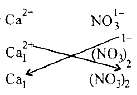
Write the formula of the compound formed – given symbols and combining power or capacity (valency) of the following element in the compound.
$Ca^{2+} NO_3^{1-}$
Answer
$Ca^{2+}NO_3^{1-}$


Formula= $Ca(NO_3)_2​​​​​​​$​​​​​​​
 
View full question & answer
Question 272 Marks
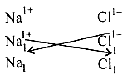
Write the formula of the compound formed – given symbols and combining power or capacity (valency) of the following element in the compound.
$Na^{1+} Cl^{1-}$
Answer
$Na^{1+}Cl^{1-}$


Formula = $NaCl$
View full question & answer
Question 282 Marks
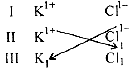
Write the formula of the compound formed – given symbols and combining power or capacity (valency) of the following element in the compound.
\$K^{1+} Cl^{1-}$
Answer
$K^{1+}Cl^{1-}$


Formula=$ KCl$
View full question & answer
Question 292 Marks
Match the symbols of – radicals – with their correct combining power or capacity, (valency).

(a) $OH$
(b) $So_4$
(c) $No_3$
(d) $Co_3$

Combining power or capacity – A : 3; B : 2; C : 1. (negative valencies)
Answer
(a) $OH$ — Valency- $1 (C)$
(b) $So_4$​​​​​​​ — Valency- $2 (B)$
(c) $No_3​​​​​​​$​​​​​​​ — Valency-$ 1 (C)$
(d) $Co_3​​​​​​​$​​​​​​​ — Valency- $2 (B)$
View full question & answer
Question 302 Marks
Match the symbols of metallic elements – with their correct combining power or capacity.

(a) K
(b) Zn
(c) Al
(d) Na
(e) Ca
Combining power or capacity – A : 3 ; B : 2 ; C : 1. (positive valencies)
Answer
(a) K — Valency-1 (C)
(b) Zn — Valency-2 (B)
(c) Al — Valency-3 (A)
(d) Na — Valency-1 (C)
(e) Ca — Valency-2 (B)
View full question & answer
Question 312 Marks
State what are radicals. Give the names of the radicals –
$(a)NO_3$
$(b)OH$
$(c)SO_4$
$(d)CO_3​​​​​​​$
Answer
A radical is an atom or group of an atom of the same or different elements that behave in the manner of positive or negative ions.
(a$)NO_3$ – nitrate
(b)$OH$ – hydroxide
(c)$SO_4$​​​​​​​ – sulphate
(d)$CO_3$​​​​​​ ​– carbonate
View full question & answer
Question 322 Marks
Give the symbol and the number of atoms of the following elements present in zinc chloride.
Answer
Zinc Chloride $ZnCl_2$
Elements Symbols
(Zinc) Zn
[Chlorine (Chloride)] Cl

No. of atoms of this element present

1 atom of - Zn, 2 atoms of - Cl
View full question & answer
Question 332 Marks
Give the symbol and the number of atoms of the following elements present in carbon dioxide.
Answer
Carbon Dioxide $CO_2$
Elements Symbols
(Carbon) $C$
[Oxygen (oxide)] $O$

No. of atoms of this element present

$1$ atom of -$ C, 2$ atoms of -$ O$
View full question & answer
Question 342 Marks
Give the symbol and the number of atoms of the following elements present in water.
Answer
Water($H_2O$)
Elements Symbols
(Hydrogen) $H$
[Oxygen (oxide)] $O$

No. of atoms of this element present

$2$ atoms of - $H, 1$ atom of - $O$
View full question & answer
Question 352 Marks
Give the symbol and the number of atoms of the following elements present in sodium chloride.
Answer
Sodium Chloride
Elements Symbols
(Sodium) Na
[Chlorine(Chloride)] Cl

No. of atoms of this element present

1 atom of - Na, 1 atom of - Cl
View full question & answer
Question 362 Marks
State two characteristics of water which prove that it is a – compound.
Answer
Characteristics of compounds
  1. Elements in a compound are present in a definite proportion. Example 2 atoms of hydrogen combine with 1 atom of oxygen to give $1$ molecule of water (compound) $H_2 + O = H_2O$(water)
  2. Compounds have a definite set of properties
    Example: The properties of the compound water are different from the properties of the elements of hydrogen and oxygen in the water.
View full question & answer
Question 372 Marks
Give a reason why elements are tabulated in a table called the ‘Periodic table’.
Answer
For arranging all the elements in a systematic and simple manner. The arrangement of elements was done in the form of a table called Periodic Table in which elements are arranged in increasing order of their atomic numbers. Elements in the Periodic Table are arranged in Horizontal rows called Periods and vertical columns called groups. Metallic elements are placed on the left non-metallic on the right and noble gases on the extreme right of the Periodic table.
View full question & answer
[2 Mark Question Answer] - CHEMISTRY STD 6 Questions - Vidyadip