Questions

[3 marks Question Answer]

🎯

Test yourself on this topic

5 questions · timed · auto-graded

Question 13 Marks
Match the items in Column I with as many as possible and even repeatedly from column II.

Column I

Column II

1.Pine

(i) Fungi

2. Earthworm

(ii) Monera

3. Bread mould

(iii) Prokaryote

4.Amoeba

(iv) Gymnosperm

5. Moss

(v) Plantae

6.Bacteria

(vi) Animalia

(vii) Protista

(viii) Bryophyta

Answer

Column I

Column II

1.Pine

(iv) Gymnosperm
(v) Plantae

2. Earthworm

(vi) Animalia

3. Bread mould

(i) Fungi

4.Amoeba

(vii) Protista

5. Moss

(v) Plantae
(viii) Bryophyta

6.Bacteria

(ii) Monera
(iii) Prokaryote

View full question & answer
Question 23 Marks
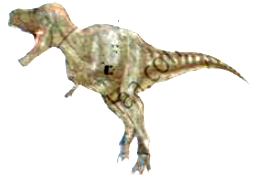
TYRANNOSAURUS

(One of the extinct animals which lived on the Earth about 100,000,000 years ago) Tyrannosaurus was about six meters long and it preyed upon other animals.


What do you think about its classification-was it an amphibian, a reptile or a mammal?

Can you call it a relative of Kangaroo?Yes/No.Give reason

Answer
No, it is not a relative of Kangaroo as Kangaroo is a mammal and Tyrannosaurus is a reptile.
Characteristics of Tyrannosaurus:
  1. The body has scales which may be horny
  2. Lays eggs which have a leathery shell
  3. One of the dinosaurs which moved on the earth. These ruled the earth. Some were vegetarian, others were non-vegetarian. Archaeopteryx is a link between reptiles and birds. Its fossils have been found, which vanished from the earth due to ice-age.
  4. Had three-chambered heart as ventricles are partially divided
  5. Cold-blooded animals.
View full question & answer
Question 33 Marks
Mention any two drawbacks in classifying organisms under the old two kingdom classification.
Answer
According to the 'Two-Kingdom Classification', proposed by Carolus Linnaeus in 1758, living organisms were classified into two broad kingdoms, Plants and Animals.
The drawbacks in classifying organisms under the old two-kingdom classification are:
  1. Bacteria were kept in Kingdom Plantae. These organisms have no chlorophyll and do not carry out photosynthesis. Bacteria do not have a definite nucleus nor a nuclear membrane nor chromosomes.
  2. Fungi were kept in Kingdom Plantae. Bread mould is a multicellular fungi. However, it does not possess roots, stem and leaves, lacks chlorophyll and does bear any flowers, fruits and seeds like plants.
View full question & answer
Question 43 Marks
Write one difference between the following pair:
Invertebrates and Vertebrates
Answer
Invertebrates Vertebrates
1 The animals do not have a backbone. 1 The animals which have a backbone or a vertebral column.
2 They are further classified into nine groups. 2 They are further classified into five groups.
3 Example:Octopus, Starfish. 3 Example:Human Being, Lizard.
View full question & answer
Question 53 Marks
Match the names of animal groups in Column I with the names of animals in column II.

Column I (Group)

Column II (Animals)

Annelida

Pigeon

Porifera

Snake

Mollusca

Earthworm

Reptilia

Sponge

Amphibia

Octopus

Pisces

Trout

Mammal

Rabbit

Which names are left out that do not match and why?

Answer

Column I

Column II

Annelida

Earthworm

Porifera

Sponge

Mollusca

Octopus

Reptilia

Snake

Pisces

Trout

Mammal

Rabbit

Amphibia from Column I and Pigeon from column II are left out. They do not match as Pigeon comes under Class Aves and not Class Amphibia.
View full question & answer
[3 marks Question Answer] - BIOLOGY STD 9 Questions - Vidyadip