Question 15 Marks
Explain, briefly two methods by which plants can be vegetatively propagated artificially.
Answer
View full question & answer→The methods by which plants can be vegetatively propagated artificially are
(i) Cutting - In this method, stems are cut into pieces and planted in the soil. This is the easiest and most frequently used method of artificially propagating plants, Eg. - Sugarcane, grapes, rose, etc.
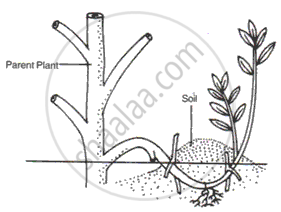
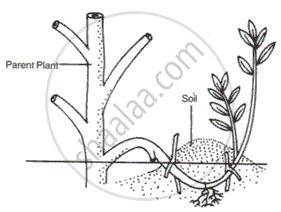
(ii) Layering - Here, an intact branch is bent into the soil and is covered with moist soil. The growing tip remains above the soil. When roots arise in the branch region in contact with soil, it is separated from the parent plant. Within a few weeks, a new plant can be propagated by this method. Eg. - Cherry, jasmine, and grapevine
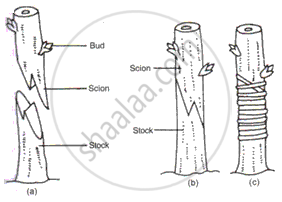
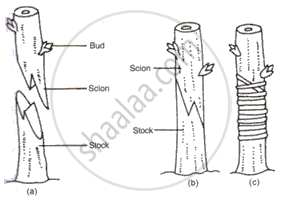
(iii) Grafting - Here a detached part of one plant called scion is inserted into the stem of a rooted plant called stock. Scion is a short piece of detached shoot containing several buds. Stock is the lower portion of the plant fixed in the soil. The scion is cut and placed face to face with stock. After a few days, a vascular connection is established between the joined parts and parenchyma tissue develops at the junction of the graft. Eg. - Apple, pear, mango, guava.
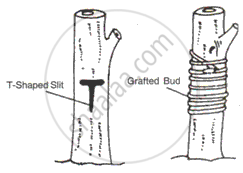
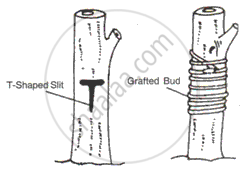
(iv) Budding - Here a single bud instead of a branch is grafted on the stock. In about two weeks, the bud unites with the stock after which the stock just above the bud is cut off. Eg. - Lemon and hibiscus
(i) Cutting - In this method, stems are cut into pieces and planted in the soil. This is the easiest and most frequently used method of artificially propagating plants, Eg. - Sugarcane, grapes, rose, etc.
(ii) Layering - Here, an intact branch is bent into the soil and is covered with moist soil. The growing tip remains above the soil. When roots arise in the branch region in contact with soil, it is separated from the parent plant. Within a few weeks, a new plant can be propagated by this method. Eg. - Cherry, jasmine, and grapevine
(iii) Grafting - Here a detached part of one plant called scion is inserted into the stem of a rooted plant called stock. Scion is a short piece of detached shoot containing several buds. Stock is the lower portion of the plant fixed in the soil. The scion is cut and placed face to face with stock. After a few days, a vascular connection is established between the joined parts and parenchyma tissue develops at the junction of the graft. Eg. - Apple, pear, mango, guava.
(iv) Budding - Here a single bud instead of a branch is grafted on the stock. In about two weeks, the bud unites with the stock after which the stock just above the bud is cut off. Eg. - Lemon and hibiscus