Questions · Page 1 of 2

3 Marks Question

Take a timed test

50 questions · self-marked practice — reveal the answer and mark yourself.

Question 13 Marks
Find out what do the terms ‘algal bloom’ and ‘red-tides’ signify.
Answer
Sometimes, green algae such as Chlorella, Scenedesmus and Spirogyra, etc., grow in excess in water bodies and impart green colour to the water. These are called algal blooms. Red. dinoflagellates (Gonyaulax) grow in abundance in sea and impart red colour to the ocean. This looks like red tides. Both due to algal blooms and 'red tide' the animal life declines due to toxins and deficiency of oxygen inside water.
View full question & answer
Question 23 Marks
State economically important uses of: heterotrophic bacteria
Answer
Heterotrophic bacteria:
  1. Many bacteria like Lactobacillus helps in the production of curd from milk.
  2. They act as decomposers and help in the formation of humus e.g. Pseudomonas.
  3. Many antibiotics are obtained from some species of bacteria like streptomyces, Bacillus etc.
  4. Many soil bacteria help in fixation of atmospheric nitrogen like Rhizobium (Symbiotic), Azotobacter (Free living).
View full question & answer
Question 33 Marks
How are viroids different from viruses?
Answer
Viroids are the smallest known agent of infectious diseases that contain small single-stranded RNA molecule. They lack capsid and have no proteins associated with them. Viroids infect only plants. Whereas, viruses have genetic material surrounded by a protective coat of protein or lipoprotein. The genetic material of viruses are of 4 types – double-stranded DNA, double-stranded RNA, single-stranded DNA, single-stranded RNA. They infect both plants and animals.
View full question & answer
Question 43 Marks
Plants are autotrophic. Can you think of some plants that are partially heterotrophic?
Answer
Plants have autotrophic mode of nutrition as they contain chlorophyll pigment. Thus, they have the ability to prepare their own food by the process of photosynthesis. However, some insectivorous plants are partially heterotrophic. They have various means of capturing insects so as to supplement their diet with required nutrients derived from insects, causing proliferation of growth. The examples include pitcher plant (Nepenthes), Venus fly trap, bladderwort, and sundew plant.
View full question & answer
Question 53 Marks
Organise a discussion in your class on the topic – Are viruses living or nonliving?
Answer
Viruses are microscopic organisms that have characteristics of both living and non-living. A virus consists of a strand of DNA or RNA covered by a protein coat. This presence of nucleic acid (DNA or RNA) suggests that viruses are alive. In addition, they can also respond to their environment (inside the host cell) in a limited manner. However, some other characters, such as their inability to reproduce without using the host cell machinery and their acellular nature, indicate that viruses are non-living. Therefore, classifying viruses has remained a mystery for modern systematics.
View full question & answer
Question 63 Marks
What is the nature of cell-walls in diatoms?
Answer
The cell walls of diatoms are made of silica. Their cell wall construction is known as frustule. It consists of two thin overlapping shells that fit into each other such as a soap box. When the diatoms die, the silica in their cell walls gets deposited in the form of diatomaceous earth. This diatomaceous earth is very soft and quite inert. It is used in filtration of oils, sugars, and for other industrial purposes.
View full question & answer
Question 73 Marks
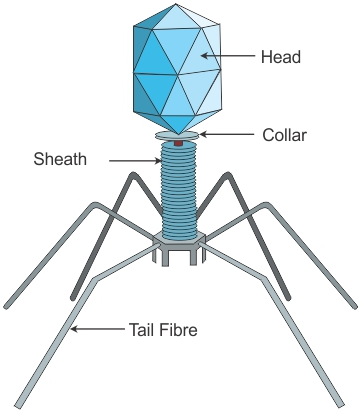
Explain the structure of bacteriophage with the help of well-labelled diagram.
Answer
A bacteriophage consists of two main parts i.e., head and tail. Head: The head is in the form of bipyramidal hexagonal prism. It consists of proteinaceous membrane enclosing a core of viral DNA. The DNA is double-stranded. Tail: It is cylindrical. It has four components are:
  1. A central core.
  2. A protein sheath surrounding the core
  3. A sheath connected to head by a collar and at distal end to a hexagonal basal plate.
  4. Pins at the corners of basal plate. Basal plate also bears six long tail fibres which are the organs of attachment to the bacterial surface.
​​​​​​​
View full question & answer
Question 83 Marks
Explain the following terms in relation to Phycomycetes.
  1. Myceliu.
  2. Eucarpy and holocarpy.
  3. Asexual reproduction.
Answer
  1. Mycelium: Mycelium is coenocytic and non-septate or aseptate. Septa are formed only in connection with separation of old senescent parts and delimitation of reproductive structures.
  2. Eucarpy and holocarpy: In eucarpy, only a portion of somatic body is transformed into reproductive body. In holocarpy, transformation of the whole somatic body into reproductive structure is found in only some primitive forms.
  3. Asexual reproduction: It involves the formation of sporangia. The sporangia function as conidia in dry habitats as zoosporangia under wet conditions.
View full question & answer
Question 93 Marks
Describe the cell structure of fungus in detail.
Answer
Fungus cells are eukaryotic. These cells contain all the eukaryotic organelles except plastids. Some of these organelles are nucleus, ribosomes, endoplasmic reticulum,mitochondria, Golgi bodies, etc. A fungal cell wall contains mostly chitin. Plasmalemma bears coiled membranous outgrowths called lomasomes. Nuclei are small and connected to endoplasmic reticulum. Nuclear division involves formation of internal spindle. Vacuoles are small. Near the hyphal tips, the cytoplasm contains small vesicles called chitosomes. Food reserve is in the form of glycogen and oil.
View full question & answer
Question 103 Marks
‘Peat’ is an important source of domestic fuel in several countries. How is ‘peat’ formed in nature?
Answer
Species of Sphagnum, a moss, provide peat that has long been used as fuel and because of their capacity to hold water as packing material for trans-shipment of living material. Peat forms when plant material decaying fully by acidic and anaerobic conditions. Peat is soft and easily compressed. Under pressure, water in the peat is forced out. Upon drying, peat can be used as fuel.
View full question & answer
Question 113 Marks
Write the name of five diseases caused by viruses.
Answer
  1. AIDS (Acquired Immuno Deficiency Syndrome).
  2. Small Pox.
  3. Swine Flu.
  4. Bird Flue.
  5. Common cold.
View full question & answer
Question 123 Marks
Are chemosynthetic bacteria-autotrophic or heterotrophic?
Answer
Chemosynthetic bacteria are autotrophic bacteria. They are able to manufacture their organic food from inorganic raw materials with the help of energy derived from exergonic chemical reactions involving oxidation of an inorganic substance present in the external medium. Thus, these bacteria are chemoautotrophic. The chemical energy obtained from oxidation reaction is trapped in ATP molecules. Examples are nitrifying bacteria, sulphur oxidising bacteria, and iron bacteria.
View full question & answer
Question 133 Marks
What are the three methods of locomotion shown by the protozoans? Mention them with an example of each.
Answer
  1. By pseudopodia - e.g. Amoeba
  2. By flagella - e.g. Trypanosoma
  3. By cilia - e.g. Paramoecium.
View full question & answer
Question 143 Marks
What is the principle underlying the use of cyanobacteria in agricultural fields for crop improvement?
Answer
Several cyanobacteria have the ability to fix atmospheric nitrogen. The filamentous forms possess special large pale cells or hetrocysts specialised to perform nitrogen fixation. Some of the fixed nitrogen comes out as excretion. After death of cyanobacteria the substratum becomes rich in nitrogen. Such nitrogen fixing cyanobacteria are now regularly inoculated in the rice fields. This saves consumption of nitrogen fertilisers, and. thus helps in crop improvement.
View full question & answer
Question 163 Marks
List out some living features of viruses.
Answer
Viruses have the following features that make them similar to living things:
  1. They have DNA or RNA.
  2. Their nucleic acid can undergo mutation.
  3. They can reproduce only in living host cells.
  4. They infect different types of host cells.
  5. The nucleic acids of viruses are identical in composition to those of other organisms.
View full question & answer
Question 173 Marks
In which organisms these structures are found and what is their role?
  1. Paramylon.
  2. Pseudoplasmodia.
  3. Heterocysts.
Answer
  1. Paramylon: These are found in euglenoids. These are the products of photosynthesis which can be stored in the cytoplasm.
  2. Pseudoplasmodia: These are found in slime moulds. Pseudoplasmodia are formed when the food supply of the medium is exhausted.
  3. Heterocysts: Present in cyanobacteria. They are the sites of nitrogen-fixation.
View full question & answer
Question 183 Marks
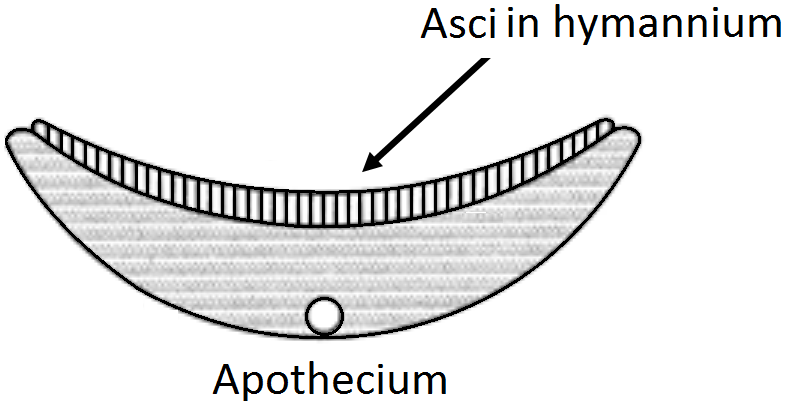
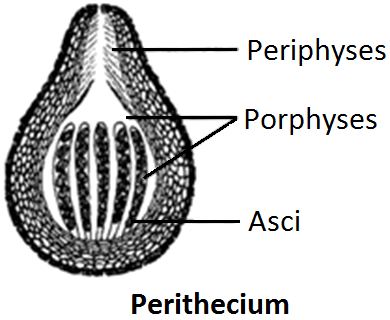
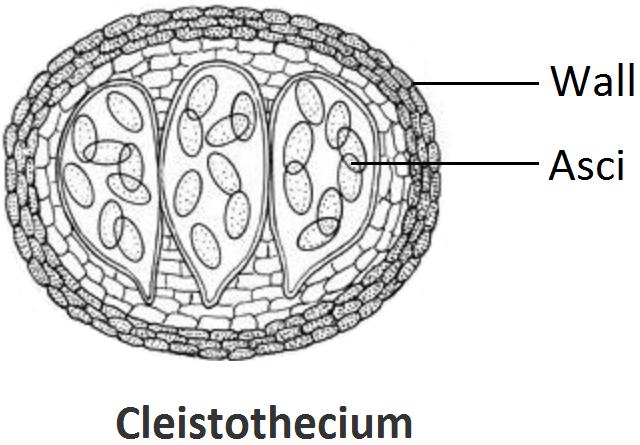
At a stage of their cycle, ascomycetes fungi produce the fruiting bodies like apothecium, perithecium or cleistothecium. How are these three types of fruiting bodies different from each other?
Answer
Ascomycetes Consist of sporangial sac called ascus . Asci (singular-ascus) may occur freely or get aggregated with dikaryotic mycelium to form the f ratification called ascocarps, The trustification formed by asci are like.
  1. Apothecium is a cup like structure, e.g., Peziza.
  1. Perithecium flask shaped, e.g., Neurospora.
​​​​​​​
  1. Cleistothecium closed with a slit, e.g., Penicillium.
​​​​​​​
View full question & answer
Question 193 Marks
What are the main criteria used for five kingdom system of classification?
Answer
The main criteria used for five kingdom system of classification are:
  1. Complexity of cell structure.
  2. Complexity of organism's body.
  3. Mode of obtaining nutrition.
  4. Life cycle and phylogenetic relationship.
View full question & answer
Question 203 Marks
Write the name of three parasitic protozoans.
Answer
  1. Plasmodium causes malaria.
  2. Entamoeba histolytica causes amoebic dysentery.
  3. Trypanosoma causes sleeping sickness.
View full question & answer
Question 223 Marks
How was three kingdom system different than four kingdom system?
Answer
The three kingdom classification system was proposed by Ernst Haeckel in 1866. He did not distinguish bacteria from other living beings. They were incorrectly placed under kingdom-Protista. This shortcoming was removed by Copeland in 1956, when he placed all the bacteria and related organisms into another kingdom-Monera. Copeland's system of classification was able to separate prokaryotic organisms from eukaryotic organisms which was a major drawback of Haeckel's system of classification.
View full question & answer
Question 233 Marks
What are the criteria used to classify fungi?
Answer
Criteria used to classify fungi are:
  1. Morphology and appearance of fungus.
  2. Life-cycle.
  3. Types of spores and their dispersal.
  4. Physiology and biochemistry.
View full question & answer
Question 243 Marks
Who was the first to attempt a more scientific basis for classification of living organisms? How did he classify plants and animals?
Answer
  • Aristotle attempted a more scientific basis for classification.
  • He classified plants into trees, shrubs and herbs.
  • He classified animals into two groups:
  1. Those which have red blood.
  2. Those without red blood.
View full question & answer
Question 253 Marks
Briefly describe the life cycle phases of fungi.
Answer
All fungi pass through two phases or stages in their life cycle. These phases are vegetative or assimilative phase and reproductive phase. Vegetative phase: In this phase, they go speedily in the food giving substratum. The food substratum may be bread, cheese, wood, etc. Coprophilous fungi grow well on cow dung, dead parts of plants like fallen leaves. Reproductive phase: In this phase, erect hyphae develop which produce reproductive structure. In unicellular yeasts, the entire cell becomes a reproductive structure. This is the holocarpic condition. In other fungi, reproductive structures develop from a part of the vegetative body and the condition is called eucarpic.
View full question & answer
Question 263 Marks
Why does the interior of bacterial cell appear simple and granular? Which components make cell envelope of bacterial cell? What gives gummy or sticky trait to bacterial cells and if it is not essential for survival, what are its functions?
Answer
  1. The interior of bacterial cell seems simple and granular because the membrane bound organellesare not present in it.
  2. Mucilage, cell wall and plasma membrane are together called cell envelope.
  3. Mucilage or glycocalyx gives gummy or sticky trait to cells.
Though it is not essential for bacterial survival, glycocalyx has several functions such as:
  1. Protection from dessication and toxins.
  2. Preventing host phagocytes to get attached to the bacterium.
  3. Holding cells together.
  4. Storing chemicals for virulence.
View full question & answer
Question 273 Marks
Living beings are classified into different categories and sub-categories so that it becomes easy to study them. Which of the following shows similar theory? Give reasons for your answer. Moreover, mention the benefits of segregating students into different classes.
  1. Students of a school are categorized into different classes and sections so that it becomes easy to manage them.
  2. There are different departments in a schvol so that the school can function in a better way.
  3. There are different teachers for different subjects so that a subject can be taught better.
Answer
Option (i) is the correct option because it talks about classification of a particular term into specific categories. Other options are not related to classification of anything. Segregation of students into different classes has many benefits. The level of course would be different for students of different age groups; which necessitates progression of students through various stages of classes. Segregation of students of a class into different sections makes the life easy for students as well as for teachers. It is easier for teachers to manage a smaller group. For students also, learning in a small group makes the learning easy. Studying in a very large group would mean that most of the students would be unable to pay proper attention in the class.
View full question & answer
Question 283 Marks
List out the differences between Monera and Protista.
Answer
Differences between Monera and Protista are:
S. No.
Monera
Protista
1.
Cell wall is made up of peptidoglycan.
It is made up of cellulose.
2.
Respiratory apparatus is present in respiratory membrane.
It is present in mitochondria.
3.
Ribosomes are 70S type.
Ribosomes are 80S type.
4.
These are prokaryotic and have naked circular DNA.
Eukaryotic, linear DNA is present in nucleus.
5.
Extrachromosomal DNA is present in the form of plasnids.
Extrachromosomal DNA is present in organelles like mitochondria and chloroplast.
View full question & answer
Question 293 Marks
There is a myth that immediately after heavy rains in forest, mushrooms appear in large number and make a very large ring or circle, which may be several metres in diameter. These are called as ‘Fairy rings’. Can you explain this myth of fairy rings in biological terms?
Answer
The mycelium of a fungus /mushroom growing in the ground absorbs nutrients by secretion of enzymes from the tips of the hyphae (threads making up the mycelium). This breaks down larger molecules in the soil into smaller molecules that are then absorbed through the walls of the hyphae near their growing tips. The mycelium moves outward from the center when the nutrients in the center are exhausted. The center dies, thereby forming a living ring. These rings are known as fairy rings especially in Europe.
View full question & answer
Question 313 Marks
Explain the terms:
  1. Basidiocarp.
  2. Basidia.
  3. Basidiospores.
Answer
  1. Basidiocarp: It may be minute or very large structure which bears basidia, e.g., Bracket fungi, puffballs.
  2. Basidia: These are special reproductive bodies of Basidiomycetes where karyogamy, meiosis and basidiospore formation occurs.
  3. Basidiospores: These are meiospores of Basidiomycetes. Basidiospores are borne at the tips of sterigmata or outgrowths of basidia.
View full question & answer
Question 323 Marks
Name the following:
  1. A poisonous mushroom having white spores.
  2. Edible Basidiomycetes.
  3. Fungus used in brewing industry.
  4. It is searched by trained pets.
  5. Root-like, cards-like hyphal masses having a distinct growing point.
  6. Non-motile meiospores develop in Basidiomycetes.
  7. Compact groups of hyphae produced to overcome unfavourable conditions.
Answer
  1. Toadstools.
  2. Mushrooms and young puffballs.
  3. Brewer's yeast (Saccharomyces cerevisiae).
  4. Truffles (tuber-like underground fungus).
  5. Rhizomorphs perennate during periods of scarcity of food and water.
  6. Basidiospores (develop exogenously).
  7. Sclerotia under favourable conditions each one forms a new mycelium.
View full question & answer
Question 333 Marks
Fungi are cosmopolitan. Write the role of fungi in your daily life.
Answer
Fungi are cosmopolitan in occurrence being present in air, water, soil, over and inside plants and animals. Fungi have both beneficial and harmful roles. For example, yeasts are used in brewing industry, baking industry as well as it causes various plant and animal diseases. Commercial antibiotic penicillin has been obtained from fungus Penicillium. Morels and mushrooms are group of edible fungi. However, Aspergillus another fungus contaminates food stuff like bread, jam, butter, syrups and also laboratory cultures.
View full question & answer
Question 343 Marks
Sporozoans are parasitic protozoan protists which lack locomotory organelles atleast in trophozoite stage.
  1. Where are they found?
  2. What kind of nutrition they have?
  3. Do they have nucleus?
  4. What is the mode of reproduction?
  5. List any four examples of sporozoans.
Answer
  1. Sporozoans are intracellular endoparasites of invertebrates and vertebrates.
  2. They have nutrition which is mostly absorptive type and rarely digestive.
  3. Sporozoans are commonly uninucleate.
  4. Asexual reproduction occurs by multiple fission and sexual reproduction involves fusion of gametes.
  5. Examples Plasmodium, Toxoplasma, Monocystis and Eimeria.
View full question & answer
Question 353 Marks
Give the name of the bacteria for following activities:
  1. Food poisoning.
  2. Denitrification of soil.
  3. Dairy industry.
  4. Vinegar production.
  5. Retting of fibres.
  6. Genetic engineering.
Answer
  1. Staphylococcus aureus and Clostridium botulinum.
  2. Thiobacillus denitrificans and Micrococcus denitnficans.
  3. Lactobacillus acidophyllus.
  4. Acetobacter acetic.
  5. Pseudomonas fluorescens and Clostridium sp.
  6. Escherichia coli and Agrobacterium tumefaciens.
View full question & answer
Question 363 Marks
Write a brief account of reproduction in fungi.
Answer
Reproduction in fungi occurs by asexual and sexual methods. Asexually, it takes place either by formation of motile spores (zoospores) or by formation of non-motile spores (aplanospores) or conidia. In lower fungi like Phycomycetes, sex organs like the unicellular antheridia (male) and unicellular oogonia (female) are produced. In higher fungi like Basidiomycetes, sex organs are absent but sexual process is present. Ascomycetes and Basidiomycetes fungi produce fruiting bodies by sexual process called ascospores and basidiospores, respectively.
View full question & answer
Question 373 Marks
Justify at what extent the phylogenetic relationship is useful as a criterion for classification.
Answer
Phylogeny is the evolutionary history of an organism. It shows the true kinship of organism. Such relationships are not clear in all cases. Only fossil record can provide such relationships, but complete records are not available for such studies. Hence, the phylogenetic relationships are ascertained from morphology, cytology, genetics, physiology and biochemistry for the correct classification of the organisms.
View full question & answer
Question 383 Marks
Explain the following in terms of mycorrhizal association.
  1. Growth promotion.
  2. Antimicrobial substance.
  3. Nourishment.
  4. Adverse environment.
  5. Absorption of water.
Answer
  1. Growth promotion: Fungus produces growth promoting hormones. In the absence of this association, Pinus and Berth show stunted growth despite providing all types of nutrients.
  2. Antimicrobial substance: Fungus protects the root from parasitic fungi and harmful bacteria by secreting antimicrobial substances.
  3. Nourishment: In orchids, the fungus absorbs nourishment from outside transports it over to the germinating seed.
  4. Adverse environment: Allows plants to grow in mineral deficient soil, saline soil, unfavourable pH and temperature.
  5. Absorption of water: Fungal association increases water availability to the root.
View full question & answer
Question 393 Marks
How are ascospores and conidia, both produced by Ascomycetes, different from each other?
Answer
S.No.
Ascospores
Conidia
1.
These are the spores formed after sexual formed reproduction.
There are the spores for asexual reproduction.
2.
Spores are formed endogenously in the asci.
Spores are produced exogenously on condiophores.
3.
Eight spores are formed in an ascus.
Many are formed on a conidiophore.
4.
Spores formed are genetically dissimilar.
Spores formed are genetically similar.
View full question & answer
Question 403 Marks
What do you understand by alternation of generation? Describe in short.
Answer
Alternation of Generation: Life cycle of plants has two distinct phases the diploid sporophytic and the haploid gametophytic that alternate with each other. The lengths of the haploid and diploid phases, and whether these phases are free living or dependent on others, vary among different groups in plants. This phenomenon is called alternation of generation.
View full question & answer
Question 413 Marks
Mention six characteristic features of dinoflagellates.
Answer
  1. They are mostly marine.
  2. They are unicellular and eukaryotic.
  3. They appear yellow, brown, blue, green or red, depending on the main pigments present in them.
  4. The cell wall has stiff cellulosic plates on the S outer surface.
  5. Most of them have two flagella-one lies longitudinally and the other transversely in afurrow between the cell wall plates
  6. Some red dinoflagellate like Gonyaulax undergoes such a rapid multiplication that it causes red tide in the ocean and the toxin secreted by it kills aquatic animals.
View full question & answer
Question 423 Marks
Define the term mycorrhiza. How are these associations affect a plant? Explain with examples.
Answer
Mycorrhiza is a mutually beneficial or symbiotic association of fungi with roots of higher plants. Orchids grow as epiphyte on plants, have their roots associated with fungi right from the seedling stage. Many orchids cannot survive without mycorrhizae associations. Many forest trees such as piles appear stunted if mycorrhizal associations are absent. In the presence of these associations, these plants absorb 2-3 times more nitrogen, potassium and phosphorus compared to without them.
View full question & answer
Question 433 Marks
Algae are known to reproduce asexually by variety of spores under different environmental conditions. Name these spores and the conditions under which they are produced.
Answer
Algae produce different spores under different conditions:
Type of Spores
Description
Conditions for production
Zoospore.
Mobile spores with flagella.
Formed under favourable conditions.
Aplanospore.
Non-motile spores without flagella.
Formed under unfavourable conditions.
Hynospore.
Spores having thick walls for protection.
Formed under unfavourable conditions.
Akinetes.
Resting cells formed from the vegetative cells.
Formed under unfavourable conditions.
Statospores.
Similar to akinetes and found in ddiatoms.
Formed under unfavourable conditions.
View full question & answer
Question 443 Marks
Differentiate between pill and fimbriae.
Answer
Differences between pili and fimbriae are:
S. No.
Pili
Fimbriae
1.
They are tube-like outgrowths of bacterial cells.
They are solid outgrowths bacterial cells.
2.
Their length is about 18-20m.
Their length is about 0. 15-1.5m.
3.
Only 1-4 pill occur per cell.
About 300-400 fimbriae occur per cell.
4.
They help in conjugation.
They help in clinging to various objects.
View full question & answer
Question 453 Marks
Why the members of class-Deuteromycetes are considered the fungi imperfect?
Answer
Deuteromycetes is an artificial class of fungi which has been created to include all those fungi (fungi imperfect) in which sexual stage is either absent or not known. Their mycelium is usually septate. Coenocytic forms are not known. Clamp connections, typical of Basidiomycetes are absent. It is believed that most members of Deuteromycetes are actually Ascomycetes in which sexual reproduction is either absent or yet to be discovered.
View full question & answer
Question 463 Marks
Cyanobacteria and heterotrophic bacteria have been clubbed together in Eubacteria of kingdom Monera as per the “Five Kingdom Classification” even though the two are vastly different from each other. Is this grouping of the two types of taxa in the same kingdom justified? If so, why?
Answer
Cyanobacteria and heterotrophic bacteria have been clubbed together in Eubacteria of Kingdom Monera as per the “Five Kingdom Classification” because they do not have nuclear envelope and membrane bound organelles. Their genetic material is naked. They have 70S type of ribosomes. So, cyanobacteria and heterotrophic bacteria are prokaryotes and belong, to Kingdom Monera.
View full question & answer
Question 473 Marks
The two kingdom classification system placed bacteria, algae, blue-green algae, fungi, mosses, ferns, gymnosperm, and angiosperms, together under one single kingdoms-Plantae. According to you, what could have been the basis of such classification.
Answer
The two kingdom classification system was given by Linnaeus in 1758. Lesser number of organisms were known then in comparison to what the world knows today. He classified all the known living beings into two categories-Animalia and Plantae on the basis of the presence or absence of cell wall in their cells. As bacteria, blue-green algae, fungi, algae, mosses, ferns, gymnosperms and angiosperms have their cells surrounded by cell walls, unlike animals, therefore, they were placed together under kingdom-Plantae.
View full question & answer
Question 483 Marks
Write any four differences between phycomycetes and ascomycetes.
Answer
S.No.
Phycomycetes
Ascomycetes
1.
Hyphae are aseptate and coenocytic.
Hyphae are septate and branched.
2.
A sexual spores are zoospores sporangiospores (aplanospores).
Asexual spores are or conidia.
3.
Asexual spores are formed endogenously within the sporangia.
Asexual spores are formed exogenously on conidiophore
4.
No dikaryophase is seen.
A dikaryophase is seen in some.
5.
No fruiting body is ascocarp is formed.
A fruiting body, formed.
View full question & answer
Question 493 Marks
What is the need of a classification system in biology? How did different classification systems develop over a period of time?
Answer
There are millions of species on this planet. The largest phylum Arthropoda alone comprises of millions of species. To study all of them properly we need some system for categorizing them, based on some common characteristics. Apart from that think of the differences in language and you will find different names for the same species in different languages. In the absence of a system of nomenclature it would have been difficult to share scientific knowledge among the scientists of different nations. To make things easier and systematic the need for classification was felt. Earlier attempts by people like Aristotle segregated living beings into plants and animals. This was good point to start with, but there are certain living beings which do not fit in either of plants or animals. So a three kingdom classification was devised. The three kingdom classification was used for some time. But as none of the scientific theory is permanent so further discoveries led to creation of a five kingdom classification. The five kingdom classification is the most accepted system of classification.
View full question & answer
Question 503 Marks
In which organisms heterocyst is present? Mention two features of heterocysts. Which features make it suitable for nitrogen-fixation?
Answer
  1. Heterocysts are present in some cyanobacteria. It is a large-sized, pale coloured, thick-walled cell which occurs in terminal, intercalary or lateral position in filamentous cyanobacteria, e.g., Nostoc.
  2. Features of cyanobacteria are:
  1. Mucilage sheath is present.
  2. Thylakoids lack phycobilins. Therefore, photosynthesis is absent, but cyclic photophosphorylation occurs.
  3. Heterocyst is dependent for its nourishment on adjacent vegetative cells.
The thick wall is impermeable to oxygen, but permeable to nitrogen. It has enzyme nitrogenase which is specialised to perform nitrogen-fixation.
View full question & answer
3 Marks Question - Biology STD 11 Science Questions - Vidyadip