- AAtmosphere is the envelope of air that surrounds the earth.
- BAtmospheric gases contain nitrogen and oxygen.
- ✓Both the above are correct.
- DNone of these.
159 questions · auto-graded multiple-choice test.


|
S.No.
|
Column $-I$
|
S.No.
|
Column $-II$
|
|
$A.$
|
Oxygen.
|
$(p)$
|
Consumed by plants and animals during photosynthesis.
|
|
$B.$
|
Carbon dioxide.
|
$(q)$
|
Produced by animals during respiration.
|
|
$C.$
|
Atmosphere.
|
$(r)$
|
Animals that live under water.
|
|
$D.$
|
Aquatic animals.
|
$(s)$
|
Thin layer of air that surrounds the earth.
|

|
$(i)$
|
Respiration
|
|
$(ii)$
|
Combustion
|
|
$(iii)$
|
Burning
|
Air is essential for respiration, combustion and burning.

During photosynthesis in plants, oxygen is released which is taken in by human beings and animals for respiration. They in turn release carbon dioxide needed for photosynthesis by plants.

Air is not a pure substance. A pure substance refers to an element or a compound and not a mixture. Air is a homogeneous mixture.
|
S.No.
|
Column$-I$
|
S.No.
|
Column$-II$
|
|
$a.$
|
Aquatic animals
|
$1.$
|
Sail boat
|
|
$b.$
|
Mountaineers
|
$2.$
|
Soot and dust
|
|
$c.$
|
Factories
|
$3.$
|
Oxygen cylinders
|
|
$d.$
|
Wind
|
$4.$
|
Dissolved oxygen
|
|
$(i)$
|
Tyres
|
|
$(ii)$
|
Sprayers
|
|
$(iii)$
|
Gas cylinders
|
Compressed air is used for filling inflating tyres, sprayers and gas cylinders.
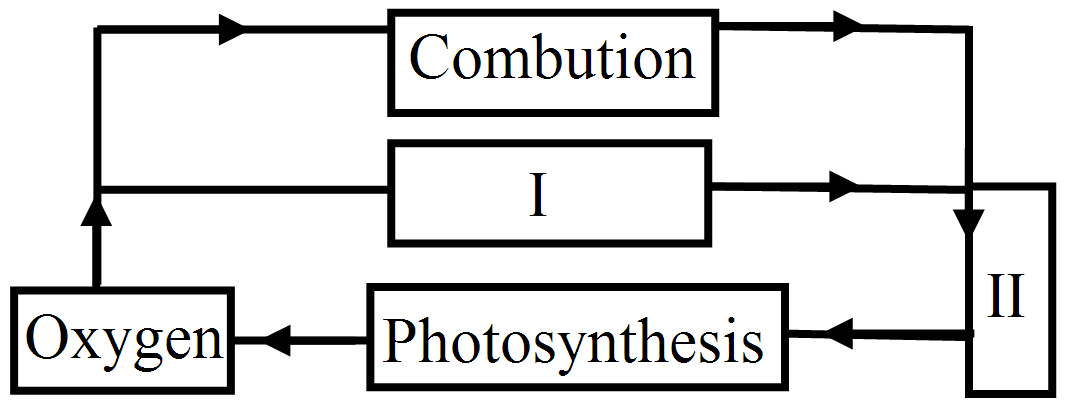
During respiration in animals, oxygen is taken in and carbon dioxide is released. During photosynthesis in plants, carbon dioxide is absorbed and oxygen is released. The proportion of oxygen and carbon dioxide in the atmosphere is maintained both by plants and animals.
Respiration and burning release carbon dioxide into the atmosphere, whereas photosynthesis releases oxygen into the atmosphere.
|
S.No.
|
Column$-I$
|
S.No.
|
Column$-II$
|
|
$A.$
|
Nitrogen
|
$(p)$
|
Produced when fuel is burnt.
|
|
$B.$
|
Oxygen
|
$(q)$
|
Supporter of combustion.
|
|
$C.$
|
Carbon dioxide
|
$(r)$
|
Not a supporter of combustion.
|
|
$D.$
|
Smoke
|
$(s)$
|
Colourless, odourless gas that may cause suffocation.
|
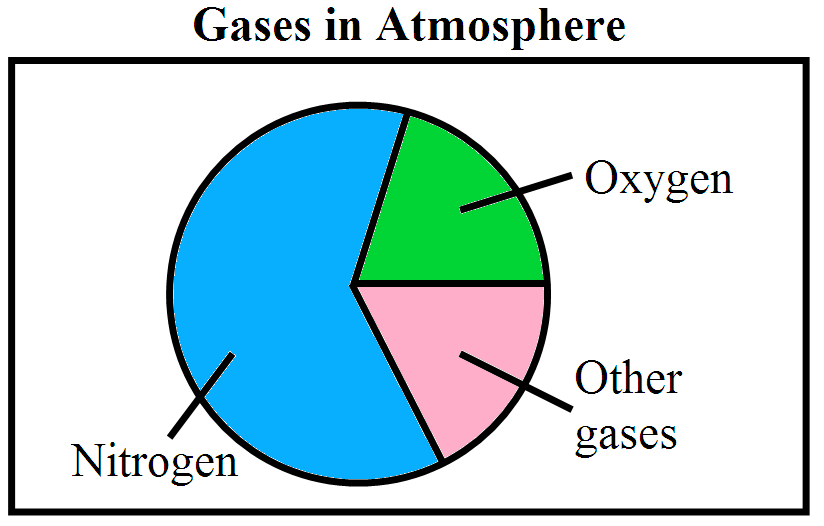
Composition of air (Percentage by volume),
nitrogen $= 78.03,$
oxygen $= 20.99,$
carbon dioxide $= 0.03,$
noble gases $= 0.95$ and
some water vapours, dust particles and other impurities.

In exhaled air the percentage of nitrogen is $79\%.$
Humidity varies from time to time and from place to place. It is not fixed because it depends on the temperature of that place at that particular time.
Water contains dissolved air. Note: Sol ability of gases decreases on increase of temperature.
As we go up above the sea level, the atmospheric pressure goes on decreasing and the amount of oxygen also decreases at higher altitude. This is why, mountaineers carry oxygen, cylinders with them.
We have evolved under the temperature and pressure conditions on the earth such that pressure inside or outside our bodies is almost the same. If we go to higher attitudes, we can feel the difference in pressure.
Plants require carbon dioxide to carry out photosynthesis.
Air is a mixture of a number of gases like Nitrogen, Oxygen and Carbon dioxide etc.
If we breathe air through our mouth, the dust particles present in the air may enter the lungs and cause harm. But if the nose is used for breathing, the hair present in the nose filters the air and prevents the dust particles from entering the lungs.
The presence of air around us can be proved by feeling it and breathing.
Air in motion is called wind.
Plants consume lesser amount of oxygen during respiration and produce larger amount of oxygen during photosynthesis.
The presence of water vapour in air is important for the working of water cycle in nature (This is because it is water vapour present in air which rises high in the sky along with hot air, gets cooled, condenses to form clouds and then brings rain on the earth).
When a person is caught with fire, he or she is wrapped in a thick blanket so as to cut off the oxygen supply, since oxygen is a supporter of combustion.

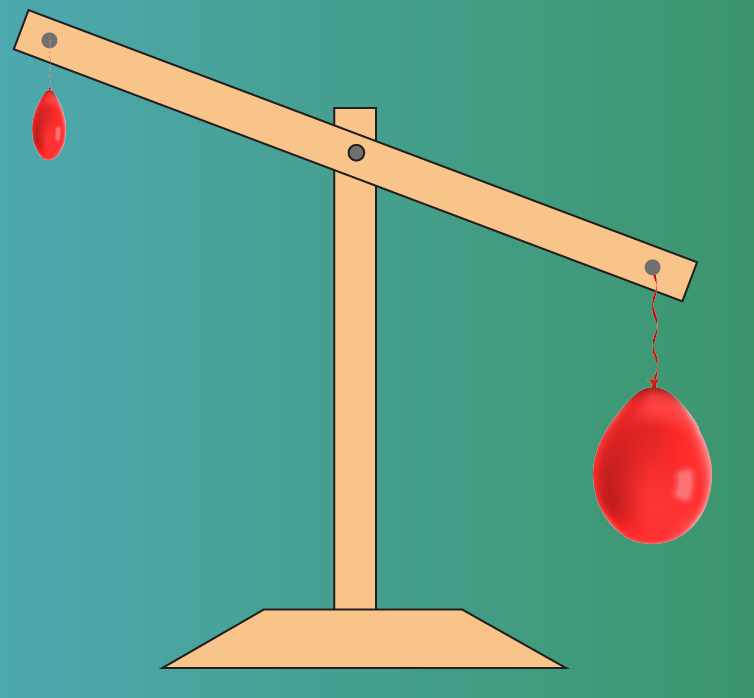
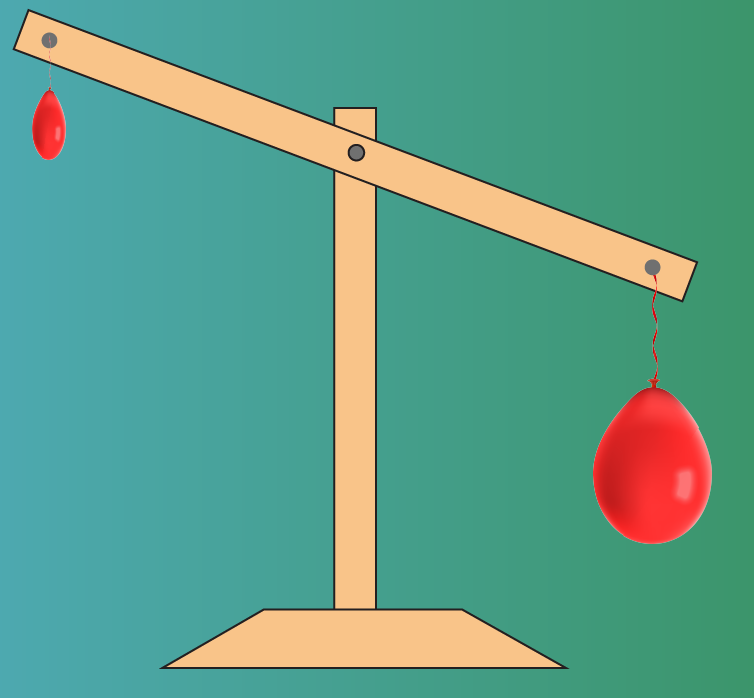
The balloon with air has more mass than the balloon without air.
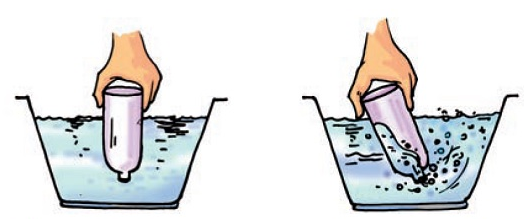
Bubbles of air came out from the bottle and some water entered into the bottle, when it was tilted.
Gases like hydrogen, oxygen, nitrogen, carbon dioxide and many other gases, together form a mixture called air.
Air is a mixture of various gases, water vapours and dust particles.
Plants play an important role in the oxygen cycle, as they release oxygen during the process of photosynthesis. Thus, they help in balancing the oxygen content in the atmosphere.
Hydrogen gas is used as fuel in rockets for combustion of fuels due to high calorific value.
Hydrogen is also highly flammable.
The percentage of nitrogen in the air is $78\%$.
|
$(i)$
|
blue litmus paper.
|
|
$(ii)$
|
lime water.
|
|
$(iii)$
|
burning splinter.
|
Carbon dioxide gas can be tested using a blue litmus paper, lime water and a burning splinter.
Breathing becomes faster, if the oxygen content in the air decreases as it is the breath of life.
Carbon monoxide causes suffocation.

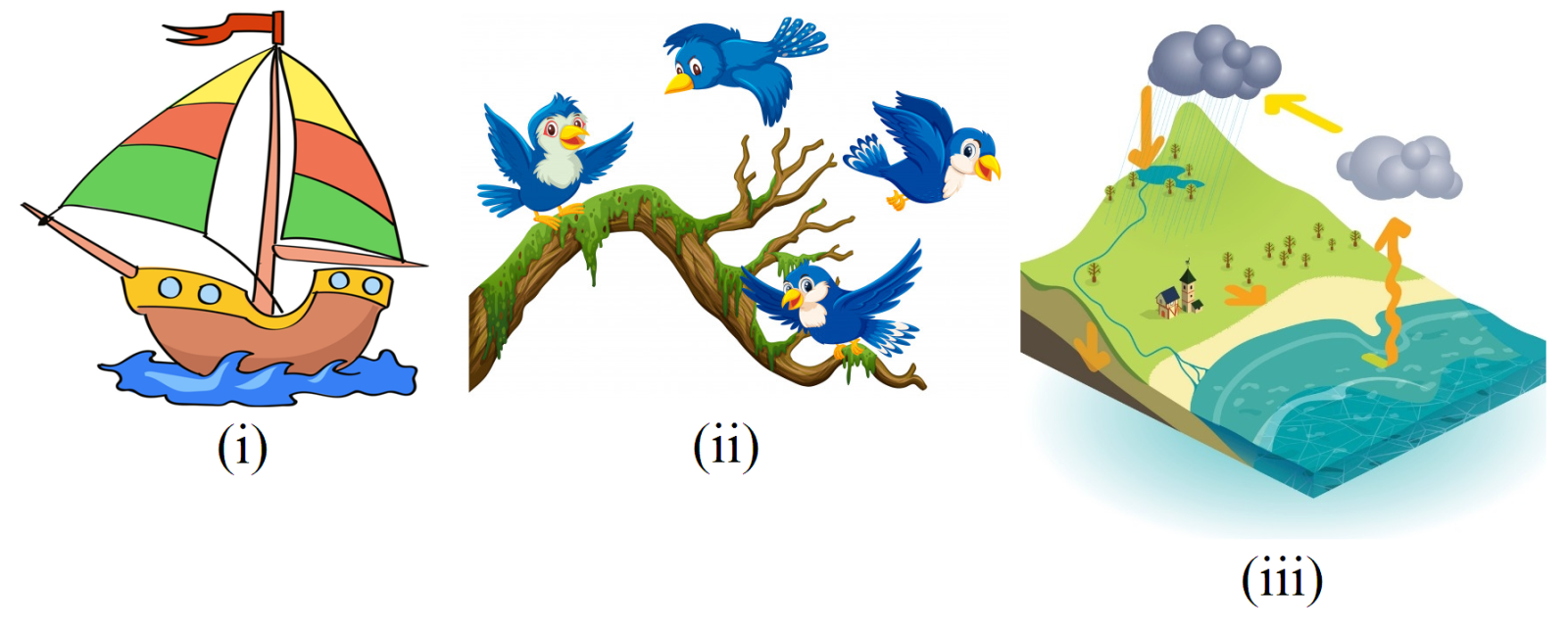
Air is useful in many ways, like in the generation of electricity, the dispersal of seeds and in bird's flight.
The amount of water vapour in air is more in the rainy season.
Air is transparent, a bad conductor of electricity and heat and also its composition varies from place to place.
Wind energy from the blowing of the wind makes the windmill to rotate.
Oxygen is the most abundant element in the earth's crust and next to it is silicon.
$\frac{3}{4}\text{th}$ portion of air is nitrogen.
A weather cock shows the direction in which wind is blowing. It is also called as weather vane or wind vane.
The amount of water vapour present in the air is called as humidity.
Plants require nitrogen for their growth and for the formation of proteins.
The percentage of carbon dioxide present in air is about $0.03\%$
|
$(i)$
|
The compressed air in a tyre exerts a force large enough to lift a heavy car.
|
|
$(ii)$
|
In a syringe, the plunger compresses the liquid.
|
$(i)$ The compressed air in a tyre exerts a force large enough to lift a heavy car. $(ii)$ In a syringe, the plunger does not compress the liquid. Pressure is applied on the liquid causing it to flow out.
Oxygen is necessary for combustion, respiration and oxidation.

Dust and smoke present in air are harmful to living beings.
Note: Breathing in air containing smoke and dust may enter our respiratory system (lungs, etc.) and damage our health.
Hydrogen is a combustible gas. It burns with a pale blue flame.
|
S.No.
|
Column-I (Name of gas in Air)
|
S.No.
|
Column-II (% age of gas in air)
|
|
$A.$
|
Oxygen
|
$(p)$
|
$20\%$
|
|
$B.$
|
Nitrogen
|
$(q)$
|
$79\%$
|
|
$C.$
|
Carbon dioxide
|
$(r)$
|
$0.04\%$
|
|
$D.$
|
Other gases
|
$(s)$
|
Less than $1\%$
|

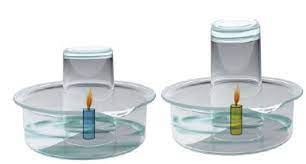
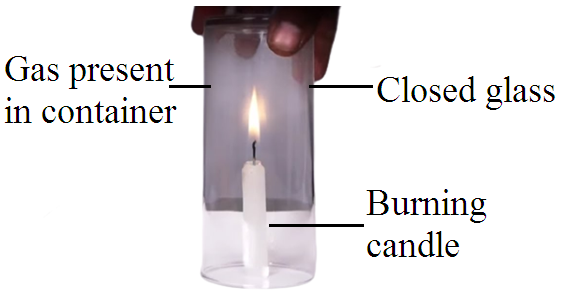
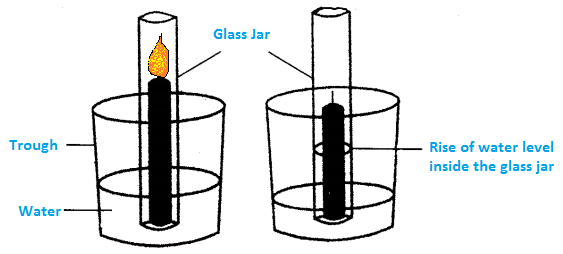
Carbon dioxide is produced when candle burns.
|
$(i)$
|
Air is a mixture of several gases.
|
|
$(ii)$
|
Air exerts pressure.
|
|
$(iii)$
|
The composition of air is constant in all places.
|
Air is a mixture of several types of gases. It can exert pressure. The composition of air is not constant in all places.
It is about $79\%$ by volume.
$ 4 : 1$ is the ratio of nitrogen to oxygen in the air.