Questions

[3 Marks Each] QUE-ANS

Take a timed test

15 questions · self-marked practice — reveal the answer and mark yourself.

Question 13 Marks
Will a leaf taken from a potted plant kept in a dark room for a few days turn blue black when tested for starch? Give reasons for your answer.
Answer
No, a leaf from a potted plant kept in dark will not turn blue-black when tested for the presence of starch.
This is because all the stored starch would have been used up by the plant. No fresh starch would be synthesised by leaves due to non-availability of sunlight (i.e. no photosynthesis can occur, thus no food is prepared).
View full question & answer
Question 43 Marks
Which of the following leaves have reticulate venation?
Wheat, tulsi, maize, grass, coriander (dhania), China rose
Answer
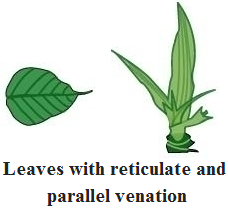
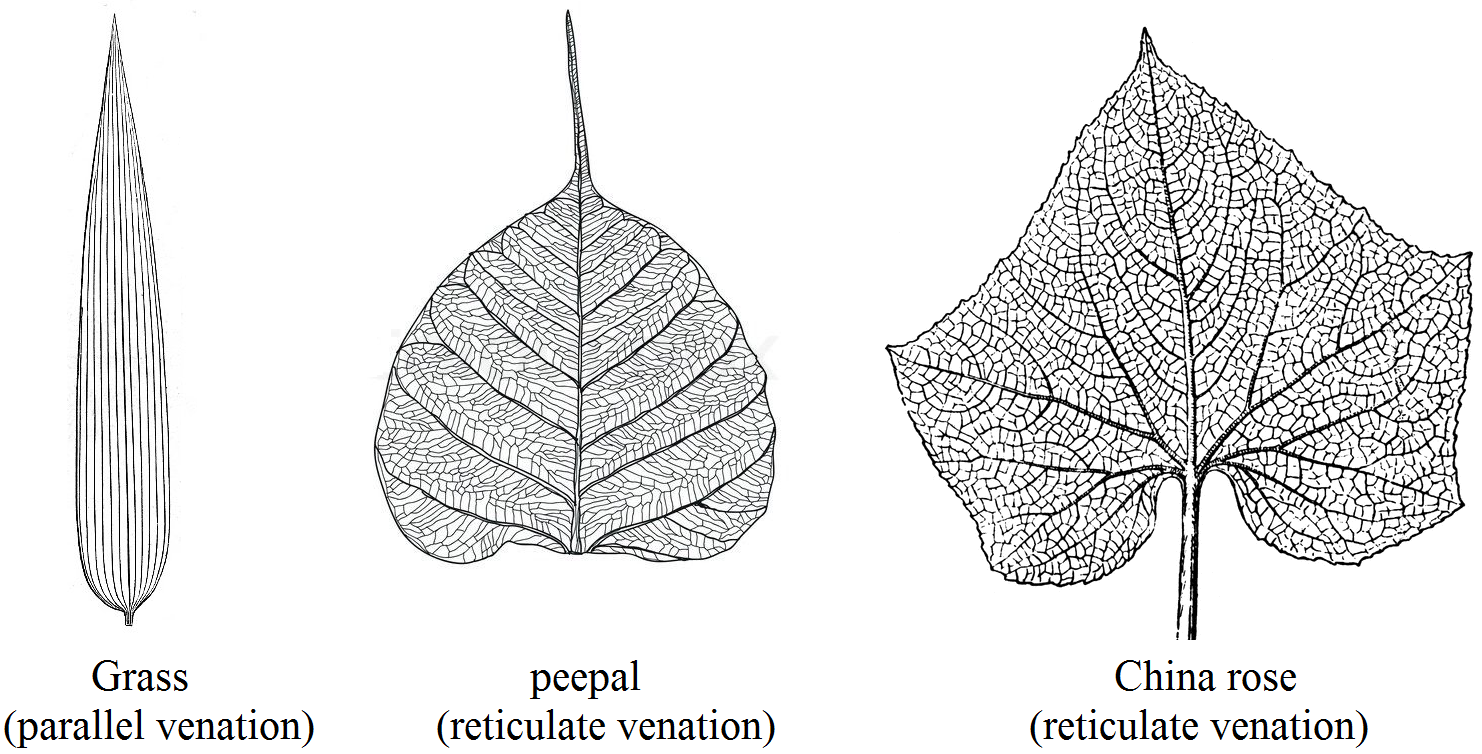
The leaves of tulsi, coriander, and China rose have reticulate venation, whereas maize, grass, and wheat have parallel venation. In leaves with reticulate venation, the veins are arranged in a net-like pattern. In parallel venation, the veins are arranged parallel to one another.
View full question & answer
Question 53 Marks
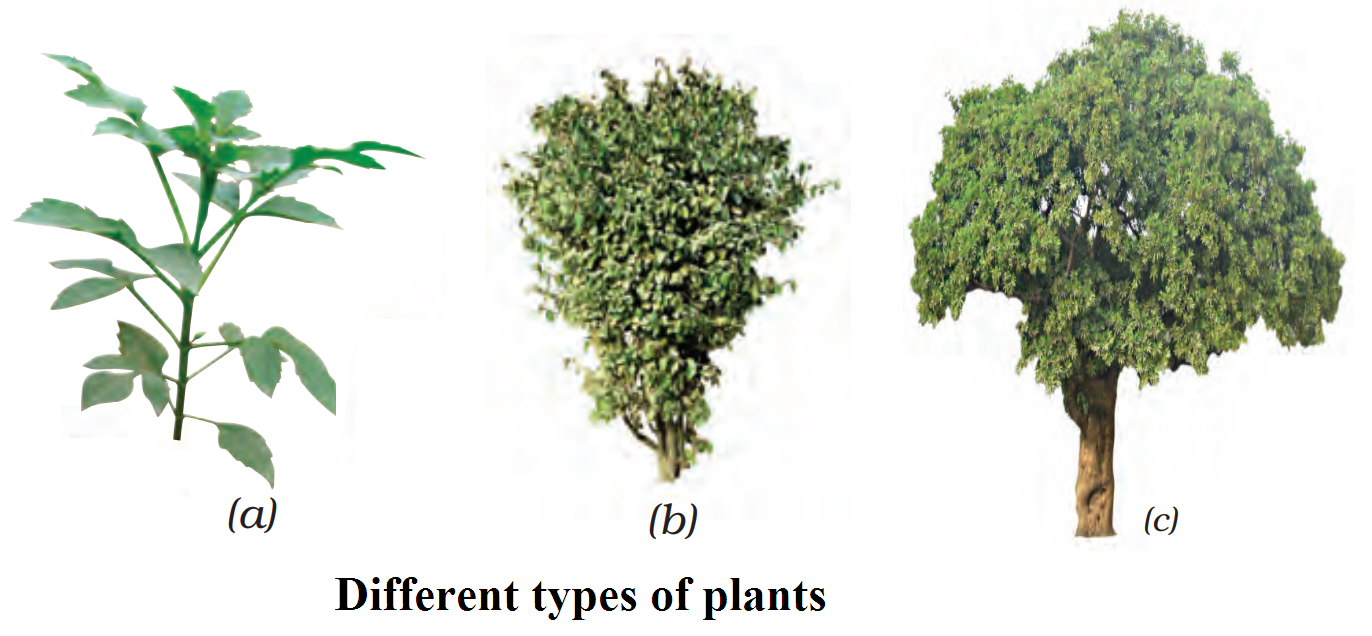
Look carefully at the plants shown in Fig and identify their type. Are they herbs, shrubs or trees? Are they similar in shape? Which category has the biggest plants and which has the smallest?
Answer
  • Close look of these plants make it clear that these plants are not of the same type.
  • Plants and are small and have soft and thin stem. These are called herbs.
  • Plant has many branches arising from the base and its stem is thin but hard. It is a shrub.
  • Plant is tall. Its stem is thick and hard, it is a tree.
View full question & answer
Question 63 Marks
Fill in the blanks with the terms that are listed below:
anther, male, ovary, ovule, petals, pistil, stamen, filament.
Sepals, ______$(a)$______, stamens and ______$(b)$______ are the parts of a flower. Stamen is made up of ______$(c)$______ and ______$(d)$______ and it represents the ______$(e)$______ part of the flower. The female part of the flower is called the ______$(f)$______ . The basal, swollen part of the pistil is called the ______$(g)$______ which contains the ______$(h)$______ .
Answer
Sepals, petals, stamens and pistil are the parts of a flower. Stamen is made up of anther and filament and it represents the male part of the flower. The female part of the flower is called the pistil. The basal, swollen part of the pistil is called the ovary which contains the ovules.
View full question & answer
Question 73 Marks
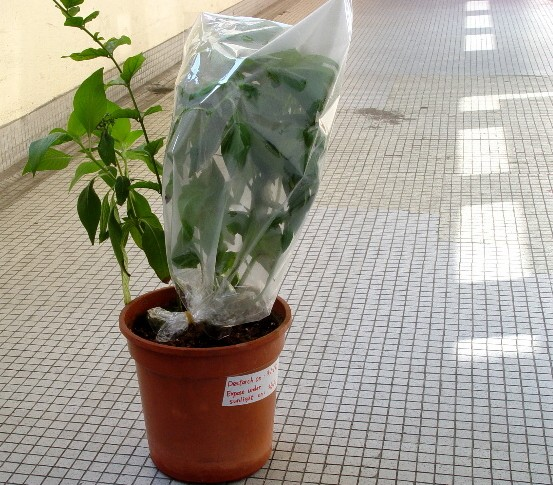
Observe the picture of an activity given below carried out with leaves of plants and polythene bag.

Now answer the following:
  1. Which process is demonstrated in the activity?
  2. When will this activity show better results-on a bright sunny day or a cloudy day?
  3. Mention any one precaution you must take while performing this activity.
Answer
  1. Transpiration.
  2. On a bright sunny day.
  3. The set-up must be airtight/polythene bag must be dry/ the twig must be fresh with 10-12 leaves.
View full question & answer
Question 83 Marks
What are the main functions of roots?
Answer
Main functions of roots are:
  1. Roots absorb water and minerals from soil for the other parts of the plants.
  2. Roots hold the plant firmly to the soil.
  3. Some roots transform to store food, e.g., radish.
  4. Roots of leguminous plants contain symbiotic bacteria which add the fertility of soil by fixing atmospheric nitrogen into nitrates.
View full question & answer
Question 93 Marks
Boojho wanted to test the presence of starch in leaves. He performed the following steps:
  1. He took a leaf and boiled it in water.
  2. He placed the leaf in a petri dish and poured some iodine over it.
He did not get the expected result. Which step did he miss? Explain.
Answer
Boojho did not get the expected results in his experiment because he missed an important step in the procedure.
He did not boil the leaf in alcohol or spirit to remove chlorophyll (green colour) from the leaf. It is necessary to remove chlorophyll because it interferes with the test for starch. The decolourised leaf, on adding iodine turns blue-black, showing the presence of starch.
View full question & answer
Question 103 Marks
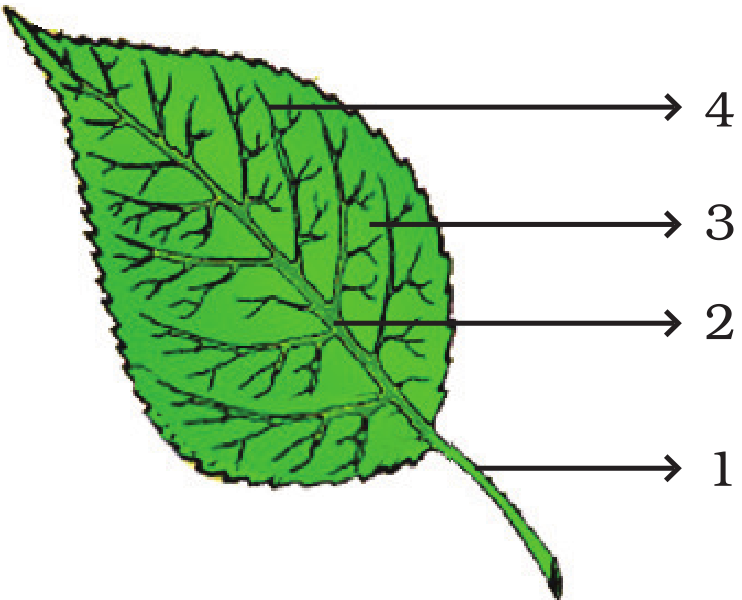
Observe and attempt the questions that follow it.
  1. Label the parts $1, 2, 3$ and $4$ in the diagram.
  2. What type of venation does the leaf has?
  3. What type of venation is seen in grass leaves?
Answer
  1. In the given figure:
  1. Petiole.
  2. Mid rib.
  3. Lamina.
  4. Vein.
  1. The leaf has reticulate venation, the veins in leaf occur in an irregular way forming a net-like structure.
  2. Grass leaves have parallel venation. The vein run parallel to each other on both sides of mid rib.
View full question & answer
Question 113 Marks
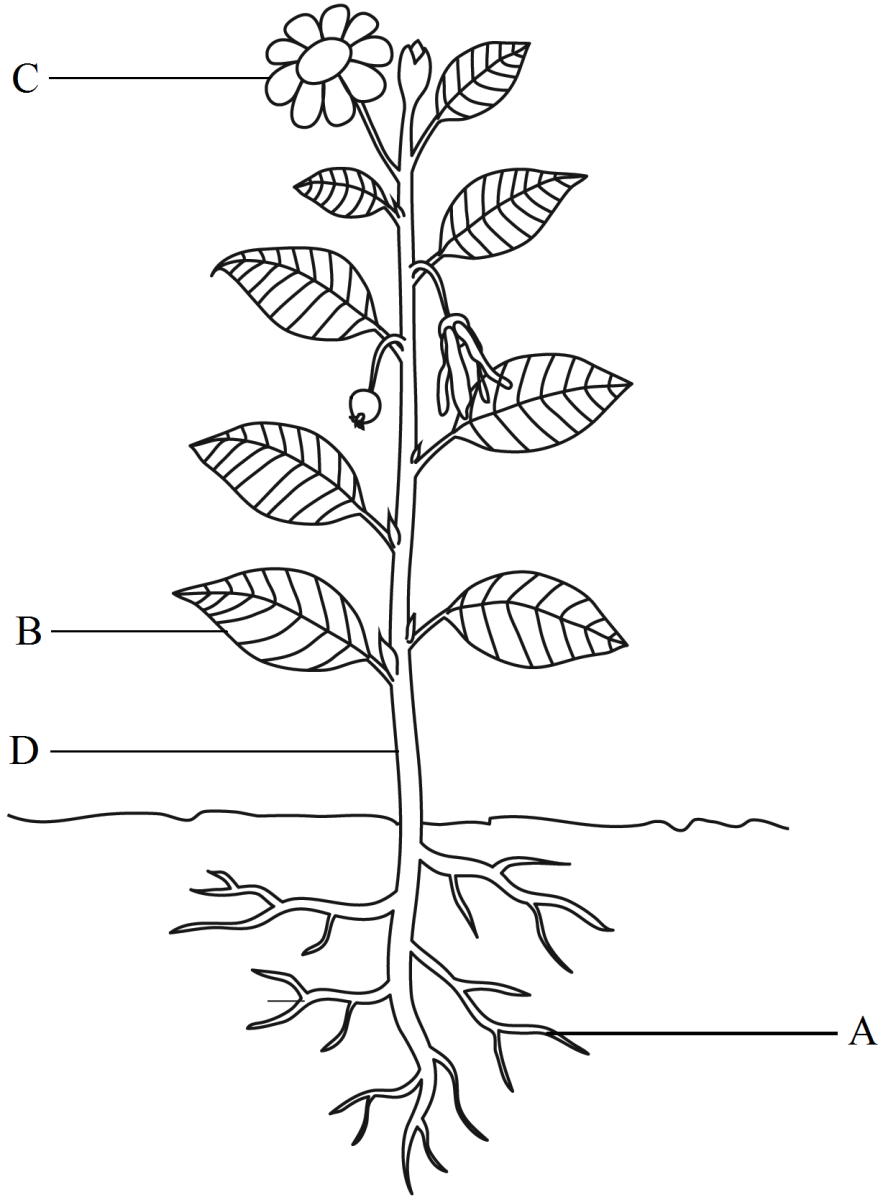
Read the function of parts of a plant given here:
  1. Fixes plant to the soil.
  2. Prepares starch.
  3. Takes part in reproduction.
  4. Supports branches and bears flowers.
In the given diagram, write the names of the parts whose functions you have just read at the appropriate space.
Answer
  1. Root
  2. Leaf
  3. Flower
  4. Stem
View full question & answer
Question 133 Marks
Can the stem of a plant be compared with a street with two–way traffic? Give reason.
Answer
Yes, the stem of a plant can be compared with a street with two ways traffic because movement of substances occur in different directions in it.
  1. It carries water and minerals from the roots to the leaves and other parts of plant in upward direction.
  2. It takes the food prepared by the leaves to other parts of the plant, in downward direction.
View full question & answer
Question 143 Marks
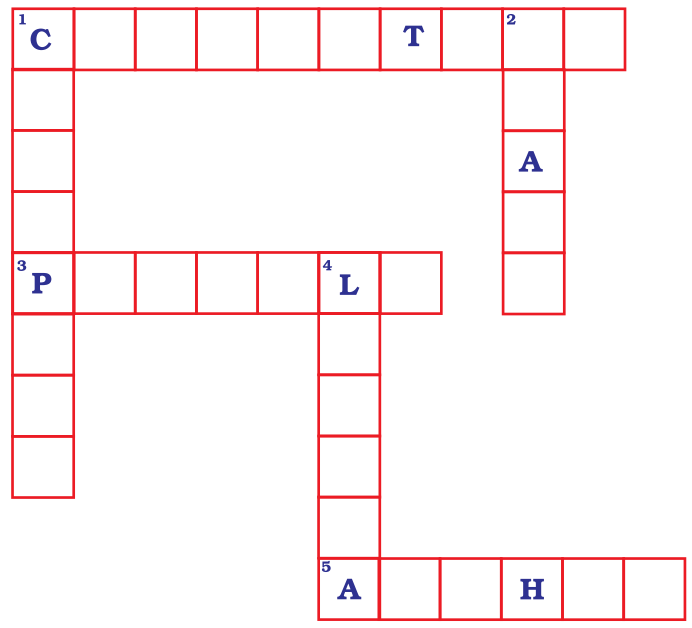
Solve the crossword given in Fig. as per the clues given below it:

Across
  1. The term that describes upward movement of water in a stem.
  2. The part of leaf which is attached to the stem.
  3. This part is attached to the tip of filament.
Down
  1. Plants that are weak and spread on the ground.
  2. Ovules are present in this part of flower.
  3. Is the broad part of leaf.
Answer
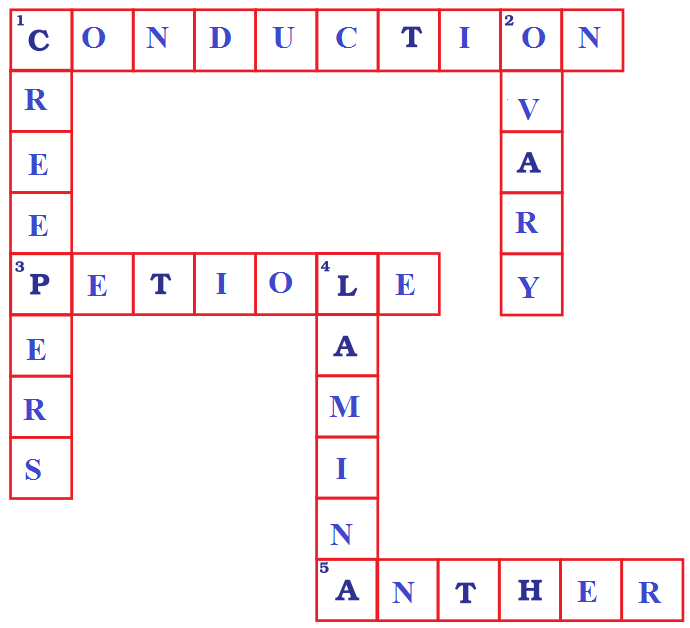
Across
  1. $CONDUCTION.$
  1. $PETIOLE.$
  1. $ANTHER.$
Down
  1. $CREEPERS.$
  1. $OVARY.$
  1. $LAMINA.$
View full question & answer
Question 153 Marks
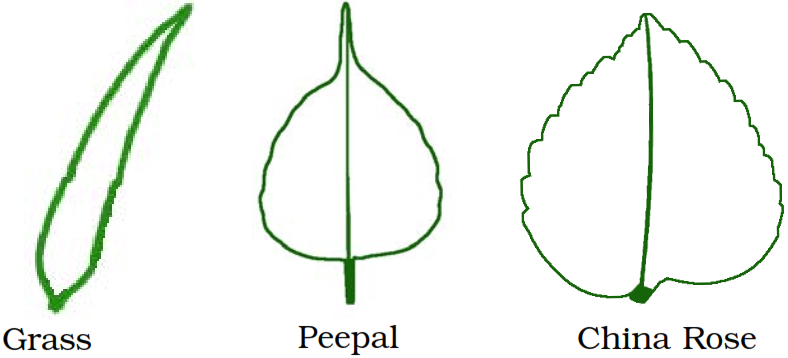
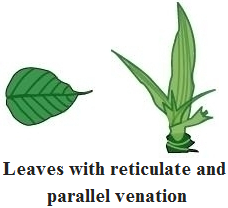
Draw the veins of leaves given in Fig below and write the type of venation.
Answer
The veins of leaves and their type of venation are:
View full question & answer