Questions

1 Marks Question

Take a timed test

73 questions · self-marked practice — reveal the answer and mark yourself.

Question 11 Mark
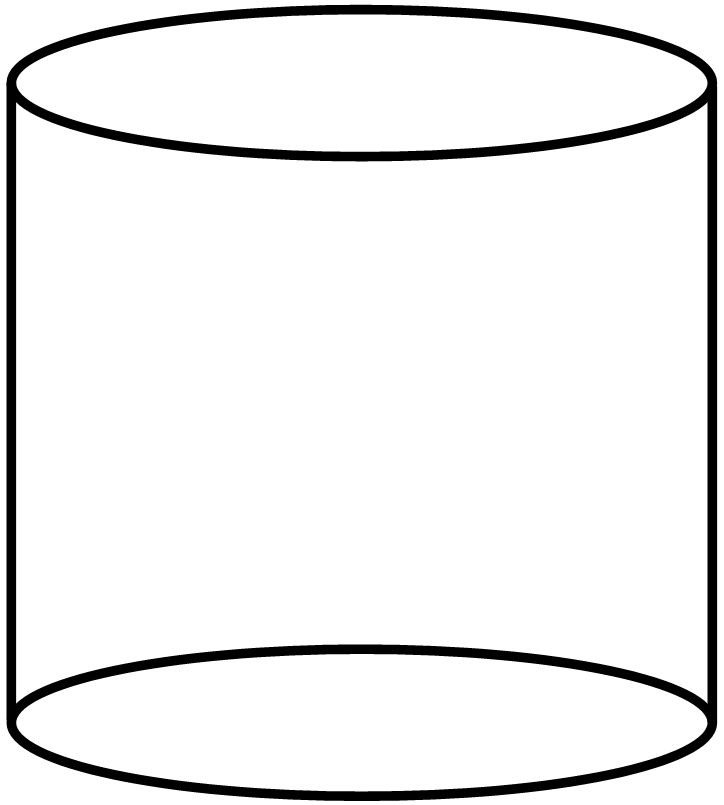
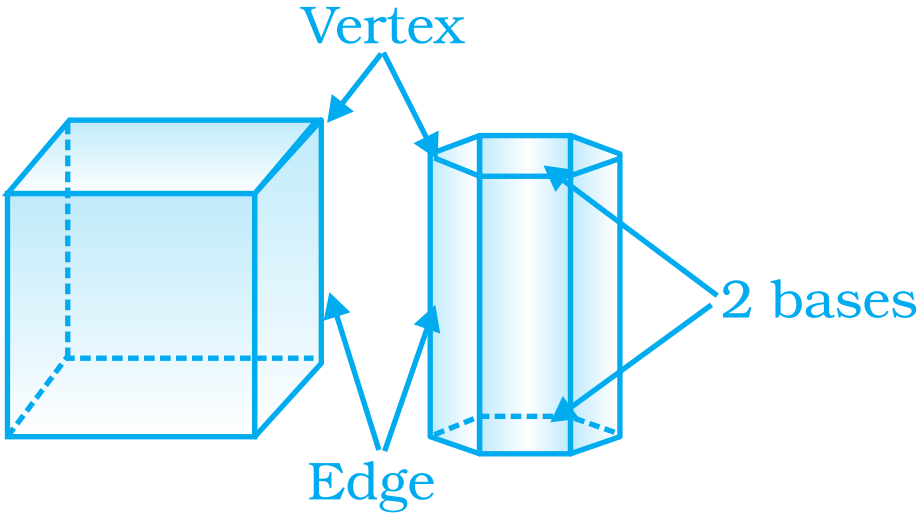
A cylinder is a $3 - D$ shape having two circular faces of different radii.
Answer
In a cylinder, the radii of the two circular faces are same. If the radii of two circular faces are different, then it will become frustum.
View full question & answer
Question 21 Mark
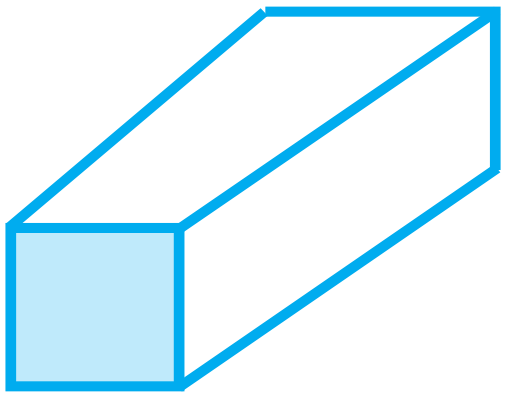
The other name of cuboid is tetrahedron.
Answer
False. Solution: The other name of cuboid is rectangular prism.
View full question & answer
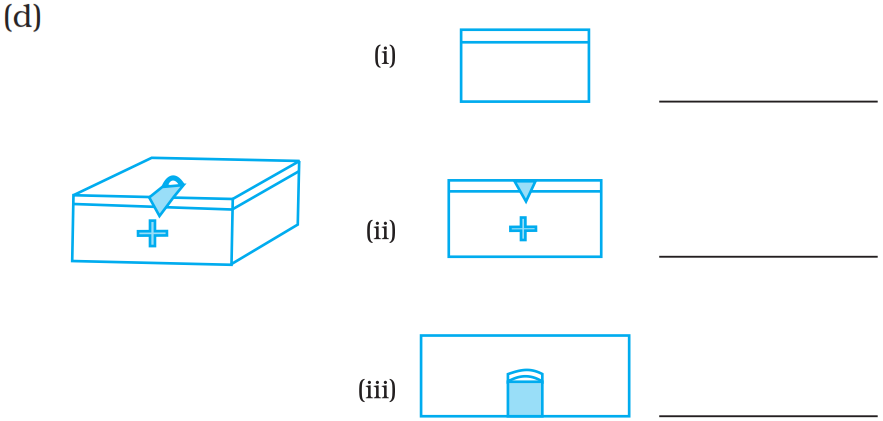
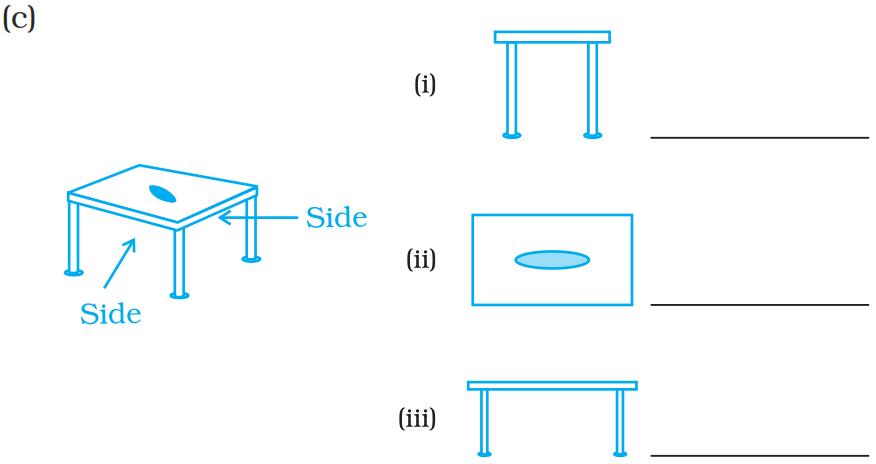
Question 31 Mark

Answer

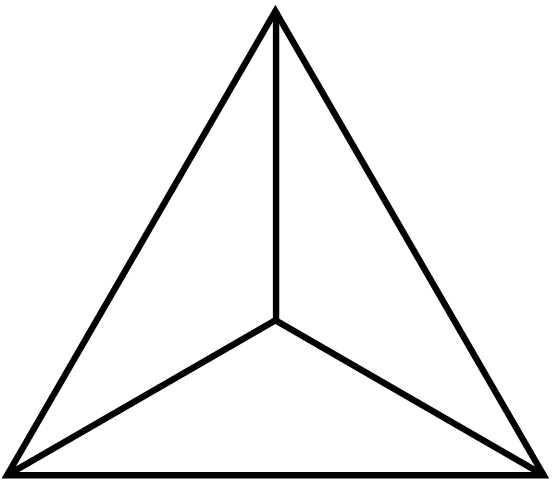
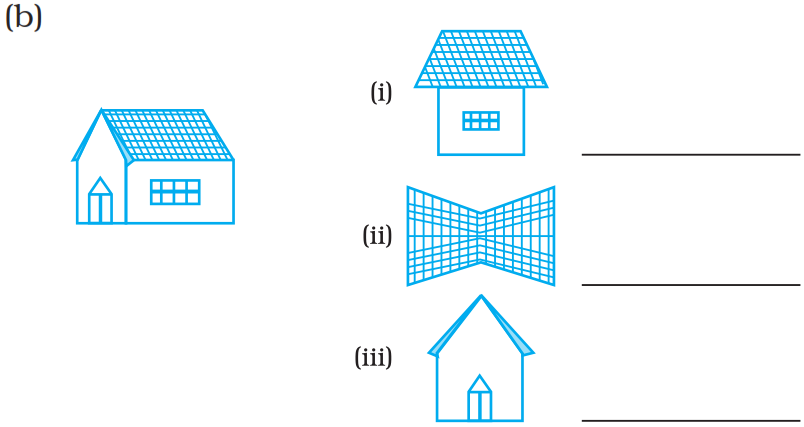
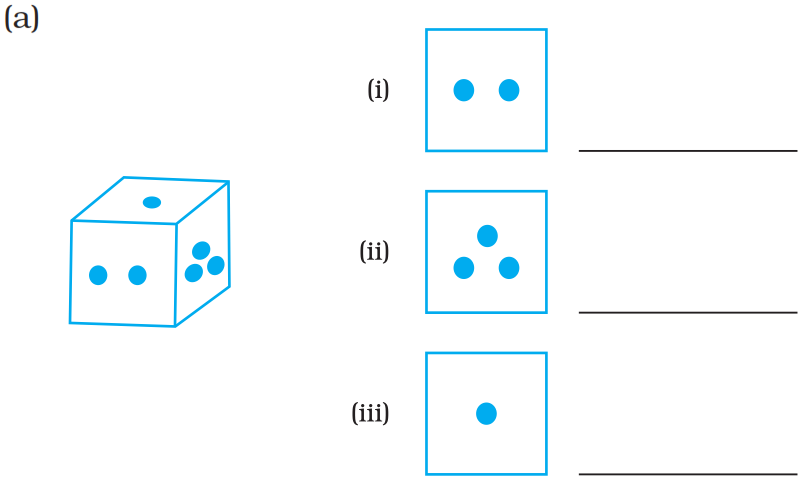
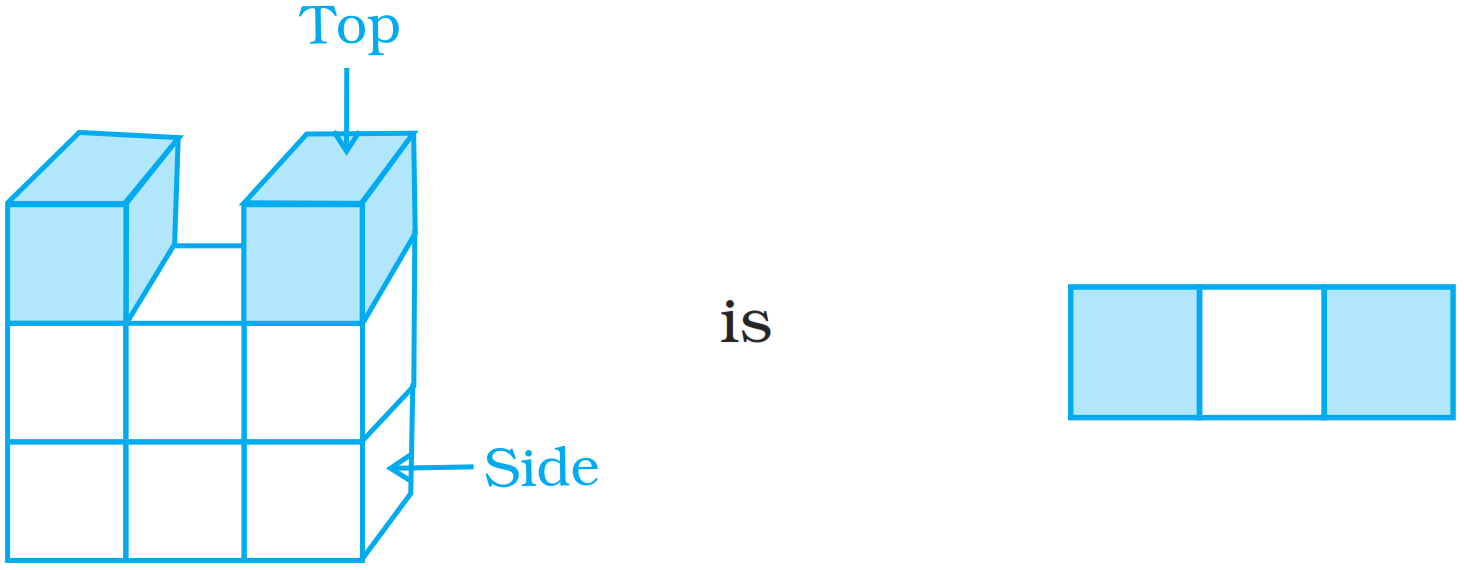
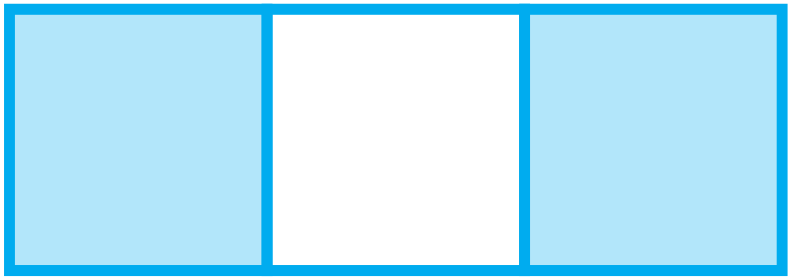
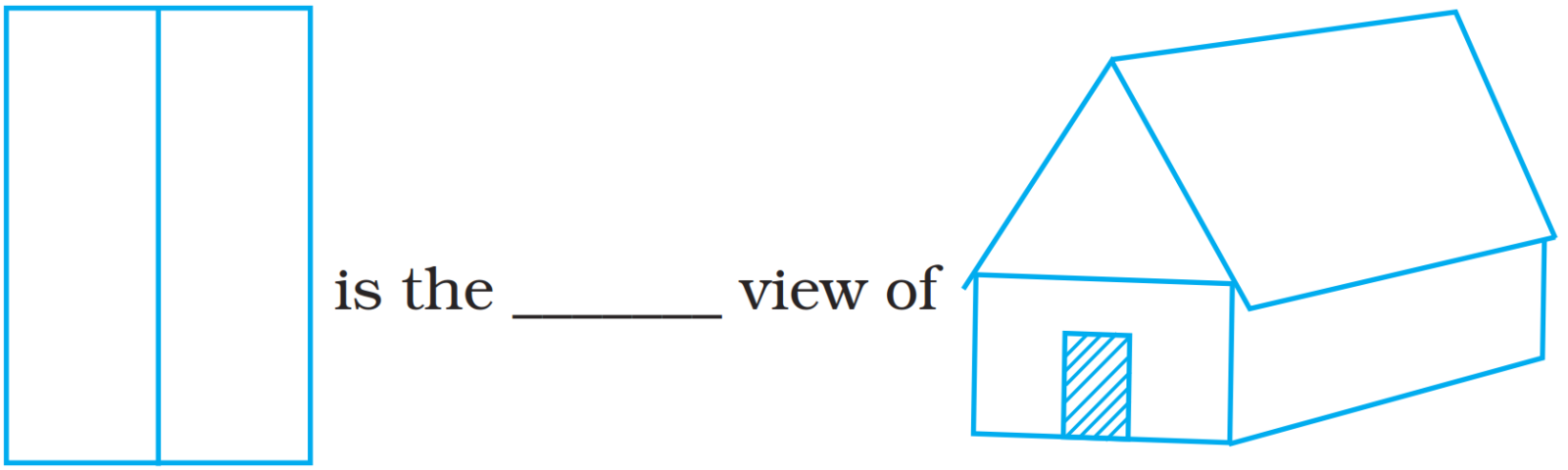
is the top view of the given figure.
Note: If we see the given figure from the top, then view is
View full question & answer
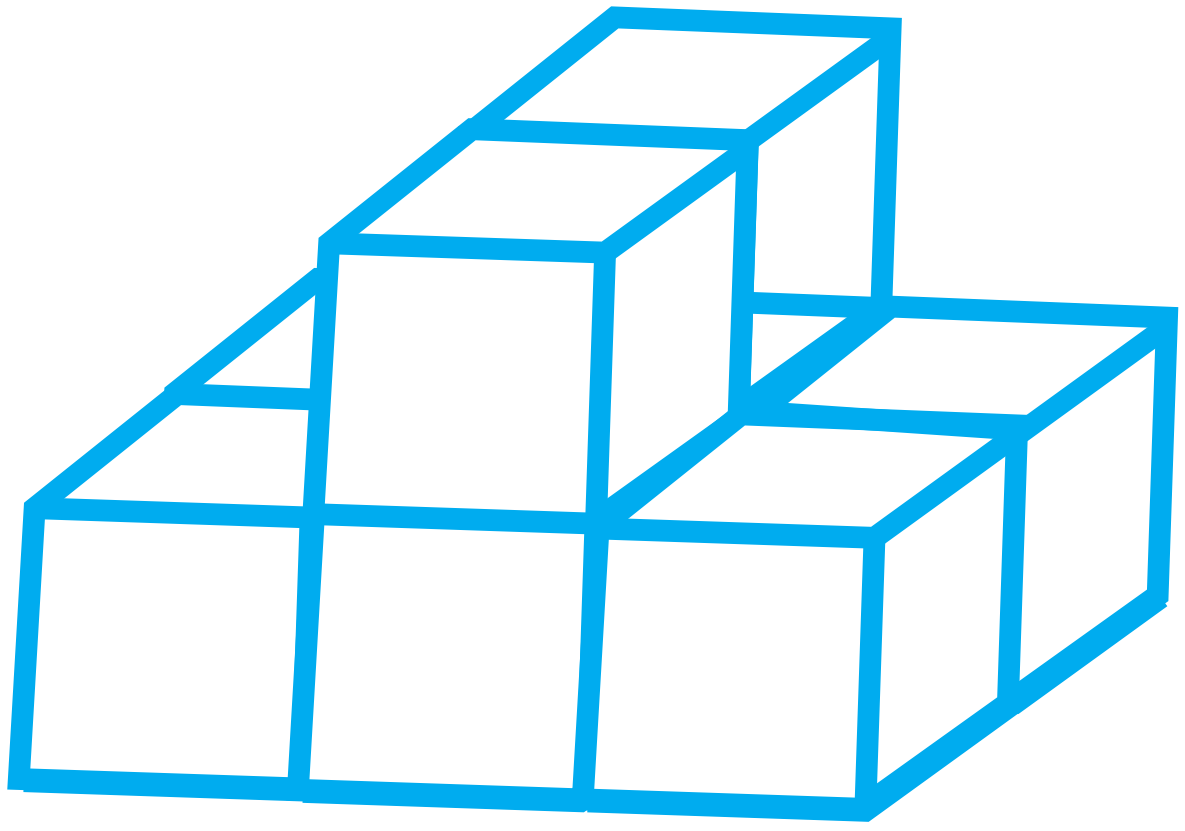
Question 41 Mark
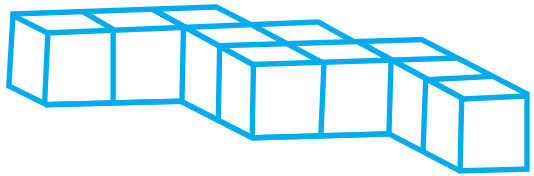
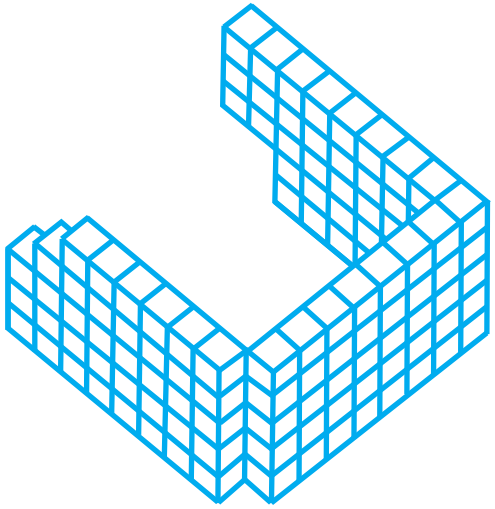
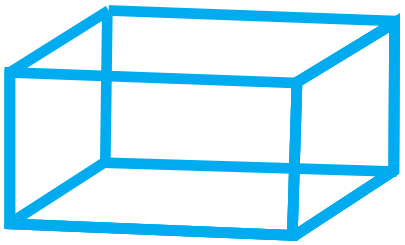
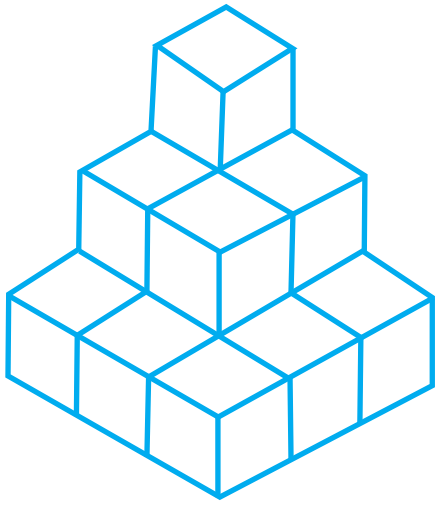
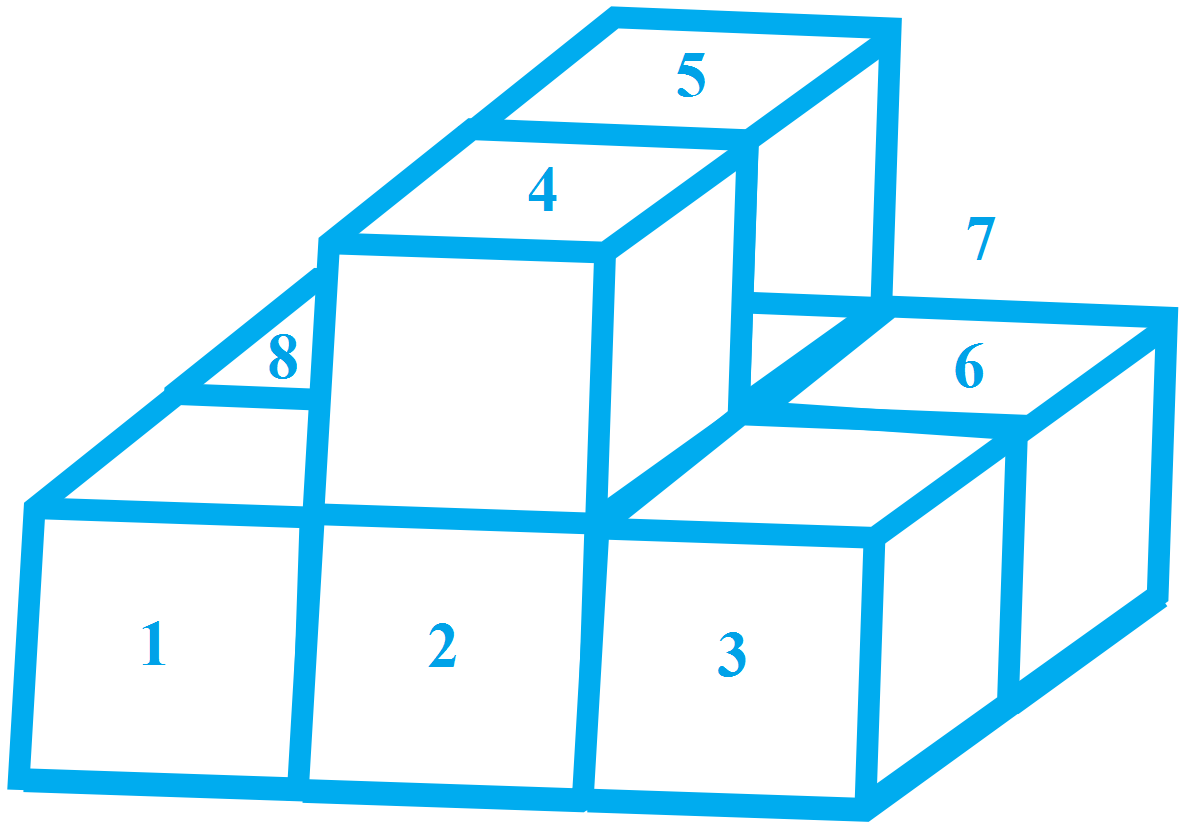
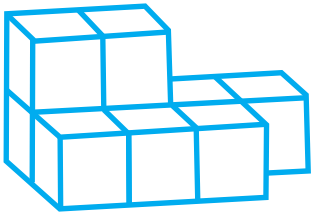
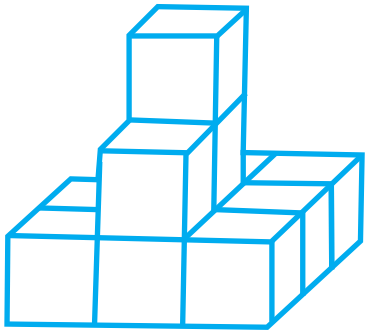
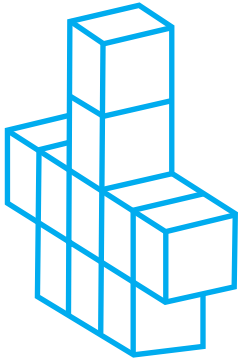
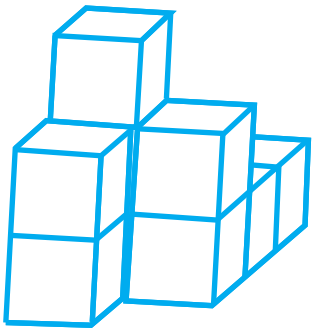
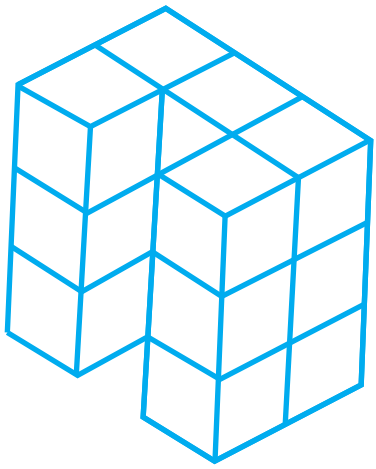
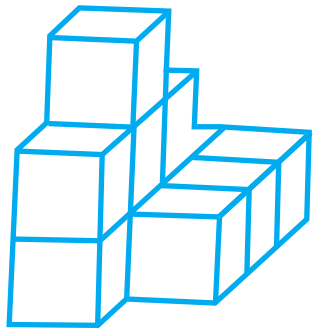
Count the number of cubes in the given shapes.
Answer
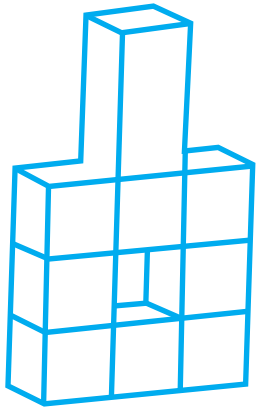
For finding the number of cubes in the given shapes you have to count all cubes which are visible or not. Hence, we have the total number of cubes for the given figures as: 10 cubes.
View full question & answer
Question 61 Mark
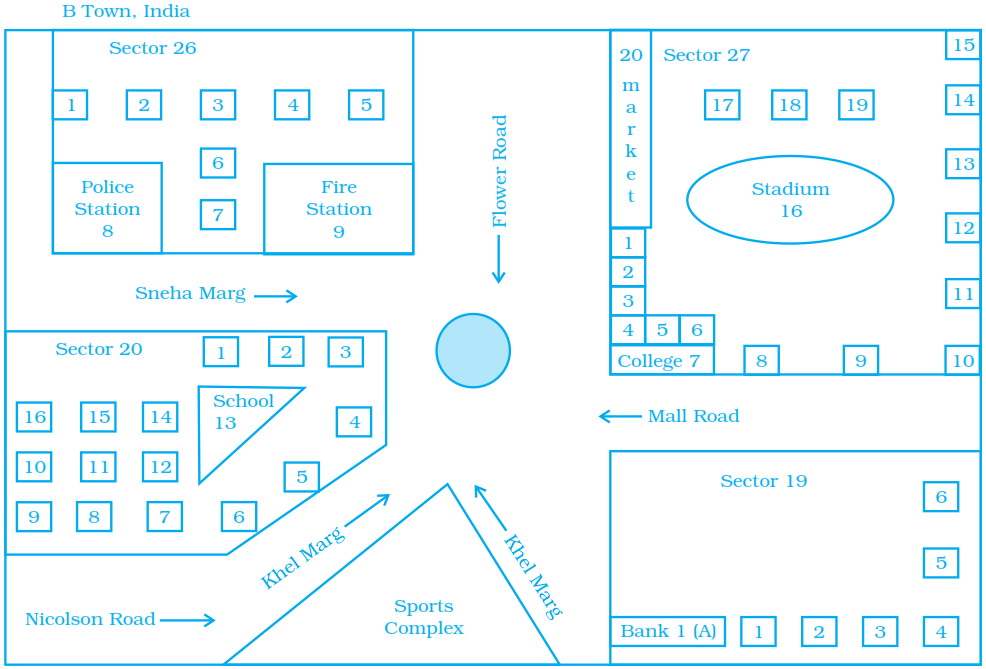
Look at the map given below.Answer the following questions.
$a.$ Which two hospitals are opposite to each other?
$b.$ A person residing at Niti Bagh has to go to Chirag Delhi after dropping her daughter at Asiad Tower. Mention the important landmarks he will pass alongwith the roads taken.
$c.$ Name of which road is similar to the name of some month.
Answer
The given map is not sufficient to answer these questions.
View full question & answer
Question 71 Mark
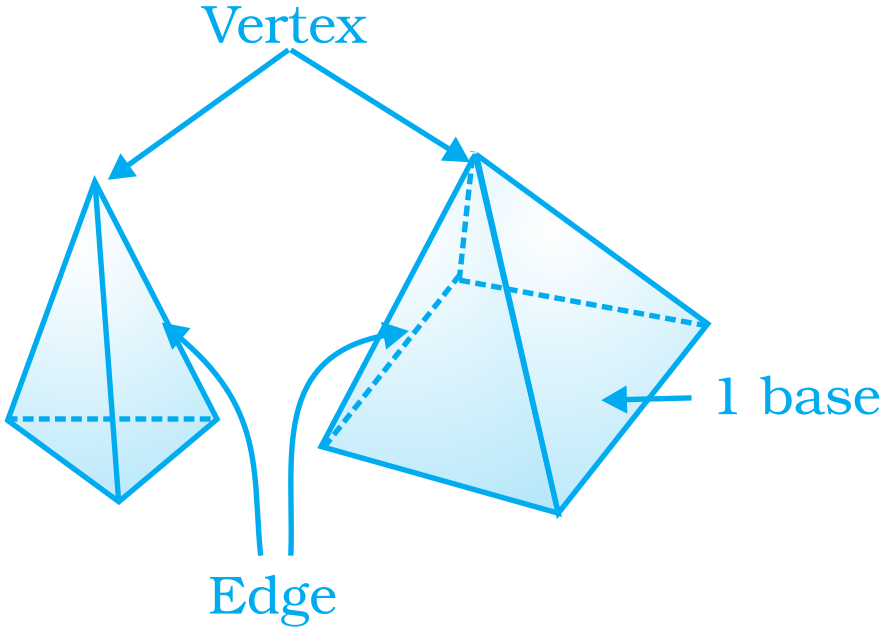
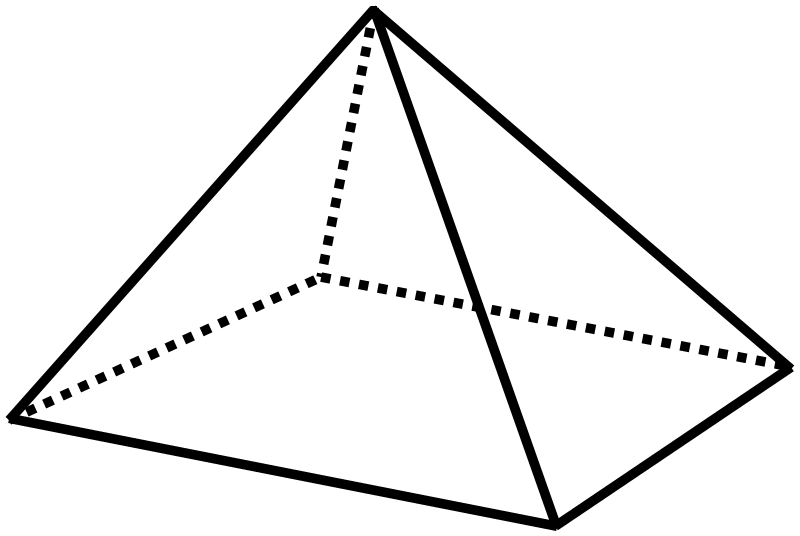
A polyhedron with least number of faces is known as a triangular pyramid.
Answer
True. Solution: A polyhedron have atleast $4$ faces and a four faced polyhedron is known as pyramid.
View full question & answer
Question 81 Mark
If a length of $100\ m$ is represented on a map by $1\ cm,$ then the actual distance corresponding to $2\ cm$ is $200\ m.$
Answer
When a length $100\ m$ is respresented on a map by $1\ cm.$
Then, actual distance corresponding to $2\ cm = 2 × 100 = 200\ m$
View full question & answer
Question 91 Mark
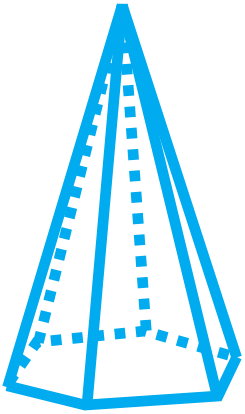
Pyramids do not have a diagonal.
Answer
True.Solution:
yramids are polyhedron with a polygon as its base and other faces as triangles meeting at a common vertex and diagonal is a line joining the two opposite vertex.
So, in pyramids, two opposite vertex cannot be formed.
So, we can say pyramids has no diagonal.
View full question & answer
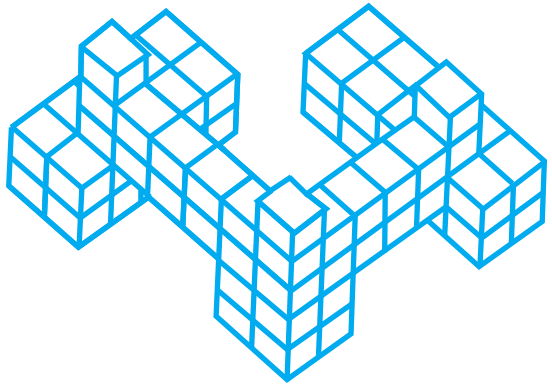
Question 101 Mark
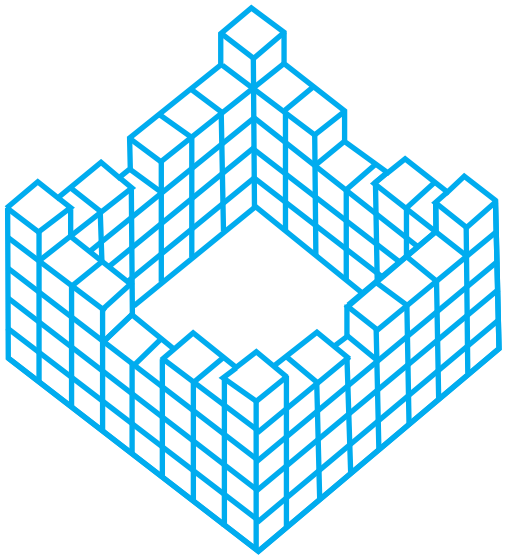
Count the number of cubes in the given shapes.
Answer
For finding the number of cubes in the given shapes you have to count all cubes which are visible or not. Hence, we have the total number of cubes for the given figures as: $113$ cubes.
View full question & answer
Question 131 Mark
All cubes are prisms.
Answer
True. Solution: A cube is a prism because it has a square base, a congruent square top and the lateral sides are parallelograms.
View full question & answer
Question 141 Mark
The actual width of a store room is $280\ cm.$ If the scale chosen to make its drawing is $1 : 7,$ then the width of the room in the drawing will be $40\ cm.$
Answer
Actual width of store room $= 280\ cm$
Given, scale $= 1 : 7$
Width of the room in the drawing will be $=$ Actual Size $\times $ Scale $\Big[\therefore\text{scale}=\frac{\text{Size drawing}}{\text{Acual size}}\Big]$
$=280\times\frac{1}{7}=\frac{280}{7}=40\text{cm}$
View full question & answer
Question 151 Mark
Complete the table given below:
S. No Solid Shape of Solid Number of faces F Number of Vertices V Number of edges E F + V E + 2
$a.$ Cuboid          
$b.$ Triangular Pyramid          
$c.$ Square Pyramid          
$d.$ Rectangular Pyramid          
$e.$ Pentagonal Pyramid          
$f.$ Hexagonal Pyramid          
$g.$ Triangular Prism          
$h.$ Square Prism          
$i.$ Cube          
$j.$ Pentagonal Prism          
$k.$ Octagonal Prism          
$l.$ Heptagonal Prism          
Answer
By using Euler's formula for polyhedron.
S. No Solid Shape of Solid Number of faces F Number of Vertices V Number of edges E F + V E + 2
$a.$ Cuboid $6$ $8$ $12$ $6 + 8 = 14$ $12 + 2 = 14$
$b.$ Triangular Pyramid $4$ $4$ $6$ $4 + 4 =8$ $6 + 2 = 10$
$c.$ Square Pyramid $5$ $5$ $8$ $5 + 5 = 10$ $8 + 2 = 10$
$d.$ Rectangular Pyramid $5$ $5$ $8$ $5 + 5 = 10$ $8 + 2 = 10$
$e.$ Pentagonal Pyramid $6$ $6$ $10$ $6 + 6 = 12$ $10 + 2 = 12$
$f.$ Hexagonal Pyramid $7$ $7$ $12$ $7 + 7 = 14$ $12 + 2 = 14$
$g.$ Triangular Prism $5$ $6$ $9$ $5 + 6 = 11$ $9 + 2 = 11$
$h.$ Square Prism $6$ $8$ $12$ $6 + 8 = 14$ $12 + 2 = 14$
$i.$ Cube $6$ $8$ $12$ $6 + 8 = 14$ $12 + 2 = 14$
$j.$ Pentagonal Prism $7$ $10$ $15$ $7 + 10 = 17$ $15 + 2 = 17$
$k.$ Octagonal Prism $10$ $16$ $24$ $10 + 16 = 26$ $24 + 2 = 26$
$l.$ Heptagonal Prism $9$ $14$ $21$ $9 + 14 = 23$ $21 + 2 = 23$
View full question & answer
Question 161 Mark
In a three-dimensional shape, diagonal is a line segment that joins two vertices that do not lie on the _____ face.
Answer
In a three-dimensional shape, diagonal is a line segment that joins two vertices that do not lie on the same face.
View full question & answer
Question 171 Mark
If actual distance between two places $A$ and $B$ is $110\ km$ and it is represented on a map by $25\ mm$. Then the scale used is ______.
Answer
If actual distance between two places $A$ and $B$ is $110\ km$ and it is represented on a map by $25\ mm.$ Then the scale used is $1 : 44000000.$
Solution:
$\therefore \text{Scale of map}=\frac{\text{Size drawn}}{\text{Actual size}}$
$=\frac{25\text{mm}}{110\text{km}}$
$=\frac{25\text{mm}}{110000000}$
$=\frac{1}{44000000}$
Hence, the scale used is $1 : 44000000$
View full question & answer
Question 201 Mark
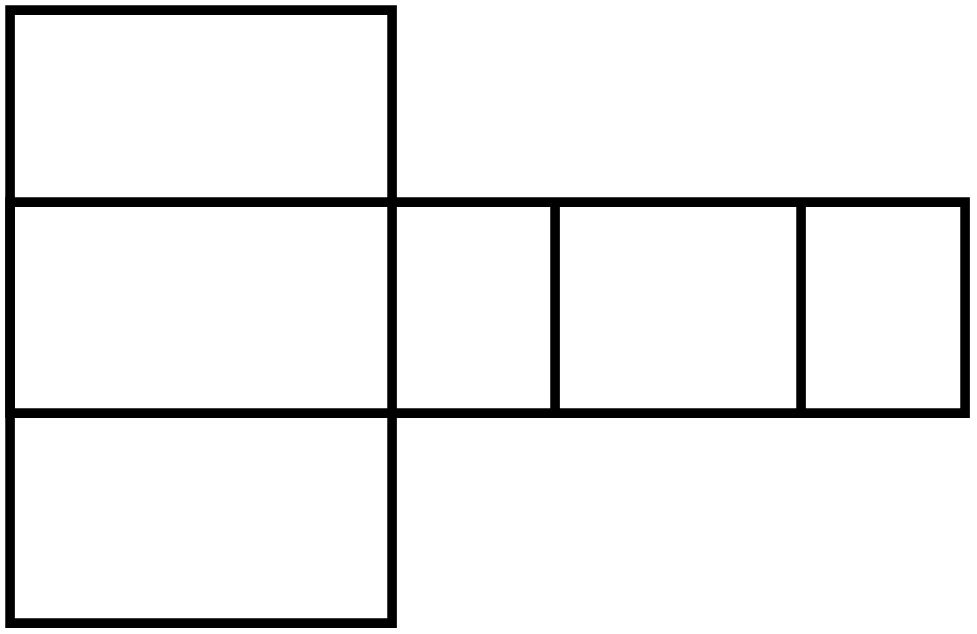
The net of a rectangular prism has ______ rectangles.(Hint: Every square is a rectangle but every rectangle is not a square.)
Answer
The net of a rectangular prism has 6 rectangles.Solution:
View full question & answer
Question 211 Mark
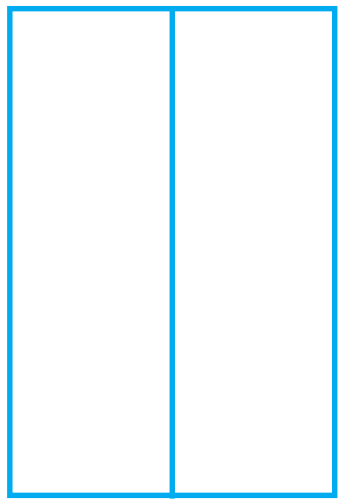
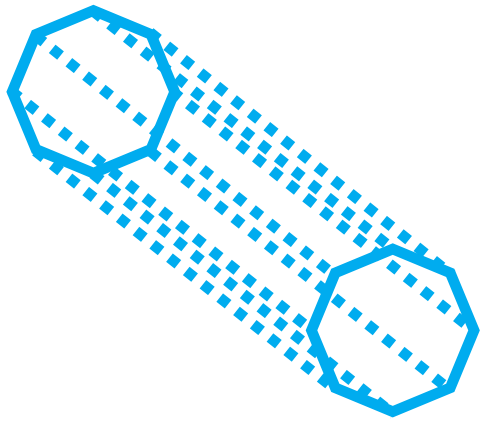
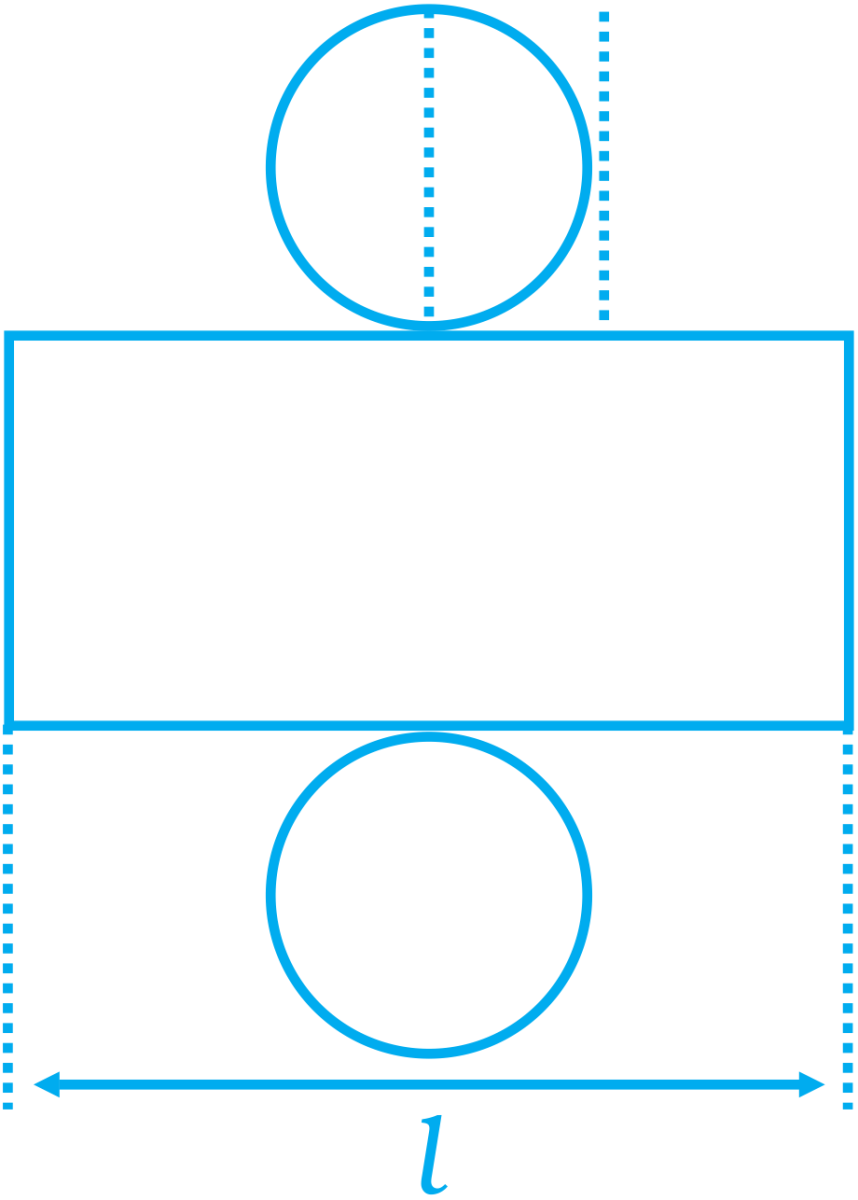
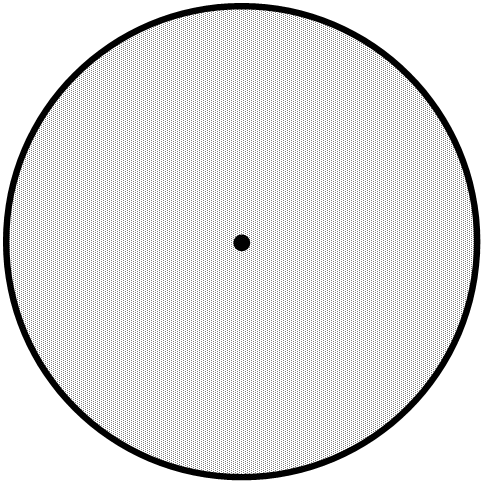
On the basis of the given figure, the length of a rectangle in the net of a cylinder is same as circumference of circles in its net.
Answer
True. Solution: Since, the length of a rectangle in the net of a cylinder is same as circumference of circle in the given net.
View full question & answer
Question 221 Mark
Count the number of cubes in the given shapes.
Answer
For finding the number of cubes in the given shapes you have to count all cubes which are visible or not. Hence, we have the total number of cubes for the given figures as: $14$ cubes.
View full question & answer
Question 251 Mark
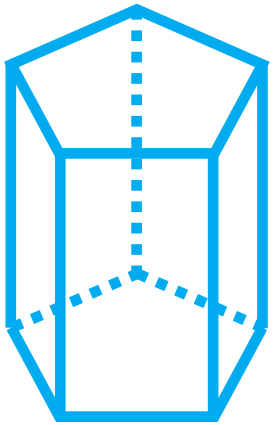
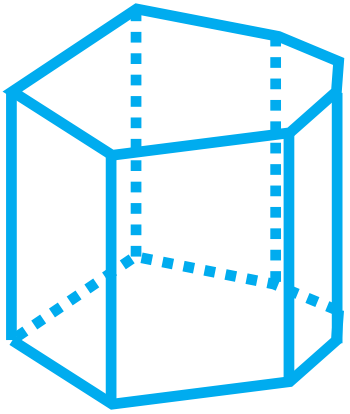
Pentagonal prism has $5$ pentagons.
Answer
 Pentagonal prism has $2$ pentagons, one on the top and other on the base.
View full question & answer
Question 261 Mark
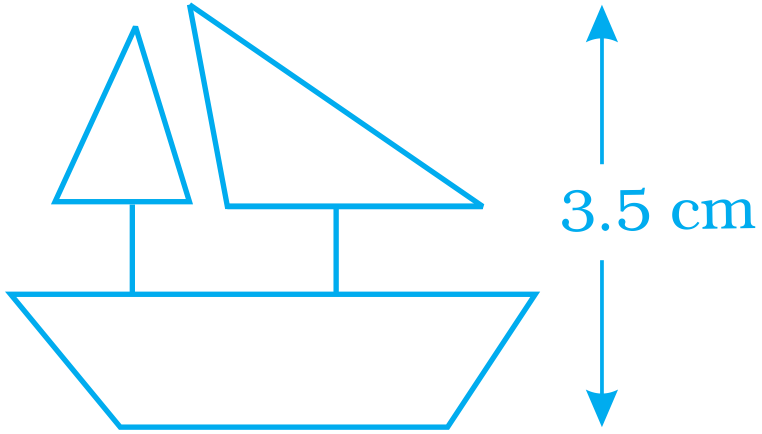
The model of a ship shown is of height $3.5\ cm.$ The actual height of the ship is $210\ cm$  if the scale chosen is $1: 60.$
Answer
Given, actual height $= 210\ cm$ and shown height $= 3.5\ cm.$
Scale chosen is $1 : 60.$
So, $\text{Scale}=\frac{\text{Shown hright}}{\text{Actual height}}=\frac{3.5}{210}$ $=\frac{35}{2100}=\frac{1}{60}=1 :60$
View full question & answer
Question 271 Mark
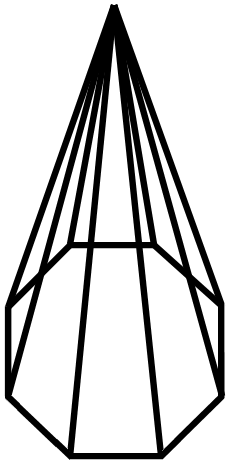
How many faces does the following solids, have? Octagonal Pyramid.
Answer
Octagonal pyrmid has $9$ faces.
View full question & answer
Question 281 Mark
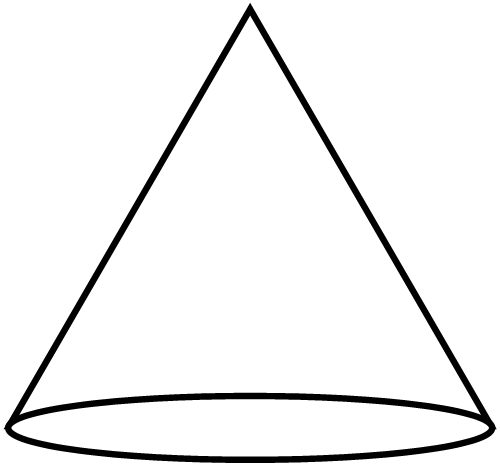
A solid figure with only $1$ vertex is a ______.
Answer
A solid figure with only $1$ vertex is a cone.
Solution:
We know that, cone is a solid figure which has a circular base and its all other surfaces comes to a point called vertex.
View full question & answer
Question 291 Mark
Square prism is also called a _______.
Answer
Square prism is also called a cube. Solution: We know that, a square prism has a square base, a congruent square top and the sides are parallelograms. So, it is also a cube.
View full question & answer
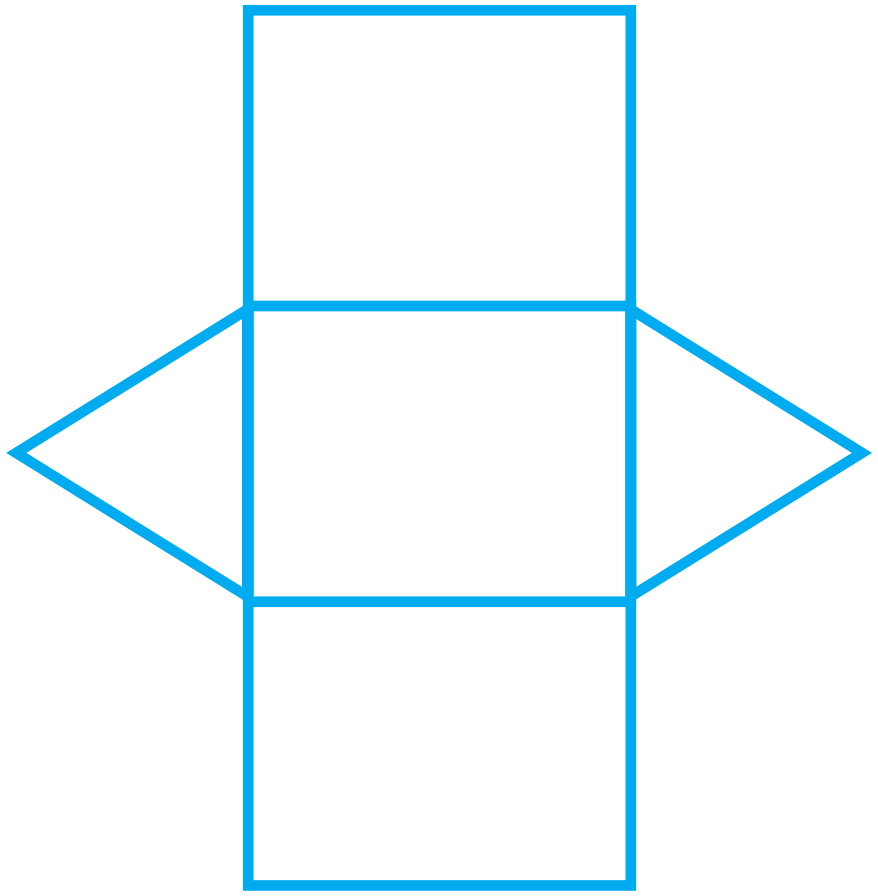
Question 301 Mark
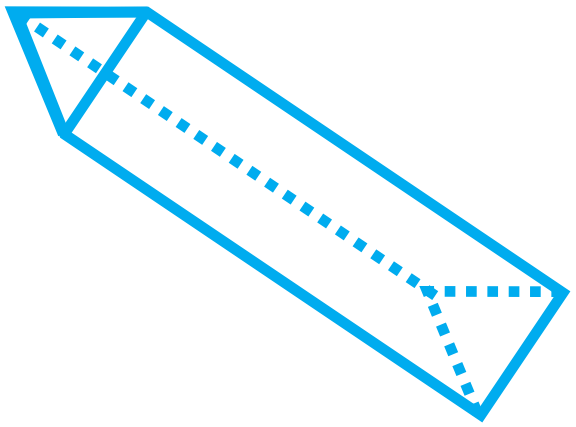
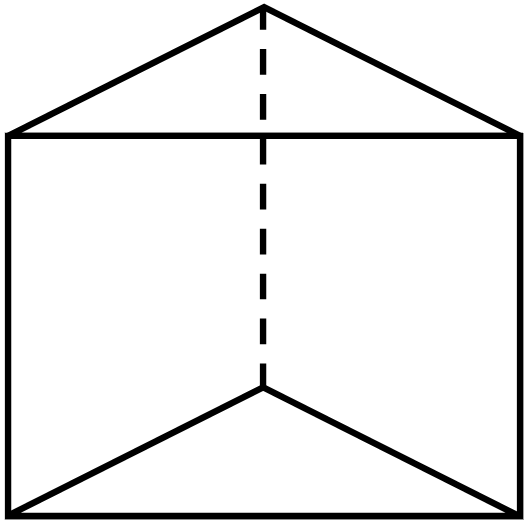
The given net can be folded to make a _____.
Answer
The given net can be folded to make a Prism i.e..Solution:
View full question & answer
Question 311 Mark
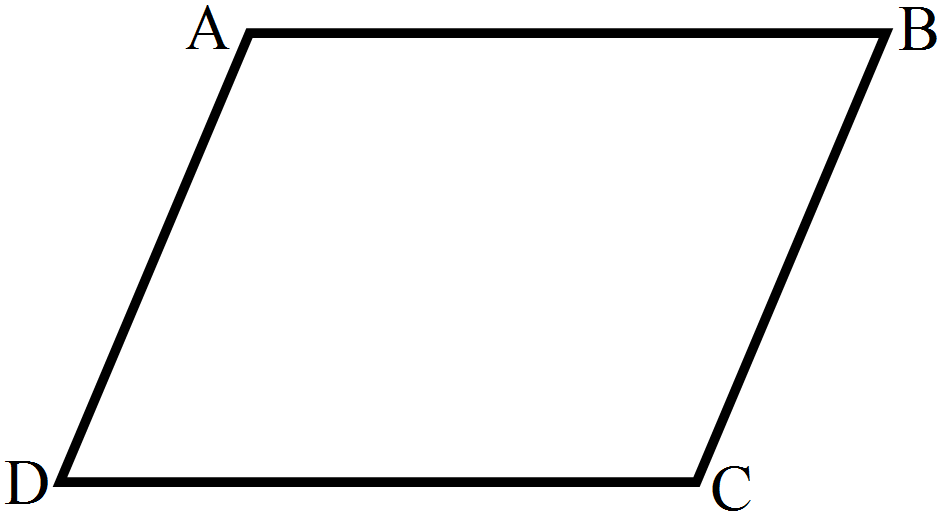
The number of edges in a parallelogram is $4.$
Answer
$AB, BC, CD$ and $DA$ are the edges of a parallelogram $ABCD.$
View full question & answer
Question 321 Mark
Count the number of cubes in the given shapes.
Answer
For finding the number of cubes in the given shapes you have to count all cubes which are visible or not. Hence, we have the total number of cubes for the given figures as: $66$ cubes.
View full question & answer
Question 341 Mark
A polyhedron can have $10$ faces, $20$ edges and $15$ vertices.
Answer
We know that, Euler's formula satisfies for every polyhedron.
i.e. $F + V - E = 2$
Here, $F = 10, E = 20$
$V = 15$
On putting thes values in the Euler's formula, we get.
$10 + 15 - 20 = 2$
$\Rightarrow 25 - 20 = 2$
$\Rightarrow5\neq2$
Hence, the given values does not satisfy the Euler's formula.
View full question & answer
Question 351 Mark
Every solid shape has a unique net.
Answer
False. Solution: A net is a flat figure that can be folded to form a closed, three-dimensional object. So, for an object, more than one net is possible but it is not true for the objects of all shapes.
View full question & answer
Question 361 Mark
A pyramid on an n sided polygon has _____ faces.
Answer
A pyramid on an $n$ sided polygon has $n + 1$ faces.
Solution:
We know that, in a pyramid, the number of faces is $1$ more than the number of sides of the polygohal base.
View full question & answer
Question 371 Mark

The number of cubes in are _____.
Answer
The number of cubes in are $8.$
Solution:

The number of cubes in the given figure are $8.$
View full question & answer
Question 381 Mark
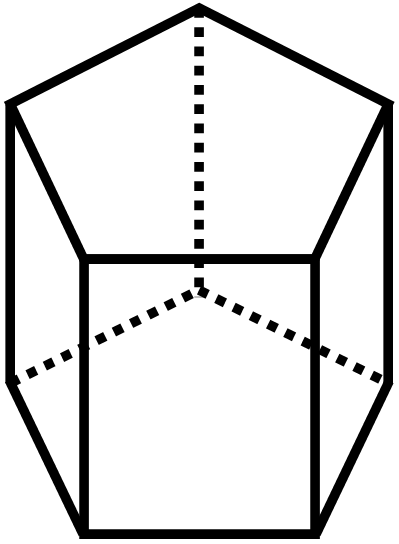
A pentagonal prism has ______ faces.
Answer
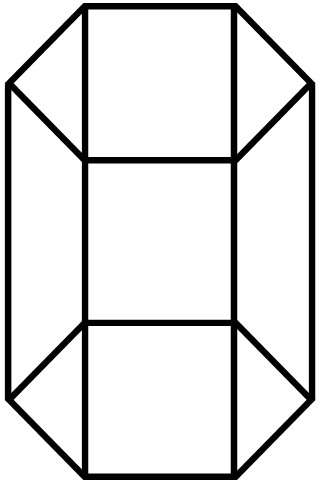
A pentagonal prism has $7$ faces. Solution:As shown in below figure.
View full question & answer
Question 391 Mark
Count the number of cubes in the given shapes.
Answer
For finding the number of cubes in the given shapes you have to count all cubes which are visible or not. Hence, we have the total number of cubes for the given figures as$:9$ cubes.
View full question & answer
Question 401 Mark
If a solid shape has $12$ faces and $20$ vertices, then the number of edges in this solid is _____.
Answer
If a solid shape has $12$ faces and $20$ vertices, then the number of edges in this solid is $30.$
​​​​​​​Solution:
Given, faces, $F = 12,$ vertices, $V = 20$
Now, on putting the value of $F$ and $V$ in the Euler's formula, we get $12 + 20 - E = 2$
$\Rightarrow 32 - E = 2$
$\Rightarrow 32 - 2 = E$
$\Rightarrow E = 30$
Hence, the number of edges $= 30$
View full question & answer
Question 431 Mark
Euler’s formula is true for all three-dimensional shapes.
Answer
Euler’s formula is true only for polyhedrons, i.e. $F+V-E = 2$
Where $F =$ faces,
$V =$ vertices
$E =$ edges
 
View full question & answer
Question 451 Mark
If a pyramid has a hexagonal base, then the number of vertices is ______.
Answer
If a pyramid has a hexagonal base, then the number of vertices is $7.$
Solution:
We know that, in a pyramid the number of vertices is $1$ more than the number of sides of the polygonal base.
View full question & answer
Question 461 Mark
How many vertices does each of the following solids have? Tetrahedron.
Answer
Tetrahedron has 4 vertices.
View full question & answer
Question 471 Mark
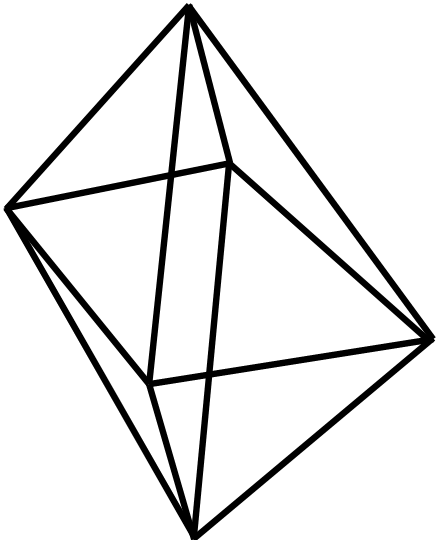
Regular octahedron has $8$ congruent faces which are isosceles triangles.
Answer
A regular octahedron is obtained by joining two congruent square pyramids such that the vertices of the two square pyramids coincide. It has eight congruent equilateral triangular faces.
View full question & answer
Question 501 Mark
Count the number of cubes in the given shapes.
Answer
For finding the number of cubes in the given shapes you have to count all cubes which are visible or not. Hence, we have the total number of cubes for the given figures as: $11$ cubes
View full question & answer
Question 511 Mark
Count the number of cubes in the given shapes.
Answer
For finding the number of cubes in the given shapes you have to count all cubes which are visible or not. Hence, we have the total number of cubes for the given figures as: $110$ cubes.
View full question & answer
Question 521 Mark
Total number of faces in a pyramid which has eight edges is ______.
Answer
Total number of faces in a pyramid which has eight edges is $5,$ i.e..Solution:
View full question & answer
Question 561 Mark
If the sum of number of vertices and faces in a polyhedron is $14,$ then the number of edges in that shape is ______.
Answer
If the sum of number of vertices and faces in a polyhedron is $14,$ then the number of edges in that shape is $12.$
Solution:
Given, the sum of number of vertices and faces in a polyhedron is $14,$ i.e. $V + F + = 14$
We know that, Euler's formula, $F + V - E = 2$ for any polyhedron.
$\Rightarrow 14 - E = 2$
$\Rightarrow 14 - 2 = E$
$\Rightarrow E = 12$
Hence, the number of edges are $12.$
View full question & answer
Question 571 Mark
Every cylinder has $2$ opposite faces as congruent circles, so it is also a prism.
Answer
False. Solution: The cylinder has a congruent cross-section which is a circle, so it could be called as a circular prism.
View full question & answer
Question 581 Mark
How many edges does following solids have$?$ Octagonal Pyramid.
Answer
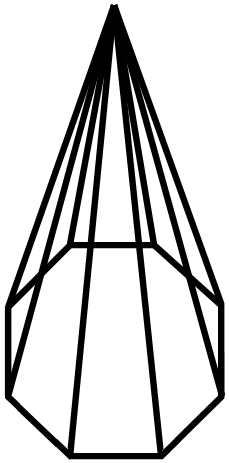
Octagonal pyramid has $16$ edges.
View full question & answer
Question 591 Mark
A regular polyhedron is a solid made up of ______ faces.
Answer
A regular polyhedron is a solid made up of congruent faces. Solution: [according to the definition of regular polyhedron]
View full question & answer
Question 601 Mark
Count the number of cubes in the given shapes.
Answer
For finding the number of cubes in the given shapes you have to count all cubes which are visible or not. Hence, we have the total number of cubes for the given figures as:
$10$ cubes.
View full question & answer
Question 611 Mark
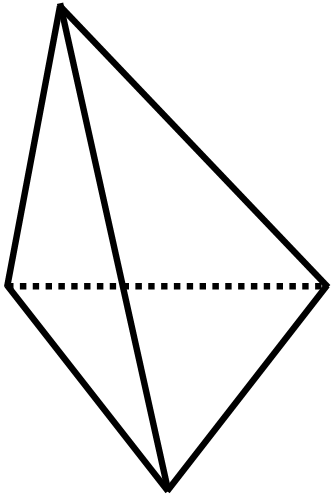
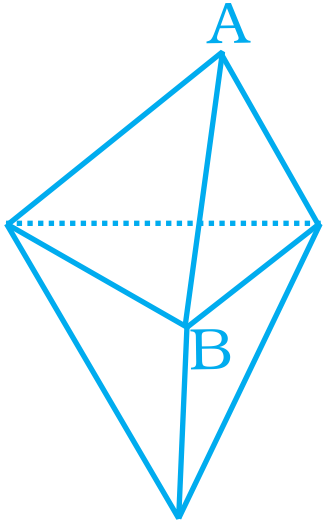
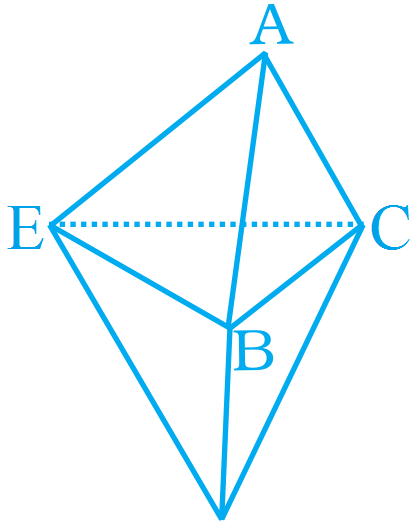
In the figure
the number of faces meeting at $B$ is ________.
Answer
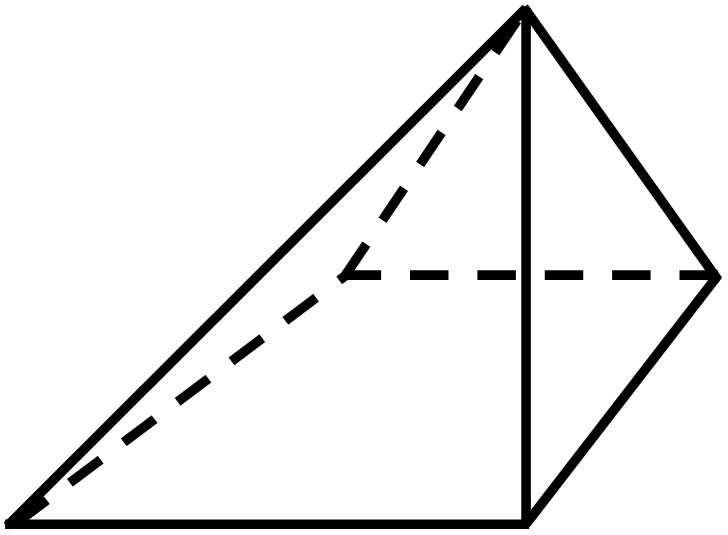
In the figure the number of faces meeting at $B$ is $4.$
Solution:

Here, faces are $EDB, DCB, EAB$ and $ACB.$
View full question & answer
Question 621 Mark
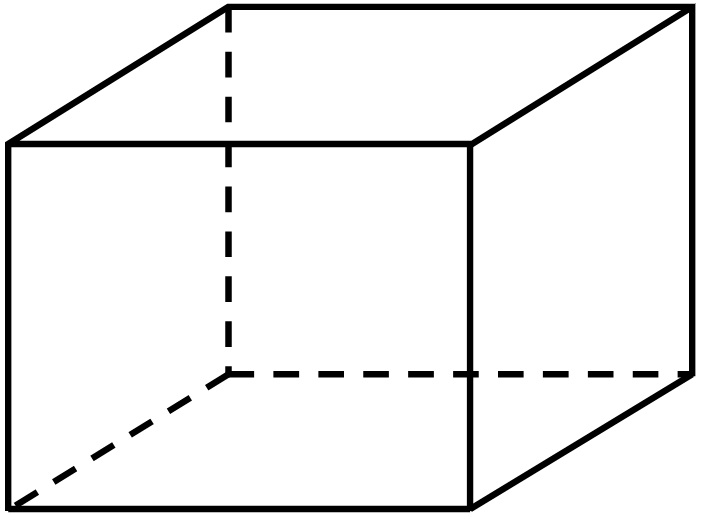
Rectangular prism is also called a _______.
Answer
Rectangular prism is also called a cuboid.
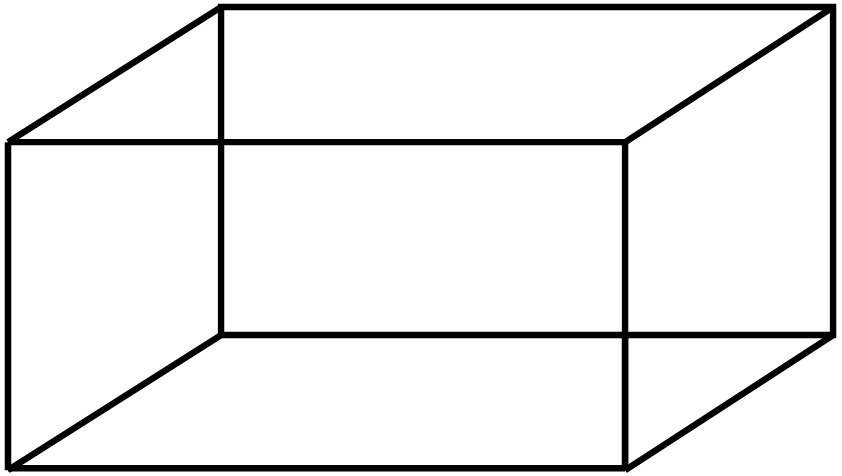
Solution: Since, a rectangular prism has $8$ vertices, $12$ edges and $6$ rectangular faces as cuboid shown in below figure.
View full question & answer
Question 631 Mark
How many vertices does the following solids have? Octagonal Pyramid.
Answer
Octagonal pyramid has one vertex.
View full question & answer
Question 641 Mark
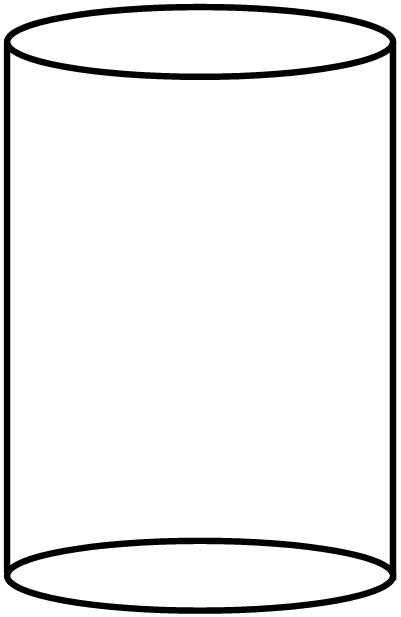
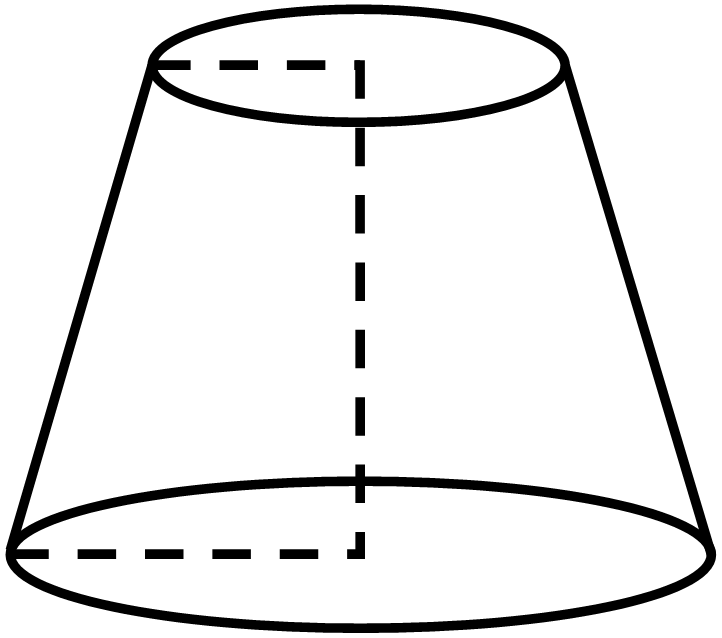
The given shape is a cylinder.
Answer
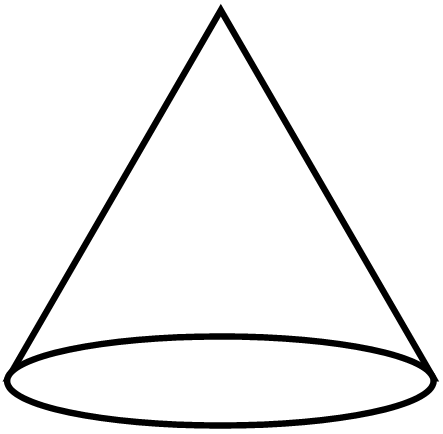
False. Solution: The given shape is a fustum. The shape of a cylinder is,
View full question & answer
Question 661 Mark
Count the number of cubes in the given shapes.
Answer
For finding the number of cubes in the given shapes you have to count all cubes which are visible or not. Hence, we have the total number of cubes for the given figures as: $10$ cubes.
View full question & answer
Question 671 Mark
Total number of regular polyhedra is ______.A prism has two bases, and a pyramid has one base.
Prisms
Pyramids
A Prism is a polyhedron that has two parallel, congruent bases. The bases can be any polygon. The other faces are parallelograms.
A pyramid is a polyhedron that has one base. The base can be any polygon. The other faces are triangles.
Answer
Total number of regular polyhedra is five, i.e. cube, octahedron, tetrahedron, dodecahedron and icosahedron.
View full question & answer
Question 681 Mark
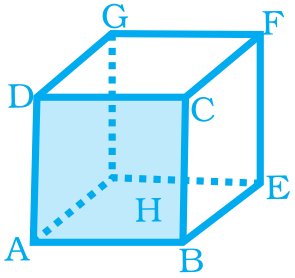
A cuboid has atleast $4$ diagonals.
Answer
True. Solution: In a cuboid, the number of diagonals is not least then $4.$
View full question & answer
Question 691 Mark
Count the number of cubes in the given shapes.
Answer
For finding the number of cubes in the given shapes you have to count all cubes which are visible or not. Hence, we have the total number of cubes for the given figures as:$9$ cubes.
View full question & answer
Question 701 Mark
How many vertices does each of the following solids have? Hexagonal Prism.
Answer
Hexagonal prism has $12$ vertices.
View full question & answer
Question 711 Mark
If $4\ km$ on a map is represented by $1\ cm,$ then $16\ km$ is represented by ______ $cm.$
Answer
If $4\ km$ on a map is represented by $1\ cm,$ then $16\  km$ is represented by $\frac{1}{4}\text{cm}.$
View full question & answer
Question 721 Mark
Count the number of cubes in the given shapes.
Answer
For finding the number of cubes in the given shapes you have to count all cubes which are visible or not. Hence, we have the total number of cubes for the given figures as$: 15$ cubes.
View full question & answer
Question 731 Mark
Count the number of cubes in the given shapes.
Answer
For finding the number of cubes in the given shapes you have to count all cubes which are visible or not. Hence, we have the total number of cubes for the given figures as$: 11$ cubes.
View full question & answer