Questions

M.C.Q

Take a timed test

74 questions · auto-graded multiple-choice test.

MCQ 11 Mark
The bending of the shoot of a plant in response to light is called:
  • A
    Geotropism.
  • Phototropism.
  • C
    Thigmotropism.
  • D
    Photonasty.
Answer
Correct option: B.
Phototropism.
Photo means light and tropism means movement.
The bending of plant shoots in response to light is called phototropism.
View full question & answer
MCQ 21 Mark
One of the following is an incorrect statement about insulin. This is:
  • A
    It is produced in pancreas.
  • It regulates growth and development of the body.
  • C
    It regulates blood glucose level in the blood.
  • D
    Its deficiency in the body will cause diabetes.
Answer
Correct option: B.
It regulates growth and development of the body.
Insulin is produced in the pancreas.
It regulates blood sugar level and its deficiency causes diabetes.
The growth and development of the body is regulated by the growth hormone.
View full question & answer
MCQ 31 Mark
The movement of sunflower in accordance with the path of the sun is due to:
  • Photonasty.
  • B
    Phototropism.
  • C
    Hydrotropism.
  • D
    Chemotropism.
Answer
Correct option: A.
Photonasty.
It is a non$-$directional movement of plant parts in response to light.
View full question & answer
MCQ 41 Mark
The hormone which is associated with male puberty is called:
  • A
    Oestrogen.
  • B
    Adrenaline.
  • Testosterone.
  • D
    Progesterone.
Answer
Correct option: C.
Testosterone.
Testosterone is the male sex hormone which is associated with male puberty.
View full question & answer
MCQ 51 Mark
The growth of a pollen tube towards the ovule caused by a sugary substance as stimulus is an example of:
  • A
    Phototropism.
  • B
    Chlorotropism.
  • C
    Gravitropism.
  • Chemotropism.
Answer
Correct option: D.
Chemotropism.
The growth of pollen tubes towards the ovule caused by a sugary substance is an example of chemotropism.
View full question & answer
MCQ 61 Mark
Which of the following statements are true?
$i.$ Sudden action in response to something in the environment is called reflex action.
$ii.$ Sensory neurons carry electrical signals from spinal cord to muscles in a reflex action.
$iii.$ Motor neurons carry signals from receptors to spinal cord in a reflex action.
$iv.$The pathway of transmitting signals from a receptor to a muscle is a reflex action.
  • A
    $(i)$ and $(ii).$
  • B
    $(i)$ and $(iii).$
  • $(i)$ and $(iv).$
  • D
    $(i), (ii)$ and $(iii).$
Answer
Correct option: C.
$(i)$ and $(iv).$
Statements $(i)$ and $(iv)$ are correct, while statements $(ii)$ and $(iii)$ are not. Sensory neurons carry signals from the receptors to the brain or the spinal cord, while motor neurons carry signals from the brain or the spinal cord to the effector organs like muscles and glands.
View full question & answer
MCQ 71 Mark
The stimulus in the process of thigmotropism is:
  • Touch.
  • B
    Gravity.
  • C
    Light.
  • D
    Chemical.
Answer
Correct option: A.
Touch.
The stimulus in thigmotropism is touch which causes movement.
View full question & answer
MCQ 81 Mark
The underactive endocrine gland which causes goitre is:
  • A
    Pancreas.
  • Thyroid.
  • C
    Adrenal.
  • D
    Pituitary.
Answer
Correct option: B.
Thyroid.
Under$-$secretion of thyroxine hormone from the thyroid gland can lead to goitre.
View full question & answer
MCQ 91 Mark
The faulty functioning of an endocrine gland can make a person very short or very tall. This gland is:
  • A
    Thyroid.
  • B
    Pineal.
  • C
    Adrenal.
  • Pituitary.
Answer
Correct option: D.
Pituitary.
The pituitary gland secretes a hormone known as growth hormone which controls the growth of the human body.
Deficiency of growth hormone can make the person very short,
while excess of this hormone can make a person very tall.
View full question & answer
MCQ 101 Mark
To which of the following directional stimulus roots of a plant do not respond?
  • A
    Moisture.
  • B
    Candle light.
  • Touch.
  • D
    Gravity.
Answer
Correct option: C.
Touch.
Roots do not respond to touch.
View full question & answer
MCQ 111 Mark
Which of the following plant part exhibits negative phototropism?
  • Root.
  • B
    Branch.
  • C
    Leaves.
  • D
    Stem.
Answer
Correct option: A.
Root.
Roots bend away from the light source and show negative phototropism.
View full question & answer
MCQ 121 Mark
Cerbellum, medulla and pons are the parts of:
  • A
    Mid $-$ brain.
  • Hind $-$ brain.
  • C
    Forebrain.
  • D
    Spinal cord.
Answer
Correct option: B.
Hind $-$ brain.
The hindbrain consists of three centres called the pons, the cerebellum and the medulla.
The forebrain consists mainly of the cerebrum.
The midbrain does not have any further divisions.
The spinal cord is a cylindrical structure.
View full question & answer
MCQ 131 Mark
The olfactory receptors in humans are located in:
  • A
    Eyes.
  • B
    Tongue.
  • C
    Ears.
  • Nose.
Answer
Correct option: D.
Nose.
The olfactory receptors which detect smell are located in the nose.
View full question & answer
MCQ 141 Mark
In a synapse, chemical signal is transmitted from:
  • A
    Axon to cell body of the same neuron.
  • B
    Cell body to axon end of the same neuron.
  • C
    Dendrite end of one neuron to axon end of adjacent neuron.
  • Axon end of one neuron to dendrite end of adjacent neuron.
Answer
Correct option: D.
Axon end of one neuron to dendrite end of adjacent neuron.
In a synapse, a chemical signal is transmitted from the axon end of one neuron to the dendrite end of the adjacent neuron.
View full question & answer
MCQ 151 Mark
The contraction of pupil of the eye in the presence of bright light is an example of:
  • A
    Voluntary reflex.
  • B
    Spinal reflex.
  • Cerebral reflex.
  • D
    Adrenal reflex.
Answer
Correct option: C.
Cerebral reflex.
The contraction of the pupil of the eye in the presence of a bright light is an example of cerebral reflex.
A reflex action that involves the brain is called cerebral reflex.
It is found in the organs present in the head that are directly connected to the brain.
View full question & answer
MCQ 161 Mark
The growth of tendrils in pea plants is due to the:
  • A
    Effect of sunlight on the tendril cells facing the sun.
  • B
    Effect of gravity on the part of tendril hanging down towards the earth.
  • C
    Rapid cell division and elongation in tendril cells that are away from the support.
  • Rapid cell division and elongation in tendril cells in contact with the support.
Answer
Correct option: D.
Rapid cell division and elongation in tendril cells in contact with the support.
The growth of tendrils in pea plants is due to the rapid cell division and elongation in tendril cells in contact with the support.
View full question & answer
MCQ 171 Mark
Which of the following is a mis$-$matched pair?
  • Adrenaline : pituitary gland.
  • B
    Estrogen : ovary.
  • C
    Pancreas : insulin.
  • D
    Progesterone : ovary.
Answer
Correct option: A.
Adrenaline : pituitary gland.
Adrenaline is secreted by the adrenal glands which are located on top of the kidneys.
View full question & answer
MCQ 181 Mark
One of the following statements is not true about thyroxine. This is:
  • Thyroid gland requires iron to synthesise thyroxine.
  • B
    It regulates carbohydrate, protein and fat metabolism.
  • C
    Iodine is essential for the synthesis of thyroxine.
  • D
    Thyroid gland can enlarge due to lack of thyroxine.
Answer
Correct option: A.
Thyroid gland requires iron to synthesise thyroxine.
Statement $(a)$ is incorrect. Iodine is required for the synthesis of thyroxine hormone by the thyroid gland.
View full question & answer
MCQ 191 Mark
One of the following gives the correct sequence of the components in a reflex arc. This is:
  • A
    Receptors $\rightarrow$ Muscle $\rightarrow$ Sensory neuron $\rightarrow$ Motor neuron $\rightarrow$ Spinal cord.
  • B
    Receptors $\rightarrow$ Motor neuron $\rightarrow$ Spinal cord $\rightarrow$ Sensory neuron $\rightarrow$ Muscle.
  • C
    Receptors $\rightarrow$ Spinal cord $\rightarrow$ Sensory neuron $\rightarrow$ Motor neuron $\rightarrow$ Muscle.
  • Receptors $\rightarrow$ Sensory neuron $\rightarrow$ Spinal cord $\rightarrow$ Motor neuron $\rightarrow$ Muscle.
Answer
Correct option: D.
Receptors $\rightarrow$ Sensory neuron $\rightarrow$ Spinal cord $\rightarrow$ Motor neuron $\rightarrow$ Muscle.
The pathway taken by a nerve impulse in a reflex action is called reflex arc. The correct sequence of the components in a reflex arc is given below:
Receptors $\rightarrow$ Sensory neuron $\rightarrow$ Spinal cord $\rightarrow$ Motor neuron $\rightarrow$ Muscle.
View full question & answer
MCQ 201 Mark
The climbing organs of plants like tendrils grow towards any support which they happen to touch and wind around the support. This is an example of:
  • A
    Chemotropism.
  • B
    Nastic movement.
  • Thigmotropism.
  • D
    Geotropism.
Answer
Correct option: C.
Thigmotropism.
This is an example of thigmotropism.
View full question & answer
MCQ 211 Mark
Dwarfism results due to:
  • A
    Excessive secretion of thyroxine hormone.
  • B
    Excessive secretion of growth hormone.
  • C
    Less secretion of adrenaline hormone.
  • Less secretion of growth hormone.
Answer
Correct option: D.
Less secretion of growth hormone.
Dwarfism is characterised by retarded physical growth and a normal brain. It is caused due to the hypo - secretion of growth hormone.
View full question & answer
MCQ 221 Mark
One of the following is not caused by the growth related movement of the concerned plant part. This is:
  • A
    Phototropism.
  • B
    Photonasty.
  • Thigmonasty.
  • D
    Thigmotropism.
Answer
Correct option: C.
Thigmonasty.
The rolling up of plant leaves on touching is a thigmonastic movement and it is not related to growth.
View full question & answer
MCQ 231 Mark
The use of iodised salt is recommended to prevent:
  • A
    Diabetes.
  • B
    Gonorrhoea.
  • C
    Dysentery.
  • Goitre.
Answer
Correct option: D.
Goitre.
It is advised to use iodised salt to prevent goitre. It is because the thyroid gland requires iodine to synthesise thyroxine hormone.
Deficiency of iodine in the body can lead to the under$-$secretion of thyroxine hormone which, in turn, can lead to goitre.
View full question & answer
MCQ 241 Mark
The junction between two adjacent neurons is called:
  • A
    Nerve junction.
  • B
    Sensory junction.
  • Synapse.
  • D
    Neuro$-$muscular joint.
Answer
Correct option: C.
Synapse.
A synapse is a functional junction between the axon of a neuron and the dendrites of the next neuron.
It is separated by a small gap known as the synaptic cleft.
View full question & answer
MCQ 251 Mark
The plant hormone which triggers the fall of mature leaves and fruits from the plant body is:
  • A
    Auxin.
  • B
    Gibberellin.
  • Abscisic acid.
  • D
    Cytokinin.
Answer
Correct option: C.
Abscisic acid.
Abscisic acid causes abscission, i.e., falling of leaves and fruits from the plant body.
View full question & answer
MCQ 261 Mark
Which of the following are cerebral reflexes?
$i.$ A person pulls away his hand on touching a hot object.
$ii.$ A person spits out immediately when a fly enters his mouth while talking.
$iii.$ A person walking bare foot lifts his foot at once on stepping on to a nail.
$iv.$ A person's pupil contracts at once in the presence of bright light.
 
  • A
    $(i)$ and $(ii).$
  • B
    $(ii)$ and $(iii).$
  • C
    $(iii)$ and $(iv).$
  • $(ii)$ and $(iv).$
Answer
Correct option: D.
$(ii)$ and $(iv).$
Cerebral reflexes are those reflex actions which involve the brain.
They occur in the organs present in the head as these organs are directly connected to the brain.
View full question & answer
MCQ 271 Mark
A cell $($or group of cells$)$ in a sense organ which is sensitive to a particular type of stimulus is called:
  • A
    Interceptor.
  • B
    Effector.
  • Receptor.
  • D
    Acceptor.
Answer
Correct option: C.
Receptor.
A receptor is a cell $($or a group of cells$)$ which present in a sense organ and is sensitive to a particular type of stimulus such as light, sound, smell, taste, heat or pressure.
View full question & answer
MCQ 281 Mark
A growing seedling is kept in a dark room. A burning candle is placed near it for a few days. The top part of seedling bends towards the burning candle. This is an example of:
  • A
    Chemotropism.
  • B
    Hydrotropism.
  • Phototropism.
  • D
    Geotropism.
Answer
Correct option: C.
Phototropism.
The bending of the top part of the seedling towards the burning candle is an example of phototropism.
View full question & answer
MCQ 291 Mark
One of the following statements is not true about thyroxine. This is:
  • Thyroid gland requires iron to synthesise thyroxine.
  • B
    It regulates carbohydrate, protein and fat metabolism.
  • C
    Iodine is essential for the synthesis of thyroxine.
  • D
    Thyroid gland can enlarge due to lack of thyroxine.
Answer
Correct option: A.
Thyroid gland requires iron to synthesise thyroxine.
Statement $(a)$ is incorrect. Iodine is required for the synthesis of thyroxine hormone by the thyroid gland.
View full question & answer
MCQ 301 Mark
Which of the following statements is correct about receptors?
  • Gustatory receptors detect taste while olfactory receptors detect smell.
  • B
    Both gustatory and olfactory receptors detect smell.
  • C
    Auditory receptors detect smell and olfactory receptors detect taste.
  • D
    Olfactory receptors detect taste and gustatory receptors detect smell.
Answer
Correct option: A.
Gustatory receptors detect taste while olfactory receptors detect smell.
Gustatory receptors detect taste; olfactory receptors detect smell; while auditory receptors detect sound.
View full question & answer
MCQ 311 Mark
One of the following acts as an endocrine gland as well as an exocrine gland. This one is:
  • A
    Salivary gland.
  • Pancreas.
  • C
    Pituitary.
  • D
    Parathyroid.
Answer
Correct option: B.
Pancreas.
The pancreas acts as an exocrine as well as an endocrine gland.
The salivary, pituitary and parathyroid glands are endocrine glands.
View full question & answer
MCQ 321 Mark
Which of the following helps in maintaining posture and balance of the human body?
  • Cerebellum.
  • B
    Cerebrum.
  • C
    Medulla.
  • D
    Pons.
Answer
Correct option: A.
Cerebellum.
The cerebellum is a part of the hindbrain which helps in maintaining posture and balance of the body.
View full question & answer
MCQ 331 Mark
The life processes in humans are controlled and regulated by:
  • A
    Reproductive and endocrine systems.
  • B
    Respiratory and nervous systems.
  • C
    Endocrine and digestive systems.
  • Nervous and endocrine systems.
Answer
Correct option: D.
Nervous and endocrine systems.
The life processes in humans are controlled and regulated by the endocrine and the digestive system.
They work together to communicate, integrate and coordinate the functions of various organs and other systems of the body.
View full question & answer
MCQ 341 Mark
The dramatic changes in body features associated with puberty are mainly because of the secretions of:
  • A
    Estrogen from testes and testosterone from ovary.
  • B
    Estrogen from adrenal gland and testosterone from pituitary gland.
  • Testosterone from testes and estrogen from ovary.
  • D
    Testosterone from thyroid gland and estrogen from pituitary gland.
Answer
Correct option: C.
Testosterone from testes and estrogen from ovary.
The dramatic changes in the body features associated with puberty are mainly due to the secretion of testosterone from the testes $($in male$)$ and estrogen from the ovary $($in female$).$
View full question & answer
MCQ 351 Mark
The movement of a plant part in response to the force of attraction exerted by the earth is called:
  • A
    Hydrotropism.
  • Geotropism.
  • C
    Chemotropism.
  • D
    Phototropism.
Answer
Correct option: B.
Geotropism.
The movement of plant parts in response to the force of gravity is called geotropism.
View full question & answer
MCQ 361 Mark
Which of the following phytohormone is not associated with the promotion of growth in plants?
  • A
    Auxin.
  • Abscisic acid.
  • C
    Gibberellin.
  • D
    Cytokinin.
Answer
Correct option: B.
Abscisic acid.
Abscisic acid inhibits growth in plants.
View full question & answer
MCQ 371 Mark
Which of the following acts as a stimulus in the process of hydrotropism?
  • A
    Hydrocarbon.
  • Hydrogen oxide.
  • C
    Hydrogen chloride.
  • D
    Hydrogen peroxide.
Answer
Correct option: B.
Hydrogen oxide.
Water or hydrogen oxide acts as a stimulus in the process of hydrotropism.
View full question & answer
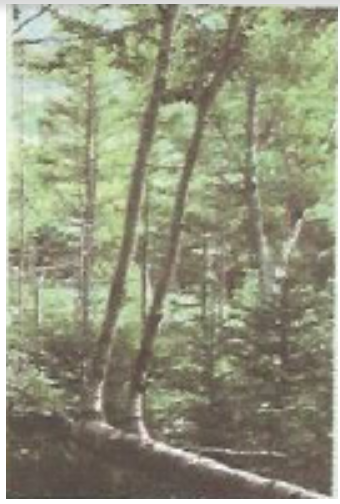
MCQ 381 Mark


A big tree falls in a forest but its roots are still in contact with the soil.
The branches of this fallen tree grow straight up $($vertically$)$. This happens in response to:
  • A
    Water and light.
  • B
    Water and minerals.
  • C
    Gravity and water.
  • Light and gravity.
Answer
Correct option: D.
Light and gravity.
It is because a plant stem grows towards the light in the upward direction against the force of gravity.
View full question & answer
MCQ 391 Mark
The number of pairs of nerves which arises from the spinal cord is:
  • A
    $21.$
  • $31.$
  • C
    $41.$
  • D
    $51.$
Answer
Correct option: B.
$31.$
As many as $31$ pairs of nerves arise from the spinal cord.
View full question & answer
MCQ 401 Mark
Dandelion flowers open the petals in bright light during the daytime but close the petals in dark at night. This response of dandelion flowers to light is called:
  • A
    Phototropism.
  • B
    Thigmonasty.
  • C
    Chemotropism.
  • Photonasty.
Answer
Correct option: D.
Photonasty.
The response of dandelion flowers to light that involves the movement of the petals is an example of photonasty.
View full question & answer
MCQ 411 Mark
The involuntary actions in the body are controlled by:
  • A
    Medulla in forebrain.
  • Medulla in hindbrain.
  • C
    Medulla in spinal cord.
  • D
    Medulla in midbrain.
Answer
Correct option: B.
Medulla in hindbrain.
The medulla controls various involuntary actions such as heart beat, breathing, blood pressure and peristaltic movement in the body.
View full question & answer
MCQ 421 Mark
The main function of the plant hormone called abscisic acid is to:
  • A
    Increase the length of cells.
  • B
    Promote cell division.
  • Inhibit growth.
  • D
    Promote growth of stem and roots.
Answer
Correct option: C.
Inhibit growth.
Abscisic acid mainly functions as a growth inhibitor.
View full question & answer
MCQ 431 Mark
Which of the following endocrine gland does not occur as a pair in the human body?
  • A
    Adrenal.
  • Pituitary.
  • C
    Testis.
  • D
    Ovary.
Answer
Correct option: B.
Pituitary.
Pituitary.
View full question & answer
MCQ 441 Mark
Which is the target organ of both adrenaline and insulin?
  • A
    Heart.
  • B
    Kidney.
  • Liver.
  • D
    Pancreas.
Answer
Correct option: C.
Liver.
The liver is the target organ for both adrenaline and insulin. Target organs and target cells are specific organs and cells upon which hormones act and produce their effects.
View full question & answer
MCQ 451 Mark
A doctor advised a person to take injection of insulin because:
  • A
    His blood pressure was high.
  • B
    His heart beat was high.
  • His blood sugar was high.
  • D
    His thyroxine level in blood was high.
Answer
Correct option: C.
His blood sugar was high.
Insulin controls the blood sugar level. Hence, the doctor advised him to take an injection of insulin to bring his sugar level to normal.
View full question & answer
MCQ 461 Mark
Which of the following cannot be considered a receptor?
  • A
    Ear.
  • B
    Nose.
  • Muscle.
  • D
    Eye.
Answer
Correct option: C.
Muscle.
Sense organs contain receptors. The ear, nose and eye are sense organs, a muscle is not.
View full question & answer
MCQ 471 Mark
Electrical impulse travels in a neuron from:
  • A
    Dendrite $\rightarrow$ axon $\rightarrow$ axon end $\rightarrow$ cell body.
  • B
    Cell body $\rightarrow$ dendrite $\rightarrow$ axon $\rightarrow$ axon end.
  • Dendrite $\rightarrow$ cell body $\rightarrow$ axon $\rightarrow$ axon end.
  • D
    Axon end $\rightarrow$ axon $\rightarrow$ cell body $\rightarrow$ dendrite.
Answer
Correct option: C.
Dendrite $\rightarrow$ cell body $\rightarrow$ axon $\rightarrow$ axon end.
In a neuron, the electrical impulse travels from the dendrites to the cell body and from the cell body to the axon and, then, to the axon end.
View full question & answer
MCQ 481 Mark
All the voluntary actions of our body are controlled by:
  • Cerebrum.
  • B
    Cerebellum.
  • C
    Pons.
  • D
    Medulla.
Answer
Correct option: A.
Cerebrum.
All the voluntary actions of our body are controlled by the cerebrum. The cerebrum is the largest and the most prominent part of the brain.
View full question & answer
MCQ 491 Mark
The part of brain which takes part in regulating respiration in the human body is:
  • A
    Medulla.
  • Pons.
  • C
    Cerebellum.
  • D
    Cerebrum.
Answer
Correct option: B.
Pons.
The pons take part in the regulation of respiration in the human body.
View full question & answer
MCQ 501 Mark
Which of the following does not act as an endocrine gland as well as an exocrine gland?
  • A
    Testis.
  • B
    Ovary.
  • Pituitary.
  • D
    Pancreas.
Answer
Correct option: C.
Pituitary.
Pituitary.
View full question & answer
MCQ 511 Mark
In a neuron, the conversion of electrical signal to a chemical signal occurs at$/$ in:
  • A
    Dendrite end.
  • B
    Cell body.
  • Axon end.
  • D
    Myelin sheath.
Answer
Correct option: C.
Axon end.
The conversion of an electrical signal to a chemical signal occurs at the axon terminal.
View full question & answer
MCQ 521 Mark
The bending of the stem of a plant towards a source of light is caused by the action of a phytohormone known as:
  • A
    Abscisic acid.
  • Auxin.
  • C
    Gibberellins.
  • D
    Cytokinin.
Answer
Correct option: B.
Auxin.
Auxin causes phototropism, i.e., bending of plant stems towards the source of light.
View full question & answer
MCQ 531 Mark
One of the following controls the peristaltic movements of alimentary canal. This one is:
  • A
    Cerebrum.
  • B
    Cerebellum.
  • C
    Pons.
  • Medulla.
Answer
Correct option: D.
Medulla.
The medulla controls the involuntary actions like the peristaltic movements of the alimentary canal.
View full question & answer
MCQ 541 Mark
Which of the following hormone prepares our body for action in emergency situations?
  • A
    Testosterone.
  • B
    Growth hormone.
  • Adrenaline.
  • D
    Insulin.
Answer
Correct option: C.
Adrenaline.
Adrenaline released from the adrenal gland prepares our body for action in emergency situation.
Hence, it is called emergency hormone, i.e., hormone of fight or flight.
View full question & answer
MCQ 551 Mark
Which of the following terms denotes the movement of the root of a plant towards moisture in the soil?
  • A
    Thigmotropism.
  • B
    Chemotropism.
  • Hydrotropism.
  • D
    Geotropism.
Answer
Correct option: C.
Hydrotropism.
Hydro means water and tropism means movement. Thus, the movement of plant roots towards the moisture in the soil is called hydrotropism.
View full question & answer
MCQ 561 Mark
The movement of a shoot towards light is:
  • A
    Geotropism.
  • B
    Hydrotropism.
  • C
    Chemotropism.
  • Phototropism.
Answer
Correct option: D.
Phototropism.
The movement of plant shoots towards the light is an example of phototropism $($photo $=$ light; tropism $=$ movement$).$
View full question & answer
MCQ 571 Mark
One of the following plant hormones is responsible for the phenomenon of phototropism in plants. This is:
  • A
    Gibberellin.
  • B
    Eltroxin.
  • C
    Cytokinin.
  • Auxin.
Answer
Correct option: D.
Auxin.
Auxin is responsible for the phenomenon of phototropism in plants.
View full question & answer
MCQ 581 Mark
Most of the plant hormones promote plant growth. A plant hormone which inhibits growth is:
  • Abscisic acid.
  • B
    Ethene.
  • C
    Ascorbic acid.
  • D
    Cytokinin.
Answer
Correct option: A.
Abscisic acid.
Abscisic acid inhibit plant growth.
View full question & answer
MCQ 591 Mark
Iodine is necessary for the synthesis of which of the following hormone?
  • A
    Adrenaline.
  • B
    Auxin.
  • Thyroxine.
  • D
    Insulin.
Answer
Correct option: C.
Thyroxine.
Iodine is required for the synthesis of thyroxine hormone by the thyroid gland.
View full question & answer
MCQ 601 Mark
The growth movement of a plant part in response to the touch of an object is called:
  • A
    Thigmonasty.
  • B
    Hydrotropism.
  • Thigmotropism.
  • D
    Geotropism.
Answer
Correct option: C.
Thigmotropism.
The growth movement of a plant part in response to the touch of an object is called thigmotropism.
View full question & answer
MCQ 611 Mark
Which of the following is not a plant hormone?
  • A
    Auxin.
  • Ascorbic acid.
  • C
    Cytokinin.
  • D
    Abscisic acid.
Answer
Correct option: B.
Ascorbic acid.
Ascorbic acid is the chemical name of vitamin $C$ and it is not a plant hormone.
View full question & answer
MCQ 621 Mark
The spinal cord orginates from:
  • A
    Cerebrum.
  • B
    Cerebellum.
  • Medulla.
  • D
    Pons.
Answer
Correct option: C.
Medulla.
The spinal cord is a tubular structure connected to the medulla oblongata of the brain.
View full question & answer
MCQ 631 Mark
The endocrine gland whose malfunctioning causes diabetes disease is:
  • A
    Pituitary.
  • B
    Pineal.
  • C
    Parathyroid.
  • Pancreas.
Answer
Correct option: D.
Pancreas.
The pancreas secretes a hormone called insulin. Insulin lowers the blood sugar level. Deficiency of insulin can lead to a disease called diabetes.
View full question & answer
MCQ 641 Mark
When the leaves of a Mimosa pudica plant are touched with a finger, they fold up quickly. This is an example of:
  • A
    Chemotropism.
  • B
    Thigmonasty.
  • C
    Photonasty.
  • Thigmotropism.
Answer
Correct option: D.
Thigmotropism.
The leaves of a Mimosa pudica plant show response to touch. This is an example of thigmotropism.
View full question & answer
MCQ 651 Mark
Which of the following are not tropisms?
$(i).$ Growing of pollen tube in response to a sugary substance.
$(ii).$ Folding up of leaves of sensitive plant in response to touch.
$(iii).$ Winding of tendril around a support in response to touch.
$(iv).$ Up of the leaves of a daisy flower in response to lightopening.
  • A
    $(i)$ and $(ii).$
  • B
    $(ii)$ and $(iii).$
  • C
    $(i)$ and $(iv).$
  • $(ii)$ and $(iv).$
Answer
Correct option: D.
$(ii)$ and $(iv).$
The folding up of leaves in sensitive plant as a response to touch and the opening up of leaves of a daisy flower in response to light are nastic movements.
View full question & answer
MCQ 661 Mark
The root of a plant is:
$(i).$ Positively phototropic but negatively geotropic.
$(ii).$ Positively geotropic but negatively phototropic.
$(iii).$ Negatively phototropic but positively hydrotropic.
$(iv).$ Negatively hydrotropic but positively phototropic.
  • A
    $(i)$ and $(ii).$
  • $(ii)$ and $(iii).$
  • C
    $(iii)$ and $(iv).$
  • D
    $(i)$ and $(iv).$
Answer
Correct option: B.
$(ii)$ and $(iii).$
The root of a plant is positively geotropic, negatively phototropic and positively hydrotropic.
View full question & answer
MCQ 671 Mark
Which of the following is not caused by a growth movement?
  • A
    Bending of the shoot of a plant in response to light.
  • Closing up of leaves of a sensitive plant on touching with an object.
  • C
    Climbing up of a plant on an object by using tendrils.
  • D
    Movement of the root of a plant towards a source of water.
Answer
Correct option: B.
Closing up of leaves of a sensitive plant on touching with an object.
This is a non$-$directional movement of a plant in response to touch.
View full question & answer
MCQ 681 Mark
The plant part which exhibits negative geotropism is:
  • A
    Root.
  • Stem.
  • C
    Branch.
  • D
    Leaves.
Answer
Correct option: B.
Stem.
Plant stem grows upward opposite to the force of gravity. Hence, it exhibits negative geotropism.
View full question & answer
MCQ 691 Mark
The gustatory receptors of our body are in one of the following organs. This organ is:
  • A
    Ear.
  • B
    Nose.
  • Tongue.
  • D
    Skin.
Answer
Correct option: C.
Tongue.
The gustatory receptors which detect taste are present in the tongue.
View full question & answer
MCQ 701 Mark
The rate of growth in roots is decreased by one of the following plant hormones. This plant hormone is:
  • A
    Gibberellin.
  • Auxin.
  • C
    Cytokinin.
  • D
    Ethene.
Answer
Correct option: B.
Auxin.
Auxin decreases the growth rate of plant roots.
View full question & answer
MCQ 711 Mark
The bending of the root of a plant away from a source of light is caused by a plant hormone called:
  • A
    Cytokinin.
  • B
    Gibberellin.
  • C
    Abscisic acid.
  • Auxin.
Answer
Correct option: D.
Auxin.
The plant hormone auxin is responsible for negative phototropism in roots.
View full question & answer
MCQ 721 Mark
Which of the following are often called glands of emergency?
  • A
    Thyroid.
  • B
    Pituitary.
  • Adrenal.
  • D
    Pancreas.
Answer
Correct option: C.
Adrenal.
The adrenal glands are often called glands of emergency. It secretes adrenaline hormone which prepares the body for action.
View full question & answer
MCQ 731 Mark
Which of the following is not an involuntary action?
  • A
    Vomiting.
  • Chewing.
  • C
    Heart beat.
  • D
    Salivation.
Answer
Correct option: B.
Chewing.
Chewing is a voluntary action, while actions like vomiting, heart beat and salivation are involuntary.
View full question & answer
MCQ 741 Mark
The part of brain which controls the involuntary action such as heart beat, breathing, blood pressure, etc. is:
  • A
    Pons.
  • Medulla.
  • C
    Cerebrum.
  • D
    Cerebellum.
Answer
Correct option: B.
Medulla.
The medulla controls various involuntary actions such as the heart beat, breathing, blood pressure and the peristaltic movement in the body.
View full question & answer