Question 11 MarkThe atom of the element which is substitute for hydrogen is referred as hetero atoms.AnswerTrue View full question & answer→
Question 31 MarkCovalent compounds have high melting and boiling points.AnswerFalse. Covalent compound have low melting and boiling points View full question & answer→
Question 51 MarkCarbon is tetravalent and it can undergo catenation.AnswerTrue View full question & answer→
Question 71 MarkWhen Unsaturated carbon compounds burn, they give a clean oxidizing flame with lots of black carbon.AnswerFalse. When unsaturated carbon compounds burn, they give yellow flame with lots of black carbon.View full question & answer→
Question 81 MarkEthanoic acid reacts with a base like sodium hydroxide to form sodium ethanoate and water.AnswerTrue View full question & answer→
Question 91 MarkTwo pairs of electrons are shared between two nitrogen atoms to form a nitrogen molecule.AnswerFalse. Three pairs of electron are shared between two nitrogen atoms to form a Nitrogen molecule.View full question & answer→
Question 101 MarkGenerally most of the carbon compounds are found to be good conductors of electricity.AnswerFalse. Generally most of the carbon compounds are found to be bad conductor of electricity.View full question & answer→
Question 111 MarkThe essential element in all the organic compounds is carbon.AnswerTrue View full question & answer→
Question 121 MarkSaturated hydrocarbons burn with smoky flame.AnswerFalse. Saturated hydrocarbon burns with non-smoky flame.View full question & answer→
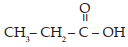 is propanone.