Questions

Answer the following questions: [2 M]

Take a timed test

25 questions · self-marked practice — reveal the answer and mark yourself.

Question 12 Marks
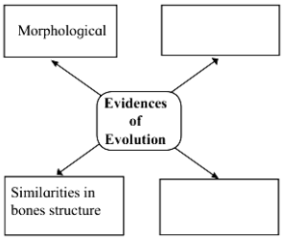
There is evidences of fatal Science among chordates.
[Please read the above question as: Among different chordates there are embryological evidences.]
Answer
  • Very young embryos of fish, amphibians, reptiles, birds and mammals show quite similar structure in the early stages.
  • As the further growth takes place, they acquire different patterns.
  • The initial similarity between the vertebrate embryos is an evidence that during evolution, there was a common ancestor for all the vertebrate classes.
  • This is called embryological evidence for vertebrate evolution.
View full question & answer
Question 22 Marks
What were the objections raised against Darwinism?
Answer
Objections raised against Darwinism:
  1. There are other factors too for evolution and just not the Natural Selection.
  2. Arrival of useful and useless modifications were not explained by Darwin, though he said about the survival of the fittest.
  3. He has not given any explanation about slow changes and abrupt changes occurring during evolution.
View full question & answer
Question 32 Marks
What is meant by carbon dating method?
Answer
(1) Carbon dating method is technique used for determining the age of fossils.
(2) After the death of the organisms, their consumption of carbon stops. But right from that moment the decaying process of C-14 occurs continuously.
(3) This results in change in the ratio between C-14 and C-12. C-12 is not radioactive as C-14.
(4) Thus the time passed since the death of a plant or animal is calculated by measuring the radioactivity of C-14 and ratio of C-14 to C-12 present in their body.
(5) The points noted during carbon dating are:
  • The period after the organism has been dead.
  • The activity of C-14 in the dead organism.
  • Ratio between C-14 and C-12.
View full question & answer
Question 42 Marks
Evidences of evolutionExamples
(1) Palaeontological evidences(a) Duck billed Platypus and Peripatus
(2) Connecting links(b) Remnants and impressions
(c) Coccyx and wisdom tooth
(d) Human hand and fore limb of cat
Answer
(1) Palaeontological evidences – Remnants and impressions.
(2) Connecting links – Duck billed Platypus and Peripatus.
View full question & answer
Question 52 Marks
Evidences of evolutionExamples
(1) Morphological evidences(a) Duck billed Platypus and Peripatus
(2) Anatomical evidences(b) Remnants and impressions
(c) Human hand and fore limb of bull
(d) Shape and venation of leaf
Answer
(1) Morphological evidences – Shape and venation of leaf.
(2) Anatomical evidences – Human hand and fore limb of bull.
View full question & answer
Question 62 Marks
ScientistDiscovery
(1) Walter, Sutton(a) Chromosomes of grasshopper
(2) Mclyn McCarthy(b) DNA is genetic material
(c) Pioneer of the modern genetics
(d) Mutational theory
Answer
(1) Walter, Sutton – Chromosomes of grasshopper.
(2) Mclyn McCarthy – DNA is genetic material.
View full question & answer
Question 72 Marks
ScientistDiscovery
(1) Johann Gregor Mendel(a) Chromosomes of grasshopper
(2) Hugo de Vries(b) DNA is genetic material
(c) Pioneer of the modern genetics
(d) Mutational theory
Answer
(1) Johann Gregor Mendel – Pioneer of the modern genetics.
(2) Hugo de Vries – Mutational theory.
View full question & answer
Question 82 Marks
Explain with suitable examples importance of anatomical evidences in evolution.
Answer
  • There are similarities in the structure and anatomy of different animal groups. E.g. human hand, forelimb of bull, patagium of bat and flipper of whale are all similar in their internal anatomy. There is similarity in the bones and joints of all these specimens.
  • External morphology does not show any similarity. Use of each of the organ is also different in different animals. Structurally, they may not be related.
  • However, the similarities in the anatomy is an evidence that they may have a common ancestor.
  • In this way, the anatomical evidence throws light on the process of evolution.
View full question & answer
Question 92 Marks
Define heredity. Explain the mechanism of hereditary changes.
Answer
(1) Heredity: Heredity is the process by which the biological characters from parental generation are transmitted to the next generation through genes.

(2) The mechanism of hereditary changes:

  • Mutation: Sudden change in the parental DNA can cause mutations. This results into changes in the hereditary characters.
  • At the time of meiosis, the crossing over takes place. This creates new recombination of the genetic information. Therefore, the haploid gametes produced carry changed hereditary characters.
View full question & answer
Question 102 Marks
Read the following statements and justify same in your own words with the help of suituble examples.
There is evidences of fatal Science among chordates.
[Please read the above question as: Among different chordates there are embryological evidences.]
Answer
  • Very young embryos of fish, amphibians, reptiles, birds and mammals show quite similar structure in the early stages.
  • As the further growth takes place, they acquire different patterns.
  • The initial similarity between the vertebrate embryos is an evidence that during evolution, there was a common ancestor for all the vertebrate classes.
  • This is called embryological evidence for vertebrate evolution.
View full question & answer
Question 112 Marks
Read the following statements and justify same in your own words with the help of suituble examples.
Study of fossils is an important aspect of study of evolution.
Answer
  • Fossils offer palaeontological evidence for the evolutionary process.
  • Due to some natural calamities the organisms get buried during ancient times.
  • The impressions and remnants of such organisms remain preserved underground. The hot lava also traps some organisms or their impressions. All such formations form fossils.
  • Study of fossils help the researcher to understand the characteristics of the organisms that existed in the past.
  • Carbon dating method also helps in finding out exact age of the fossil. According to the structure of earth’s crust the fossils are obtained at specific depths.
  • The oldest ones are obtained at the depth while the relatively recent ones occupy the upper surface. Thus fossils of invertebrates were seen in very old Palaeozoic era. Later were seen fossils of Pisces, Amphibia and Reptilia. The Mesozoic era was dominated by reptiles while Coenozoic era showed presence of mammals.
  • In this way, study of fossils unfold the evolutionary secrets.
View full question & answer
Question 122 Marks
Read the following statements and justify same in your own words with the help of suituble examples.
Geographical and reproductive isolation of organisms gradually leads to speciation.
Answer
  • Every species survives in specific geographical conditions. The requirements of food and habitat, is specific for each species. Their reproductive ability and period is also different.
  • Therefore, the individuals from one species cannot reproduce with individuals from other species.
  • When they are separated by a distance or geographical barriers they are said to be isolated geographically.
  • When they cannot reproduce with each other, they are said to be isolated reproductively.
  • The ancestor species of both these subspecies may be the same but due to isolation over a very long-time duration, there is genetic variation between the two. Therefore, the isolation leads to speciation.
View full question & answer
Question 132 Marks
Read the following statements and justify same in your own words with the help of suituble examples.
Human evolution began approximately 7 crore years ago.
Answer
  • Approximately around 7 crore years back the ice age began on the earth. In such conditions, dinosaurs became extinct. The evolution and diversity of mammals started during this time. Due to change in climate the forest cover also declined rapidly.
  • Ancestors of monkey-like animals were Lemur like animals which evolved during this time period.
  • The tails of these monkey-like creatures started vanishing very gradually around 4 crore years ago.
  • The body and brain both increased in volume forming first ape like animals. The monkey like ancestors gave rise to two evolutionary links to apes and human like animals.
  • Later, the human evolution took place by changes in the brain volume, the ability to walk upright, excessive use of hand for manipulations.
  • This journey of human evolution began 7 crore years ago. But the true wise and intelligent man arose around 50,000 years ago.
View full question & answer
Question 152 Marks
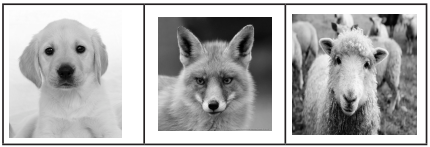
Observe the following images and note the similarities between given animal images and plant images.
Answer
Animal Images: We see similarities in the structure of mouth, position of eyes, ear pinnae, distribution of hair on their bodies etc.
Image
Plant Images: We see similarities in the shape of leaves, its venation, petiole, colour of their leaves position and the manner in which the fruits hang from the branches etc.
Image
View full question & answer
Question 162 Marks
Define : Vestigial organs:
Answer
Degenerated ог underdeveloped useless organs of organisms are called as vestigial organs.
View full question & answer
Question 172 Marks
Define : Triplet codon:
Answer
The code for each amino acid consists of three nucleotides. It is called as Triplet codon.
View full question & answer
Question 182 Marks
Define : Translocation
Answer
The ribosome keeps on moving from one end of mRNA to other end by the distance of one triplet codon. This is called Translocation.
View full question & answer
Question 192 Marks
Define : Translation:
Answer
As per the message on mRNA, amino acids are supplied by the tRNA. For this purpose, tRNA has 'anticodon' having complementary sequence to the codon on mRNA. This is called Translation.
View full question & answer
Question 212 Marks
Define : Heredity:
Answer
Heredity is the transfer of biological characters from one generation to another via genes.
View full question & answer
Question 222 Marks
Define : Evolution:
Answer
Formation of new species due to changes in specific characters of several generations of liv- ing organisms as a response to natural selection is called as evolution.
View full question & answer
Question 232 Marks
Define : Central Dogma:
Answer
Information about protein synthesis is stored in the DNA and synthesis of appropriate proteins as per requirement is necessary for body. These proteins are synthesized by DNA through RNA. This is called Central Dogma.
View full question & answer
Question 242 Marks
Define : Carbon dating method :
Answer
The time passed since the death of a plant or animal can be calculated by measuring the radioactivity of C-14 and ratio of C-14 to C-12 present in their body. This is carbon dating method.
View full question & answer
Question 252 Marks
Define : Ancestry of acquired characters:
Answer
The living organism can transfer the characters which it has acquired, to the next generation. This is called Ancestry of acquired characters.
View full question & answer