Question types

2020 MHT-CET PCB SET - 02 question types

200 questions across 1 question group — pick any mix to generate a MHT - CET paper with step-by-step answer keys.

200
Questions
1
Question groups
5
Question types
Sample Questions

2020 MHT-CET PCB SET - 02 questions

One sample from each question group in this chapter. Select any group above to see the full set with answer keys.

Q 1MCQ1 Mark
The figure shows two diagrams in which diode and resistance are connected. Out of the following statements which one is TRUE?
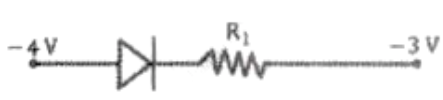
Image
Diagram (a)
Image
Diagram (b)
  • A
    diagram (a) forward biased and diagram (b) reverse biased
  • B
    diagram (a) and diagram (b) both are reverse biased
  • C
    diagram (a) and diagram (b) both are forward biased
  • diagram (a) reverse biased and diagram (b) forward biased

Answer: D.

View full solution
Q 2MCQ1 Mark
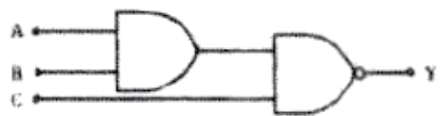
For the following combination of logic gates, when all the three inputs are first high and then low, the output 'Y' will respectively be
Image
  • A
    1, 1
  • 0, 1
  • C
    0, 0
  • D
    1, 0

Answer: B.

View full solution
Q 3MCQ1 Mark
In hydrogen spectnun, the wavelengths of light emited in a series of spectral lines is given by the equation $\frac{1}{\lambda}=R\left(\frac{1}{3^2}-\frac{1}{n^2}\right)$, where $n=4,5,6 \ldots$. And ' $R$ ' is Rydberg's constant. Identify the series and wavelenth region.
  • Paschen. Infrared
  • B
    Brackett, far infrared
  • C
    Paschen, far infrared
  • D
    Brackett, near infrared

Answer: A.

View full solution
Q 4MCQ1 Mark
The ratio of speed of an electron in the ground state in the Bohr's first orbit of hydrogen atom to velocity of light $(c)$ is $......(h =$ Planck's constant, $ε_0 =$ permittivity of free space, $e =$ charge on electron$)$
  • A
    $\frac{2 e ^2 \varepsilon_0}{ hc }$
  • $\frac{ e ^2}{2 \varepsilon_0 hc }$
  • C
    $\frac{ e ^3}{2 \varepsilon_0 hc }$
  • D
    $\frac{2 \varepsilon_0 hc }{ e ^2}$

Answer: B.

View full solution
Q 5MCQ1 Mark
The maximum velocity of the photoelectron emitted by the metal surface is 'v '. Charge and mass of the photoelectron is denoted by 'e' and 'm' respectively. The stopping potential in volt is ______.
  • $\frac{v^2}{2\left(\frac{e}{m}\right)}$
  • B
    $\frac{v^2}{\left(\frac{m}{e}\right)}$
  • C
    $\frac{v^2}{\left(\frac{e}{m}\right)}$
  • D
    $\frac{v^2}{2\left(\frac{m}{e}\right)}$

Answer: A.

View full solution

Generate a 2020 MHT-CET PCB SET - 02 paper free

Pick question groups from the list above, set marks and difficulty, and export a branded PDF with step-by-step answer keys. First 3 chapters free — no signup.

Download App