Question types

Introduction to Polymer Chemistry question types

227 questions across 5 question groups — pick any mix to generate a Chemistry paper with step-by-step answer keys.

227
Questions
5
Question groups
5
Question types
Sample Questions

Introduction to Polymer Chemistry questions

One sample from each question group in this chapter. Select any group above to see the full set with answer keys.

Q 1MCQ1 Mark
Identify the use of polyethylene terephthalate.
  • A
    To obtain bags for bread and shopping.
  • To manufacture soft drink bottles.
  • C
    To prepare bottles to store shampoo.
  • D
    To obtain disposable cups and plates.

Answer: B.

View full solution
Q 2MCQ1 Mark
Which among the following enzymes hydrolyzes starch?
  • A
    Proteases
  • B
    Insuline
  • Glucose isomerase
  • D
    Amylase

Answer: C.

View full solution
Q 3MCQ1 Mark
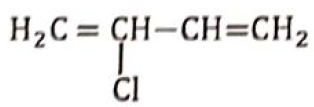
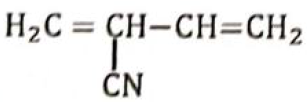
Identify the monomer used to prepare neoprene.
  • A
    $\mathrm{H}_2 \mathrm{C}=\mathrm{CH}-\mathrm{CN}$
  • Image
  • C
    $\mathrm{H}_2 \mathrm{C}=\mathrm{CH}-\mathrm{CH}=\mathrm{CH}_2$
  • D
    Image

Answer: B.

View full solution
Q 4MCQ1 Mark
Which among the following polymers has high tensile strength and is used to obtain tyre cords?
  • A
    Dacron
  • B
    PHBV
  • Nylon 6
  • D
    Teflon

Answer: C.

View full solution
Q 5MCQ1 Mark
Which among the following polymers restores it's original shape once stretched?
  • Neoprene
  • B
    Polythene
  • C
    Nylon $6$
  • D
    Bakelite

Answer: A.

View full solution
(1) From the cis-polyisoprene structure of natural rubber explain the low strength of van der Waals forces in it.
(2) Explain how the vulcanization of natural rubber improves its elasticity. (Hint : consider the intermolecular links.)
View full solution

Generate a Introduction to Polymer Chemistry paper free

Pick question groups from the list above, set marks and difficulty, and export a branded PDF with step-by-step answer keys. First 3 chapters free — no signup.

Download App