The part of the skin which maintains body temperature is ………………….. .
- AEpidermis
- BDermis
- ✓Subcutaneous layer
- DNetwork of blood vessels and nerve fibers
Answer: C.
View full solution →53 questions across 10 question groups — pick any mix to generate a Science paper with step-by-step answer keys.
MCQ
8 Q→02Answer the following questions:[1 M]
10 Q→03Fill in the blanks
10 Q→04Give scientific reasons: [2 M]
5 Q→05Do as instructed
6 Q→06Match the following.
3 Q→07Answer the following questions: [2 M]
6 Q→08Do as instructed
2 Q→09Do as instructed
2 Q→10Answer the following questions: [5 M]
1 Q→One sample from each question group in this chapter. Select any group above to see the full set with answer keys.
Answer: C.
View full solution →Answer: C.
View full solution →Answer: C.
View full solution →Answer: D.
View full solution →Answer: D.
View full solution →Column ‘A’ | Column ‘B’ |
1. Lower jaw | a. Movable joint |
2. Ears | b. Femur |
3. Thigh | c. Movable joint in skull |
4. Elbow | d. Smallest bone |
Column ‘A’ | Column ‘B’ |
1. Skull | a. 25 bones |
2. Rib cage | b. 6 bones |
3. Spine | c. 22 bones |
4. Both ears | d. 33 bones |
Column ‘A’ | Column ‘B’ |
1. Ball and socket joint | a. Knee |
2. Hinge joint | b. Wrist |
3. Gliding joint | c. Shoulder |
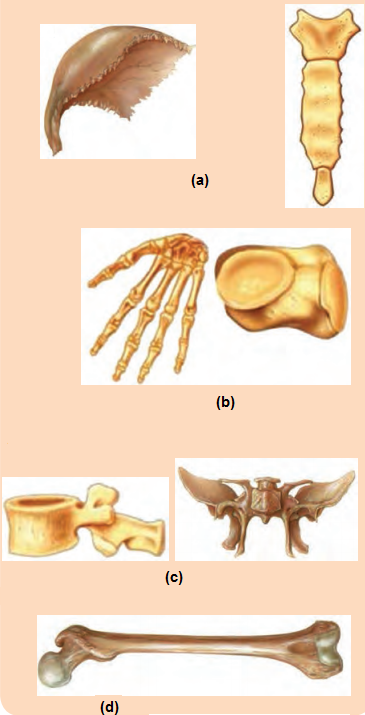
In the given figure, name the type of bones marked a, b, c, d. State where they are seen in our body.
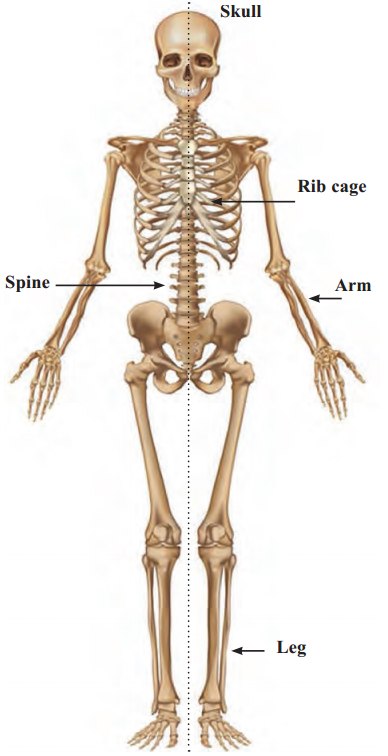
In the above figure label the parts marked a, b, c, d, e and hence show axial and appendicular
skeleton.
Pick question groups from the list above, set marks and difficulty, and export a branded PDF with step-by-step answer keys. First 3 chapters free — no signup.