Questions

Answer the following questions:[3 M]

🎯

Test yourself on this topic

13 questions · timed · auto-graded

Question 13 Marks
What is the co-relation between the normal body temperature of humans which is 37°C and the optimum temperature for the growth of micro-organism, 15 °C to 35 °C?
Answer
  1. Each micro-organism needs a specific environment for growth and reproduction.
  2. Optimum temperature for the growth of micro-organism is 15°C to 35°C.
  3. Normal body temperature of human body is 37°C. At that temperature micro-organism can not grow and cause disease.
View full question & answer
Question 23 Marks
Why is yoghurt mixed in the batter or dough for making rava-idli, butter naan?
Answer
  1. The microbes present in yoghurt are allowed to grow in batter or dough.
  2. They break down these substances producing new compound and gases are released as they grow and multiply in them which allows the batter, dough to rise.
  3. This process is called fermentation.
  4. This makes the food soft and nutritious.
View full question & answer
Question 33 Marks
Why do food poisoning incidents occur during marriage or other community feasts?
Answer
1. During marriage feast, food is prepared in very large quantity and food may not be properly washed or if it is cooked with water contaminated, with sewage or dirt which has many disease causing microbes, or the people handling the food may be having dirty hands

2. Also the utensils used for cooking and storing food may be dirty, contaminated with dirt and may produce microbes. The consumption of such food is responsible for food poisoning.

View full question & answer
Question 43 Marks
Try this and answer the following questions:

In pot AIn pot B
Soil + garden waste + dung + fruit peel vegetable stalksPieces of glass + scrap metal + plastic bags + Soil.

Image
1.Did the garbage in pot B remain unchanged.
2.Where did the garbage in pot ‘A’ disappear? Why?

Answer
1.

  1. Yes, the garbage in pot B remained unchanged because micro-organisms need nutrients for their growth.
  2. In pot B there was no medium for growth of micro-organisms.


2.

  1. Microbes present in soil, dung, etc. decompose the garbage to obtain food material.
  2. As a result garbage is soon converted into manure of the best quality and our surroundings are kept clean.
View full question & answer
Question 53 Marks
Why children are vaccinated?
Answer
  1. A vaccine is produced in a laboratory with the help of microbes, that gives immunity against particular diseases.
  2. Vaccine is actually a live micro-organism which is weak.
  3. When injected into a person in small amount, antibodies are produced.
  4. It increases the resistance power against the disease produced by that micro-organism. So, the possibility of contracting that disease is greatly reduced.
View full question & answer
Question 63 Marks
What happens if clothes remain damp in the rainy season?
Answer
  1. During rainy season the humidity in the air is quite high and also.
  2. Due to presence of moisture in clothes it becomes breeding ground for fungus.
  3. It is the favourable condition for growth of fungus.
  4. We can see white cotton like growth of fungus on clothes.
View full question & answer
Question 73 Marks
Observe cells from various parts of plants like leaves, bark, root tips, etc.
1.Are the cells that you observed, all alike?
2.What are their shapes?
Answer
1.No, all cells do not look alike, each one has different shape and size.
2.
  1. The cells of leaves, show a green pigment because of chloroplast.
  2. The shape of the cell may be spherical or polygonal.
  3. The shape of root tips are oval or polygonal and the cells of back are hexagonal in shape.
View full question & answer
Question 83 Marks
Why are infants vaccinated according to fixed time schedule?
Answer
Vaccination is done to protect the child against diseases.
1. If a baby is vaccinated by true vaccine schedule, that baby will have immunity to over 14 diseases by the age of two. With the recommended schedule, babies visit their doctor 5 times in the first 15 months and receive protection against upto 14 diseases in as little as 18 shots.
2. We immunize children so young against these diseases because infancy is the time period that kids are most vulnerable to life threatening diseases.
3. It is not advisable to skip or delay vaccines as this will leave the child vulnerable to disease for a longer period of time.
View full question & answer
Question 93 Marks
Which diseases do micro-organism cause in plants and animals?
Answer
Diseases caused by micro-organism in plants and animals are:
PlantsAnimals
Cankers, Downy Mildew, Ergot, Root rot, Rust, Seed Decay, Smut, Soft rot, Wilts, Leaf spot, Crown gel, Curly top, Mosaic leaf, Yellowing of leaf etc.Anthrax in cattle, Dysentery in monkey, Diphtheria in rabbit, Tuberculosis in cattle, Plaque in rats.
View full question & answer
Question 123 Marks
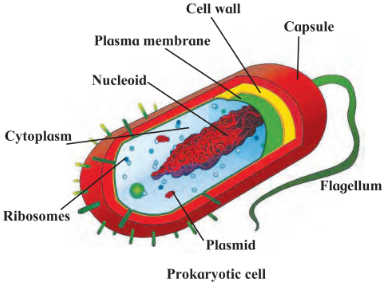
With the help of diagram describe Prokaryotic cell.

Image

Answer
  1. Prokaryotic cell do not have well-defined nucleus.
  2. The plasma membrane, cytoplasm and nucleoid are the only components.
  3. The prokaryotic cells have smaller ribosomes compared to eukaryotic cells.
  4. Bacteria and blue green algae are examples of prokaryotic cell.
View full question & answer
Question 133 Marks
Ram ate chaat from a street hawker, when he reached home he fell ill and complained of stomach ache. What could be the reason?
Answer
  1. he chaat Ram ate from a street hawker must be contaminated with harmful micro-organism due to dirty water used in it or stale potato used in it.
  2. Toxins are produced by micro-organisms in food.
  3. Ram ate that and suffered from food poisoning.
View full question & answer
Answer the following questions:[3 M] - Science STD 7 Questions - Vidyadip