Questions

2 Mark Question

Take a timed test

12 questions · self-marked practice — reveal the answer and mark yourself.

Question 12 Marks
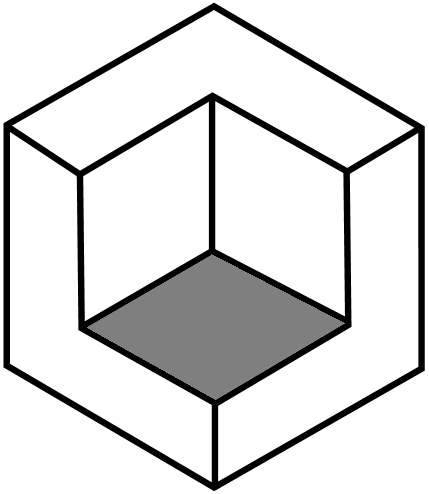
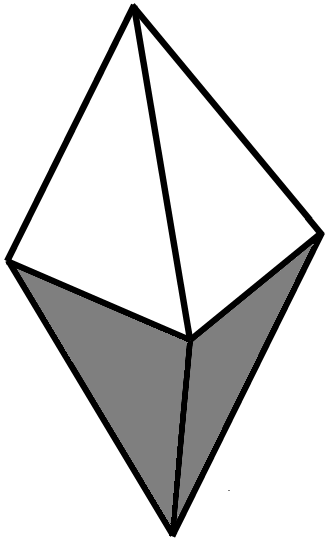
Verify Euler's formula for the following polyhedrons:
Answer
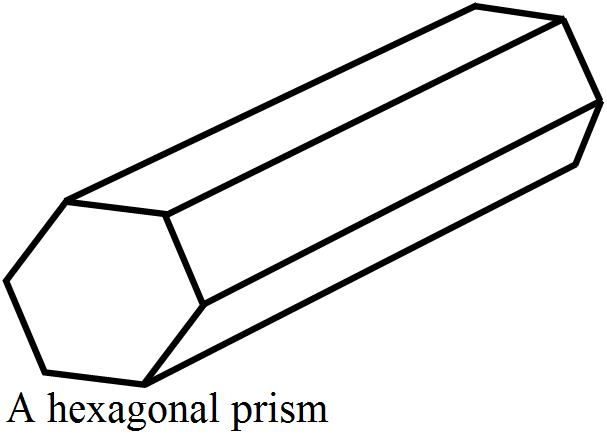
In the given polyhedron: Edges E = 21 Faces F = 9 Vertices V = 14
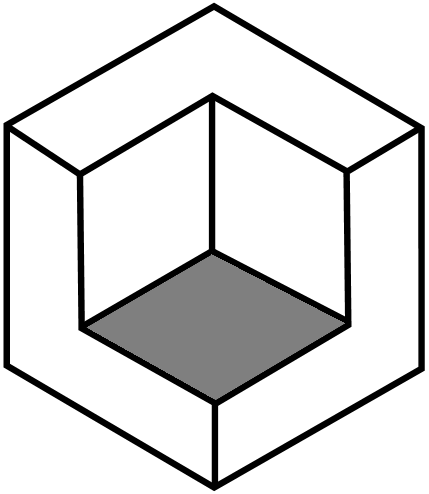
Now, putting these values in Euler's formula: LHS: F + V = 9 + 14 = 23 RHS: E + 2 = 21 + 2 = 23 This is true. Hence, Euler's formula is satisfied.
View full question & answer
Question 22 Marks
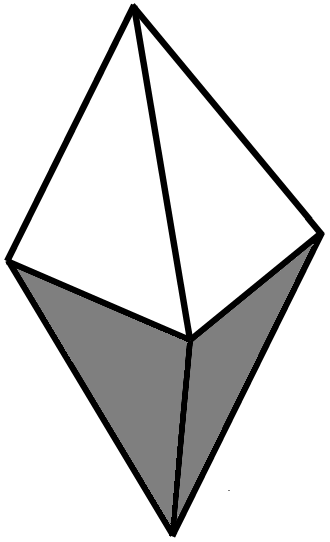
Verify Euler's formula for the following polyhedrons:
Answer
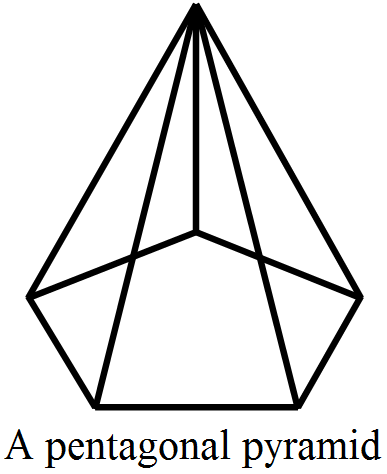
In the given polyhedron: Edges E = 8 Faces F = 5 Vertices V = 5
Now, putting these values in Euler's formula: LHS: F + V = 5 + 5 = 10 RHS: E + 2 = 8 + 2 = 10 This is true. Hence, Euler's formula is satisfied.
View full question & answer
Question 32 Marks
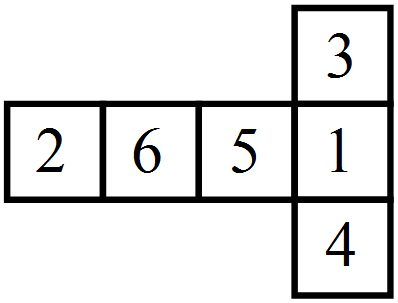
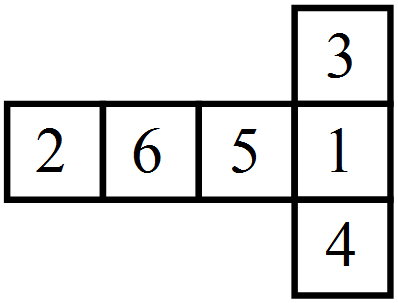
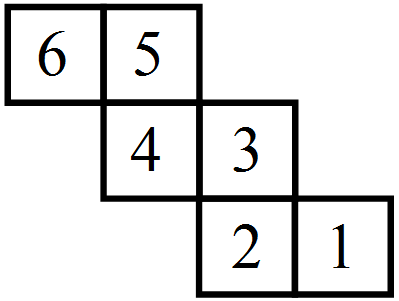
Dice are cubes where the numbers on the opposite faces must total 7. Which of the following are dice?
  1.  
  1.  
Answer
Among the given figures, only figure (i) is a dice.
This is because if we fold the given net from the edges, we'll get a cube in which the sum of the opposite faces is 7.
  1.  
View full question & answer
Question 42 Marks
Is it possible to have a polyhedron with any given number of faces?
Answer
Yes, it is possible to have a polyhedron with any number of faces.
The only condition is that there should be at least four faces.
This is because there is no possible polyhedron with 3 or less faces.
View full question & answer
Question 62 Marks
Verify Euler's formula for the following polyhedrons:
Answer
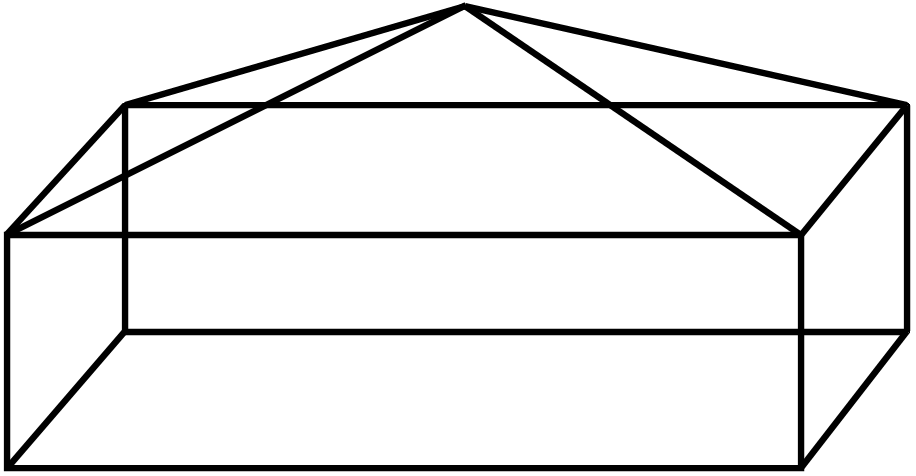
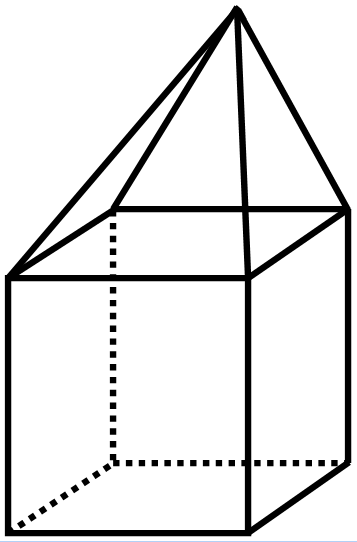
In the given polyhedron: Edges E = 16 Faces F = 9 Vertices V = 9
Now, putting these values in Euler's formula: LHS: F + V = 9 + 9 = 18 RHS: E + 2 = 16 + 2 = 18 This is true. Hence, Euler's formula is satisfied.
View full question & answer
Question 92 Marks
Verify Euler's formula for the following polyhedrons:
Answer
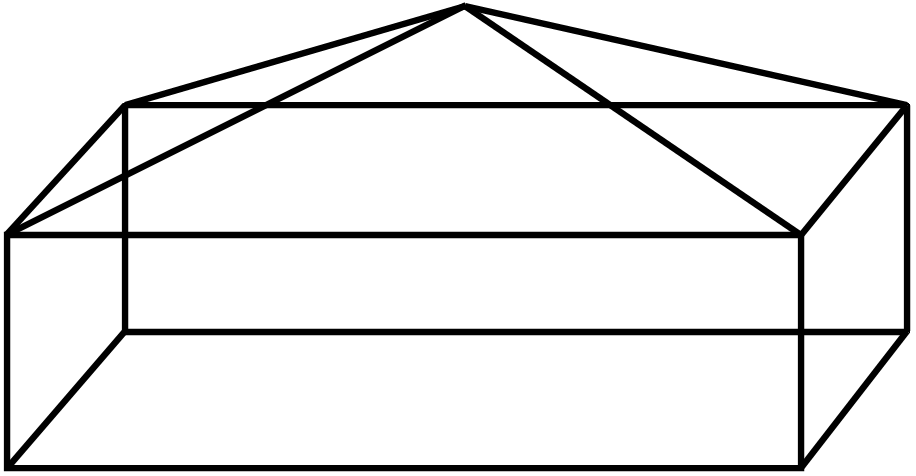
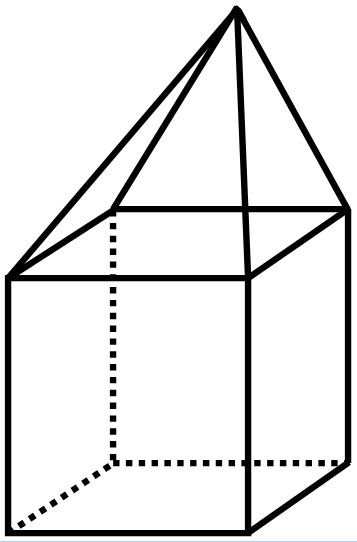
In the given polyhedron: Edges E = 16 Faces F = 9 Vertices V = 9
Now, putting these values in Euler's formula: LHS: F + V = 9 + 9 = 18 RHS: E + 2 = 16 + 2 = 18 This is true. Hence, Euler's formula is satisfied.
View full question & answer
Question 102 Marks
What is the least number of planes that can enclose a solid? What is the name of the solid?
Answer
The least number of planes that can enclose a solid is 4.
Tetrahedron is a solid with four planes (faces).
View full question & answer
Question 122 Marks
Verify Euler's formula for the following polyhedrons:
Answer
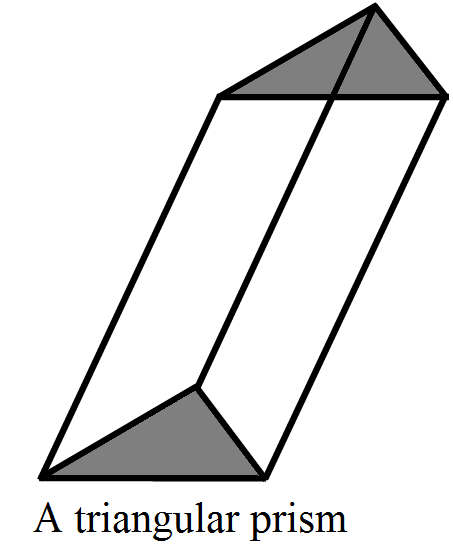
In the given polyhedron:
Edges E = 15
Faces F = 7
Vertices V = 10

Now, putting these values in Euler's formula:
LHS: F + V = 7 + 10 = 17
LHS: E + 2 = 15 + 2 = 17
LHS = RHS
Hence, the Euler's formula is satisfied.
View full question & answer