Questions

Question Answer (5 Marks)

Take a timed test

10 questions · self-marked practice — reveal the answer and mark yourself.

Question 15 Marks
The fossil fuel P is formed under the earth by the decomposition of vegetable matter lying under water by the action of anaerobic bacteria. The major component of fuel P is Q. The fossil fuel P is used as a source of gas R needed to manufacture nitrogenous fertilisers. When P is filled in metal cylinders and used as a fuel in motor vehicles, it is called S. What are P, Q, R and S?
Answer
The fossil fuel P is known as Natural Gas. Natural gas is a very important fossil fuel because it is easy to transport through pipes. Natural gas is stored under high pressure as compressed natural gas (CNG). It can be used as a fuel in homes and factories. It is also used as a starting material for the manufacture of a number of chemicals and fertilizers.
The substance Q is Methane. It is the primary component of Natural gas. Natural gas also contains ethane, propane and heavier hydrocarbons.
The substance R is Hydrogen. Natural gas is used in the manufacture of fertilizers and is used as a source of hydrogen.
The substance S is Compressed natural gas also known as CNG. Natural gas is a very important fossil fuel because it is easy to transport through pipes. Natural gas is stored under high pressure as compressed natural gas (CNG). It is advantageous to use CNG as a fuel because it is less polluting than petrol. It is a clean burning fuel. It produces 45% less hydrocarbons than petrol.
View full question & answer
Question 25 Marks
The substance W is a fossil fuel. It occurs deep below the ground in certain areas of the earth. Another fossil fuel X is found trapped above the deposits of W. When W is subjected to a process called Y, then a number of different products are collected at different temperature ranges which are put to different uses. A special grade of product Z obtained in this way is used as aviation fuel in jet aeroplanes.
  1. What are (i) W, and (ii) X ?
  2. What is the physical state of (i) W, and (ii) X ?
  3. Name the process Y.
  4. Name the product Z.
Answer
  1. The substance W is Petroleum and substance Y is Natural gas. Natural gas is a fossil fuel other than coal and petroleum. Petroleum can be extracted with giant drilling machines. The layer containing petroleum oil and natural gas is above that of water.
  2. The physical state of W is a liquid. Petroleum is a dark oily liquid. It has an unpleasant odor. It is a mixture of various constituents such as petroleum gas, petrol, diesel, lubricating oil, paraffin wax, etc.
The physical state of X is Gas. Natural gas is a fossil fuel other than coal and petroleum. Natural gas is a very important fossil fuel because it is easy to transport through pipes. Natural gas is stored under high pressure as compressed natural gas (CNG). It can be used as a fuel in homes and factories. It is also used as a starting material for the manufacture of a number of chemicals and fertilizers.
  1. Process Y is known as Fractional distillation. It is the process of separation of a mixture into its components, by the difference in their boiling points. Mixture is heated which causes one or more components to vaporize at different temperatures. The process of separating the various constituents or fractions of petroleum is known as refining. It is carried out in a petroleum refinery.
  2. The product Z is Kerosene. Kerosene is one of the constituents of petroleum. It is a fossil fuel. It is used as a fuel for stoves, lamps and for jet aircrafts.
View full question & answer
Question 35 Marks
Describe how coal was formed. What is this process called?
Answer
Coal was formed millions and millions of years ago in swampy forests where some plants died and some grew simultaneously. As the years passed, the layers of dead plants collected one over the other and formed thick layers. With changing weather conditions, more plants grew and the layers of dead plants continued to form deep. Coal is a fossil fuel. The heat and the pressure produced physical and chemical changes in the layers which resulted in the rich carbon content and forced the oxygen into the environment. This rich carbon content became as coal. This process of forcing the oxygen out and leaving behind carbon content was called as carbonisation. In other words, Carbonisation is the process by which plant material or vegetation buried deep under the earth was slowly converted into coal. This is a very slow process and usually, takes millions of years.
View full question & answer
Question 45 Marks
What are the major products (or fractions) of petroleum refining? Give one use of each petroleum product.
Answer
The process of separating the various constituents or fractions of petroleum is known as refining. It is carried out in a petroleum refinery. The main products of petroleum refining are petroleum gas, petrol, diesel, lubricating oil, paraffin wax and kerosene.Following are the uses of petroleum products:
  • Petroleum gas is used as fuel for home and industry.
  • Petrol is used as a Motor fuel, aviation fuel and solvent for dry cleaning.
  • Diesel is used as a fuel for heavy motor vehicles and electric generators.
  • Lubricating oil is used as a lubricant.
  • Kerosene is used as a fuel for stoves, lamps and for jet aircrafts.
  • Paraffin wax is used in ointments, candles and Vaseline etc.
  • Bitumen Paints are used in road surfacing.
View full question & answer
Question 55 Marks
The material A is a fossil fuel which is extracted from the earth. It is said to be formed from the buried, large land plants by a very slow process B. When A is heated in the absence of air in a process called C, then it gives three products D, E and F. The product D is used as a reducing agent in the extraction of metals, the product E is used as an industrial fuel whereas the product F has been traditionally used for metalling the roads.
  1. What could material A be?
  2. What is (i) physical state, and (ii) colour, of A?
  3. Name the processes (i) B, and (ii) C.
  4. What are (i) D, (ii) E, and (iii) F?
Answer
  1. The material A is Coal. Coal is a fossil fuel. It was formed by the process of carbonisation. Carbonisation is the process by which plant material or vegetation buried deep under the earth was slowly converted into coal. This is a very slow process and usually takes millions of years.
  2. Coal exists as solid. It is as hard as stone and is black in colour.
  3. The process B is carbonization. It is a process by which plant material or vegetation buried deep under the earth was slowly converted into coal. This is a very slow process and usually takes millions of years.
The process C is Destructive distillation. Destructive distillation is a chemical process of decomposition of a solid by heating it in a closed container. The volatile constituents produced in this process can be separated. Coal is processed in industry to get some useful products such as coke, coal tar and coal gas.
  1. The product D is coke, E is Coal gas and F is Coal tar.
Coal is processed in industry by the process of destructive distillation to get some useful products such as coke, coal tar and coal gas. Coke is a tough, porous and black substance. It is almost pure form of carbon. Coal is a mixture of about 200 substances. It is a black, thick liquid with unpleasant smell. Coal gas is obtained during the processing of coal to get coke.
View full question & answer
Question 65 Marks
Describe how, fossil fuels were formed.
Answer
The fossil fuel such as coal is formed from the remains of dead vegetation. Earth had dense forests in low lying wetland areas about 300 million years ago. Due to natural processes, like flooding, these forests got buried under the soil. Due to soil deposition over these dead plants, they were compressed. The temperature also increased as they sank deeper and deeper. Under high pressure and high temperature, dead plants got slowly converted to coal. As coal contains mainly carbon, the slow process of conversion of dead vegetation into coal is called carbonisation. Since it was formed from the remains of vegetation, coal is also called a fossil fuel.
The fossil fuel such as petroleum is formed from the dead animals under the sea. As these organisms died, their bodies settled at the bottom of the sea. They got covered with layers of sand and clay. Over millions of years, in the absence of air, with high temperature and high pressure, these the dead organisms were transformed into petroleum and natural gas.
View full question & answer
Question 75 Marks
What is petroleum? Where does petroleum occur?
Answer
The exhaustible natural resources which are formed from the dead remains of living organisms or fossils are known as fossil fuels. For example, coal, petroleum and natural gas are fossil fuels. The fossil fuel such as petroleum is formed from the dead animals under the sea. As these organisms died, their bodies settled at the bottom of the sea. They got covered with layers of sand and clay. Over millions of years, in the absence of air, with high temperature and high pressure, these the dead organisms were transformed into petroleum and natural gas. The main constituents of petroleum are petroleum gas, petrol, diesel, lubricating oil, paraffin wax and kerosene. Petroleum can be extracted from under the sea bed. It can be extracted with giant drilling machines. The layer containing petroleum oil and gas is above that of water.
View full question & answer
Question 85 Marks
State one use each of the following products of petroleum:
  1. Petroleum gas
  2. Petrol
  3. Diesel
  4. Lubricating oil
  5. Bitumen
Answer
  1. Petroleum gas is used as fuel for home and industry.
  2. Petrol is used as a Motor fuel, aviation fuel and solvent for dry cleaning.
  3. Diesel is used as a fuel for heavy motor vehicles and electric generators.
  4. Lubricating oil is used as a lubricant.
  5. Bitumen Paints are used in road surfacing.
View full question & answer
Question 95 Marks
What is the major cause of air pollution? Write the various tips for minimising the wastage of petrol/ diesel while driving vehicles.
Answer
Burning of fossil fuels is the major cause of air pollution. Burning of fossil fuels affects the environment because they release carbon dioxide and other harmful gases such as Sulphur dioxide, nitrogen oxides and carbon monoxides. These gases trap heat in the earth’s atmosphere and causes global warming which contributes to global climate change. It is therefore necessary that we use these fuels only when absolutely necessary. This will result in better environment, smaller risk of global warming and their availability for a longer period of time. In India, the Petroleum Conservation Research Association (PCRA) advises people how to save petrol or diesel while driving. Their tips are:
  • Drive at a constant and moderate speed as far as possible.
  • Switch off the engine at traffic lights or at a place where you have to wait.
  • Make sure there is correct tyre pressure.
  • Ensure regular maintenance of the vehicle.
View full question & answer
Question 105 Marks
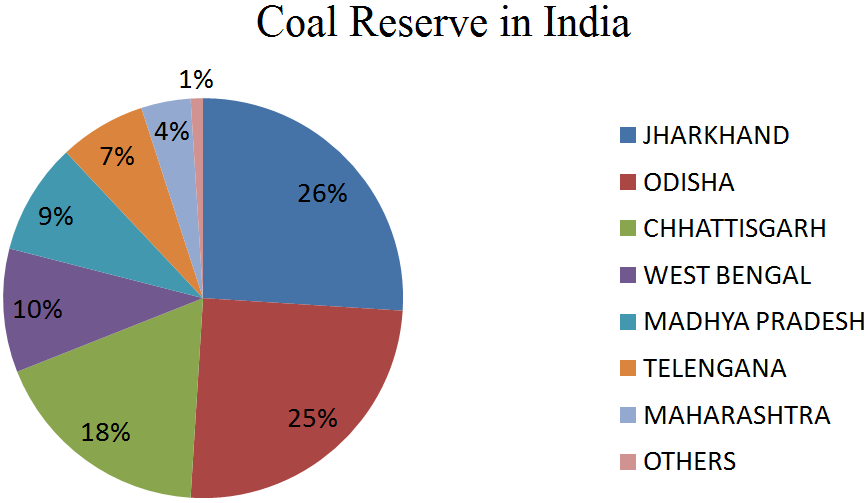
Name two places in India where coal is found.
Answer
India has abundant domestic reserves of coal. Coal can be found in Jharkhand and West Bengal.
View full question & answer
Question Answer (5 Marks) - Science STD 8 Questions - Vidyadip