Questions

Write The Short Note.

Take a timed test

5 questions · self-marked practice — reveal the answer and mark yourself.

Question 15 Marks
Properties of Glass:
Answer
The glass becomes soft on heating and thus can be moulded into desired shape.
  1. According to ingredients added at the time of preparation of glass, its density changes accordingly.
  2. Glass is slow conductor of heat. If a cold glass is quickly heated, it cracks suddenly. Similarly, the warm glass if exposed to sudden cooling, it too cracks.
  3. Glass is a bad conductor of electricity. Therefore, it is used as insulating material in electric appliances.
  4. Glass is transparent, allowing most of light to pass through it. If there are chromium, vanadium or iron oxides in the glass, large amount of light is absorbed in glass.
View full question & answer
Question 25 Marks
Properties of plastic:
Answer
  1. Plastic is non-corrosive.
  2. It is non-degradable as it does not decompose.
  3. The factors such as humidity, heat, rain, etc. do not affect plastic.
  4. Any coloured item can be manufactured from plastic.
  5. Plastic shows property of plasticity. Thus it can be moulded into any shape that is needed.
  6. Plastic is a bad conductor of heat and electricity.
  7. Plastic is light-weight and thus preferred for carrying.
View full question & answer
Question 35 Marks
Uses of plastic:
Answer
Plastic, the man-made material is used in various forms in modern age. According to the type of plastic, its uses are different.

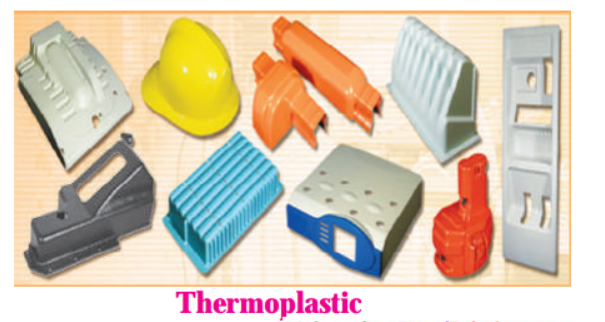
Image

I. Thermoplastic materials are used for manufacturing following articles:

  1. Polyvinyl chloride or PVC is used to make bottles, raincoat, pipes, handbags,: shoes, electric cable insulation, furniture, ropes, toys, etc.
  2. Polystyrene is used in making thermo insulating parts of electric appliances like refrigerators, gears of machines, toys, protective coverings like covers of CD and DVD, etc.
  3. Polyethylene (PE) plastics are used for making milk bags, packing bags, flexible garden pipes, etc.
  4. Polypropylene (PP) is used in making parts of loudspeakers and vehicles, ropes, mattresses, laboratory appliances, etc.

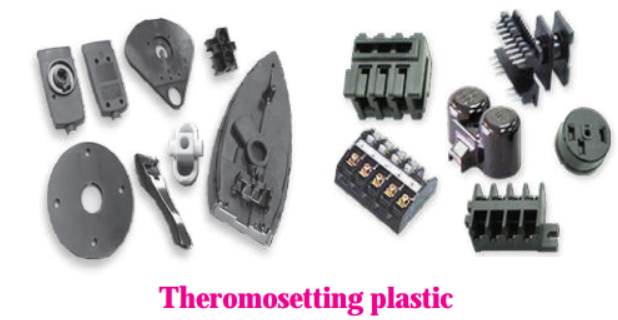
II. Thermosetting plastic is used in the manufacturing of the following items:

Image

  1. Bakelite for making cabinets of radio, T.V., telephones, electric switches, toys, plastic handles of cookers, etc.
  2. Melamine for making domestically useful items like cup – saucers, plates, tray, some spare parts of airplane engines, electric and sound insulating coverings, etc.
  3. Polyurethane in making surfing boards, small boats, furniture, seats in vehicles, etc.
  4. Polyester in fibreglass, toners of laser printers, textile industry, etc.
View full question & answer
Question 45 Marks
Optic glass:
Answer
  1. Optic glass or optical glass needs to be very clear and transparent as it is used in spectacles, lenses and other devices like microscopes.
  2. Optic glasses are produced from the mixture of sand, soda, limestone, barium oxide and boron.
View full question & answer
Question 55 Marks
Glass production:
Answer
The general preparation of the glass is as follows:
  1. Mixture of sand, soda, lime and small quantity of magnesium oxide is heated in furnace.
  2. At 1700 °C sand or silicon dioxide melts.
  3. To make the mixture melt at lesser temperature, pieces of discarded glasses are added to it.
  4. This addition makes the mixture to melt at lesser temperature of 850 °C.
  5. When all the ingredients of mixture are liquified, then again it is heated up to 1500 °C.
  6. This heating is immediately followed by cooling.
  7. The sudden cooling causes the mixture to become homogeneous, amorphous and transparent instead of crystalline.
  8. For variety of glass types, different proportions of ingredients are used for heating.
View full question & answer