Question types

History CH 7 - Science and Technology question types

45 questions across 7 question groups — pick any mix to generate a Social Studies paper with step-by-step answer keys.

45
Questions
7
Question groups
5
Question types
Sample Questions

History CH 7 - Science and Technology questions

One sample from each question group in this chapter. Select any group above to see the full set with answer keys.

Oil and Natural Gas Commission (ONGC) : In 1956, the Oil and Natural Gas Commission was established to search for the deposits of mineral oil and natural gas and to increase their production. After Digboi in Assam, mineral oil deposits were found in Ankleshwar , area in Gujarat. Later, mineral oil and natural gas deposits were found in the gulf of Khambhat in Gujarat. In 1974, the Oil and Natural Gas Commission , started digging an oil well in ‘Bombay High’ area , with the help of Russian scientists by a drillship called ‘Sagar Samrat’. From 1975, mineral oil and natural gas began to be extracted from there. Later, more than 8500 oil wells and 33 natural gas wells dug eventually in this area began to contribute , 38% of the total mineral oil production in the country and met 14% of the country’s demand for crude oil.
Railways and Technology : The technology adopted by railways has a big role in the history of modem India. In order to bring efficiency, accuracy and coordination in the reservation system in rail travel, computerised reservation system was started for the first time in Delhi in 1984. In the same year, the Metro was started in Kolkata. In this way India has been making progress in the fields of science and technology. New inventions have been made. India is an important 21st century nation, which has always used technology for establishing peace in the world. India is making all these advancements in order to be the foremost among nations in the 21st century. In the next chapter, we shall learn about the progress India , has made in the fields of commerce and trade.
(1) State the odd man out – and state the reason Digboi, Kohima, Ankleshwar, Bombay High
(2) Complete the following – Konkan Railway chart:
(3) Do you think we can rely on our mineral oil deposits for time to come? Justify your answer.
View full solution
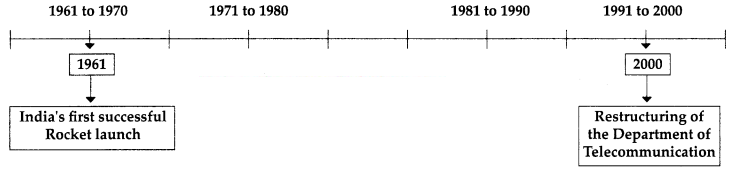
Space research: In 1961, Indian National Committee for Space Research (NCSR) launched India’s first , research rocket from Thumba Equatorial Launch Center in Thumba in the State of Kerala. In 1969, our indigenously built rocket Rohini-75 was successfully launched. The next stage was the successful launch , of the first Indian satellite Aryabhatta in 1975 with ‘ help from the Soviet Union. This success proved that Indian scientists can indigenously build and launch satellite. Indian scientists were confident that they , could acquire the technology for sending a message from the Earth Station and to assess the working of the satellite.
Indian Space Research Organisation (ISRO) : After , the success of the basic programme in space research and rocket related project, Indian Space Research Organisation was established on 15th August 1969 in order to carry out further space research. ‘ The headquarters of ISRO are at Bengaluru. ISRO activated the space station at Sriharikota in Andhra Pradesh for launching our satellites in space.
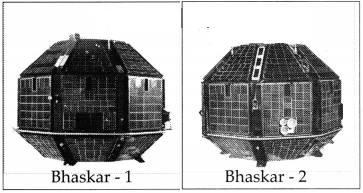
Bhaskar-1: India launched remote sensing ,experimental satellite Bhaskar-1 from the Soviet Union in 1979 in order to observe various things on the surface of the earth by remote sensing technology, This remote sensing technology would be useful for India’s development by regarding water bodies, mineral deposits and forecasting weather. The photographs taken with the help of this technology about the bowels of the earth, environment and forests were important. Another area in which the information from this satellite was useful was oceanography. In 1981, ‘Bhaskar-2’ was launched from Soviet Union.
(1) What does the passage deal with?
(2) State the benefits of remote sensing technology.
View full solution

Generate a History CH 7 - Science and Technology paper free

Pick question groups from the list above, set marks and difficulty, and export a branded PDF with step-by-step answer keys. First 3 chapters free — no signup.

Download App