Question types

2.3 Mark Twain question types

6 questions across 1 question group — pick any mix to generate a My English Coursebook paper with step-by-step answer keys.

6
Questions
1
Question groups
5
Question types
Sample Questions

2.3 Mark Twain questions

One sample from each question group in this chapter. Select any group above to see the full set with answer keys.

A1. Simple Factual Activities:
Answer the following in words:
(1) Mark Twain received a letter from the editor of a small Missouri newspaper.
(2) Finding a spider in a paper is good luck for the reader according to Mark Twain.
(3) Mark Twain's birth was heralded by the return of Halley's comet.
(4) Mark Twain died in November 1835.

      One day during his tenure as the editor of a small Missouri newspaper, Mark Twain received a letter from a reader who had found a spider in his paper. He wondered whether this portended good or bad luck.
       “Finding a spider in your paper,” Twain replied, “is neither good luck nor bad. The spider was merely looking over our paper to see which merchant was not advertising so that he could go to that store, spin his web across the door, and lead a life of undisturbed peace ever afterward.”
      Mark Twain’s birth in November 1835 was heralded by the return of Halley’s comet. Twain, who often remarked upon this curiosity, came to think of himself and the comet as ‘unaccountable freaks,’ cosmically linked: having come in together, he declared, they would go out together.
      In fact, Twain was proven right. On the night of his death in April 1910, Halley’s comet once again blazed through the sky...
Some Quotations
April Fool’s Day - This is the day upon which we are reminded of what we are on the other three hundred and sixty-four.
 A man cannot be comfortable without his own approval.
A person with a new idea is a crank until the idea succeeds.
Age is an issue of mind over matter. If you don’t mind, it doesn’t matter.
All generalizations are false, including this one 
Be careful about reading health books. You may die of a misprint.
Be careless in your dress if you will, but keep a tidy soul.
‘Classic’ - A book which people praise and don’t read. Humour is mankind’s greatest blessing.
I am an old man and have known a great many troubles, but most of them never happened.
I must have a prodigious quantity of mind; it takes me as much as a week sometimes to make it up.
If you tell the truth, you don’t have to remember anything.
 It is better to deserve honours and not have them than to have them and not deserve them.
It is better to keep your mouth closed and let people think you are a fool than to open it and 
remove all doubt.
It’s no wonder that truth is stranger than fiction. Fiction has to make sense.
Whenever you find yourself on the side of the majority, it is time to pause and reflect.
Why is it that we rejoice at a birth and grieve at a funeral? It is because we are not the person 
involved.
Thousands of geniuses live and die undiscovered either by themselves or by others.
Thunder is good, thunder is impressive; but it is lightning that does the work.
When I was younger I could remember anything, whether it happened or not.
When your friends begin to flatter you on how young you look, it’s a sure sign you’re getting old.

A2. Complex Factual Activities:
Which episode shows that Mark Twain did not believe in superstitions? 
A3. Activities based on Vocabulary:
Read the following and write the two meanings of 'mind' and 'matter'.
Age is an issue of mind over matter. If you don't mind, it doesn't matter.
A4. Activities based on Contextual Grammar:
Frame a wh-question to get the underlined part as an answer in each sentences:
(1) Mark Twain received a letter from a reader.
(2) Mark Twain's birth was heralded by the return of Halley's comet.
A5. Personal Response:
(1) Why should we take part in humorous sessions?
View full solution
A1. Simple Factual Activities:
Answer the following in words:
(1) Mark Twain received a letter from the editor of a small Missouri newspaper.
(2) Finding a spider in a paper is good luck for the reader according to Mark Twain.
(3) Mark Twain's birth was heralded by the return of Halley's comet.
(4) Mark Twain died in November 1835.

      One day during his tenure as the editor of a small Missouri newspaper, Mark Twain received a letter from a reader who had found a spider in his paper. He wondered whether this portended good or bad luck.
       “Finding a spider in your paper,” Twain replied, “is neither good luck nor bad. The spider was merely looking over our paper to see which merchant was not advertising so that he could go to that store, spin his web across the door, and lead a life of undisturbed peace ever afterward.”
      Mark Twain’s birth in November 1835 was heralded by the return of Halley’s comet. Twain, who often remarked upon this curiosity, came to think of himself and the comet as ‘unaccountable freaks,’ cosmically linked: having come in together, he declared, they would go out together.
      In fact, Twain was proven right. On the night of his death in April 1910, Halley’s comet once again blazed through the sky...
Some Quotations
April Fool’s Day - This is the day upon which we are reminded of what we are on the other three hundred and sixty-four.
 A man cannot be comfortable without his own approval.
A person with a new idea is a crank until the idea succeeds.
Age is an issue of mind over matter. If you don’t mind, it doesn’t matter.
All generalizations are false, including this one 
Be careful about reading health books. You may die of a misprint.
Be careless in your dress if you will, but keep a tidy soul.
‘Classic’ - A book which people praise and don’t read. Humour is mankind’s greatest blessing.
I am an old man and have known a great many troubles, but most of them never happened.
I must have a prodigious quantity of mind; it takes me as much as a week sometimes to make it up.
If you tell the truth, you don’t have to remember anything.
 It is better to deserve honours and not have them than to have them and not deserve them.
It is better to keep your mouth closed and let people think you are a fool than to open it and 
remove all doubt.
It’s no wonder that truth is stranger than fiction. Fiction has to make sense.
Whenever you find yourself on the side of the majority, it is time to pause and reflect.
Why is it that we rejoice at a birth and grieve at a funeral? It is because we are not the person 
involved.
Thousands of geniuses live and die undiscovered either by themselves or by others.
Thunder is good, thunder is impressive; but it is lightning that does the work.
When I was younger I could remember anything, whether it happened or not.
When your friends begin to flatter you on how young you look, it’s a sure sign you’re getting old.

A2. Complex Factual Activities:
Which episode shows that Mark Twain did not believe in superstitions? 
A3. Activities based on Vocabulary:
Classify the following words in the given table:
reader, remind, wonder, spider, merchant, return, declare, comet.
A4. Activities based on Contextual Grammar:
Make the sentences affirmative:
(1) Mark Twain received a letter from a reader.
(2) Mark Twain's birth was heralded by the return of Halley's comet.
A5. Personal Response:
(1) Why should we take part in humorous sessions? 
View full solution
A1. Simple Factual Activities:
Answer the following in words:
(1) Henry Irving asked Mark Twain if he had heard the story before ______________
(2) Mark Twain could not lie the third time at any cost because ______________

     One day Henry Irving, in the midst of telling Mark Twain a humorous story, abruptly stopped and examined his friend’s face. “You haven’t heard this, have you ?” he asked. Twain assured him that he had not. 
     When, some time later, Irving again paused, and again posed the question, Twain again reassured him. Then, approaching the climax, Irving broke off once more. “Are you quite sure you haven’t heard this?” he demanded suspiciously. “I can lie once,” Twain finally replied. “I can lie twice for courtesy’s sake, but I draw the line there. I can’t lie the third time at any price. I not only heard the story, I invented it !”
Mark Twain once proposed a ‘Plan for the Improvement of English Spelling’: 
     For example, in Year 1 that useless letter ‘c’ would be dropped to be replased either by ‘k’ or 
‘s,’ and likewise, ‘x’ would no longer be part of the alphabet. 
The only kase in which ‘c’ would be retained  would be the ‘ch’ formation, which will be dealt with later.
     Year 2 might reform ‘w’ spelling, so that ‘which’ and ‘one’ would take the same konsonant, wile Year 3 might well abolish ‘y’ replasing it with ‘i’ and Iear 4 might fiks the ‘g/j’ anomali wonse and for all. 
     Jenerally, then, the improvement would kontinue iear bai iear with Iear 5 doing awai with useless double konsonants, and Iears 6-12 or so modifaiing vowlz and the rimeining voist and unvoist konsonants. Bai Iear 15 or sou, it wud fainali bi posibl to meik ius ov thi ridandant letez ‘c,’ ‘y’ and ‘x’ — bai now jast a memori in the maindz ov ould doderez — tu riplais ‘ch,’ ‘sh,’ and ‘th’ rispektivli. 
     Fainali, xen, aafte sam 20 iers ov orxogrefkl riform, wi wud hev a lojikl, kohirnt speling in ius xrewawt xe Ingliy-spiking werld. 

A2. Complex Factual Activities:
(1) Was Twain particular about what words he used?
(2) What did Mark Twain propose? What was his plan at the year 6-12?
A3. Activities based on Vocabulary:
Find out words from the passage that are used in place of the following words:
(1) world - ______________
(2) replace - ______________
(3) respectively - ______________
(4) modifying - ______________
A4. Activities based on Contextual Grammar:
Identify the tense:"
(1) Henry Irving was telling a humorous story.
(2) Mark Twain proposed a plan for the improvement of English Spelling.
A5. Personal Response:
(1) How can you improve English spellings?
View full solution
A1. Simple Factual Activities:
Answer the following in words:
(1) How many times did Mark Twain hear the story?
(2) Who was telling the story?

     One day Henry Irving, in the midst of telling Mark Twain a humorous story, abruptly stopped and examined his friend’s face. “You haven’t heard this, have you ?” he asked. Twain assured him that he had not. 
     When, some time later, Irving again paused, and again posed the question, Twain again reassured him. Then, approaching the climax, Irving broke off once more. “Are you quite sure you haven’t heard this?” he demanded suspiciously. “I can lie once,” Twain finally replied. “I can lie twice for courtesy’s sake, but I draw the line there. I can’t lie the third time at any price. I not only heard the story, I invented it !”
Mark Twain once proposed a ‘Plan for the Improvement of English Spelling’: 
     For example, in Year 1 that useless letter ‘c’ would be dropped to be replased either by ‘k’ or 
‘s,’ and likewise, ‘x’ would no longer be part of the alphabet. 
The only kase in which ‘c’ would be retained  would be the ‘ch’ formation, which will be dealt with later.
     Year 2 might reform ‘w’ spelling, so that ‘which’ and ‘one’ would take the same konsonant, wile Year 3 might well abolish ‘y’ replasing it with ‘i’ and Iear 4 might fiks the ‘g/j’ anomali wonse and for all. 
     Jenerally, then, the improvement would kontinue iear bai iear with Iear 5 doing awai with useless double konsonants, and Iears 6-12 or so modifaiing vowlz and the rimeining voist and unvoist konsonants. Bai Iear 15 or sou, it wud fainali bi posibl to meik ius ov thi ridandant letez ‘c,’ ‘y’ and ‘x’ — bai now jast a memori in the maindz ov ould doderez — tu riplais ‘ch,’ ‘sh,’ and ‘th’ rispektivli. 
     Fainali, xen, aafte sam 20 iers ov orxogrefkl riform, wi wud hev a lojikl, kohirnt speling in ius xrewawt xe Ingliy-spiking werld. 

A2. Complex Factual Activities:
(1) Why was Henry Irving asking Mark Twain the same question again and again?
A3. Activities based on Vocabulary:
Find out any four wrongly spelled words from the passage and correct them:
(1) Iear - 
(2) konsonant - 
(3) fainali -
(4) lojikl -
A4. Activities based on Contextual Grammar:
Identify the mistakes in the following sentences and write the correct sentences:
(1) Jenerally, then, the improvement would kontinue iear bai iear.
(2) it wud fainali bi posibl to meik ius ov thi ridandant letez.
A5. Personal Response:
(1) Why should we avoid spelling mistakes while writing?
View full solution
A1. Simple Factual Activities:
Name the following:
(1) The popular American writer -
(2) The place where Mrs Stowe was going -
(3) The home country of Mark Twain -
(4) The person who was going to Florida

    Mark Twain was the pen name of Samuel Langhome Clemens, a popular American writer. He was famous for his humorous stories, novels and other writings. His ready wit shone through everyday conversations. Many anecdotes related to Mark Twain are told and enjoyed even today.
     It should be noted that he was a great defender of human values like liberty, equality and fraternity. He opposed wars and imperialism and supported the cause of labourers and of the black people in his country, America. Given below are some anecdotes from his life and some quotations from his speeches and writings.
     One day during a lecture tour, Mark Twain entered a local barber shop for a shave. This, Twain told the barber, was his first visit to the town.
     "You've chosen a good time to come," he declared.
     "Oh?" Twain replied.
     "Mark Twain is going to lecture here tonight. You'll want to go, I suppose?"
     "I guess so..."
     "Have you bought your ticket yet?"
     "No, not yet."
     "Well, it's sold out, so you'll have to stand."
     "Just my luck," said Twain with a sigh. "I always have to stand when that fellow lectures!"
     Mrs Stowe was leaving for Florida one morning, and Clemens (the young Mark Twain) ran over early to say goodbye. On his return Mrs Clemens regarded him disapprovingly: 
     “Why”, she said, “you haven’t on any collar and tie.” 
     He said nothing, but went up to his room, did up these items in a neat package, and sent it over to Mrs Stowe by a servant, with a line: 
     ‘Herewith receive a call from the rest of me.

A2. Complex Factual Activities:
(1) Describe Mark Twain.
A3. Activities based on Vocabulary:
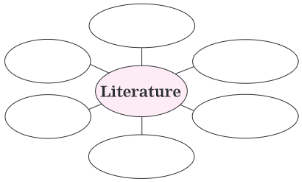
Complete the following word-web with the words related to literature:
 Image
A4. Activities based on Contextual Grammar:
Change the following sentences in indirect speech:
(1) "You have chosen a good time to come," the barber said to Mark Twain.
(2) The barber said to Mark Twain, "Have you bought your ticket?"
A5. Personal Response:
(1) What is the importance of humour in our life?
View full solution

Generate a 2.3 Mark Twain paper free

Pick question groups from the list above, set marks and difficulty, and export a branded PDF with step-by-step answer keys. First 3 chapters free — no signup.

Download App