Question 15 Marks
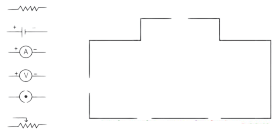
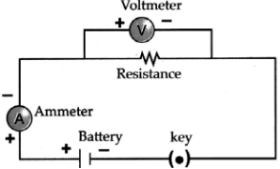
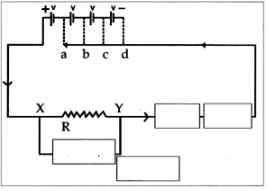
Complete the incomplete figure and give an explanation:
Answer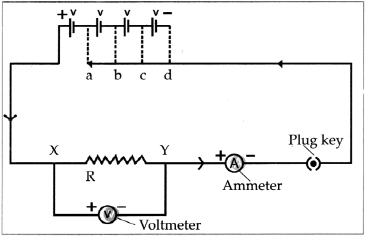
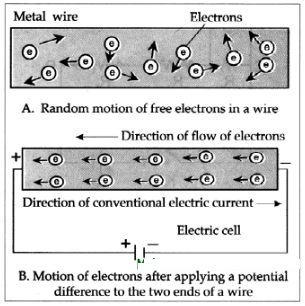
If the physical state of a conductor remains constant, the current (I) flowing through it is directly proportional to the potential difference (V) between its two ends.I α V
I = kV (k = constant of proportionality)
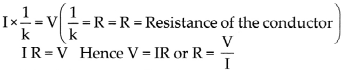
This is known as Ohm’s law.
We can obtain the SI unit of resistance from the above formula, Potential difference and current are measured in Volts and Amperes respectively. The unit o resistance is called Ohm. It is indicated by the symbol Ω.
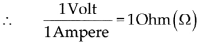
The resistance of one Ohm : If one Ampere current flows through a conductor when one Volt potential difference is applied between its ends, then the resistance of the conductor is one Ohm.
View full question & answer→If the physical state of a conductor remains constant, the current (I) flowing through it is directly proportional to the potential difference (V) between its two ends.I α V
I = kV (k = constant of proportionality)
This is known as Ohm’s law.
We can obtain the SI unit of resistance from the above formula, Potential difference and current are measured in Volts and Amperes respectively. The unit o resistance is called Ohm. It is indicated by the symbol Ω.
The resistance of one Ohm : If one Ampere current flows through a conductor when one Volt potential difference is applied between its ends, then the resistance of the conductor is one Ohm.