Questions

[2 Mark Questions]

🎯

Test yourself on this topic

39 questions · timed · auto-graded

Question 12 Marks
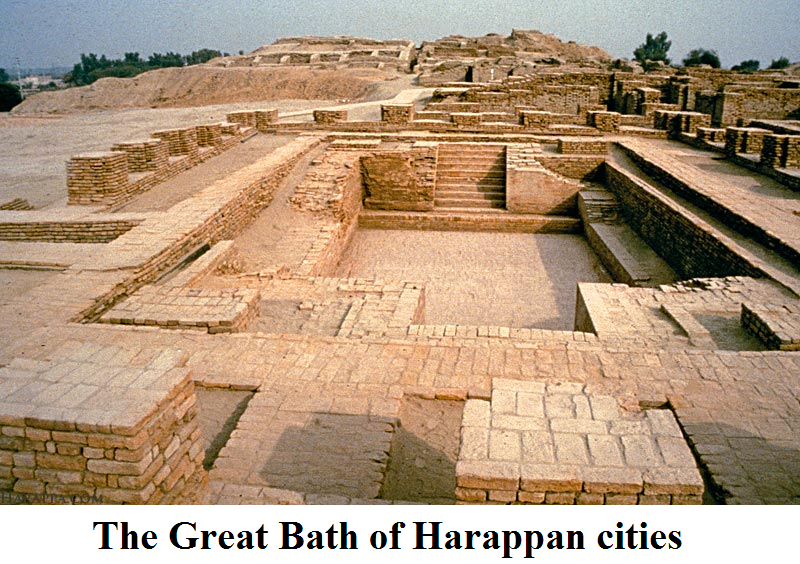
Describe the Great Bath.
Answer
The Great Bath is a tank excavated in Mohenjodaro. It has steps leading from two sides. The bath was lined with bricks and coated with bitumen to make it water proof.
View full question & answer
Question 22 Marks
What was special about the roads in the Indus Valley Civilization?
Answer
The roads were wide and cut each other at right angles. Houses were built on both sides and covered drains ran along the streets.
View full question & answer
Question 32 Marks
Write a short note on the Script of the Harappan people.
Answer
$i.$ Historians believe that the people of the Indus-Valley civilisation were literate. Many seals have been discovered. We can note lines $($or symbols$)$ of signs on the top of several seals of the Harappan people. These are parts of what historians call a script. This is the earliest form of writing known in the subcontinent.
$ii.$ Scholars have made many efforts to read these signs $($or decipher the Harappan script$)$, but we still do not know exactly what they mean.
View full question & answer
Question 42 Marks
Write two main characteristics of houses in the Harappan city.
Answer
$i.$ Generally, houses were either one or two storeys high with a single room built around a courtyard.
$ii.$ Most houses had a separate bathing area and some had wells to supply water.
View full question & answer
Question 52 Marks
Make a list of what Harappans ate, and put a tick mark against the things you eat today.
Answer
The people of Harappans grew wheat, barely, pulses, peas, rice, sesame, linseed and mustard. We today eat all these things they collected ber, hunted wild animal and caught fish.
View full question & answer
Question 62 Marks
Make a list of all the terracotta toys shown in the lesson. Which do you think children would have enjoyed playing with the most?
Answer
Most of the terracotta toys are the models of clay, which show animal figures. Most probably the toys are models of cattle, rhinoceros, cow etc.
View full question & answer
Question 72 Marks
When did earliest cities emerge in India?
Answer
The earliest cities of the Indian subcontinent emerged around 4,700 years in the region drained by Indus and its tributaries in the North-West.
View full question & answer
Question 82 Marks
Write the names of two means of transport generally used by the Harappans.
Answer
$i.$ Cart and.
$ii.$ Boat.
View full question & answer
Question 92 Marks
What does ‘raw material’ mean?
Answer
Raw materials are substances that are either found naturally or produced by farmers or herders. These are then processed to produce finished goods.
View full question & answer
Question 102 Marks
Write about Harappan seals.
Answer
Harappan seals had pictures of animals that relate to a wet and marshy environment. Rhinoceroses, elephants, and tigers were placed in the midst of marshy plants.
View full question & answer
Question 112 Marks
Do you think that the life of farmers and herders who supplied food to the Harappan cities was different from that of the farmers and herders? Give reasons for your answer.
Answer
The farmers and herders who gave food to the Harappan cities knew about agriculture and domestication of animals. So they supplied food to the city dwellers. The farmers and herders in the earlier period cultivated the fields themselves and domesticated the animals. So they provided their own food.
View full question & answer
Question 122 Marks
What are the two important salient features about the constructions excavated in the Indus Valley Civilisation?
Answer
$1.$ It has been found that baked bricks were used in all buildings.
$2.$ These bricks were laid in an interlocking pattern to make strong walls.
View full question & answer
Question 132 Marks
Into how many parts were the cities of the Mohenjodaro and Harappa divided?
Answer
Both cities were divided into two main parts:
$i.$ Upper part and
$ii.$ Lower part.
View full question & answer
Question 142 Marks
What was the main food of people in the cities?
Answer
The main food of the Harrappans were wheat, barley, pulses, peas, rice, sesame, linseed and mustard together with meat, milk and milk products.
View full question & answer
Question 152 Marks
List features of The Great Bath.
Answer
The Great Bath was lined with bricks, coated with plaster and made water tight with a layer of natural tar. There were steps leading down from two sides into the tank.
View full question & answer
Question 162 Marks
What type of houses were found in the earlier cities?
Answer
In Harrappan city, which is the first urban site in India, houses were either one or two storeys high, with rooms built around a courtyard.
View full question & answer
Question 172 Marks
When was cotton cultivated at Mehrgarh?
Answer
Cotton was probably grown at Mehragarh about 7000 years ago. Mehragarh was also the first site in India where agricultural activities took place.
View full question & answer
Question 182 Marks
What was the use of the Great Bath? What materials were used in the great bath?
Answer
Important people (priests, rulers) took ritual baths in this tank. The tank was lined with kiln burnt bricks, plaster of gypsum and bitumen was used to make the tank water resistant.
View full question & answer
Question 192 Marks
Write down the names of the main earliest cities?
Answer
The names are:Mohenjodaro, Harappa, Kalibangan, Rakhi Garhi, Chanhudaro, Dholavira, Surkotada, Lothal and Sotkakoh.
View full question & answer
Question 202 Marks
How do archaeologists know that cloth was used in the Harappan civilisation?
Answer
Archaeologists know that people in the in the Harappan civilization use cloth because they have found pieces of cloth attached to the lid of a silver vase. They have also found spindle whorls, made of terracotta and faience. They were used to spin thread.
View full question & answer
Question 212 Marks
What were the main Harappan towns in Gujrat?
Answer
The main Harappan towns in Gujrat were Dholavira, located on Khadir Beyt in the Rann of Kutch and Lothal that stood beside a tributary of the Sabarmati, close to the gulf of Khambat.
View full question & answer
Question 222 Marks
Write a short note on Lothal.
Answer
Lothal was a city on the banks of the tributary of the Sabarmati in Gujarat. It was a centre for making stone, shell and metal objects. A storehouse and fire altars were also found in the city.
View full question & answer
Question 232 Marks
Do you know from where gold, bronze, copper and precious stones were brought by the Harappans?
Answer
Yes, the Harappans probably got copper from Rajasthan, bronze may have been brought from Afghanistan and Iran, Gold from Karnataka and precious stones from Gujarat, Iran and Afghanistan. (All places are stated as per present location)
View full question & answer
Question 242 Marks
Make a list of raw materials produced by the farmers.
Answer
Farmers in our country are great producers of edible items :
1. Sugar cane produced sugar and gur
2. Tea leave produced tea
3. Cotton produced thread
4. Bamboo produced basket, furniture and many more household items of bamboo.
5. Soya bean/Palm oil produced edible oil etc.
6. Spices
7. Grains etc.
View full question & answer
Question 252 Marks
What was used in making the seals and what was found special in seals?
Answer
The Harappans made seals on stone. These were generally rectangular and had usually an animal carved on them with a script in form of signs which are still not known exactly what they mean.
View full question & answer
Question 262 Marks
Give the name of metals found in the Harappan cities.
Answer
Metals found in the Harappan cities were :
1. Copper
2. Bronze
3. Gold and
4. Silver
View full question & answer
Question 272 Marks
What were the raw materials that made the things found in the Harappan cities?
Answer
The things found in the Harappan cities were made up of :
• Stone
• Shell
• Metal.
View full question & answer
Question 282 Marks
How were houses planned in cities?
Answer
Generally, houses were either one or two storeys high with rooms built around courtyard. Most houses had separate bathing area and some had wells to supply water and had covered drains.
View full question & answer
Question 292 Marks
What unique objects were found in almost all the cities of Harappa by the archaeologists?
Answer
Archaeologists found unique objects in almost all the cities. They are :
1. red pottery painted with designs in blacks
2. stone weights,
3. seals,
4. special beads,
5. copper tools and
6. long stone blades.
View full question & answer
Question 302 Marks
Write a short note on Pyramids found in Egypt.
Answer
Around 5000 years ago, kings ruled over Egypt. They had armies and these were used to collect precious metals and stones. They also built huge tombs, known as pyramids. When kings died, the bodies were preserved and buried in these pyramids. These carefully preserved bodies are known as ‘mummies’. A large number of objects were also buried with them.
View full question & answer
Question 312 Marks
How were plants grown in the Harappan cities?
Answer
The earth was dug for turning the soil and planting the seeds by the use of plough. There was not heavy rainfall and thus water was stored and used for irrigation. The Harappans grew wheat, barley, pulses, peas, rice, sesame, linseed and mustard.
View full question & answer
Question 322 Marks
How were the goods carried from one place to another?
Answer
In the Harappan cities, a cart toy has been found which is just like the bullock cart used in present time. There were two wheels in it which were connected to each other with an axle and sides of base are supported by sticks. Thus, archaeologists considered that this cart would have been used for carrying the goods.
View full question & answer
Question 332 Marks
How were the beads made?
Answer
Beads were made of carnelian, a beautiful red stone. The stone was cut, shaped and polished and finally a hole was bored through the centre so that string could be passed through it. Thus, garlands of beads were made and used.
View full question & answer
Question 342 Marks
Were houses, drains and streets planned?
Answer
The evidences which were obtained from these cities referred that the houses, drains and streets were probably planned. Houses were either one or two-storeyed with rooms built around courtyard. There were separate bathing areas. Likewise, each drain had a gentle slope so that water could flow through it.
View full question & answer
Question 352 Marks
What do you know about Mohenjodaro?
Answer
Mohenjodaro was a city which comes under the Harappan cities. In Mohenjodaro, there was a very special tank which is called the Great Bath. This Great Bath was made up of bricks and bricks were coated with plaster and tank was made water-tight with a layer of natural tar. Stairs were used for bathing. Water in the tank was probably brought in from well and water was drained out after use. Perhaps, important people took a dip in this tank on special occasions.
View full question & answer
Question 362 Marks
What was special about the Harappan cities?
Answer
Many of these cities were divided into two or more parts. Number one was the west part which was smaller but higher. Archaeologists described this as the ‘citadel’. Number two was the east part which was larger but lower. Around each part, baked bricks were used. Bricks were so well-made that they have lasted for thousands of years. The bricks were laid in an interlocking pattern that made the walls strong.
View full question & answer
Question 372 Marks
Describe three important buildings in your city or village. Are they located in a special part of the settlement (e.g. The Centre)? What are the activities that take place in these buildings?
Answer
In our city (or village) the following three important buildings are located :
1. Community Hall or Gram Panchayat Bhawan or Municipal Committee Bhawan
2. School Building
3. Hospital
4. Temple or Mosque or Church or Gurudwara (Any three groups or points.)

The following activities take place in these buildings respectively :
1. Community Hall. Marriage Parties or Public Functions.
Gram Panchayat Bhawan. In this Bhawan (Building) Panchayat holds its meetings and discusses our village problems.
Municipal Committee Bhawan. In this Bhawan city's elected members meet under a chairman and discuss problems of the city.
2. School Building. In this building, education is provided to boys and girls of our village or city.
3. Hospital. Here ill people or patients come and consult doctors, compounders or nurses as per their diseases or requirements.
4. Temple or Mosque or Church or Gurudwara. People come and participate in prayer (or Namaz) according to their own religion and faith. (Any three points.)

View full question & answer
Question 382 Marks
Do you think that the life of farmers and herders who supplied food to the Harappan cities was different from that of the farmers and herders you read about in Chapter 3? Give reasons for your answer.
Answer
The farmers and herders who gave food to the Harappan cities knew about agriculture and the domestication of animals. So they supplied food to the city’ dwellers. The farmers and herders in the earlier period cultivated the fields themselves and domesticated the animals. So they provided their own food.
View full question & answer
Question 392 Marks
How do archaeologists know that cloth was used in the Harappan civilization?
Answer
Archaeologists know that the people in the Harappan civilization use cloth because they have found pieces of cloth attached to the lid of a silver vase. They have also found spindle whorls, made of terracotta and faience. They were used to spin thread.
View full question & answer
[2 Mark Questions] - Social Science STD 6 Questions - Vidyadip