Questions

[3 Mark Questions]

🎯

Test yourself on this topic

31 questions · timed · auto-graded

Question 13 Marks
Return to Rasheeda’s question. Can you think of some answers to it?
Answer
Rasheed'a question was how could anyone Know what had happened so many year ago. There are various ways by which the people can know about the past.
  1. The remains left by the early man in the form of tools. weapons, pottery, jewelery etc.
  2. After man had learnt the art of writing he wrote on leaves bark of the trees and even on hard material. We have been able to read the script of these people (in many case).
View full question & answer
Question 23 Marks
Define archaeology.
Answer
Archaeology is the science that studies human cultures through the recovery, documentation, analysis and interpretation of material remains and environmental data, including architecture, artifacts, features, biofacts and landscapes.
View full question & answer
Question 33 Marks
Why is the plural word ‘Pasts’ used in the title of this book,‘Our Pasts’?
Answer
The word ‘Pasts’ is used in plural to draw attention to the fact that the past was different for different groups of people. For example, the lives of kings and queens were different from those of peasants and herdsmen, the lives of traders were different from those of crafts persons and so on. This fact is true even in the modern times. The life of people living in the Andaman Islands is very different from those living in the cities. Secondly, we know a lot about the kings and battles they fought because they recorded all their victories. We know very little about the lives of the ordinary people because they did not keep any record of what they did.
View full question & answer
Question 43 Marks
How do the scholars understand what is written in the inscriptions?
Answer
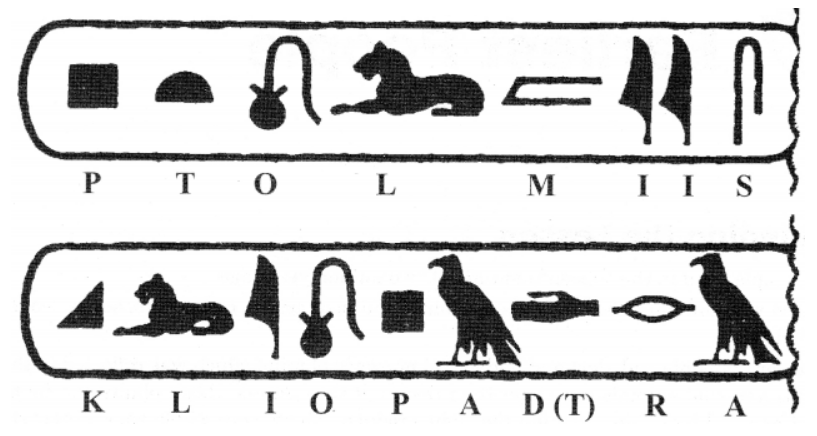
The scholars understand what is written in these inscriptions through the process called decipherment. Most of these inscriptions were written several hundred years ago and languages and the script used in the inscriptions have changed with time. One good example of decipherment is of the Rosetta stone found in Egypt which was used to decipher ancient Egyptian using Greek language.
View full question & answer
Question 53 Marks
What was the occupation of the people who lived on the banks of the river Narmada?
Answer
People have lived along the banks of river Narmada for several hundred thousand years. They were skilled gatherers. They were aware of the vast wealth of the forest around them. They collected roots, fruits and other forest products for their food from these surrounding forests. They also hunted animals.
View full question & answer
Question 63 Marks
Who all studied sources of history? What did they explore?
Answer
$1.$ There were two types of people who studied and explored history.
$2.$ One group was called archaeologists while the other group was called historians.
$3.$ Archaeologists studied remains of buildings made of stones, bricks, paintings and sculptures.
$4.$ The other group called historians were people who studied the past and used the word source to refer to the information, found from manuscripts, inscriptions and archaeology.
View full question & answer
Question 73 Marks
Describe at least two ways in which you think the lives of kings would have been different from those of farmers.
Answer
  1. King: The king led a luxurious life. He mad all the decisions for the society and looked after their welfare. They led the armies in war.
  2. Farmers: They worked very hard to grow crops for the people. They led an ordinary life. where he could barely fulfill his needs.
View full question & answer
Question 83 Marks
Why should we study history?
Answer
The study of history has several benefits. Some of these are as follows:
  1. It tells us about our past.
  2. It tells us about the mistakes people committed in the past so that these are not repeated.
  3. It gives us an understanding about our ancient culture and lifestyle.
View full question & answer
Question 93 Marks
How have Himalayas served us since the past?
Answer
  1. The Himalayas have acted as natural barriers between India and Central Asia since ages.
  2. Travellers, traders and scholars came through the passes of these mountains and other areas.
  3. They have left accounts which help us to know about the history of India.
  4. They brought new ideas, customs and beliefs which have made Indian culture richer.
View full question & answer
Question 103 Marks
Write a short note on manuscripts?
Answer
Manuscripts are a very important source to know about our past. They were usually written on the palm leaf or on the bark of a tree, by hand. The palm leaves or the bark of a tree were cut into pages and tied together to make books. These books deal with varied subjects such as, science, medicine, religious beliefs and practices and lives of kings. Besides, there were epics, poems and plays. The language used in the manuscripts was Sanskrit, Prakrit and Tamil.
View full question & answer
Question 113 Marks
How did our country get its names?
Answer
Names of our country.
  1. Two of the words we generally use for our country are India and Bharat. The word India comes from the Indus called Sindhu in Sanskrit.
  2. The Iranians and the Greeks who came through the northwest about 2500 years ago, were familiar with the Indus, called it the Hindos or the Indos. The land to the east of the river (i.e., the Indus) was called India.
  3. The name Bharat was used by a group of people who lived in the northwest, and who are mentioned in the Rigveda, the earliest composition in Sanskrit (dated to about 3500 years ago). Later, it was used for the country.
View full question & answer
Question 123 Marks
Why is South Asia often called a sub-continent?
Answer
South Asia is often called a sub-continent because although it is smaller than a continent, it is very large and is separated from the rest of Asia by seas, hills and mountains. It is a home to over one-fifth of the world’s population.
View full question & answer
Question 133 Marks
How has geography affected the history of India? Discuss.
Answer
The history of a place is shaped by the location and geography of that particular place. The physical features of the Indian subcontinent have greatly influenced its history. India has mountains, plains, plateaus and sea coasts. The Himalayas have acted as a barrier in the north for foreign invaders. Numerous rivers of India led to the rise of human settlements around them. The Harappan Civilization flourished around the river Indus. The Indo Gangetic plains lying between the Indus and the Ganges saw the rise of many powerful kingdoms and empires. The coastal plains have been centre of trade and commerce since ancient times. There was an enormous exchange of ideas, cultures and traditions besides merchandise. This resulted in the development of a unique yet diverse culture.
View full question & answer
Question 143 Marks
Why did ancient men & women move to different places?
Answer
Men & women travelled from one place to another for the following reasons:
  1. In search of livelihood.
  2. To escape from natural disasters like flood or drought.
  3. Sometimes men marched in armies, conquering other's lands.
  4. Merchants travelled with caravans or ships, carrying valuables.
  5. Religious teachers walked from one place to another to offer instructions and advices on religion.
  6. Some people travelled to new & exciting places for adventure purposes.
View full question & answer
Question 153 Marks
Find the word crafts persons on page 1. List at least five different crafts that you know about today. Are the crafts persons:
  1. Men
  2. Women
  3. Both men and women?
Answer
The craft person are the people who make things at home with simple tools and with the help of family members.
  1. The different crafts are:
  2. Spinning and weaving of cloth on hand looms.
  3. Blacksmiths.
  4. Pottery making.
  5. Inlay work.
The craft persons can both men and women: some the work blacksmith can be done mainly by men. Some other like pottery making is done both by men and both men and women.
View full question & answer
Question 163 Marks
What do AD and BC stand for?
Answer
AD stands for two Latin words, ‘Anno Domini’, meaning 'in the year of the Lord' (i.e. Christ) . The year 2007, also written as AD 2007, means 2007 years after the birth of Christ. BC stands for 'Before Christ', meaning before the birth of Christ. For example, a time period written as 200 BC means 200 years before the birth of Christ. BC runs into countdown format as 10..,9..,8..,7..,........1.. upto the time of Jesus Christ's birth and after his birth it started to run in today's date format, i.e., 1..,2..,3....,onwards.
View full question & answer
Question 173 Marks
How was the name of our country derived?
Answer
  1. Our motherland is commonly known by two names: India and Bharat.
  2. The name Bharat was used by people of North India in the Sanskrit composition of Rigveda.
  3. The word India traces its roots from the river Indus called Sindhu in Sanskrit.
  4. The Iranians and the Greek called India as Indoi or Hindos, i.e., land across the Indus.
View full question & answer
Question 183 Marks
How did the archeologists find out about the eating habits of the people in the past?
Answer
Archaeologists studied the bones of animals, birds and fish to identify the eating habits of the people in the past. Although plant remains survive far more rarely. But if seeds of grains or pieces of woods would have been burnt, they would have survived in a charred form. So finding charred seeds give information that they ate plant produce also.
View full question & answer
Question 193 Marks
Who are archaeologists and what do they do?
Answer
The people who systematically study things that were made and used in the past through process of exploration and excavation are called archaeologists. They study the remains of buildings made of stone & brick, paintings & sculpture. They also explore and excavate (dig under the surface of the earth) to find tools, weapons, pots, pans, ornaments, coins and various other articles used by them. Then they analyse their findings to give a new theory.
View full question & answer
Question 203 Marks
State an important difference between a manuscript and an inscription.
Answer
An important difference between an inscription and a manuscript is the surface on which they are written. Inscriptions are engravings on hard surfaces while manuscripts are hand written books, which are usually written on palm leaves or the bark of a tree.
View full question & answer
Question 213 Marks
Why did the Magadh Empire flourished on the banks of river Ganga and river Son?
Answer
This was possible because the rivers facilitated quick transportation system and hence quite effectively helped the trade to flourish. This encouraged the rural people to come to these areas and settle down. Moreover rivers provided a kind of natural defence and the kingdom was able to strengthen its position due to the availability of iron ore in the region.
View full question & answer
Question 223 Marks
Why did people across the world come to this subcontinent?
Answer
  1. People from across the frontiers also came to subcontinent and settled here.
  2. These movements of people enriched one’s cultural traditions.
  3. People have shared new ways of carving stones, composing music and even cooking food for several hundreds of years.
View full question & answer
Question 233 Marks
What is a source? What is its importance to the historians?
Answer
The word source refers to the information found from the manuscripts, inscriptions, coins and monuments. It helps the historians in the reconstruction of our past. These sources give a lot of information about the kings, their coronation, their extent of the empire, the battles they fought, their welfare measures etc. because they kept records of all what they did.
View full question & answer
Question 243 Marks
Discuss why it is important to study our past?
Answer
It is important to study about our past. It gives a lot of information regarding the political, social, economic and cultural life of the people in the earlier days. By studying about our past:
  1. We can find about the eating habits, the clothing and housing pattern of the people of the earlier times.
  2. We can gather information about the different occupations of those people. We can find about the lives of hunters, farmers, merchants, priest, craftsmen, musicians, poets and scientists.
  3. We can learn about the lives of children; the songs they sang, the plays they saw, the games that they played and the kind of toys with which they played.
View full question & answer
Question 253 Marks
Why do you think ordinary men and women did not generally keep records of what they did?
Answer
The ordinary men did not keep a reward of what they did because they did not know how to read and write. There was a specialized class of a people called 'scribes' who recorded all the events.
View full question & answer
Question 263 Marks
What is the work of an archaeologist?
Answer
Archaeologists are people who excavate to find evidence of the past. They look for objects like stone tools, pottery, seals, jewellery, toys etc. from excavation sites. These also provide a lot of information about that period of history. This is especially important in gathering information about prehistory because no written records are available. Archaeological evidence includes cave paintings, coins, inscriptions, and monuments and burials.
View full question & answer
Question 273 Marks
How did the people live in Stone Age?
Answer
The Way of Life of the People in Stone Age.
  1. Some of the earliest people lived along the banks of rivers. They were skilled gatherers. They knew about the vast wealth of plants in the surrounding forests, and collected roots, fruits and other forest produces for their food.
  2. The people in Stone Age also hunted animals and birds. They used to catch fish also.
  3. Some of the areas where the people first began to grow crops such as wheat and barley about 8000 years ago are located in river-valley areas. They also began rearing animals like sheep, goat, dog, cow and other cattle.
View full question & answer
Question 283 Marks
The sources of history are archaeological and literary.
Answer
The birth of Christ is taken as a reference point. The years before Christ was born are written as BC or before the birth of Christ e.g. 3000 BC means 3000 years before Christ was born. Nowadays, BC is also written as BCE which means Before the Common era. AD stands for Anno Domini meaning 'in the year of the Lord'. Any event that occurred after the birth of Christ is written as AD e.g. India gained independence in 1947 AD, meaning 1947 years after the birth of Christ. It can also be written as CE or Common Era.
View full question & answer
Question 293 Marks
Name the language which was not used in the Ancient Period.
Answer
The archaeologists study the remains of buildings made of stone and brick. painting and sculpture. They also dig in under the surface of the earth to find tools. weapons, pots, pans and ornaments and coin.
Toll and weapons could have been made of stone. Buildings were also made of stone.
View full question & answer
Question 303 Marks
Look at the following picture given below and answer the following.

Image

(a) What does the bird stand for ?
(b) What does the lion stand for ?
(c) Where was the inscribed stone found and what is the process of reading the letters, as describe above, called ?
Answer
(a) A bird is stood for the letter A.
(b) Lion is stood for the letter L.
(c) The stone was found in Rosetta, a town on the north coast of Egypt. The process is called decipherment.
View full question & answer
Question 313 Marks
How is living of the present Indian tribals different from the villages?
Answer
There are many places in India where tribals are living. These tribals are living just adjoining to the forest areas or in the forest. Presently, most of the tribals are living in the state of Madhya Pradesh, Odisha, Jharkhand, Chhattisgarh, Andaman and Nicobar etc. These communities are still depending on the natural resources. Gradually, they have been evolved in agricultural activities.

Apart from agriculture, their main livelihood is dependent on the rearing of cattles, hunting, fishing etc. They still like separation from the other population. Very rarely the children of tribals join school situated in the nearby area. They are almost unaware about the development of science and technology. Thus, we can say that the tribals are almost in the same condition since hundred of years.

In contrast, people of the Indian villages are enjoying many facilities such as schools, hospitals, roads, transport such as bikes, tractors, cars etc., agriculture with improved technology and now mobile has also reached Indian villages. Our villages are growing fast.
View full question & answer
[3 Mark Questions] - Social Science STD 6 Questions - Vidyadip