- ARise of iodine solution in the glass tube of dropper.
- BRise of cold drink in a long plastic straw.
- CSticking of suction hook on the wall of a room.
- ✓Rise of mercury in glass tube of thermometer.

The $SI$ unit of force is Newton.

| Column I | Column II | ||
| $(A)$ | A girl pulling the leash of a running dog | $(i)$ | Impact force can make stationary object to move by an another moving object. |
| $(B)$ | A driver turning the steering wheel of a car | $(ii)$ | Gravity acts upon an object |
| $(C)$ | When you hit a nail with a hammer | $(iii)$ | Force can make an object go slower |
| $(D)$ | A ball released from top of a tower | $(iv)$ | Force can change the direction of a moving object. |
A girl pulling the leash of a running dog makes dog slower. A driver turning the steering wheel of a car is changing the direction of the car. By hitting a nail with a hammer is showing impact force. A ball thrown upwards always comes towards the Earth due to gravity.

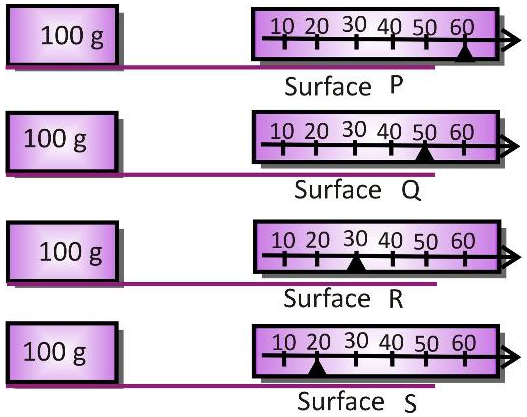
The force required to move a $100g$ mass on surface $P$ is maximum. This means surface $P$ offers maximum friction.
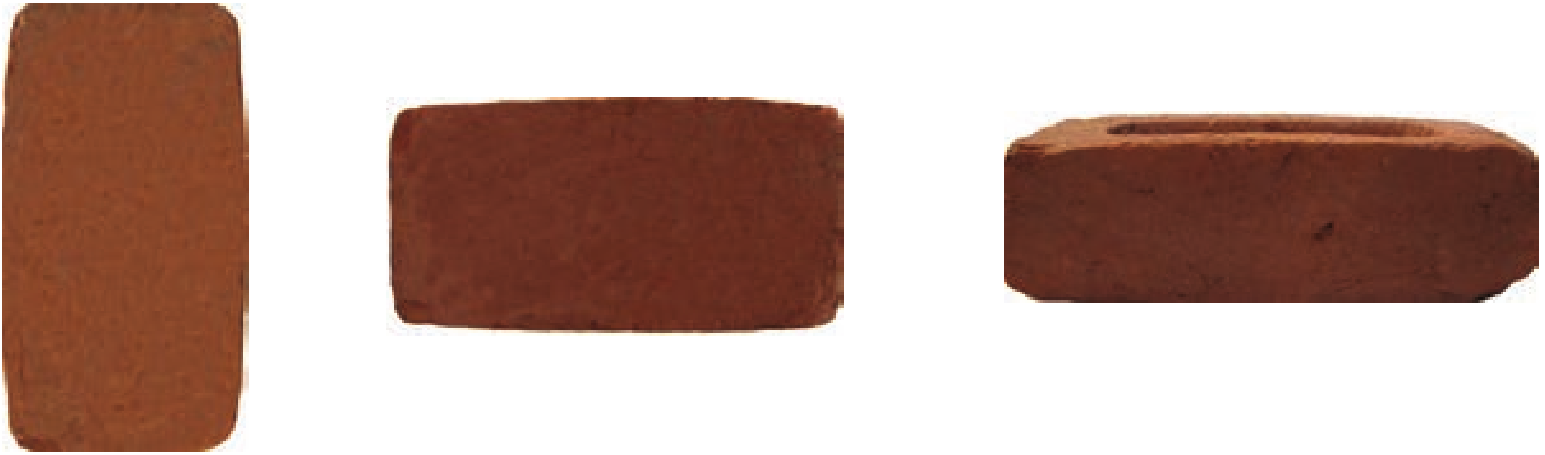
As we know that pressure exerted by the body is inversely proportional to the area where force is applied. So, which has less area of cross section in contact with the surface will exert more pressure on the ground. It is clear that height from the base exerts more pressure. Therefore, the maximum pressure is exerted when length and height form the base.

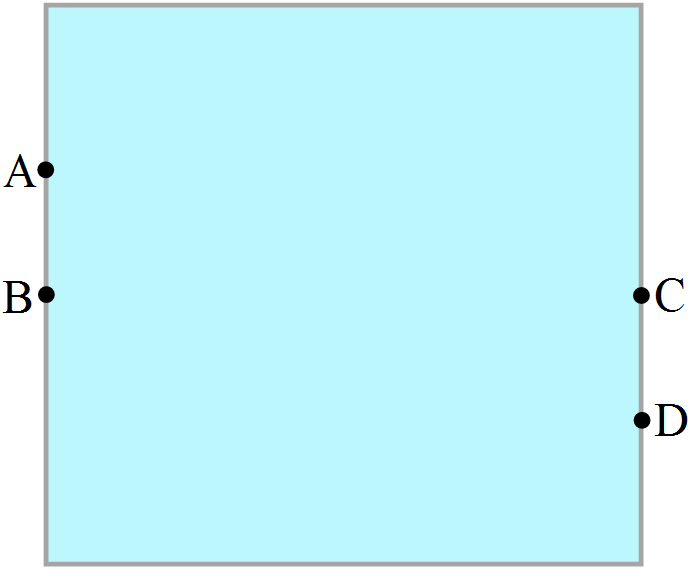
Since, $B$ and $C$ are at the same level. So, the pressure will remain same at $B$ and $C$.