Questions

M.C.Q (1 Marks)

Take a timed test

162 questions · self-marked practice — reveal the answer and mark yourself.

MCQ 11 Mark
Periderm is composed of of:
  • A
    Cork cambium.
  • B
    Cork and secondary cortex.
  • C
    Cork and cork cambium.
  • D
    Cork, cork cambium and secondary cortex.
Answer
  1. Cork, cork cambium and secondary cortex.
View full question & answer
MCQ 31 Mark
Function of companion cells is:
  • A
    Loading of sucrose into sieve elements.
  • B
    Providing energy to sieve elements for active transport.
  • C
    Providing water to phloem.
  • D
    Loading of sucrose into sieve elements by passive transport.
Answer
  1. Loading of sucrose into sieve elements.
View full question & answer
MCQ 41 Mark
For union between stock and scion in grafting which one is the first to occur?
  • A
    Formation of callus.
  • B
    Production of plasmodesmata.
  • C
    Differentiation of new vascular tissues.
  • D
    Regeneration of cortex and epidermis.
Answer
  1. Formation of callus.
View full question & answer
MCQ 51 Mark
Where would you look for active cell division in plants?
  • A
    In the pith cells
  • B
    In the cells of cortex
  • C
    In the internodal region
  • D
    At the tip of root and shoot
Answer
  1. At the tip of root and shoot

Explanation:

Meristem is the region of the plant where active cell division can be seen.

It is the part where cells are continuously dividing into different types of cells

In plants the growth is represented by the growth at the tips and the roots as there will be more number of meristems at the tips of roots and stems.

View full question & answer
MCQ 61 Mark
When we peel the skin of a potato tuber, we remove:
  • A
    Periderm.
  • B
    Epidermis.
  • C
    Cuticle.
  • D
    Sapwood.
Answer
  1. Periderm.

Explanation:

Periderm is a tissue of secondary origin that replaces damaged epidermis. It can be found in underground plant organs. In potato, a model for periderm studies, periderm replaces the epidermis early in tuber development and suberized phellems constitute tuber’s skin. Thus when we peel off a potato tuber we will remove periderm.

View full question & answer
MCQ 71 Mark
Which of the cells is enucleate at maturity?
  • A
    Palisade cell.
  • B
    Companion cells.
  • C
    Sieve tube.
  • D
    Cortical cell.
Answer
  1. Sieve tube.
View full question & answer
MCQ 91 Mark
Epiblema of roots is equivalent to:
  • A
    Pericycle.
  • B
    Endodermis.
  • C
    Epidermis.
  • D
    Sele.
Answer
  1. Epiderms.

Explanation:

EpidermisIt is usually a single layered structure, present all over the body surface of the plant. In case of root, it is called epiblema instead of epidermis. Whereas stele is collective term for vascular tissues in case of vascular plants (pteridophyte gymnosperms and angiosperms). Endodermis and Pericycle are the part of root or stem encircling vascular strands.

View full question & answer
MCQ 101 Mark
Endodermis cells are rich in:
  • A
    Cellulose
  • B
    Starch grains
  • C
    Fibers
  • D
    Resins and wax
Answer
  1. Starch grains

Explanation:

Endodermis cells are rich in starch grains.

View full question & answer
MCQ 111 Mark
Interfascicular cambium and cork cambium are formed due to:
  • A
    Cell division.
  • B
    Cell differentiation.
  • C
    Cell dedifferentiation.
  • D
    Redifferentiation.
Answer
  1. Cell dedifferentiation.

Explanation:

The phenomenon of regeneration of permanent tissue to become meristematic is called dedifferentiation. Cork cambium, wound cambium and interfascicular vascular cambium are the examples of secondary meristems which are always produced through dedifferentiation.

View full question & answer
MCQ 121 Mark
The cork cambium, cork and secondary cortex are collectively called:
  • A
    Periderm.
  • B
    Phelloderm.
  • C
    Phellogen.
  • D
    Phellem.
Answer
  1. Periderm.
View full question & answer
MCQ 131 Mark
What is not true about sclereids?
  • A
    These are parenchyma cells with thickened lignified walls.
  • B
    These are elongated and flexible with tapered ends.
  • C
    These are commonly found in the shells of nuts and in the pulp of guava, pear etc.
  • D
    These are also called the stone cells.
Answer
  1. These are parenchyma cells with thickened lignified walls.
View full question & answer
MCQ 141 Mark
Stem develops from:
  • A
    Radicle
  • B
    Cotyledon
  • C
    Mesocarp
  • D
    Plumule
Answer
  1. Plumule

Explanation:

Stem develops from plumule.

View full question & answer
MCQ 161 Mark
The buds that are present at the tip of stem or a branch are called as:
  • A
    Apical bud
  • B
    Axillary bud
  • C
    Vegetative bud
  • D
    Floral bud
Answer
  1. Apical bud

Explanation:

An apical bud is the primary growing bud located at the tip of the stem in a plant.

Apical buds make auxin that is distributed throughout the plant via the phloem.

Auxin prevents the growth of lateral buds.

This phenomenon is called apical dominance.

View full question & answer
MCQ 171 Mark
Vessels are found in:
  • A
    All angiosperms and some gymnosperms.
  • B
    Most of angiosperms and few gymnosperms.
  • C
    All angiosperms and few gymnosperms and some pteridophytes.
  • D
    All pteridophytes.
Answer
  1. Most of angiosperms and few gymnosperms.
View full question & answer
MCQ 181 Mark
What is true about a monocot leaf?
  • A
    Reticulate venation.
  • B
    Absence of bulliform cells from epidermis.
  • C
    Mesophyll not differentiated into palisade and spongy tissues.
  • D
    Well diffferentiated mesophyll.
Answer
  1. Mesophyll not differentiated into palisade and spongy tissues.
View full question & answer
MCQ 191 Mark
Closed vascular bundles lacks.
  • A
    Pith
  • B
    Xylem
  • C
    Cambium
  • D
    Xylem vessels
Answer
  1. Cambium

Explanation:

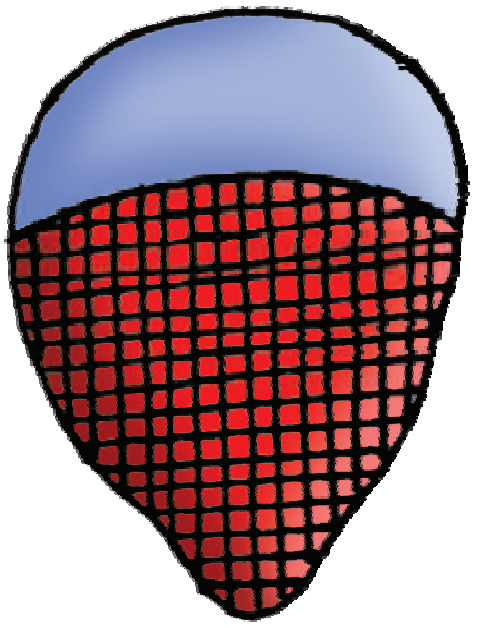
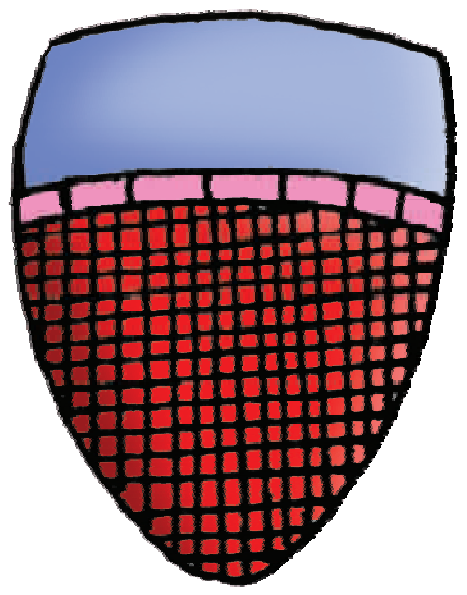
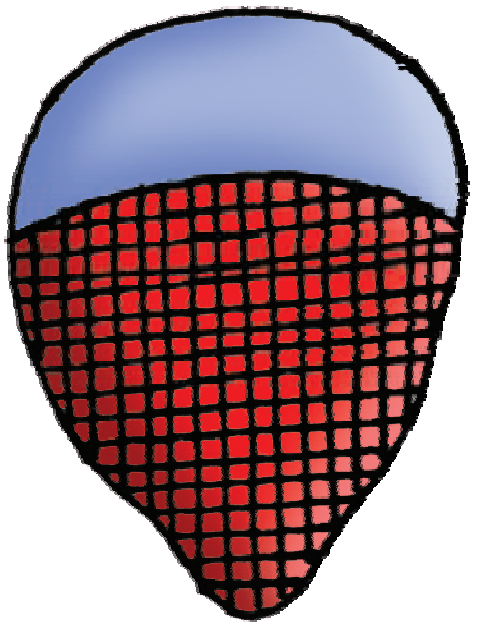
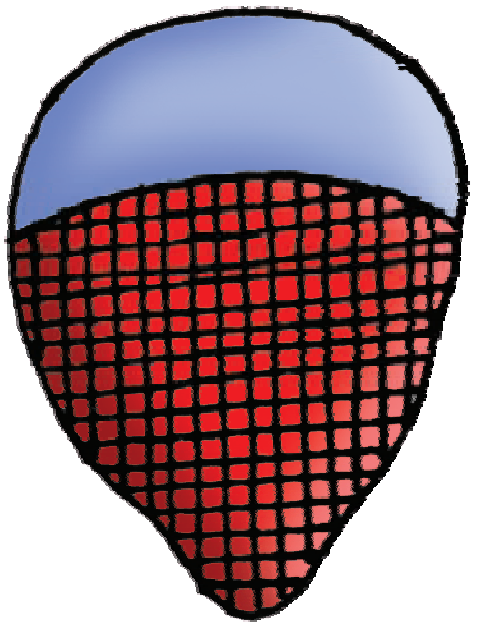
Picture of closed conjoint vascular bundles.

View full question & answer
MCQ 201 Mark
Vascular tissues in flowering plants develop from:
  • A
    Phellogen.
  • B
    Plerome.
  • C
    Periblem.
  • D
    Dermatogen.
Answer
  1. Plerome.
View full question & answer
MCQ 211 Mark
Thickest cell wall is seen in ______ cell.
  • A
    Sclerenchyma
  • B
    Parenchyma
  • C
    Collenchyma
  • D
    Both A and B
Answer
  1. Sclerenchyma

Explanation:

The chief mechanical tissue of the plant body composed of highly thick - walled cells with little or no protoplasm is called sclerenchyma.

These tissues have thick cell wall due to the deposition of cellulose or lignin or both.

Lignin deposited cells are said to be lignified.

View full question & answer
MCQ 231 Mark
What is the name of the whorl containing colourful parts of flower?
  • A
    Petal.
  • B
    Sepal.
  • C
    Calyx.
  • D
    Corolla.
Answer
  1. Corolla.
View full question & answer
MCQ 251 Mark
A narrow layer of thin walled cells found between phloem/ bark and wood of a dicot is:
  • A
    Cork cambium.
  • B
    Vascular cambium.
  • C
    Endodermis.
  • D
    Pericycle.
Answer
  1. Vascular cambium.
View full question & answer
MCQ 261 Mark
Collenchyma occurs in the stem and petioles of:
  • A
    Xerophytes.
  • B
    Monocots.
  • C
    Dicot herbs.
  • D
    Hydrophytes.
Answer
  1. Dicot herbs.
View full question & answer
MCQ 271 Mark
Which of the following substances is absent in the cell walls of sclerenchyma?
  • A
    Cellulose
  • B
    Pectin
  • C
    Lignin
  • D
    Hemicellulose
Answer
  1. Pectin

Explanation:

The sclerenchyma tissue has rectangular - shaped cells.

These cells are without a nucleus and protoplasm.

They show greater deposition of lignin in the walls resulting in uneven thickness and are referred to as the dead cells. 

Cellulose and hemicellulose are also present in the sclerenchyma wall. Pectin is present in soft plant tissues and absent in sclerenchyma.

View full question & answer
MCQ 281 Mark
Identify the simple tissue from among the following.
  • A
    Parenchyma.
  • B
    Xylem.
  • C
    Epidermis.
  • D
    Phloem.
Answer
  1. Parenchyma.

Explanation:

Parenchyma is a simple permanent tissue found in plants whereas; xylem and phloem are complex permanent tissues. Epidermis is a part of epidermal tissue system.

View full question & answer
MCQ 291 Mark
Match the followings and choose the correct option from below.
 
Column I
 
Column II
A
Meristem
i.
Photosynthesis, storange
B
Parenchyma
ii.
Mechanical support
C
Collenchyma
iii.
Actively dividing cells
D
Sclernchyma
iv.
Stomata
E
Epidermal tissuse
v.
Sdereids
 
  • A
    A(i), B(iii), C(v), D(ii), E(iv)
  • B
    A(iii), B(i), C(ii), D(v), E(iv)
  • C
    A(ii), B(iv), C(v), D(i), E(iii)
  • D
    A(v), B(iv), C(iii),D(ii), E(i)
Answer
  1. A(iii), B(i), C(ii), D(v), E(iv)

Explanation:

View full question & answer
MCQ 301 Mark
Ground tissue consists of:
  • A
    All tissues internal to endodermis.
  • B
    Epidermis and cortex.
  • C
    All tissues except epidermis and vascular bundles.
  • D
    All tissue external to endodermis.
Answer
  1. All tissues except epidermis and vascular bundles.

Explanation:

Ground tissue includes all tissues except epidermis and vascular bundles.

The ground tissue comprises the bulk of the primary plant body.

Parenchyma, collenchyma and sclerenchyma cells are common in the ground tissue.

So, the correct answer is 'All tissues except epidermis and vascular bundles.'

View full question & answer
MCQ 311 Mark
Some vascular bundles are described as open because these:
  • A
    Are not surrounded by pericycle.
  • B
    Are surrounded by pericycle but no endodermis.
  • C
    Are capable of producing secondary xylem and phloem.
  • D
    Possess conjunctive tissue between xylem and phloem.
Answer
  1. Are capable of producing secondary xylem and phloem.
View full question & answer
MCQ 321 Mark
A conjoint and open vascular bundle will be observed in the transverse section of:
  • A
    Monocot root.
  • B
    Monocot stem.
  • C
    Dicot root.
  • D
    Dicot stem.
Answer
  1. Dicot stem.

Explanation:

Vascular bundles which contain both xylem and phloem are called conjoint vascular bundles. In gymnosperms and dicot stems vascular bundles contain xylem, phloem and a strip of vascular cambium (between phloem and xylem of each vascular buncjje) called intrafascicular (or fascicular) cambium. It produces secondary tissues. Such vascular bundles are described as open because the original or primary phloem and xylem separate on the production of secondary tissues by vascular cambium. Thus, conjoint and open vascular bundles will be observed in dicot stem.

View full question & answer
MCQ 331 Mark
Function of companion cells is:
  • A
    Loading of sucrose into sieve elements.
  • B
    Providing water to phloem.
  • C
    Loading of sucrose into sieve elements by passive transport.
  • D
    Providing energy to sieve elements for active transport.
Answer
  1. Loading of sucrose into sieve elements.
View full question & answer
MCQ 341 Mark
The length of different internodes in a culm of sugarcane is variable because of:
  • A
    Shoot apical meristem.
  • B
    Position of axillary buds.
  • C
    Size of leaf lamina at the node below each internode.
  • D
    Intercalary meristem.
Answer
  1. Intercalary meristem.
View full question & answer
MCQ 351 Mark
Plant growth in length is increased by:
  • A
    Apical meristem
  • B
    Lateral meristem
  • C
    Dermatogen
  • D
    Periblem
Answer
  1. Apical meristem

Explanation:

Apical meristem is found at the growing tips, that is root and shoot tips.

These are actively dividing cells and are thus responsible for the growth of plant length - wise.

Rapid division of meristematic cells can cause the plant to grow tall.

There are several hormones like auxin which stimulate the multiplication of meristematic cells.

View full question & answer
MCQ 361 Mark
__________ cells have lignified walls.
  • A
    Collenchyma
  • B
    Parenchyma
  • C
    Sclerenchyma
  • D
    Xylem parenchyma
Answer
  1. Sclerenchyma

Explanation:

Sclerenchyma cells have thick lignified walls.

The lignified wall gives sclerenchyma cells their rigidity and helps in providing mechanical support.

Collenchyma and parenchyma cells do not have lignified walls.

View full question & answer
MCQ 371 Mark
Heartwood differs from sapwood in:
  • A
    Presence of rays and fibres.
  • B
    Absence of vessels and parenchyma.
  • C
    Having dead and non-conducting elements.
  • D
    Being susceptible to pests and pathogens.
Answer
  1. Having dead and non-conducting elements.
View full question & answer
MCQ 381 Mark
Living cells of xylem are____________.
  • A
    Xylem parenchyma
  • B
    Xylem fibres
  • C
    Vessels
  • D
    Tracheids
Answer
  1. Xylem parenchyma

Explanation:

Xylem is a complex permanent tissue specialized for transport of water and minerals.

The cells of xylem are dead at maturity and devoid of protoplasm except for xylem parenchyma cells, which are living cells.

View full question & answer
MCQ 391 Mark
Quiescent centre is present in the.
  • A
    Apical meristem
  • B
    Shoot meristem
  • C
    Lateral meristem
  • D
    Root meristem
Answer
  1. Root meristem
View full question & answer
MCQ 401 Mark
The vascular cambium in dicots is:
  • A
    Lateral
  • B
    Apical
  • C
    Intercalary
  • D
    Secondary
Answer
  1. Lateral

Explanation:

Secondary growth in dicot stem occurs by increase in lateral thickening which is also called as secondary thickening or secondary growth.

Vascular cambium initiates intrastelar secondary growth.

Hence, vascular cambium grows by division of lateral meristem.

View full question & answer
MCQ 411 Mark
Pith and cortex belongs to:
  • A
    Epidermis
  • B
    Ground tissue
  • C
    Vascular tissue
  • D
    Bundle sheath
Answer
  1. Ground tissue

Explanation:

In the stem, the pith and the cortex make up the ground tissue.

The pith is located within the cylinder of vascular tissue, where it often exhibits a spongy texture because of the presence of large intercellular air spaces.

If the growth of the pith fails to keep up with that of the surrounding tissues, the pith may degenerate, producing a hollow stem.

In general, roots lack piths, although there are exceptions to this rule. 

In contrast, the cortex, which is located between the epidermis and the vascular cylinder, is present in both stems and roots. 

View full question & answer
MCQ 421 Mark
Pith is very well developed in:
  • A
    Monocot root and monocot stem.
  • B
    Monocot root and dicot root.
  • C
    Dicot root and monocot stem.
  • D
    Monocot root and dicot stem.
Answer
  1. Monocot root and dicot stem.
View full question & answer
MCQ 431 Mark
At maturity which of the following is enucleate?
  • A
    Sieve cell.
  • B
    Companion cell.
  • C
    Palisade cell.
  • D
    Cortical cell.
Answer
  1. Sieve cell.
View full question & answer
MCQ 441 Mark
A bicollateral vascular bundle is characterised by:
  • A
    Phloem being sandwitched between xylem.
  • B
    Transverse splitting of vascular bundle.
  • C
    Longitudinal splitting of vascular bundle.
  • D
    Xylem being sandwitched between phloem.
Answer
  1. Xylem being sandwitched between phloem.
View full question & answer
MCQ 451 Mark
Pericycle of roots produces.
  • A
    Mechanical support.
  • B
    Lateral roots.
  • C
    Vascular bundles.
  • D
    Adventitious buds.
Answer
  1. Lateral roots.
View full question & answer
MCQ 461 Mark
Which of the following helps in the curling of the leaf surface?
  • A
    Bulliform cells.
  • B
    Xylem tissue.
  • C
    Palisade parenchyma.
  • D
    Bundle sheath cells.
Answer
  1. Bulliform cells.

Explanation:

In grasses, adaxial epidermal cells along the veins modify themselves into large, empty, colourless cells. These are called bulliform cells. When there is water stress leaves curl themselves inward to minimise water loss. When the cells have absorbed water and are turgid, the leaf surface is exposed.

View full question & answer
MCQ 481 Mark
Which of the following layer is present nearest of plasma membrane in plant cell?
  • A
    Tonoplast.
  • B
    Middle lamella.
  • C
    Secondary wall.
  • D
    Primary wall.
Answer
  1. Tonoplast.
View full question & answer
MCQ 491 Mark
What is the fate of primary xylem in a dicot root showing extensive secondary growth?
  • A
    It is retained in the centre of the axis.
  • B
    It gets crushed.
  • C
    May or may not get crushed.
  • D
    If gets surrounded by primary phloem.
Answer
  1. It is retained in the centre of the axis.

Explanation:

The cambial ring becomes active and begins to cut off new cells, both towards the inner and outer sides. The cells cut off ‘towards pith, mature into secondary xylem and the cells cut off towards periphery mature into secondary phloem. The primary and secondary phloem’s get gradually crushed due to the continued formation and accumulation of secondary xylem. The primary xylem however remains more or less intact, in or around the centre.

View full question & answer
MCQ 501 Mark
Collenchyma differs from parenchyma in having.
  • A
    Pectin deposits at corners.
  • B
    Vacuoles.
  • C
    Cellulose walls.
  • D
    living protoplasm.
Answer
  1. Pectin deposits at corners.
View full question & answer
MCQ 511 Mark
Out of diffuse porous and ring porous woods, which is correct?
  • A
    Ring porous wood, carries more water for short period.
  • B
    Diffuse porous wood carries more water.
  • C
    Ring porous wood carries more water when need is higher.
  • D
    Diffuse porous wood is less specialized but conducts water rapidly through out.
Answer
  1. Ring porous wood carries more water when need is higher.
View full question & answer
MCQ 521 Mark
Which of the following does not have stomata?
  • A
    Submerged hydrophytes.
  • B
    Mesophytes.
  • C
    Hydrophytes.
  • D
    None of these.
Answer
  1. Submerged hydrophytes.
View full question & answer
MCQ 531 Mark
The innermost layer of cortex which shows casparian thickenings in its cells is called as:
  • A
    Epidermis
  • B
    Endodermis
  • C
    Pericycle
  • D
    Exodermis
Answer
  1. Endodermis
View full question & answer
MCQ 541 Mark
Periderm is produced by:
  • A
    Vascular cambium.
  • B
    Fascicular cambium.
  • C
    Phellogen.
  • D
    Intrafascicular cambium.
Answer
  1. Phellogen.
View full question & answer
MCQ 561 Mark
Pith is a central part of the ground tissue generally made up of:
  • A
    Parenchyma
  • B
    Collenchyma
  • C
    Chlorenchyma
  • D
    Sclerenchyma
Answer
  1. Parenchyma

Explanation:

Pith is a central part of the ground tissue generally made up of parenchyma.

It is present in the central portion of the stem.

The cells which comprise the pith are rounded in shape.

They have large intercellular spaces. 

The cells of pith present between the vascular bundles constitute the pith rays, also called medullary rays.

These parenchymatous cells are radially arranged in between the bundles and give the appearance of rays.

The pith rays help in the radial conduction of food.

View full question & answer
MCQ 571 Mark
Cells in which end walls are absent are:
  • A
    Parenchyma
  • B
    Sclerenchyma
  • C
    Vessels
  • D
    Sieve tubes
Answer
  1. Vessels

Explanation:

Vessel elements differ from tracheids in that the end walls are modified into perforation plates, an area or areas in which there is no shared wall material or membrane.

Vessel elements are found in the late metaxylem (the final, or most developed, form of the primary xylem). 

View full question & answer
MCQ 581 Mark
The chief water conducting elements of xylem in gymnosperms are:
  • A
    Tracheids.
  • B
    Fibres.
  • C
    Transfusion tissue.
  • D
    None of these.
Answer
  1. Tracheids.
View full question & answer
MCQ 601 Mark
Axillary bud and terminal bud are derived from the activity of:
  • A
    Lateral meristem.
  • B
    Intercalary meristem.
  • C
    Apical meristem.
  • D
    Parenchyma.
Answer
  1. Apical meristem.
View full question & answer
MCQ 611 Mark
Vessel elements are absent in:
  • A
    Gymnosperm
  • B
    Monocot
  • C
    Dicot
  • D
    Angiosperm
Answer
  1. Gymnosperm

Explanation:

The xylem components in gymnosperms are xylem fibers, xylem parenchyma, and tracheids.

Tracheids are the conducting components in gymnosperms. 

Vessels elements (a component of the xylem) are present in angiosperms which include monocots and dicots.

View full question & answer
MCQ 621 Mark
Centripetal xylem is present in:
  • A
    Dicot root
  • B
    Dicot stem
  • C
    Monocot stem
  • D
    Branches of stem
Answer
  1. Dicot root

Explanation:

In dicotyledonous roots Xylem plates usually join at the centre forming a solid core.

Hence the stele is regarded as a protostele.

Xylem is always exarch, due to centripetal mode of diff­erentiation from the procambium, so protoxylem occurs towards circumference and metaxylem towards the center. 

View full question & answer
MCQ 631 Mark
A transverse section of stem is stained first with safranin and then with fast green following the usual schedule of double staining for the preparation of a permanent slide. What would be the colour of the stained xylem and phloem?
  • A
    Red and green.
  • B
    Green and red.
  • C
    Orange and yellow.
  • D
    Purple and orange.
Answer
  1. Red and green. 

Explanation:

The xylem is coloured red with safrinin and phloem green with fast green, where as other colors are not given by safranin and fast green.

View full question & answer
MCQ 641 Mark
Which of the following is not a feature of spring wood?
  • A
    Colour of the wood is light.
  • B
    Density is less.
  • C
    Cambium is active.
  • D
    Lesser number of xylary elements.
Answer
  1. Lesser number of xylary elements.

Explanation:

Spring season produces a wood which has large number of xylary elements having vessels with wider cavities.

View full question & answer
MCQ 651 Mark
Match the followings and choose the correct option from below.
 
Column I
 
Column II
A
Cuticle
i.
Guard cells
B
Bulli from cell
ii.
Single layer
C
Stomata
iii.
Waxy layer
D
Epidermis
iv.
Empty colourless cell
  • A
    A(iii), B(iv), C(i), D(ii)
  • B
    A(i), B(ii), C(iii), D(iv)
  • C
    A(iii), B(ii), C(iv), D(i)
  • D
    A(iii), B(ii), C(i), D(iv)
Answer
  1. A-(iii), B-(iv), C-(i), D-(ii)

Explanation:

View full question & answer
MCQ 661 Mark
Largest bud is of:
  • A
    Cabbage
  • B
    Cauliflower
  • C
    Broccoli
  • D
    Onion
Answer
  1. Cabbage

Explanation:

Cabbage, cauliflower, broccoli, brussels are members of the genus Brassica.

These are commonly used for food.

The head of cabbage is the largest terminal (apical) bud which occurs at the end of a stem.

View full question & answer
MCQ 671 Mark
Passage cells are thin walled cells found in:
  • A
    Endodermis of roots facilitating rapid transport of water from cortex to pericycle.
  • B
    Phloem elements that serve as entry points for substances for transport to other plant parts.
  • C
    Testa of seeds to enable emergence of growing embryonic axis during seed germination.
  • D
    Central region of style through which the pollen tube grows towards the ovary.
Answer
  1. Endodermis of roots facilitating rapid transport of water from cortex to pericycle.
View full question & answer
MCQ 681 Mark
In Passiflora, the tendrils are modification of:
  • A
    Axillary buds
  • B
    Upper leaflets
  • C
    Whole leaves
  • D
    Stipules
Answer
  1. Axillary buds

Explanation:

Tendrils are thin, long, thread shaped organs that wind tightly around a thin rod, a shoot or the stalk of another plant.

The tendrils of different plant groups are not homologous.

They can be modified shoots (Vitis), specialized leaves (Pisum), leaflets (Vicia, Lathyrus), leaf stalks (Clematis) or parts of roots that originate directly from the shoot (Vanilla).

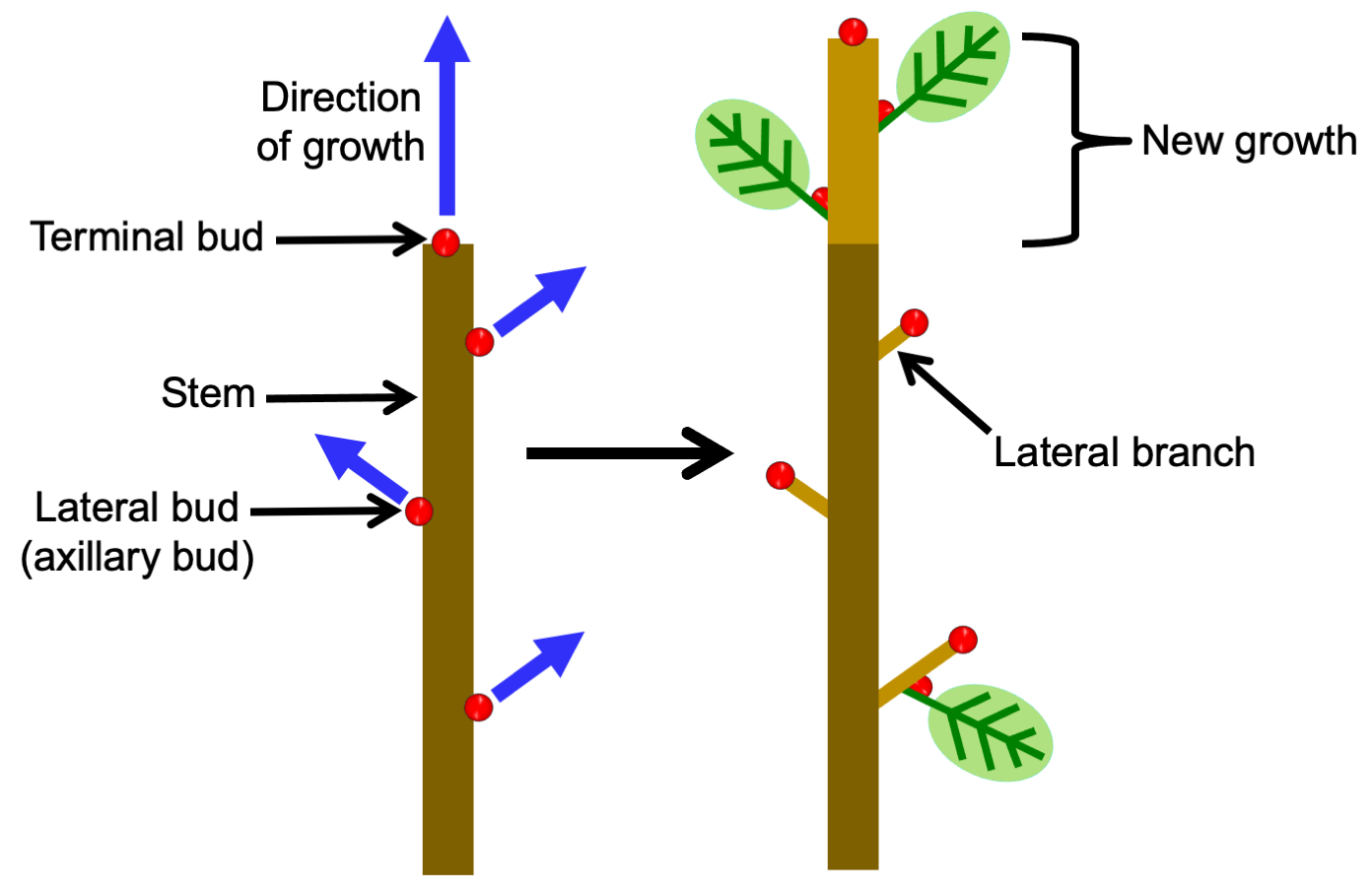
In the case of Vitis vinifera and Bryonia dioica, the tendrils are lateral shoots usually opposite to a leaf. In Passiflora, the tendrils are modified axillary bud.

So, the correct option is 'Axillary bud'
View full question & answer
MCQ 691 Mark
In endarch condition of xylem, protoxylem lies ______ of metaxylem.
  • A
    On inner side.
  • B
    On outer side.
  • C
    Both on inner and outer side.
  • D
    In centre.
Answer
  1. On inner side.
View full question & answer
MCQ 701 Mark
The apical meristem of the root is present.
  • A
    In all the roots.
  • B
    Only in radicals.
  • C
    Only in tap roots.
  • D
    Only in adventitious roots.
Answer
  1. In all the roots.
View full question & answer
MCQ 711 Mark
In sclerenchyma, cell wall is:
  • A
    Lignified
  • B
    Suberised
  • C
    Pectinised
  • D
    Cutinised
Answer
  1. Lignified

Explanation:

Sclerenchyma cells are characterized by relatively thick, lignified secondary cell walls.

The lignified wall gives sclerenchyma cells their rigidity and helps in providing mechanical support.

View full question & answer
MCQ 721 Mark
The cells of the quiescent centre are characterised by:
  • A
    Dividing regularly to add to tunica.
  • B
    Having dense cytoplasm and prominent nuclei.
  • C
    Having light cytoplasm and small nuclei.
  • D
    Dividing regularly to add to the corpus.
Answer
  1. Having light cytoplasm and small nuclei.
View full question & answer
MCQ 731 Mark
Which exposed wood will decay faster?
  • A
    Sapwood.
  • B
    Softwood.
  • C
    Wood with lot of fibres.
  • D
    Heartwood.
Answer
  1. Sapwood.
View full question & answer
MCQ 741 Mark
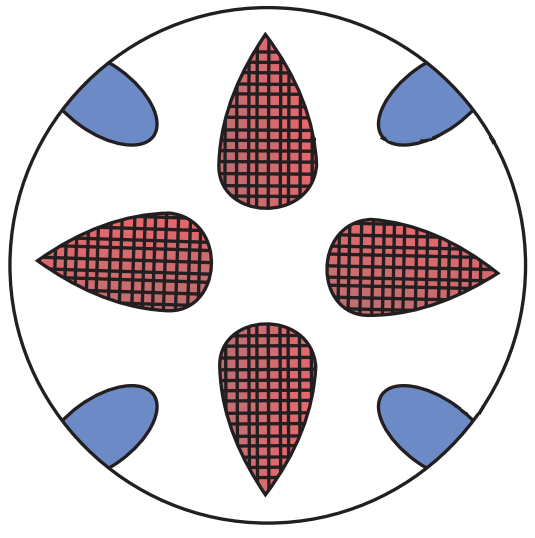
Four radial vascular bundles are found in:
  • A
    Dicot root.
  • B
    Monocot root.
  • C
    Dicot stem.
  • D
    Monocot stem.
Answer
  1. Monocot root.
View full question & answer
MCQ 751 Mark
In which of the following pairs of parts of a flowering plant is epidermis absent?
  • A
    Root tip and shoot tip.
  • B
    Shoot bud and floral bud.
  • C
    Ovule and seed.
  • D
    Petiole and pedicel Maim.
Answer
  1. Root tip and shoot tip.

Explanation:

Root tip and shoot tip have meristematic cells and hence epidermis is absent. Epidermis has differentiated cells which is not the case in case of meristem.

View full question & answer
MCQ 761 Mark
What is the function of adventitious roots?
  • A
    Anchorage.
  • B
    Vegetative Propagation.
  • C
    Food Storage.
  • D
    Oxygen intake.
Answer
  1. Vegetative Propagation.
View full question & answer
MCQ 771 Mark
As the secondary growth takes place (proceeds) in a tree, thickness of:
  • A
    Heartwood increases.
  • B
    Sapwood increases.
  • C
    Both increase.
  • D
    Both remain the same.
Answer
  1. Both increase.
View full question & answer
MCQ 791 Mark
Anatomically fairly old dicotyledonous root is distinguished from the dicotyledonous stem by:
  • A
    Presence of cortex.
  • B
    Position of protoxylem.
  • C
    Absence of secondary xylem.
  • D
    Absence of secondary phloem.
Answer
  1. Position of protoxylem.
View full question & answer
MCQ 801 Mark
A vessel less piece of stem possessing prominent sieve tubes would belong to:
  • A
    Pinus.
  • B
    Eucalyptus.
  • C
    Grass.
  • D
    Trochodendron.
Answer
  1. Trochodendron.

Explanation:

Trochodendron lacks vessel elements which is quite unusual for flowering plants. Only one living species of trochodendron is known to exist.

View full question & answer
MCQ 811 Mark
The quiescent centre in root meristem serves as a.
  • A
    Reserve for replenishment of damaged cells of the meristem.
  • B
    Region for absorption of water.
  • C
    Reservoir of growth hormones.
  • D
    Site for storage of food which is utilized during maturation.
Answer
  1. Reserve for replenishment of damaged cells of the meristem.
View full question & answer
MCQ 821 Mark
Cells of this tissue are living and show angular wall thickening. They also provide mechanical support. The tissue is:
  • A
    Xylem.
  • B
    Sclerenchyma.
  • C
    Collenchyma.
  • D
    Epidermis.
Answer
  1. Collenchyma

Explanation:

Collenchyma occurs only in dicots. Collenchyma is living mechanical tissue having cellulosic cell wall. Collenchyma is found climbing stems like. In Cucurbita lacunate or angular collenchyma is present.

View full question & answer
MCQ 831 Mark
Chlorenchyma is known to develop in the.
  • A
    Pollen tube of Pinus.
  • B
    Cytoplasm of Chlorella.
  • C
    Mycelium of a green mould such as Aspergillus.
  • D
    Spore capsule of a moss.
Answer
  1. Spore capsule of a moss.
View full question & answer
MCQ 841 Mark
What happens during vascularization in plants?
  • A
    Differentiation of procambium is immediately followed by the development of secondary xylem and phloem.
  • B
    Differentiation of procambium followed by the development of xylem and phloem.
  • C
    Differentiation of procambium, xylem and phloem is simultaneous.
  • D
    Differentiation of procambium followed by the development of primary phloem and then by primary xylem.
Answer
  1. Differentiation of procambium followed by the development of xylem and phloem.
View full question & answer
MCQ 851 Mark
Stem grows in girth due to:
  • A
    Outer cortical.
  • B
    Epidermis.
  • C
    Vascular cambium.
  • D
    Phellogen.
Answer
  1. Vascular cambium.

Explanation:

Stem increase in girth due to the activity of vascular cambium. In this process, the outer cortical and epidermis layers gets broken. This layer is replaced with new protective cell layer.

View full question & answer
MCQ 861 Mark
When bark is cut from stem, which of the following vascular tissue is removed?
  • A
    Xylem
  • B
    Phloem
  • C
    Parenchyma
  • D
    All of the above
Answer
  1. Phloem

Explanation:

The bark is the outer covering of the stems and the roots of woody plants, especially of trees. 

All tissues present outer to the vascular cambium together to form bark.

It includes a dead tissue cork or phellem, meristematic tissue cork cambium or phellogen, parenchyma in secondary cortex or phelloderm, complex tissue secondary phloem. 

Thus, when the bark is cut from the stem the phloem vascular tissue is removed.

View full question & answer
MCQ 871 Mark
The term protoderm was coined by:
  • A
    Haberlandt
  • B
    Nageli
  • C
    Hanstein
  • D
    Schmidt
Answer
  1. Haberlandt

Explanation:

Primary growth initiated by apical meristems near tips of roots and shoots produce primary tissues that are partially differentiated into ground meristem that produce ground tissue protoderm that produce epidermis and procambium that produce primary vascular tissue.

This theory was given by Haberlandt.

View full question & answer
MCQ 881 Mark
Organization of stem apex into corpus and tunica is determined mainly by:
  • A
    Planes of cell division.
  • B
    Regions of meristematic activity.
  • C
    Rate of cell growth.
  • D
    Rate of shoot tip growth.
Answer
  1. Planes of cell division.
View full question & answer
MCQ 891 Mark
Which meristem influences the shape of the mature plants? 
  • A
    Lateral meristem
  • B
    Apical meristem
  • C
    Intercallary meristem
  • D
    All of the above
Answer
  1. Apical meristem

Explanation:

Apical meristems are found at the tip of stems and roots.

During the cell division, this meristem helps in cellular enlargement and also influences the shapes of the mature plants.

Lateral meristems are found along the sides of roots and stems.

They play a vital role in increasing the width or diameter of stems and roots.

Intercallary meristems are found at the bases of young leaves and internodes.

They are mainly responsible for further lengthening of stems and leaves.

View full question & answer
MCQ 901 Mark
Which of the following is responsible for secondary growth in woody plants?
  • A
    Xylem
  • B
    Phloem
  • C
    Vascular cambium
  • D
    Pith
Answer
  1. Vascular cambium

Explanation:

Xylem and phloem are permanent vascular tissues while pith serves in storage and transport of nutrients.

The vascular cambium (lateral meristem) has thin walled highly vacuolated cells of two types, the fusiform initials and the ray initials.

The fusiform initials are the elongated cells that give rise to secondary xylem and secondary phloem which in turn increase the girth of plants.

View full question & answer
MCQ 911 Mark
What is the function of endosperm in seeds?
  • A
    Providing nutrition during dormant phase.
  • B
    Providing nutrition during germination.
  • C
    Providing nutrition to new leaves.
  • D
    All of the above.
Answer
  1. Providing nutrition during germination.
View full question & answer
MCQ 921 Mark
Passage cells occur in:
  • A
    Root epidermis.
  • B
    Root endodermis s ion.
  • C
    Stem epidermiston.
  • D
    Stem endodermis.
Answer
  1. Root endodermis s ion.
View full question & answer
MCQ 931 Mark
In land plants, the guard cells differ from other epidermal cells in having.
  • A
    Chloroplasts.
  • B
    Mitochondria.
  • C
    Cytoskeleton.
  • D
    Endoplasmic reticulum.
Answer
  1. Chloroplasts.
View full question & answer
MCQ 941 Mark
The fascicular cambium and cork cambium are examples of:
  • A
    Apical meristem moltada too.
  • B
    Lateral meristem.
  • C
    Intercalary meristem.
  • D
    Primary meristem.
Answer
  1. Lateral meristem.
View full question & answer
MCQ 961 Mark
Cells taking part in conduction of sap are:
  • A
    Sieve tubes
  • B
    Tracheae
  • C
    Stone cells
  • D
    Companion cells
Answer
  1. Tracheae

Explanation:

The xylem parenchyma among the dead tracheids and tracheary elements provides access for the lateral movement of water from vertical xylem elements towards cortical cells.

Xylem elements in the upper parts of pants is coated with a thin layer of cell sap.

So the trachea and tracheids with their large lumen and end to end association act as excellent pipelines for the movement of water, minerals and some organic compounds as well. 

View full question & answer
MCQ 991 Mark
In a woody dicotyledonous tree, which of the following parts will mainly consist of primary tissues?
  • A
    All parts.
  • B
    Stem and root.
  • C
    Flowers, fruits and leaves.
  • D
    Shoot tips and root tips.
Answer
  1. Shoot tips and root tips.
View full question & answer
MCQ 1001 Mark
The chief water conducting elements of xylem in gymnosperms are:
  • A
    Vessels.
  • B
    Fibres.
  • C
    Transfusion tissue.
  • D
    Tracheids.
Answer
  1. Tracheids.
View full question & answer
MCQ 1011 Mark
Vessels occur in:
  • A
    All angiosperms, all gymnosperms and some pteridophytes.
  • B
    All angiosperms and some gymnosperms.
  • C
    Most angiosperms, a few gymnosperms and pteridophytes.
  • D
    All pteridophytes.
Answer
  1. Most angiosperms, a few gymnosperms and pteridophytes.

Explanation:

A vessel element or vessel member (trachea) is one of the cell types found in xylem, the water conducting tissue of plants.

Vessel elements (tracheae) are typically found in flowering plants (angiosperms) and pteridophytes but absent from most gymnosperms such as conifers. 

So, the correct answer is 'Most angiosperms, a few gymnosperms and pteridophytes.'

View full question & answer
MCQ 1021 Mark
Callose deposition is found in:
  • A
    Tracheids.
  • B
    Companion cells.
  • C
    Sieve areas.
  • D
    Phloem parenchyma.
Answer
  1. Sieve areas.
View full question & answer
MCQ 1031 Mark
Conducting part of xylem is also known as:
  • A
    Leptom
  • B
    Bast
  • C
    Rhytidome
  • D
    Hadrom
Answer
  1. Hadrom

Explanation:

The xylem tracheary elements consist of cells known as tracheids and vessel members, both of which are typically narrow, hollow, and elongated.

Tracheids and vessels are, collectively known as water conducting elements or "Hadrom".

Hadrom term was proposed by Haber landt. 

View full question & answer
MCQ 1041 Mark
Epidermis is absent in:
  • A
    Root tip and shoot tip.
  • B
    Ovule and seed.
  • C
    Shoot bud and floral bud.
  • D
    Petiole and pedice.
Answer
  1. Root tip and shoot tip.
View full question & answer
MCQ 1051 Mark
For a critical study of secondary growth in plants, which one of the following pairs is suitable?
  • A
    Sugarcane and sunflower.
  • B
    Teak and pine.
  • C
    Deodar and fern.
  • D
    Wheat and maiden hair fern.
Answer
  1. Teak and pine.
View full question & answer
MCQ 1061 Mark
Apical meristem is found in:
  • A
    Roots
  • B
    Stem
  • C
    Both A and B
  • D
    None of these
Answer
  1. Both A and B

Explanation:

Meristematic tissues are dividing tissues which are found in the plants which are responsible for growth of plants.

Both roots and shoots have meristematic tissue at their tips called as apical meristems that are responsible for the lengthening of roots and shoots.

View full question & answer
MCQ 1071 Mark
Cork cambium and vascular cambium are:
  • A
    Parts of secondary xylem and phloem.
  • B
    Parts of pericycle.
  • C
    Lateral meristems.
  • D
    Apical meristems.
Answer
  1. Lateral meristems.
View full question & answer
MCQ 1081 Mark
A vascular bundle in which the protoxylem is pointing to the periphery is called.
  • A
    Exarch.
  • B
    Closed.
  • C
    Endarch.
  • D
    Radial.
Answer
  1. Exarch.
View full question & answer
MCQ 1091 Mark
Which of the following statements is true?
  • A
    Tracheids are unicellular with wide lumen.
  • B
    Vessels are unicellular with wide lumen.
  • C
    Tracheids are multicellular with narrow lumen.
  • D
    Vessels are multicellular with narrow lumen.
Answer
  1. Tracheids are unicellular with wide lumen.
View full question & answer
MCQ 1101 Mark
Fusifrom initial cells of cambium from:
  • A
    Vascular rays.
  • B
    Tracheary elements.
  • C
    Ray parenchyma.
  • D
    Phloem parenchyma.
Answer
  1. Tracheary elements.
View full question & answer
MCQ 1111 Mark
What do you mean by closed vascular bundle?
  • A
    Presence of cambium
  • B
    Absence of cambium
  • C
    Presence of periderm
  • D
    None of these
Answer
  1. Absence of cambium

Explanation:

A closed vascular bundle means the absence of a cambium.

They do not show secondary growth.

The closed vascular bundles are generally found in monocotyledons.

View full question & answer
MCQ 1121 Mark
In conifers, fibers are likely to be absent in:
  • A
    Secondary phloem.
  • B
    Secondary xylem.
  • C
    Primary phloem.
  • D
    Leaves.
Answer
  1. Secondary xylem.

Explanation:

Elongated cells of sclerenchyma are called fibres. Sclerenchyma is absent in Secondary xylem and option 'b' is correct.

View full question & answer
MCQ 1131 Mark
Thickness of stem increase due to activity of:
  • A
    Cambium
  • B
    Xylem
  • C
    Phloem
  • D
    Shoot apex
Answer
  1. Cambium

Explanation:

Secondary growth refers to the growth that results from cell division in the cambium or lateral meristems and that causes the stems and roots to thicken, while primary growth is growth that occurs as a result of cell division at the tips of stems and roots, causing them to elongate and gives rise to primary tissue.

Secondary growth occurs in most seed plants, but monocots usually lack secondary growth. 

View full question & answer
MCQ 1141 Mark
Which picture shows conjoint closed vascular bundles?
  • A
     
    1. B
       
      1. C
         
        1. D
          None of these pictures shows conjoint closed vascular bundles.
        Answer
        1.  

        Explanation:

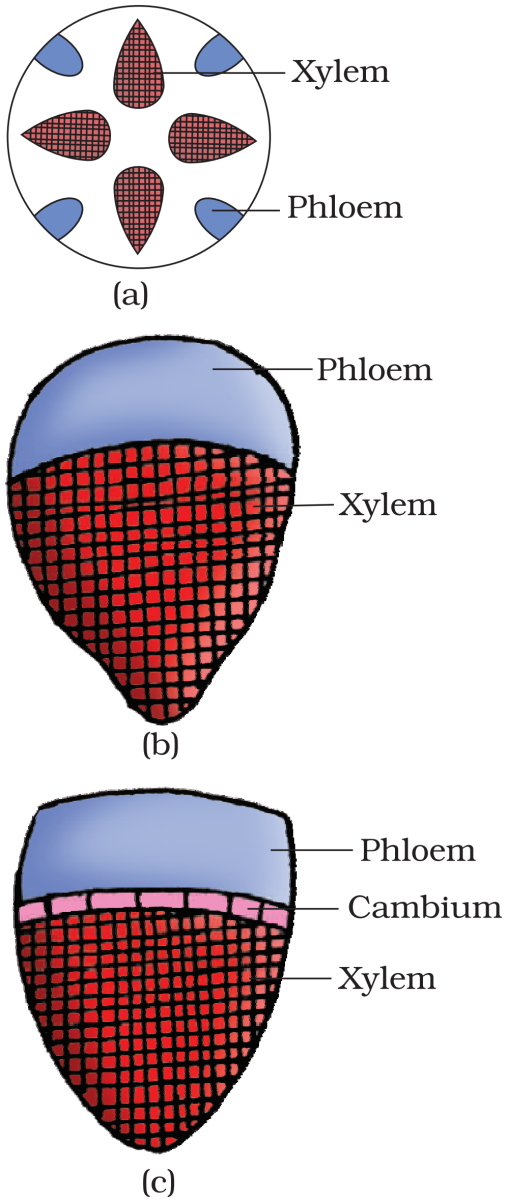
        Various types of vascular bundles :(a) radial (b) conjoint closed (c) conjoint open.

        View full question & answer
        MCQ 1151 Mark
        Starting from periphery and going towards centre which is the correct sequence of different whorls of a flower?
        • A
          Corolla, Calyx, Gynoecium, Androecium.
        • B
          Calyx, Corolla, Gynoecium, Androecium.
        • C
          Calyx, Corolla, Androecium, Gynoecium.
        • D
          Either (b) or (c).
        Answer
        1. Calyx, Corolla, Androecium, Gynoecium.
        View full question & answer
        MCQ 1161 Mark
        Which of the following is true about heartwood?
        • A
          They are dead but gives mechanical support to stem.
        • B
          They are light in colour.
        • C
          They conduct water and minerals.
        • D
          1 and 3.
        Answer
        1. They are dead but gives mechanical support to stem.

        Explanation:

        Heartwood is dead and have non-conducting elements.

        View full question & answer
        MCQ 1191 Mark
        Which of the following shows modification of stem for food storage?
        • A
          Carrot.
        • B
          Turnip.
        • C
          Ginger.
        • D
          None of these.
        Answer
        1. Ginger.
        View full question & answer
        MCQ 1201 Mark
        Procambium forms:
        • A
          Only primary vascular bundles.
        • B
          Only vascular cambium.
        • C
          Only cork cambium.
        • D
          Primary vascular bundles and vascular cambium.
        Answer
        1. Primary vascular bundles and vascular cambium.
        View full question & answer
        MCQ 1211 Mark
        Which is correct about transport or conduction of substances?
        • A
          Organic food moves upwardly and downwardly through phloem.
        • B
          Inorganic food moves upwardly and downwardly through xylem.
        • C
          Organic food moves up through phloem.
        • D
          Organic food moves up through phloem.
        Answer
        1. Organic food moves upwardly and downwardly through phloem.
        View full question & answer
        MCQ 1221 Mark
        Thickening of trunk in woody plants is due to:
        • A
          Cambium
        • B
          Apical meristem
        • C
          Intercalary meristem
        • D
          Epidermis
        Answer
        1. Cambium

        Explanation:

        Cambium is the layer of actively dividing cells between xylem and phloem tissues that is responsible for the secondary growth of stems and roots.

        The cambium produces new layers of phloem on the outside and of xylem on the inside, thus increasing the diameter of the stem.

        In woody plants, this process produces wood and shapes the plant into a tree with a thickened trunk.

        Apical and intercalary meristems involve in elongation of plants.

        Epidermis is the outermost layer of plants which does not cause thickening of the trunk. 

        View full question & answer
        MCQ 1231 Mark
        The annular and spirally thickened conducting elements generally develop in the protoxylem when the root or stem is:
        • A
          Widening.
        • B
          Differentiating.
        • C
          Maturing.
        • D
          Elongating.
        Answer
        1. Maturing.
        View full question & answer
        MCQ 1241 Mark
        Which part is responsible for growth of roots?
        • A
          Region of meristematic activity.
        • B
          Region of Elongation.
        • C
          Root cap.
        • D
          Both (a) and (b).
        Answer
        1. Both (a) and (b)
        View full question & answer
        MCQ 1261 Mark
        The function of vessels/ xylem is to:
        • A
          Translocate water and minerals.
        • B
          Translocate organic food.
        • C
          Translocate water alone.
        • D
          Translocate water, minerals and provide mechanical strength.
        Answer
        1. Translocate water, minerals and provide mechanical strength.

        Explanation:

        Vessel members in xylem are the principal water - conducting cells in angiosperms and are characterized by areas that lack both primary and secondary cell walls, known as perforations. Water flows relatively unimpeded from vessel to vessel through these perforations, though fractures and disruptions from air bubbles are also more likely.

        In addition to the tracheary elements, xylem tissue also features fiber cells for support.

        View full question & answer
        MCQ 1271 Mark
        In a monocot leaf.
        • A
          Bulliform cells are absent from the eqidermis.
        • B
          Veins from a network.
        • C
          Mesophyll is well differentiated into palisade and spongy parenchyma.
        • D
          Mesophyll is not differentiated into palisade and spongy parenchyma.
        Answer
        1. Mesophyll is not differentiated into palisade and spongy parenchyma.
        View full question & answer
        MCQ 1281 Mark
        Vessels differ from tracheids.
        • A
          In being living.
        • B
          In being derived from a single cell.
        • C
          In that they consist of vertical row of cells with cross walls dissolved.
        • D
          In coducting water and minerals.
        Answer
        1. In that they consist of vertical row of cells with cross walls dissolved.
        View full question & answer
        MCQ 1291 Mark
        A narrow layer of thin walled cells found between phloem/ bark and wood of a dicot is:
        • A
          Vascular cambium.
        • B
          Pericycle.
        • C
          Cork cambium.
        • D
          Endodermis.
        Answer
        1. Vascular cambium.
        View full question & answer
        MCQ 1301 Mark
        When a dicot leaf is exposed to sunlight, the light rays first pass through the epidermis and then through:
        • A
          Lower epidermis.
        • B
          Spongy parenchyma.
        • C
          Palisade parenchyma.
        • D
          Vascular bundles.
        Answer
        1. Palisade parenchyma.
        View full question & answer
        MCQ 1311 Mark
        Tissue means _________________.
        • A
          Similar cells having common origin.
        • B
          Similar cells having common origin and functions.
        • C
          Cells having same metabolic activities.
        • D
          Similar cells with same metabolic activity.
        Answer
        1. Similar cells having common origin and functions.

        Explanation:

        Generally, some group of cells have same function and structure and also are derived from same origin.

        These group of cells are called tissue. 

        View full question & answer
        MCQ 1321 Mark
        The stele found in monocot is:
        • A
          Haplostele
        • B
          Atactostele
        • C
          Dictyostele
        • D
          Actinostele
        Answer
        1. Atactostele

        Explanation:

        In a plant the xylem and phloem together make up the vascular bundles.

        In a monocot, these vascular bundles do not possess a cambium and do not form secondary tissues and are said to be closed.

        In conjoint vascular bundle we have the xylem and phloem on the same radius of the vascular bundles, which we can find in stems and leaves.

        The arrangement of vascular tissue with vascular bundles scattered, conjoint, collateral and closed is called an atactostele. 

        View full question & answer
        MCQ 1331 Mark
        The cork cambium, cork and secondary cortex are collectively called:
        • A
          Phelloderm.
        • B
          Phellogen.
        • C
          Periderm.
        • D
          Phellem.
        Answer
        1. Periderm.
        View full question & answer
        MCQ 1341 Mark
        Reduction in vascular tissue, mechanical tissue and cuticle is characteristic of:
        • A
          Epiphytes.
        • B
          Hydrophytes.
        • C
          Xerophytes.
        • D
          Mesophytes.
        Answer
        1. Hydrophytes.
        View full question & answer
        MCQ 1351 Mark
        How many shoot apical meristems are likely to be present in a twig of a plant possessing, 4 branches and 26 leaves?
        • A
          26
        • B
          1
        • C
          5
        • D
          30
        Answer
        1. 5

        Explanation:

        The shoot apical meristems are present at the tips of the stem, and its branches. They produce growth in length. As the twig possesses 4 branches, number of shoot apical meristems is likely to be 5 including one of the twigs itself.

        View full question & answer
        MCQ 1361 Mark
        Monocot leaves possess.
        • A
          Intercalary meristem.
        • B
          Lateral meristem.
        • C
          Apical meristem.
        • D
          Mass meristem.
        Answer
        1. Intercalary meristem.
        View full question & answer
        MCQ 1371 Mark
        Vascular cambium produces.
        • A
          Primary xylem and primary phloem.
        • B
          Secondary xylem and secondary phloem.
        • C
          Primary xylem and secondary phloem.
        • D
          Secondary xylem and primary phloem.
        Answer
        1. Secondary xylem and secondary phloem.
        View full question & answer
        MCQ 1381 Mark
        A plant tissue, when stained, showed the presence of hemicellulose and pectin in cell wall of its cells. The tissue represents: 
        • A
          Collenchyma.
        • B
          Sclerenchyma.
        • C
          Xylem.
        • D
          Meristem.
        Answer
        1. Collenchyma.

        Explanation:

        Walls of collenchyma are thick, often the thickening is unevenly distributed. They contain in addition to cellulose (20%), large amounts of pectin (45%) and hemicellulose (35%) but no lignin. They are never lignified.

        View full question & answer
        MCQ 1391 Mark
        The youngest layer of secondary xylem in a dicot stem undergoing secondary growth, is located:
        • A
          Between pith and primary xylem.
        • B
          Just outside the vascular cambium.
        • C
          Just inside the vascular cambium.
        • D
          Just inside the cork cambium.
        Answer
        1. Just inside the vascular cambium.
        View full question & answer
        MCQ 1401 Mark
        Fusifrom initial cells of cambium from:
        • A
          Vascular rays.
        • B
          Tracheary elements.
        • C
          Ray parenchyma.
        • D
          Phloem parenchyma.
        Answer
        1. Tracheary elements.
        View full question & answer
        MCQ 1411 Mark
        The fibres of commercial importance are obtained from:
        • A
          Parenchyma
        • B
          Collenchyma
        • C
          Chlorenchyma
        • D
          Sclerenchyma
        Answer
        1. Sclerenchyma

        Explanation:

        Sclerenchyma is the tissue that makes the plant hard and stiff.

        It is the supporting tissue in plants and is composed of dead cells with highly thickened cell walls (due to extensive deposition of lignin).

        Two types of sclerenchyma cells exist: - fibres and sclereids.

        Sclerenchyma fibres are of great economic importance since they constitute the source material for many fabrics (e.g. flax, hemp, jute, etc).

        View full question & answer
        MCQ 1421 Mark
        After the secondary growth, the oldest layer of secondary phloem in a dicot stem is located.
        • A
          Just outside the vascular cambium.
        • B
          Just inside the vascular cambium.
        • C
          Just inside the vascular phloem.
        • D
          Just outside the secondary xylem.
        Answer
        1. Just inside the vascular phloem.
        View full question & answer
        MCQ 1431 Mark
        Which of the following does not have stomata?
        • A
          Submerged hydrophytes.
        • B
          Xerophytes.
        • C
          Mesophytes.
        • D
          Hydrophytes.
        Answer
        1. Submerged hydrophytes.
        View full question & answer
        MCQ 1441 Mark
        A piece of wood having no vessels (trachea) must be belonging to:
        • A
          Teak.
        • B
          Mango.
        • C
          Pine.
        • D
          Palm.
        Answer
        1. Pine.

        Explanation:

        Pine It is a gymnosperm. The plants belonging to this group do not have vessels instead, they have trachieds. Whereas teak, mango and palm are angiospermic trees. Angiospermic xylem contains vessels, tracheas, parenchyma and fibers.

        View full question & answer
        MCQ 1451 Mark
        Formation of periderm is the function of:
        • A
          Vascular cambium
        • B
          Cork cambium
        • C
          Both vascular and cork cambium
        • D
          None
        Answer
        1. Cork cambium

        Explanation:

        The cork cambium is the lateral meristem which causes secondary growth and replaces the epidermis of the roots and stems upon maturation.

        Vascular cambium gives rise to new vascular tissue in plants.

        The vascular tissues are tubes that transport water and nutrients up and down the plant. 

        View full question & answer
        MCQ 1461 Mark
        Loading of phloem is related to:
        • A
          Increase of sugar in phloem.
        • B
          Elongation of phloem cell.
        • C
          Separation of phloem parenchyma.
        • D
          Strengthening of phloem fibre.
        Answer
        1. Increase of sugar in phloem.
        View full question & answer
        MCQ 1471 Mark
        A leaf primordium grows into the adult leaf lamina by means of:
        • A
          Apical meristem.
        • B
          Lateral meristem.
        • C
          Marginal meristem.
        • D
          At first by apical meristem and later largely by marginal meristem.
        Answer
        1. At first by apical meristem and later largely by marginal meristem.
        View full question & answer
        MCQ 1481 Mark
        Which of the following meristems is responsible for extrastelar secondary growth in dicotyledonous stem?
        • A
          Intrafascicular cambium.
        • B
          Interfascicular cambium.
        • C
          Intercalary meristem.
        • D
          Phellogen.
        Answer
        1. Phellogen.
        View full question & answer
        MCQ 1491 Mark
        Companion cells in angiosperms are associated with:
        • A
          Xylem vessels.
        • B
          Guard cells.
        • C
          Xylem tracheids.
        • D
          Sieve tubes.
        Answer
        1. Sieve tubes.
        View full question & answer
        MCQ 1501 Mark
        Y-shaped arrangement of xylem vessels is found in:
        • A
          Monocot stem.
        • B
          Monocot root.
        • C
          Both.
        • D
          None of these.
        Answer
        1. Monocot stem.
        View full question & answer
        MCQ 1511 Mark
        A common structural feature of vessel elements and sieve tube elements are:
        • A
          Pores on lateral walls.
        • B
          Presence of p-protein.
        • C
          Enucleate condition.
        • D
          Thick secondary walls.
        Answer
        1. Enucleate condition.
        View full question & answer
        MCQ 1521 Mark
        An organized and differentiated cellular structure having cytoplasm but no nucleus is:
        • A
          Vessels.
        • B
          Xylem parenchyma.
        • C
          Sieve tubes.
        • D
          Tracheid.
        Answer
        1. Sieve tubes.
        View full question & answer
        MCQ 1531 Mark
        Commercial cork is obtained from:
        • A
          Berberis/ Barberry.
        • B
          Salix/ Willow.
        • C
          Quercus/ Oak.
        • D
          Betula/ Birch.
        Answer
        1. Quercus/ Oak.
        View full question & answer
        MCQ 1541 Mark
        Which one of the following cell types always divides by anticlinal cell division?
        • A
          Fusiform initial cells. 
        • B
          Root cap. 
        • C
          Protoderm.
        • D
          Phellogen.
        Answer
        1. Protoderm.

        Explanation:

        Protoderm cell always divides by anticlinal cell division.

        View full question & answer
        MCQ 1551 Mark
        In a longitudinal section of root, starting from the tip upward, the four zones occur in the 3 following order:
        • A
          Root cap, cell division, cell enlargement, cell maturation.
        • B
          Root cap, cell division, cell maturation, cell enlargement.
        • C
          Cell division, cell enlargement, cell maturation, root cap.
        • D
          Cell division, cell maturation, cell enlargement, root cap.
        Answer
        1. Root cap, cell division, cell enlargement, cell maturation.
        View full question & answer
        MCQ 1561 Mark
        A.T.S. of a young dicot root can be distinguished from that of a young dicot stem by the presence of:
        • A
          Radial arrangement of xylem and phloem.
        • B
          Collateral arrangement of xylem and phloem.
        • C
          Interfascicular cambium.
        • D
          Intra fascicular cambium.
        Answer
        1. Radial arrangement of xylem and phloem.
        View full question & answer
        MCQ 1571 Mark
        A conjoint and open vascular bundle will be observed in the transverse section of:
        • A
          Monocot root.
        • B
          Monocot stem.
        • C
          Dicot root.
        • D
          Dicot stem.
        Answer
        1. Dicot stem.

        Explanation:

        Each vascular bundle is conjoint, open and with endarch protoxylem in the stem of dicot plant.

        View full question & answer
        MCQ 1581 Mark
        Centripetal xylem is the characteristic of:
        • A
          Roots
        • B
          Stems
        • C
          Leaf
        • D
          Petiole
        Answer
        1. Roots

        Explanation:

        Xylem development in the roots is from the outer regions in the inward direction and so known as centripetal.

        The growth of xylem in shoots is centrifugal direction which means towards the outside.

        Phloem development is in the centripetal direction in roots and shoots.

        View full question & answer
        MCQ 1591 Mark
        Which one of the following is not a lateral meristem?
        • A
          Intrafascicular cambium.
        • B
          Interfascicular cambium.
        • C
          Phellogen.
        • D
          Intercalary meristem.
        Answer
        1. Intercalary meristem.
        View full question & answer
        MCQ 1601 Mark
        Phellogen and phellem respectively denote:
        • A
          Cork and cork cambium.
        • B
          Cork cambium and cork.
        • C
          Secondary cortex and cork.
        • D
          Cork and secondary cortex.
        Answer
        1. Cork cambium and cork.

        Explanation:

        Cortical Cells In the dicot stem the cortical cells gets differentiated to give rise to another meristematic tissue which is called cork cambium or phellogen. On the outerside it forms phellem (cork) and in the inner region it forms secondary cortical cells (phelloderm).

        View full question & answer
        MCQ 1611 Mark
        Phellogen and phellem respectively denote.
        • A
          Cork cambium and cork.
        • B
          Cork and cork cambium.
        • C
          Secondary cortex and cork.
        • D
          Cork and secondary cortex.
        Answer
        1. Cork cambium and cork.
        View full question & answer
        MCQ 1621 Mark
        Which of the following statements is true?
        • A
          Vessels are multicellular with narrow lumen.
        • B
          Tracheids are multicellular with narrow lumen.
        • C
          Vessels are unicellular with wide lumen.
        • D
          Tracheids are unicellular with wide lumen.
        Answer
        1. Vessels are multicellular with narrow lumen.
        View full question & answer