Questions

2 Marks Questions

Take a timed test

40 questions · self-marked practice — reveal the answer and mark yourself.

Question 12 Marks
Both lysosomes and vacuoles are endomembrane structures, yet they differ in terms of their functions. Comment.
Answer
Lysosomes are membrane-bound vesicular structures holding a variety of enzymes such as lipases, proteases, and carbohydrases. The purpose of lysosomes is to digest worn out cells. They are involved in the intracellular digestion of foreign food particles and microbes. Sometimes, they also act as suicidal bags. They are involved in the self digestion of cells. They are a kind of waste disposal systems of a cell. On the other hand, vacuoles are storage sacs found in cells. They might store the waste products of cells. In unicellular organisms, the food vacuole contains the consumed food particles. It also plays a role in expelling excess water and some wastes from the cell.
View full question & answer
Question 22 Marks
What is a mesosome in a prokaryotic cell? Mention the functions that it performs.
Answer
Mesosome is a convoluted membranous structure formed in a prokaryotic cell by the invagination of the plasma membrane. Its functions are as follows:
  1. These extensions help in the synthesis of the cell wall, replication of DNA. They also help in the equal distribution of chromosomes into the daughter cells.
  2. It also increases the surface area of the plasma membrane to carry out various enzymatic activities.
  3. It helps in secretion processes as well as in bacterial respiration.
View full question & answer
Question 32 Marks
Multicellular organisms have division of labour. Explain.
Answer
The body of a multicellular organism has cell as a basic structural unit. The cells organised to form tissues such as blood, bone, etc. The tissues organised to form organs such as heart, kidney, etc. The organs then organised to form organ systems such as digestive system, reproductive system and respiratory system, etc. The various organ systems of organism get arranged to form a complete individual.
View full question & answer
Question 42 Marks
What are nuclear pores? State their function.
Answer
Nuclear pores are the pores or perforations which occur at several places in the nuclear envelope. Functions:
  1. They maintain the shape of the nucleus.
  2. These nuclear pores are the passages through which the movement of RNA and protein molecules takes place in both directions between the nucleus and the cytoplasm.
  3. They preserve the stability of genetic material by protecting it from respiratory breakdown which occurs in the cytoplasm.
View full question & answer
Question 52 Marks
Cell is the basic unit of life. Discuss in brief.
Answer
Cells are the basic units of life capable of doing all the required biochemical processes that a normal cell has to do in order to live. The basic needs for the survival of all living organisms are the same. All living organisms need to respire, digest food for obtaining energy, and get rid of metabolic wastes. Cells are capable of performing all the metabolic functions of the body. Hence, cells are called the functional units of life.
View full question & answer
Question 62 Marks
What does ‘S’ refer in a 70S & an 80S ribosome?
Answer
‘S’ refers to as Svedberg unit. It is the sedimentation coefficient. The sedimentation coefficient depicts how fast cell organelle sediments during ultracentrifugation. The heavier the structure, higher is the sedimentation coefficient.
View full question & answer
Question 82 Marks
What are gas vacuoles? State their functions?
Answer
Gas vacuole is an air vacuole. They are found only in prokaryotes. It consists of a number of smaller submicroscopic vesicles. Each vesicle is surrounded by a protein membrane and encloses metabolic gases. Air vacuoles not only store gases but provide buoyancy, mechanical strength and protection from harmful radiations.
View full question & answer
Question 92 Marks
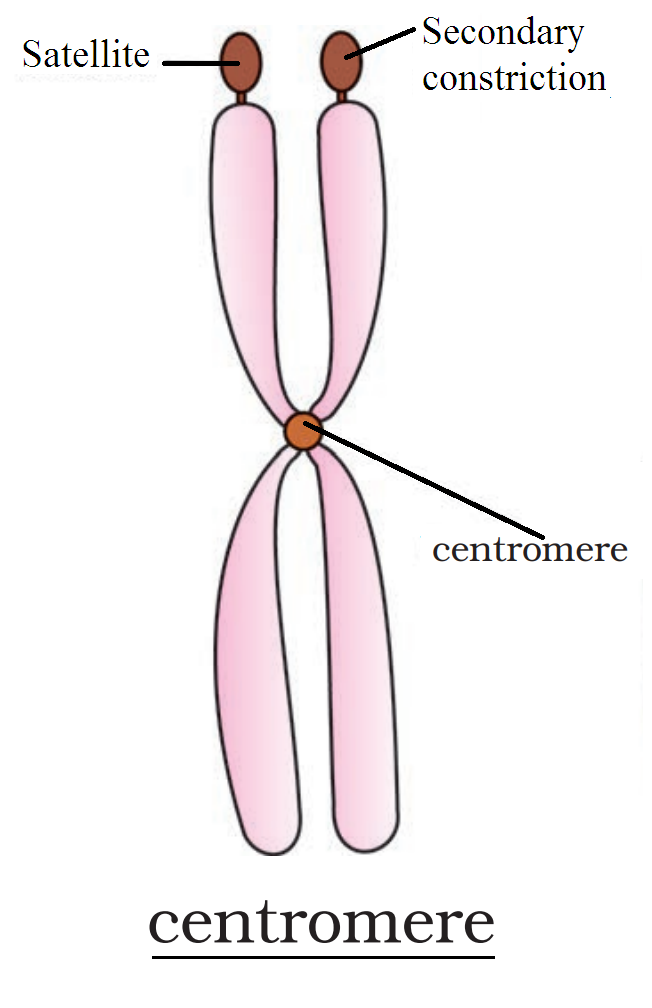
Write the functions of the following: Centromere.
Answer
Centromere It is required for proper chromosome segregation. The centromere consists of two. sister chromatids. It is also necessary at the point chromosome attaches to the spindle apparatus during mitosis and meiosis.
View full question & answer
Question 102 Marks
Mention a single membrane bound organelle which is rich in hydrolytic enzymes.
Answer
Lysosomes are the membrane bound vesicular structures formed by Golgi apparatus. These vesicles on isolation have been found to be rich in all types of hydrolytic enzymes i.e., hydrolase, lipases, proteases and carbohydrases which digest carbohydrates proteins, lipids and nucleic acid at acidic pH.
View full question & answer
Question 112 Marks
What is endomembrane system in a cell?
Answer
Certain cell organelles function in coordinated manner. Their coordination makes the endomembrane system of cell. Following structures comprise the endomembrane system:
  1. Endoplasmic Reticulum.
  2. Golgi Complex.
  3. Lysosome.
  4. Vacuoles.
View full question & answer
Question 122 Marks
Write briefly the contribution of Rudolf Vinchow in formulating cell theory. Write the cell theory in modern context.OR
State the cell theory as modified by Rudolf Vinchow.
Answer
Rudolf Virchow first explained that cells divided and new cells are formed from the pre-existing cells, (omnis cellula-e-cellula). Cell Theory:
  1. All living organisms are composed of cell(s) and it's/ their products.
  2. All cells arise from the pre-existing cells.
View full question & answer
Question 132 Marks
What is the function of a polysome?
Answer
Polysomes- Several ribosomes can translate an mRNA at the same time, forming what is called a polysome. More than one ribosome can translate an mRNA at one time, making it possible to produce many polypeptides simultaneously from a single mRNA.
View full question & answer
Question 142 Marks
What is meant by cytoskeleton of a cell? Mention any two functions, it performs.
Answer
  • Cytoskeleton refers to an elaborate network of proteinaeous filamentous structures in the cytoplasm.
  • It's functions are as follows:
  1. It provides mechanical support.
  2. It maintains the shape of the cell.
  3. It helps in mobility of cells.
  4. It regulates the distribution and orientation of cell organelles.
View full question & answer
Question 152 Marks
Give a brief description of ribosomes.
Answer
Ribosomes are the granular structures first observed under the electron microscope as dense particles by George Palade (1953). They are composed of ribonucleic acid (RNA) and proteins and are not surrounded by any membrane. The eukaryotic ribosomes are 80S while the prokaryotic ribosomes are 70S. Here 'S' stands for the sedimentation coefficient; it indirectly is a measure of density and size. Both 70S and 80S ribosomes are composed of two subunits.
View full question & answer
Question 162 Marks
Name any four sites where ribosomes are present in plant cells.
Answer
  1. Freely in the cytoplasm.
  2. Attached to ER in the cytoplasm.
  3. Inside mitochondria.
  4. Inside plastids (chloroplasts).
View full question & answer
Question 172 Marks
Given below are the pairs of cell organelles and their functions. Which out of these is not a matching pair and why?
  1. Mitochondria: Produce cellular energy in the form of ATP.
  2. Golgi apparatus: Site of formation of glycoproteins and gloycolipids.
  3. Smooth endoplasmic reticulum: The major site for synthesis of lipid.
  4. Centrosome: Trap light energy for photosynthesis.
Answer
  1. Is not a matching pair:
  • Centrioles of the centrosome form the spindle fibres during cell division and not trap light energy for photo-synthesis.
View full question & answer
Question 182 Marks
Differentiate between integral and peripheral proteins of plasma membrane.
Answer
Integral Proteins
Peripheral Proteins
These are the membrane proteins which are partially or totally buried in the lipids of the membrane.
These are the membrane proteins which lie on the surface of the membrane.
They cannot be easily extracted.
They can be easily extracted/ isolated.
View full question & answer
Question 192 Marks
What is the importance of vacuoles in Amoeba?
Answer
In amoeba all functions are carried out by the single cell. Especially when amoeba ingests food through phagocytosis or pinocytosis then it makes a vacuole around the food particle. The vacuole in amoeba is contractile in nature. This contractility is important to accommodate food of various sizes and to have enough digestive enzymes. Moreover, amoeba being an aquatic animal the contractile vacuole helps in maintaining the tonocity of the cell as well.
View full question & answer
Question 202 Marks
What are the four basic shapes of bacteria?
Answer
Shapes of bacteria:
  • Bacillus (rod shaped).
  • Coccus (spherical).
  • Vibrio (comma shaped).
  • Spirillum (spiral shaped).
View full question & answer
Question 212 Marks
Differentiate between unicellular and Multicellular organisms, with an example of each.
Answer
Unicellular organisms
Multicellular organisms
These are the organisms, which have a single cell in their body. e.g. Euglena, Paramoecium, etc.
These are the organisms, which have two or more cells in their body. e.g. Humans, insects, etc.
View full question & answer
Question 222 Marks
In what respect the mitochondria and plastids resemble the bacteria.
Answer
Mitochondria and plastids are known as semi-autonomous organelles. They have their own genetic material, i.e. DNA.They both have matrix containing 70S type of ribosomes. Although these both organelles have enzymes. That's why they resemble the bacteria.
View full question & answer
Question 232 Marks
Who developed the staining procedure to stain the bacterial cells? Mention the two categories of bacteria based on that and differentiate between them.
Answer
  • Gram is the scientist.
  • Gram positive bacteria and gram negative bacteria.
  • Those bacteria which take up and retain the gram stain, are called gram positive bacteria.
  • Those bacteria which do not take up the gram stain, are called gram negative bacteria.
View full question & answer
Question 242 Marks
Mention the functions of cell wall.
Answer
  1. Cell wall protects the cell from mechanical damage and infections.
  2. It helps in cell-to-cell interaction.
  3. It acts as a barrier to unwanted molecules.
  4. It provides rigidity and mechanical support to the cells.
View full question & answer
Question 252 Marks
Differentiate between primary cell wall and secondary cell wall.
Answer
Primary Cell Wall
Secondary Cell Wall
It is the cell wall of young cells.
It is the wall formed inner to the primary wall in older cells.
It is traversed by plasmodesmata.
It is traversed by pits.
It is made up of mainly cellulose.
It is made up of lignin, pectin, suberin, etc.
View full question & answer
Question 262 Marks
What are plasmodesmata? What is their function?
Answer
  • Plasmodesmata are the cytoplasmic bridges, that traverse the primary cell wall and middle lamella and connect the adjacent cells.
  • They form transport channels between adjacent cells.
View full question & answer
Question 272 Marks
How are chloroplasts different from chromoplasts?
Answer
Chloroplasts
Chromoplasts
They contain mainly chlorophylls and some amount of carotene and xanthophyll.
They contain mainly carotene and xanthophyll.
They are present in the mesophyll of leaves.
They are present inthe petals of flowers, skin of fruits, etc.
View full question & answer
Question 282 Marks
Cell membrane is semi-permeable in nature and thus allows passage to selected substances through it. Which of the following can be learnt from this property of the cell membrane? What are the benefits of selectively learning or adapting certain things for us?
  1. We should only eat selected food.
  2. We should follow good behaviour only and avoid bad behavior.
  3. We should pay respect to selected persons only.
Answer
  1. We should follow good behaviour only and avoid bad behaviour, because bad behaviour can ruin our life.
It is not possible to develop all the skills or to learn everything, so it is necessary to be choosy while learning something. Similarly, we should adapt those things only which can benefit us in our personal and social life. By learning bad things in life we can become social misfits and can create problems for us and for the society. Although it is impossible to become an ideal person, but we can at least try to reach somewhere near that.
View full question & answer
Question 292 Marks
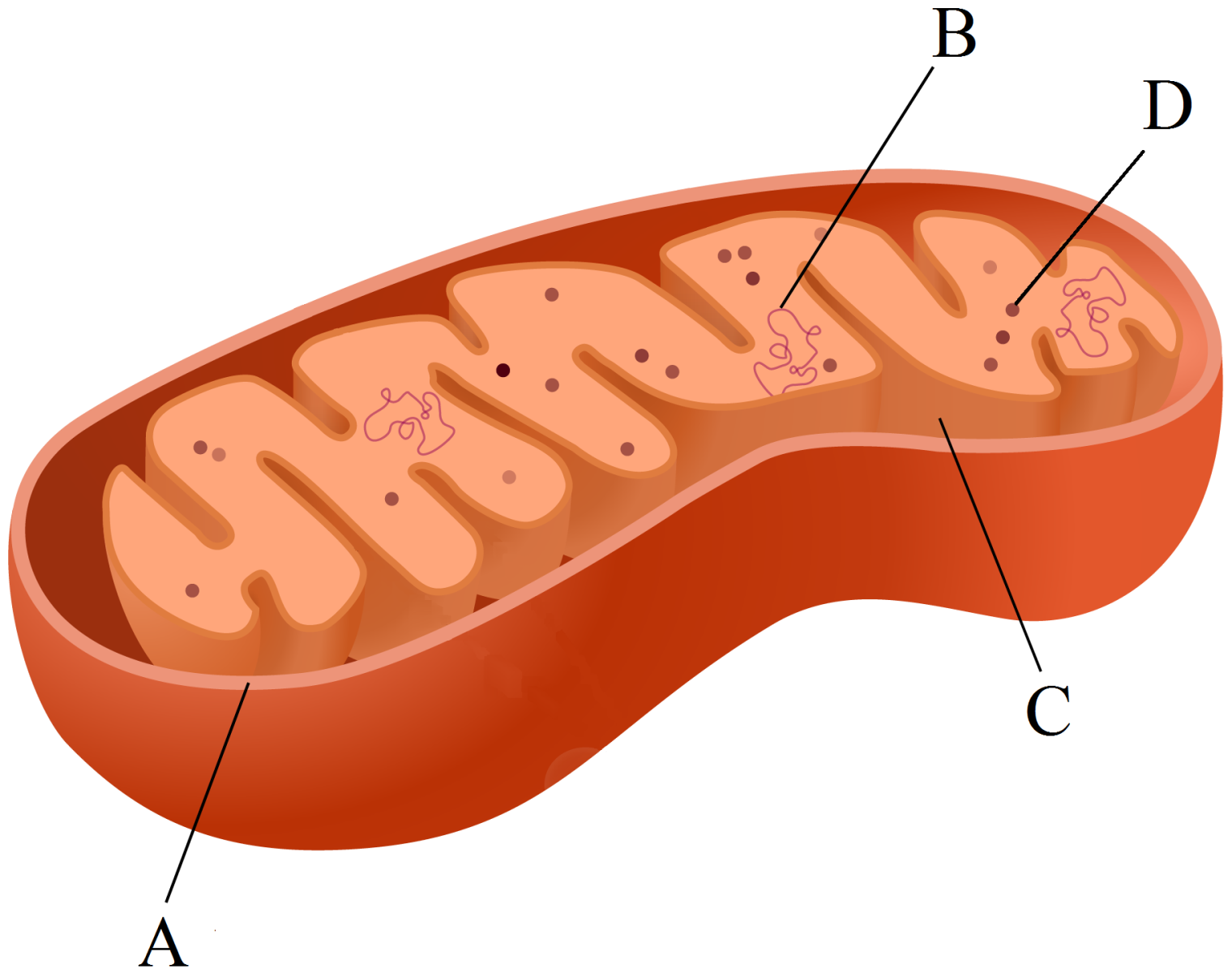
Fill in the blanks at (A), (B), (C), and (D) as shown in diagram.
Answer
  1. Inner membrane.
  2. Crista.
  3. Outer compartment/ Intermembrane space.
  4. Matrix.
View full question & answer
Question 302 Marks
Differentiate between animal cell and plant cell.
Answer
S. No.
Animal Cell
Plant Cell
1.
Cell wall absent
Cell wall present
2.
Chloroplast absent
Chloroplast present in green parts
3.
Centriole present
Centriole absent
4.
Vacuoles are smaller
Vacuoles are large
View full question & answer
Question 312 Marks
What is the significance of vacuole in a plant cell?
Answer
The vacuoles perform the following functions in a plant cell:
  1. They help to maintain the osmotic pressure of the cell.
  2. Storage of metabolic byproducts and end products like Glycogen and Proteins.
  3. The vacuoles containing cell sap provide rigidity and turgidity to the plant cells.
View full question & answer
Question 322 Marks
Differentiate between pili and fimbriae of bacteria.
Answer
Pili
Fimbriae
These are elongated tubular structures made of pilin.
These are small bristle like structures.
These are involved in the formation of conjugation bridges.
These help in attaching the bacteria to the substratum and also for clinging with each other to form a film on the water surface.
View full question & answer
Question 332 Marks
Differentiate between prokaryotic and eukaryotic cells.
Answer
S.No
Prokaryotic cell
Eukaryotic cell
1.
Nuclear membrane absent
Nuclear membrane presents
2.
Cell organelles absent(except ribosome)
Cell organelles present
3.
Endomembrane system absent.
Endomembrane system present.
4.
Example: bacteria
Example: RBC, neuron
View full question & answer
Question 342 Marks
Name the scientists who proposed the cell theory. Also, list its main postulates.
Answer
  • Cell theory was first proposed by Matthias Schleiden and Theodor Schwann; later Rudolf Virchow explained the origin of new cells.
  • It's postulates are:
  1. All living organisms are composed of cell(s) and it's/ their products.
  2. All cells arise from pre-existing cells.
View full question & answer
Question 352 Marks
What is refered to as satellite chromosome?
Answer
The round elongated knoblike appendages at one end of the chromosome are referred to as satellite chromosome. They are connected to the rest of the chromosome by a thin chromatin filament.
View full question & answer
Question 362 Marks
What is the importance of centriole?
Answer
The centrioles form the basal body of cilia or flagella, and spindle fibres that give rise to spindle apparatus during cell division in animal cells.
View full question & answer
Question 372 Marks
What is meant by endomembrane system in cell? Name the cell organelles/ structures included in it.
Answer
  • Endomembrane system of a cell refers to all those organelles that are considered together because their functions are coordinated.
  • Endoplasmic reticulum, Golgi apparatus, lysosomes and vacuoles are included in the endomembrane system.
View full question & answer
Question 382 Marks
Write the functions of the following Cell wall
Answer
Cell wall It gives a definite shape to the cell and protects the cell from mechanical injury and infections. It also helps in cell to cell interaction and act as a barrier for undesirablemacromolecules.
View full question & answer
Question 392 Marks
What are inclusion bodies? Name the four types of them.
Answer
Inclusion bodies are the non-membrane-bound structures in prokaryotic cells in which reserve materials are stored.
  1. Phosphate granules.
  2. Cyanophycean granules.
  3. Glycogen granules and.
  4. Gas vacuoles, are the different types of inclusion bodies.
View full question & answer
Question 402 Marks
Write the functions of the following: Centrioles.
Answer
Centrioles They form the base body of cilia and flagella and spindle fibres that gives rise to spindle apparatus during cell division in animal cells.They help in formation of microtubules and sperm tail. They also help in cell division by forming asters, which acts as spindle pole.
View full question & answer