Question 15 Marks
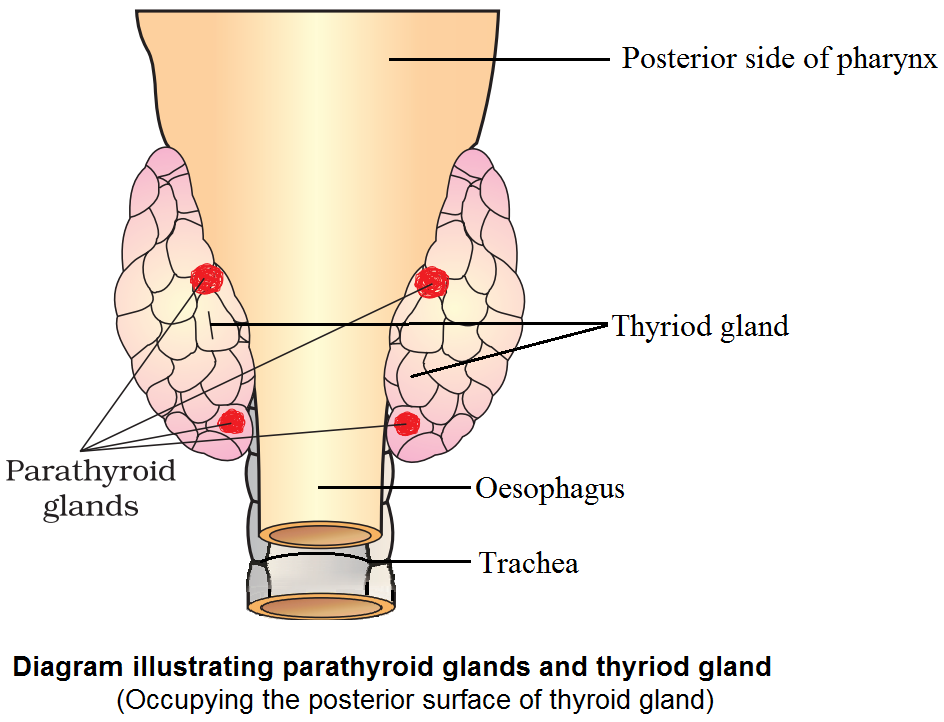
Diagrammatically indicate the location of the various endocrine glands in our body.
17 questions · self-marked practice — reveal the answer and mark yourself.
| | Column I | | Column II |
| (a) | T4 | (i) | Hypothalamus |
| (b) | PTH | (ii) | Thyroid |
| (c) | GnRH | (iii) | Pituitary |
| (d) | LH | (iv) | Parathyroid |
| | Column I | | Column II |
| (a) | T4 | (ii) | Thyroid |
| (b) | PTH | (iv) | Parathyroid |
| (c) | GnRH | (i) | Hypothalamus |
| (d) | LH | (iii) | Pituitary |
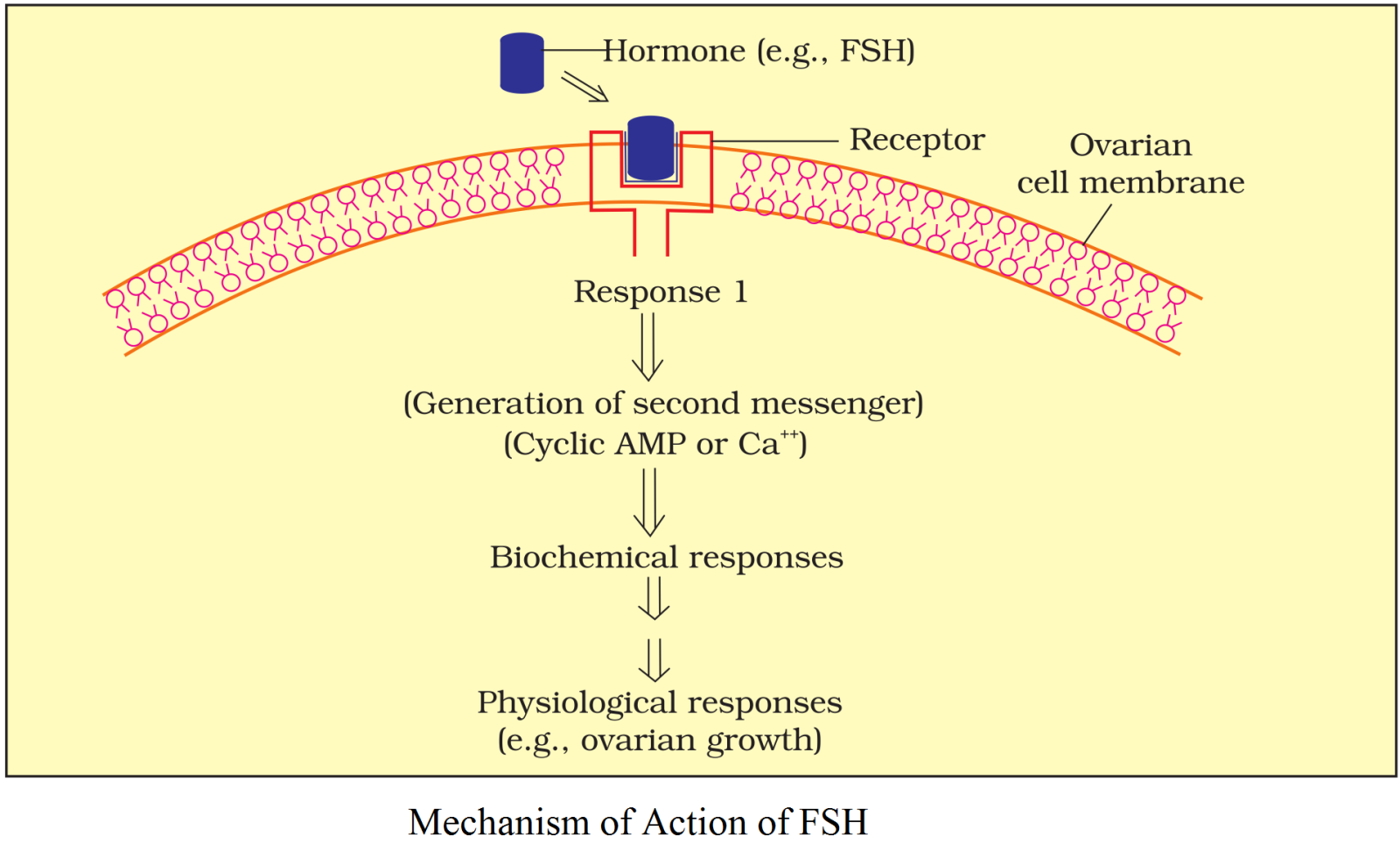
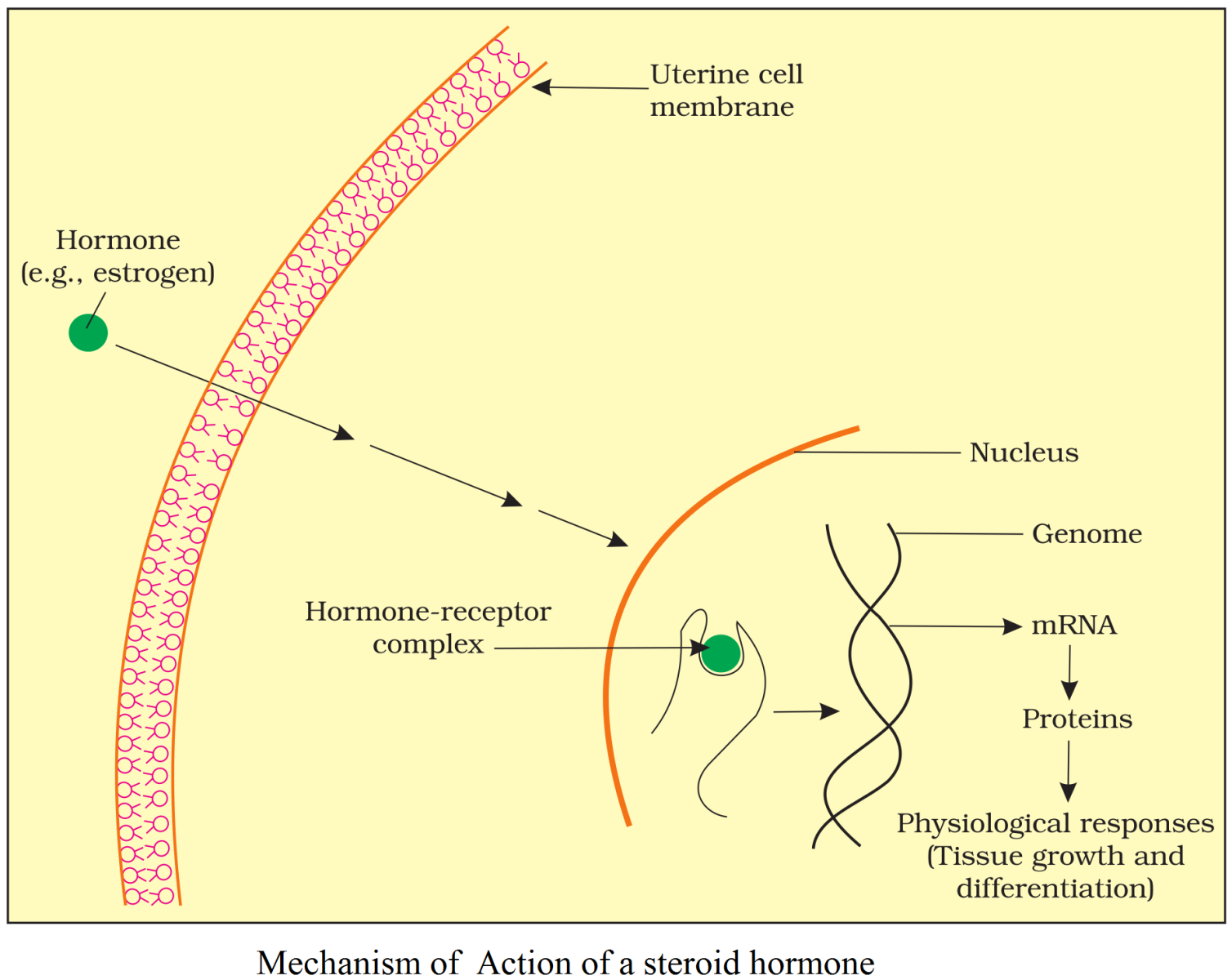
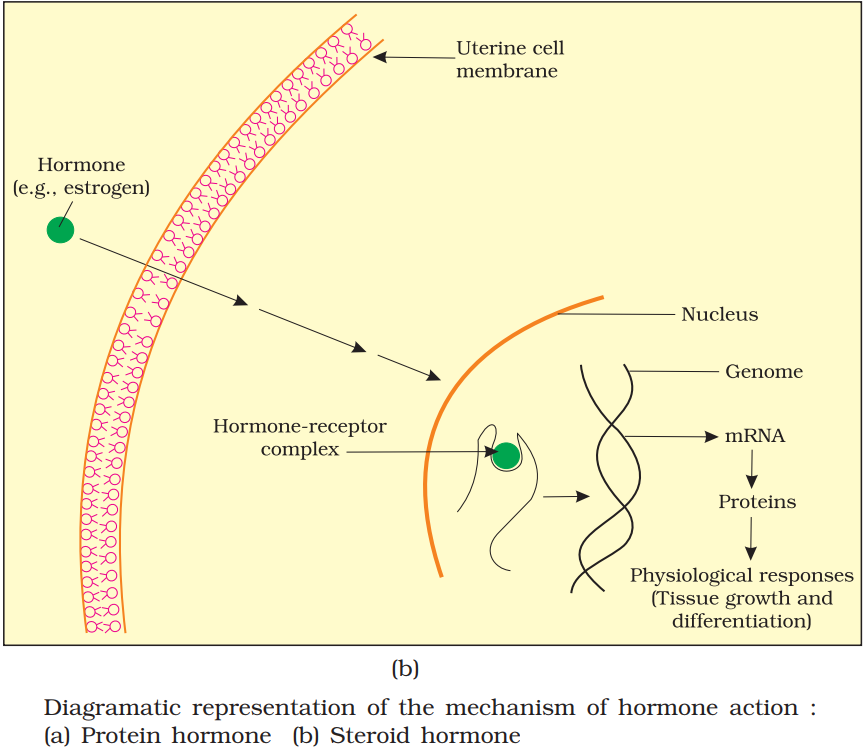
They interact to each other in two ways:
Protein hormones | Steroid hormones | ||
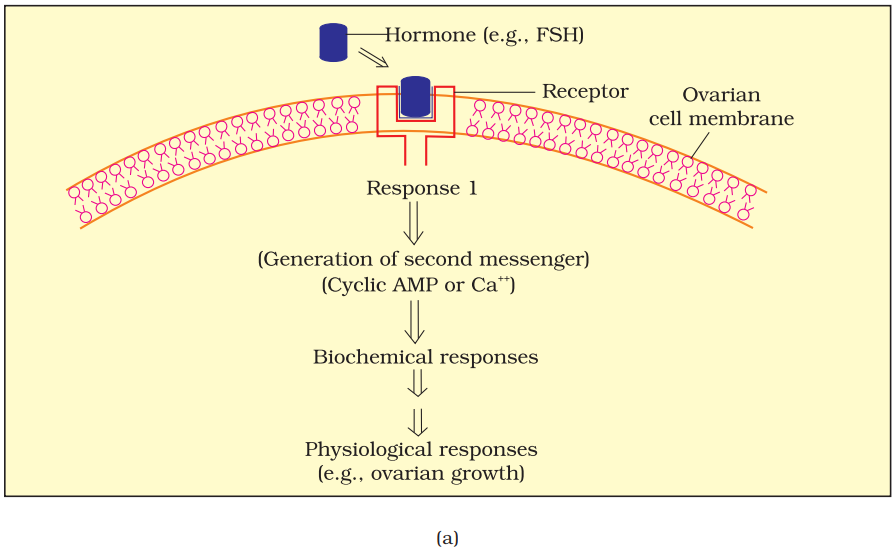
i. | They interact with membrane bound receptors. | i. | They interact with intracellular receptors. |
ii. | They generate secoun messenger for further action. | ii. | They do not generate second messenger. |
iii. | Effect of these hormones alters cellular metabolism. | iii. | Effect of these hormones regulates gene expression or chromosome function. |
iv. | Examples: insulin, glucagon, etc. | iv. | Examples: cortisol, testosterone, etc. |
Pars intermedia secretes only one hormone called melanocyte stimulating hormone (MSH). However, in humans, the pars intermedia is almost merged with pars distalis.
Neurohypophysis (pars nervosa) also known as posterior pituitary, stores and releases two hormones called oxytocin and vasopressin, which are actually synthesised by the hypothalamus and are transported axonally to neurohypophysis. Oxytocin acts on the smooth muscles of our body and stimulates their contraction. In females, it stimulates a vigorous contraction of uterus at the time of child birth, and milk ejection from the mammary gland. Vasopressin acts mainly at the kidney and stimulates re-absorption of water and electrolytes by the distal tubules and thereby reduces loss of water through urine (diuresis).
Hence, it is also called as anti-diuretic hormone (ADH).