MCQ 11 Mark
A majority of farmers in India depend upon $ ......... $ for irrigating their crops :
AnswerThe Indian economy is heavily dependent on agriculture and the livelihood of the Indian farmer largely depends on the Monsoon rains for irrigating their crops.
View full question & answer→MCQ 21 Mark
Dihydrogen can be prepared on commercial scale by different methods. In its preparation by the action of steam on hydrocarbons, a mixture of $CO$ and $H_2$ gas is formed. It is known as $ .........$
AnswerThe maximum of $CO$ and $H_2$ is called water gas. As this mixture of $CO$ and $H_2$ is used for the synthesis of methonol and a number of hydrocarbons, it is also called synthesis gas or 'syngas'.
View full question & answer→MCQ 31 Mark
Hydrogen is evolved by reaction of cold $\ce{HNO}_3 \ (5\%)$ on :
Answer$\text{Mn}+2\text{HNO}_3(\text{dil})\xrightarrow{\ \ \ \ \ \ }\text{Mn}(\text{NO}_3)_2+\text{H}_2$
View full question & answer→MCQ 41 Mark
Volume strength of $500\ ml$ solution containing $3.4\ gm$ of $\ce{H_2O_2}$ is
- A
$11.2$
- B
$6.8$
- C
$1.12$
- ✓
$2.24$
AnswerCorrect option: D. $2.24$
View full question & answer→MCQ 51 Mark
Sodium on reaction with cold water produces a residue. The nature of residue is :
- A
colourless, slippery and slightly cold
- B
colourful, soapy and slightly warm
- ✓
colourless, soapy and slightly warm
- D
colourful, slippery and slightly cold
AnswerCorrect option: C. colourless, soapy and slightly warm
Sodium reacts with cold water to form $\text{NaOH}.$
It is colourless, soapy and slightly warm.
View full question & answer→MCQ 61 Mark
In which of the following respect, electronic configuration of hydrogen has resemblance to alkali metals and halogens respectively?
- ✓
It lose one electron to form unipositive ion and gain one electron to form uninegative ion.
- B
It gain one electron to form uninegative ion and lose one electron to form unipositive ion.
- C
It has the ability only to gain one electron.
- D
AnswerCorrect option: A. It lose one electron to form unipositive ion and gain one electron to form uninegative ion.
Hydrogen has resemblance to the alkali metals, which lose one electron to form unipositive ions, as well as with halogens, which gain one electron to form uninegative ion.
View full question & answer→MCQ 71 Mark
Which of the following equations depicts reducing nature of $\ce{H_2O_2}\ ?$
- A
$ 2\left[\mathrm{Fe}(\mathrm{CN})_6\right]^{4-}+2 \mathrm{H}^{+}+\mathrm{H}_2 \mathrm{O}_2 \rightarrow 2\left[\mathrm{Fe}(\mathrm{CN})_6\right]^{3-}+2 \mathrm{H}_2 \mathrm{O} $
- ✓
$\mathrm{I}_2+\mathrm{H}_2 \mathrm{O}_2+2 \mathrm{OH}^{-} \rightarrow 2 \mathrm{I}^{-}+2 \mathrm{H}_2 \mathrm{O}+\mathrm{O}_2 $
- C
$ \mathrm{Mn}^{2+}+\mathrm{H}_2 \mathrm{O}_2 \rightarrow \mathrm{Mn}^{4+}+2 \mathrm{OH}$
- D
$ \mathrm{PbS}+4 \mathrm{H}_2 \mathrm{O}_2 \rightarrow \mathrm{PbSO}_4+4 \mathrm{H}_2 \mathrm{O} $
AnswerCorrect option: B. $\mathrm{I}_2+\mathrm{H}_2 \mathrm{O}_2+2 \mathrm{OH}^{-} \rightarrow 2 \mathrm{I}^{-}+2 \mathrm{H}_2 \mathrm{O}+\mathrm{O}_2 $
Iodile gets reduced from zero to $-1.$
View full question & answer→MCQ 81 Mark
Interstitial hydride can be formed by :
MCQ 91 Mark
The decomposition of $\ce{H_2O_2}$ is prevented by :
- A
$\ce{MnO}_2$.
- B
$\ce{NaOH}.$
- ✓
- D
View full question & answer→MCQ 101 Mark
Which of the following ions will cause hardness in water sample?
- ✓
$ \mathrm{Ca}^{2+}$
- B
$ \mathrm{Na}^{+} $
- C
$ \mathrm{Cl}^{-}$
- D
$\mathrm{K}^{+}v$
AnswerCorrect option: A. $ \mathrm{Ca}^{2+}$
Explanation: (A) $ \mathrm{Ca}^{2+}$
$\mathrm{Ca}^{++}$inos in the from $\mathrm{Ca}\left(\mathrm{HCO}_3\right)_2$ or $\mathrm{CaCl}_2$ or $\mathrm{CaSO}_4$ cause hardness in water, i.e., soluble salts of calcium can cause hardness in water.
View full question & answer→MCQ 111 Mark
Which of the following compounds is used for water softening?
- A
$\ce{Ca _3\left( PO _4\right)_2}$
- B
$ \mathrm{Na}_3 \mathrm{PO}_4 $
- ✓
$ \mathrm{Na}_6 \mathrm{P}_6 \mathrm{O}_{18} $
- D
$ \mathrm{Na}_2 \mathrm{HPO}_4 $
AnswerCorrect option: C. $ \mathrm{Na}_6 \mathrm{P}_6 \mathrm{O}_{18} $
$($Sodium hexametaphosphate$)$ commercially known as calgon is used for water softening.
$2 \mathrm{CaCl}_2+\mathrm{Na}_2\left[\mathrm{Na}_4\left(\mathrm{PO}_3\right)_6\right] \rightarrow \mathrm{Na}_2\left[\mathrm{Ca}_2\left(\mathrm{PO}_3\right)_6\right]+4 \mathrm{NaCl}$
View full question & answer→MCQ 121 Mark
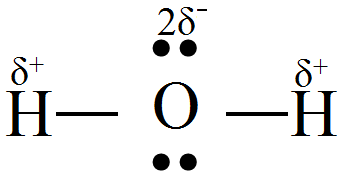
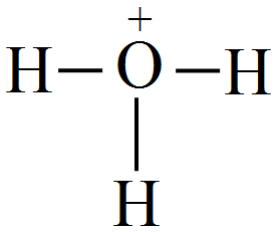
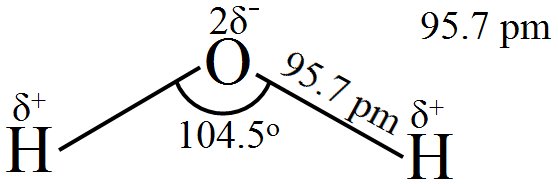
Identify the structure of water in the gaseous phase.
MCQ 131 Mark
Hydrogen is the $ ......... $ element on the earth :
Answer$H$ is the lightest element on earth as there is only $1$ proton and $1e^-$.
All the other elements have more than $1$ electrons and protons along with neutrons.
View full question & answer→MCQ 141 Mark
Which of the following statements are not true for hydrogen?
- A
It exists as diatomic molecule.
- B
It has one electron in its outermost shell.
- C
It can lose electron to form a cation which can exist freely.
- ✓
It forms a large number of ionic compounds by losing an electron.
AnswerCorrect option: D. It forms a large number of ionic compounds by losing an electron.
View full question & answer→MCQ 151 Mark
Hydrogen has the tendency to lose one electron and form $H^+$. In this respect, it resembles :
Answerlkali metals also have a tendency to lose one electron and form cations, so this similar property of hydrogen matches with alkali metals.
Carbon has a tendency to form covalent bonds.
Alkaline earth metals have a tendency to lose two electrons and Halogens have a tendency to gain electrons.
View full question & answer→MCQ 161 Mark
Metal hydride on treatment with water gives $ ........ :$
- A
$\ce{H_2O_2}$
- B
$\ce{H_2O}$
- C
- ✓
AnswerMetal hydrides react with water to form hydrogen gas and the metal hydroxide.
Example : $\ce{LiH + H_2O \rightarrow H_2 + LiOH.}$
View full question & answer→MCQ 171 Mark
Pure water is a $ ......... $ conductor of electricity :
AnswerPure water is free of impurities $($salts and minerals$).$
Impurities are necessary for electrical conductivity so pure water is a bad conductor of electricity.
View full question & answer→MCQ 181 Mark
Which of the following hydrides is electron $-$ precise hydride?
- A
$\ce{B_2H_6}$
- B
$\ce{NH_3}$
- C
$\ce{H_2O}$
- ✓
$\ce{CH_4}$
AnswerCorrect option: D. $\ce{CH_4}$
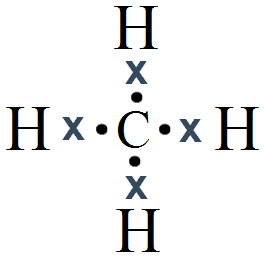
$\ce{CH_4}$ is an electron precise hydride since there are exact number of electrons to form normal covalent bonds.
View full question & answer→MCQ 191 Mark
Change of $H$ into $ H^+$ is :
AnswerChange of $H$ into $H^+$ is the oxidation of hyrogen because $H$ has zero oxidation number and $H^+$ has $+1$ oxidation number,loss of electrons is oxidation.
View full question & answer→MCQ 201 Mark
Which of the following is the example of interstitial or non $-$ stoichiometric hydrides?
- A
$\text{LaH}_{2.87,}\text{YbH}_{2.55}$
- B
$\text{TiH}_{1.5-1.8,}\text{ZrH}_{1.3-1.75}$
- C
$\text{VH}_{0.56,}\text{NiH}_{0.6-0.7,}\text{PdH}_{0.6-0.8}$
- ✓
View full question & answer→MCQ 211 Mark
Concentration of $\ce{H_2O_2}$ by vacuum distillation gives hydrogen peroxide which is :
- A
about $99\%$ pure
- ✓
about $90\%$ pure
- C
$30\%$ pure
- D
about $50\%$ pure
AnswerCorrect option: B. about $90\%$ pure
Vacuum distillation avoids decomposition of peroxide and gives crystalline $\ce{H_2O_2}$ with negligible amount of impurities.
View full question & answer→MCQ 221 Mark
Which of the following properties of dihydrogen is incorrect?
- A
It is colourless, odourless, tasteless.
- B
- C
- ✓
View full question & answer→MCQ 231 Mark
Which element forms hydride?
- ✓
$\text{Cr}$
- B
$\text{Mo}$
- C
$\text{W}$
- D
$\text{Sg}$
AnswerCorrect option: A. $\text{Cr}$
Chromium forms hydride when it reacts with hydrogen.
It forms the hydrides having the following formula $\ce{CrH_{0.5}, CrH, CrH_2}$.
View full question & answer→MCQ 241 Mark
$\text{NaH}(\text{s})+\text{H}_2\text{O}(\text{aq})\xrightarrow{\ \ \ \ \ \ \ \ }\text{NaOH}(\text{aq})+\text{H}_2(\text{g})$ and $8\text{LiH}+\text{Al}_2\text{Cl}_6\xrightarrow{\ \ \ \ \ \ \ }2\text{LiAlH}_4+6\text{LiCl}$ In the above reactions, $\text{NaH}$ and $\text{LiH}$ are the examples of :
AnswerCorrect option: A. ionic or saline or salt like hydrides.
$\text{LiH}$ and $\text{NaH}$ are the examples of ionic or saline hydrides.
View full question & answer→MCQ 251 Mark
Which of the following types of water is not in its free state?
AnswerDistilled water is purified water free of all dissolved salts.
River, well and rain water is water in free state as collected in nature.
View full question & answer→MCQ 261 Mark
Lead pipe for supplying the drinking water are :
- ✓
- B
- C
May be safe for some countries
- D
Nothing can be said about it
AnswerLead pipes for supplying the drinking water are not safe. The lead concentration in drinking water should be below $\text{ETA}$ level of $15\ \text{ ppm}$. If we will use lead pipes, it will increase the lead concentration above critical level, hence, should not be used. Use of lead pipes were banned in year $1970$ due to safety purposes.
View full question & answer→MCQ 271 Mark
Rogue element in the periodic table is $ ........ :$
AnswerRogue element in the periodic table is hydrogen, as its properties are similar with several groups. $($alkali metals and halogens$)$
View full question & answer→MCQ 281 Mark
Where is false about $\ce{H_2O_2}\ ?$
AnswerCorrect option: B. Two $\text{OH}$ bonds lie in same plane.
View full question & answer→MCQ 291 Mark
Advantage of hydrogen economy is the :
- A
Transmission of energy in the form of electric power.
- B
Transmission of energy in the form of chemical energy.
- ✓
Transmission of energy in the form of dihydrogen and not as electric power.
- D
Transmission of mechanical energy.
AnswerCorrect option: C. Transmission of energy in the form of dihydrogen and not as electric power.
Advantage of hydrogen economy is that energy is transmitted in the form of dihydrogen and not as electric power.
View full question & answer→MCQ 301 Mark
Why does $H^+$ ion always get associated with other atoms or molecules?
- A
Ionisation enthalpy of hydrogen resembles that of alkali metals.
- B
Its reactivity is similar to halogens.
- C
It resembles both alkali metals and halogens.
- ✓
Loss of an electron from hydrogen atom results in a nucleus of very small size as compared to other atoms or ions. Due to small size it can not exist freely.
AnswerCorrect option: D. Loss of an electron from hydrogen atom results in a nucleus of very small size as compared to other atoms or ions. Due to small size it can not exist freely.
$\mathrm{H} \rightarrow \mathrm{H}^{+}+\mathrm{e}^{-}$
$H^+$ has a very small size $(~1.5 \times 10^{-3}\ \text{pm})$ compared to normal atomic and ionic sizes of $50$ to $220\ \text{pm}$. It does not exist freely and is always associated with other atoms or molecules.
View full question & answer→MCQ 311 Mark
Which one of the following metals cannot evolve $\ce{H_2}$ from acids or $\ce{H_2O}$ or from its compounds?
- ✓
$\text{Hg}$
- B
$\text{Al}$
- C
$\text{Pb}$
- D
$\text{Fe}$
AnswerCorrect option: A. $\text{Hg}$
$\text{Hg}$ has greater reduction potential than that of $H^+$ and hence cannot displace hydrogen from acid.
View full question & answer→MCQ 321 Mark
Which position for hydrogen explain all its properties?
- A
- B
At the top of alkali metals
- C
At the top of carbon family
- ✓
AnswerPosition of hydrogen is not justified in the periodic table because it has properties of more than $1$ group elements.
View full question & answer→MCQ 331 Mark
The characteristics of hydrogen resemble the elements of $ ......... $ as well as $ ....... $ groups :
- A
$\text{IIA}$ and $\text{VA}$
- B
$\text{IIIA}$ and $\text{VIA}$
- C
$\text{IIA}$ and $\text{VIA}$
- ✓
$\text{IA}$ and $\text{VIIA}$
AnswerCorrect option: D. $\text{IA}$ and $\text{VIIA}$
Because hydrogen has $1 e^{-}$ in its outermost shell which is ready to be donated like that a group $1 A$
$($alkali metals$)$.
Also hydrogen can accept an $\mathrm{e}^{-}$ to from $\mathrm{H}^{-}$ having $2 \mathrm{e}^{-}$in outer shell which is stable this resembles to $\text{VIIA}$ group $($Halogen family$),$ as they also require only one $\mathrm{e}^{-}$ to fulfill their incomplete octet.
View full question & answer→MCQ 341 Mark
Which of the following is not used for disinfection of drinking water?
AnswerFor chemical disinfection a water following disinfectant are used : Chlorine, Chlorine dioxide, Hypochlorite, Ozone, Halogen etc.
Chlorine chemicals are very effective against bacteria, viruses and fungi that contaminate water.
View full question & answer→MCQ 351 Mark
The isotopes of hydrogen have the same electronic configurations and chemical properties. The only difference is in their rates of reaction. It is mainly due to their different :
- A
- B
Enthalpy of vaporisation.
- ✓
Bond dissociation enthalpy.
- D
AnswerCorrect option: C. Bond dissociation enthalpy.
View full question & answer→MCQ 361 Mark
Which of the following is not an example of ionic hydride :
- A
$\text{LeH}.$
- B
$\text{CaH}_2$.
- C
$\text{CsH}$.
- ✓
$\text{CeH}_2$.
AnswerCorrect option: D. $\text{CeH}_2$.
View full question & answer→MCQ 371 Mark
How many neutrons are present in protium, deuterium and tritium respectively?
- A
$1, 0$ and $2$
- B
$0, 2$ and $1$
- ✓
$0, 1$ and $2$
- D
$2, 1$ and $0$
AnswerCorrect option: C. $0, 1$ and $2$
Ordinary hydrogen, protium, has no neutrons, deuterium $($also known as heavy hydrogen$)$ has one and tritium has two neutrons in the nucleus.
Number of neutrons $=$ Mass number $-$ atomic number
View full question & answer→MCQ 381 Mark
In all its properties, hydrogen resembles :
- A
- B
- ✓
both alkali metals and halogens
- D
neither alkali metals nor halogens
AnswerCorrect option: C. both alkali metals and halogens
Hydrogen resembles alkali metals and halogens in all its properties. The electronic configuration of hydrogen, alkali metals and halogens are $1 s^1, \mathrm{~ns}^1$ and $ n s^2, n p^3$ respectively. All are short by one electron from noble gas configuration. Hence, all have similar chemical properties.
View full question & answer→MCQ 391 Mark
$ ........ $ give lather even with hard water due to the formation of $ ......... :$
- A
- B
Detergents, soluble salts
- ✓
Detergents, insoluble salts
- D
Soaps, insoluble precipitates
AnswerCorrect option: C. Detergents, insoluble salts
Detergents give lather even with hard water their $\text{Ca}$ and $\text{Mg}$ salts are ionic in nature and therefore soluble in water.
These salts of soap are covalent and form an insoluble precipitate in hard water.
View full question & answer→MCQ 401 Mark
Which of the following is incorrect statement?
- A
$s-$ block elements, except $\text{Be}$ and $\text{Mg},$ form ionic hydrides.
- B
$\text{BeH}_2,\text{MgH}_2,\text{CuH}_2,\text{Znh}_2,\text{CaH}_2$ and $\text{HgH}_2$ are intermediate hydrides.
- C
$p-$ block elements form covalent hydrides.
- ✓
$d$ and $f-$ block elements form ionic hydrides.
AnswerCorrect option: D. $d$ and $f-$ block elements form ionic hydrides.
$d$ and $f-$ block elements form metallic hydrides. $p-$ block elements form covalent hydrides, $s-$ block elements except $\text{Be}$ and $\text{Mg}$ form ionic hydrides. Hydrides of $\text{Be, Mg, Cu, Zn, Ca}$ and $\text{Hg}$ are intermediate hydrides.
View full question & answer→MCQ 411 Mark
The lightest element in the periodic table is $ ........:$
AnswerThe lightest element in the periodic table is hydrogen.
Its atomic weight is $1.008$ amu.
View full question & answer→MCQ 421 Mark
The co $-$ ordination number of $\text{Na}$ in solid $\text{NaH}$ is :
AnswerCoordination number of $\text{Na}$ in $\text{NaH}$ is $6$ as its shape is octahedral.
View full question & answer→MCQ 431 Mark
Which of the following is the industrial method of preparation of $\ce{H_2O_2}?$
- A
$\text{BaO}_2.8\text{H}_2\text{O}(\text{s})+\text{H}_2\text{SO}_4(\text{aq})\xrightarrow{\ \ \ \ \ \ \ }\text{BaSO}_4(\text{s})\\+\text{H}_2\text{O}_2(\text{aq})+8\text{H}_2\text{O}(\text{l})$
- B
$2\text{HSO}^-_4(\text{aq})\xrightarrow{\text{Elecrolysis}}\text{HO}_3\text{SOOSO}_3\text{H}(\text{aq})\\\xrightarrow{\text{Hydrolysis}}2\text{HSO}^-_4(\text{aq})+2\text{H}^+(\text{aq})+\text{H}_2\text{O}_2(\text{aq})$
- C
$\text{K}_2\text{S}_2\text{O}_8(\text{s})+2\text{H}_2\text{O}(\text{l})\xrightarrow{\ \ \ \ }2\text{KHSO}_4(\text{aq})+\text{H}_2\text{O}_2(\text{l})$
- ✓
$2-$ethylanthraquinol Big $\underset{\mathrm{H}_2 / \mathrm{Pd}}{\stackrel{\mathrm{O}_2(\text {air})}{\rightleftharpoons}} \mathrm{H}_2 \mathrm{O}_2+($oxidised product$)$
AnswerCorrect option: D. $2-$ethylanthraquinol Big $\underset{\mathrm{H}_2 / \mathrm{Pd}}{\stackrel{\mathrm{O}_2(\text {air})}{\rightleftharpoons}} \mathrm{H}_2 \mathrm{O}_2+($oxidised product$)$
View full question & answer→MCQ 441 Mark
Hydrogen loses its electron to form $H^+,$ in this respect, it resembles :
AnswerAlkali metals are electro positive in nature it readily lose its valence shell electron, and hydrogen resembles like alkali metals.
View full question & answer→MCQ 451 Mark
Which compound is formed when calcium carbide reacts with heavy water?
- A
$\text{CH}_4$
- B
$\text{C}_2\text{H}_2$
- C
$\text{C}_2\text{HD}$
- ✓
$\text{C}_2\text{D}_2$
AnswerCorrect option: D. $\text{C}_2\text{D}_2$
View full question & answer→MCQ 461 Mark
Which of the following is not correct regarding the electrolytic preparation of $\ce{H_2O_2}\ ?$
AnswerCorrect option: C. Hydrogen is liberated at anode.
$\ce{H_2O_2}$ can be prepared by electrolysis of $50\%$ solution of $\ce{H_2SO_4}$. In this method, hydrogen is liberated at cathode.
$\text{H}_2\text{SO}_4\rightleftharpoons2\text{H}^++\text{HSO}^-_4$
At anode $2\text{HSO}_4^-\xrightarrow{\ \ \ \ \ \ \ \ \ }\text{H}_2\text{S}_2\text{O}_8+2\text{e}^-$
$\text{H}_2\text{S}_2\text{O}_8+2\text{H}_2\text{O}\xrightarrow{\ \ \ \ \ \ \ }2\text{H}_2\text{SO}_4+\text{H}_2\text{O}_2$
At cathode $2\text{H}^++2\text{e}^-\xrightarrow{\ \ \ \ \ \ \ }\text{H}_2\uparrow$
View full question & answer→MCQ 471 Mark
Which of the following is a reducing agent and undergoes hydrolysis?
AnswerCorrect option: D. $\mathrm{SiH}_4$
Carbon compounds are unable to undergo hydrolysis due to absence of $d$ orbitals.
However, $Si$ compounds can easily undergo hydrolysis due to the same fact that it has vacant $d$ orbitals.
View full question & answer→MCQ 481 Mark
Radioactive elements emit $a, p$ and $y$ rays and are characterized by their half lives. The radioactive isotope of hydrogen is :
AnswerThe tritium concentration is about ane atom per $10^{18}$ atom protium. Of these isotopes, only tritum is radioactive and emits low energy beta particles.
View full question & answer→MCQ 491 Mark
In which of the following proportion listed below, hydrogen does not resemble with halogens?
- ✓
- B
Electro positive character.
- C
Combination with alkali metal.
- D
Answer
- Nature of oxide.
- Electro positive character.
It forms $H_2O$ which is neutral $(pH = 7)$ and it can form positive ion. View full question & answer→MCQ 501 Mark
$\text{H}_2\text{O}(\text{l})+\text{H}_2\text{O}(\text{l})\xrightarrow{\ \ \ \ \ \ \ \ \ \ }\text{H}_3\text{O}^+(\text{aq})+\text{OH}^-(\text{aq})\\\ \ ^\text{Acide-1}\ \ \ \ \ \ ^\text{Base-2}\ \ \ \ \ \ \ \ \ \ \ \ \ \ \ \ \ \ \ \ ^\text{Acide-2}\ \ \ \ \ \ \ \ \ ^\text{Base-1}\\ \ \ ^\text{(Acid)}\ \ \ \ \ \ \ ^\text{(Base)}\ \ \ \ \ \ \ \ \ \ \ \ \ \ ^\text{(Conjugate acide)}\ \ ^\text{(Conjugate base)}$ The above reaction is known as:
AnswerCorrect option: D. Both $(a)$ and $(b)$
The auto$-$protolysis $($self$-$ionisation$)$ of water takes place as follows.
$\text{H}_2\text{O}(\text{l})+\text{H}_2\text{O}(\text{l})\xrightarrow{\ \ \ \ \ \ \ \ \ \ }\text{H}_3\text{O}^+(\text{aq})+\text{OH}^-(\text{aq})\\\ \ ^\text{Acide-1}\ \ \ \ \ \ ^\text{Base-2}\ \ \ \ \ \ \ \ \ \ \ \ \ \ \ \ \ \ \ \ ^\text{Acide-2}\ \ \ \ \ \ \ \ \ ^\text{Base-1}\\ \ \ ^\text{(Acid)}\ \ \ \ \ \ \ ^\text{(Base)}\ \ \ \ \ \ \ \ \ \ \ \ \ \ ^\text{(Conjugate acide)}\ \ ^\text{(Conjugate base)}$
View full question & answer→