Questions

2 Marks Questions

Take a timed test

7 questions · self-marked practice — reveal the answer and mark yourself.

Question 12 Marks
In a group of students, 100 students know Hindi, 50 know English and 25 know both. Each of the students knows either Hindi or English. How many students are there in the group?
Answer
Let H be the set of students who know Hindi and E be the set of students who know English.
Here $n ( H )=100, n ( E )=50$ and $n(H \cap E)= 2 5$
We know that $n(H \cup E)=n(H)+n(E)-n(H \cap E)$
View full question & answer
Question 32 Marks
Find the length of perpendicular from the origin to the lines 7x + 24y = 50.
Answer
Here, it is given: Point (0,0) and line 7x + 24y = 50 
We have to find: The length of the perpendicular from the origin to the line 7x + 24y = 50
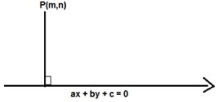
We know that the length of the perpendicular from P (m,n) to the line ax + by + c = 0 is given by,
Image

The given equation of the line is 7x + 24y - 50=0 
Here m= 0 and n = 0, a = 7, b = 24, c = -50 
$\begin{array}{l}D=\frac{|7(0)+24(0)-50|}{\sqrt{7^2+24^2}} \\ D=\frac{|0+0-50|}{\sqrt{49+576}}=\frac{|-50|}{\sqrt{625}}=\frac{|-50|}{25}=\frac{50}{25}=2 \\ D =2\end{array}$
Therefore, the length of perpendicular from the origin to the line 7x + 24y = 50 is 2 units.
View full question & answer
Question 42 Marks
Evaluate $\lim _{x \rightarrow 1} \frac{x^3-1}{x-1}$
Answer
Given, $\lim _{x \rightarrow 1} \frac{x^3-1}{x-1}$
If we put $x=1$, then expression $\frac{x^3-1}{x-1}$ becomes the indeterminate form $\frac{0}{0}$. Therefore, $(x-1)$ is a common factor of $\left(x^3-1\right)$ and $(x$ $-1)$.
Factorising the numerator and denominator, we have
$\lim _{x \rightarrow 1} \frac{x^3-1}{x-1}\left[\frac{0}{0}\right.$ form $]$
$\begin{array}{l}=\lim _{x \rightarrow 1} \frac{(x-1)\left(x^2+x+1\right)}{(x-1)} \\ =\lim _{x \rightarrow 1}\left(x^2+x+1\right)=1^2+1+1=3\end{array}$
View full question & answer
Question 52 Marks
Find the domain and the range of the real function: $f ( x )=\frac{|x-4|}{x-4}$
Answer
Here we have, $f(x)=\frac{|x-4|}{x-4}$
We need to find where the function is defined.
To find the domain of the function f(x) we need to equate the denominator of the function to 0
Therefore,
x - 4 = 0 or x = 4
It means that the denominator is zero when x = 4
So, the domain of the function is the set of all the real numbers except 4
The domain of the function, $D _{\{f( x )\}}=(-\infty, 4) \cup(4, \infty)$
The numerator is an absolute function of the denominator.
So, for any value of x from the domain set, we always get either +1 or -1 as the output.
So, the range of the function is a set containing -1 and +1
Therefore, the range of the function, $R _{ f ( x )}=\{-1,1\}$
View full question & answer
Question 62 Marks
Let $f , g$ be two real functions defined by $f(x)=\sqrt{x+1}$ and $g(x)=\sqrt{9-x^2}$ Then describe each of the following functions: $f + g$.
Answer
According to the question , we can state,
We know the square of a real number is never negative.
Clearly, $f ( x )$ takes real values only when $x+1 \geq 0$
= x > -1
$\therefore x \in[-1, \infty)$
Thus, domain of $f=(-1, \infty)$
Similarly, $g(x)$ takes real values only when $9-x^2 \geq 0$
$\begin{array}{l}=9>x^2 \\ =x^2<9 \\ =x^2-9<0 \\ =x^2-32<0 \\ =(x+3)(x-3)<0 \\ =x \geq-3 \text { and } x<3\end{array}$
$x \in[-3,3]$
Thus, domain of $g==[-3,3]$
i.f + g
We know (f + g)(x) = f(x) + g(x)
$\therefore(f+g)(x)=\sqrt{x+1}+\sqrt{9-x^2}$
Domain of $f+g=$ Domain of $f \cap$ Domain of $g$
$=$ Domain of $f+g=[-1, \infty) \cap[-3,3]$
Thus, $f + g :[-1,3] R$ is given by $(f+g)(x)=\sqrt{x+1}+\sqrt{9-x^2}$
View full question & answer
Question 72 Marks
Answer
i. It is given that 
$: P ( A )=0.25, P ( A$ or B $)=0.5$ and $P ( B )=0.4$
To find : P(A and B) 
Formula used : P(A or B) = P(A) + P(B) - P(A and B) 
Substituting the value in the above formula we get, 
0.5 = 0.25 + 0.4 - P(A and B)
0.5 = 0.65 - P(A and B)
P(A and B) = 0.65 - 0.5
P(A and B) = 0.15
ii. Given : P(A) = 0.25, P(A and B) = 0.15 ( from part (i)) 
To find: $P ( A$ and $\bar{B})$
Formula used: $P ( A$ and $\vec{B})= P ( A )- P ( A$ and B $)$
Substituting the value in the above formula we get, 
$\begin{array}{l} P ( A \text { and } \vec{B})=0.25-0.15 \\ P ( A \text { and } \bar{B})=0.10 \\ P ( A \text { and } \bar{B})=0.10\end{array}$
View full question & answer