- ACapitalist economy
- ✓Centrally planned economy
- CMixed economy
- DMarket economy
104 questions · 2 auto-graded MCQ + 102 self-marked written.
| Q | TFC | AVC | TC |
| 100 | 30 | 3 |
Explanation:
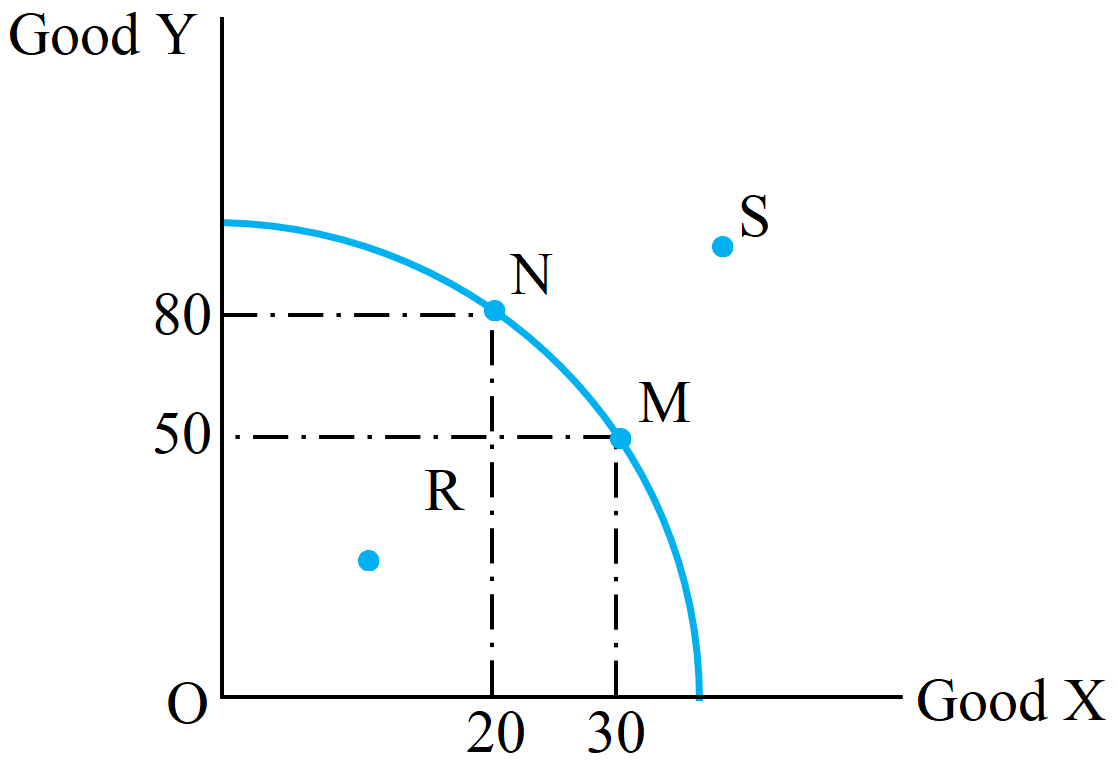
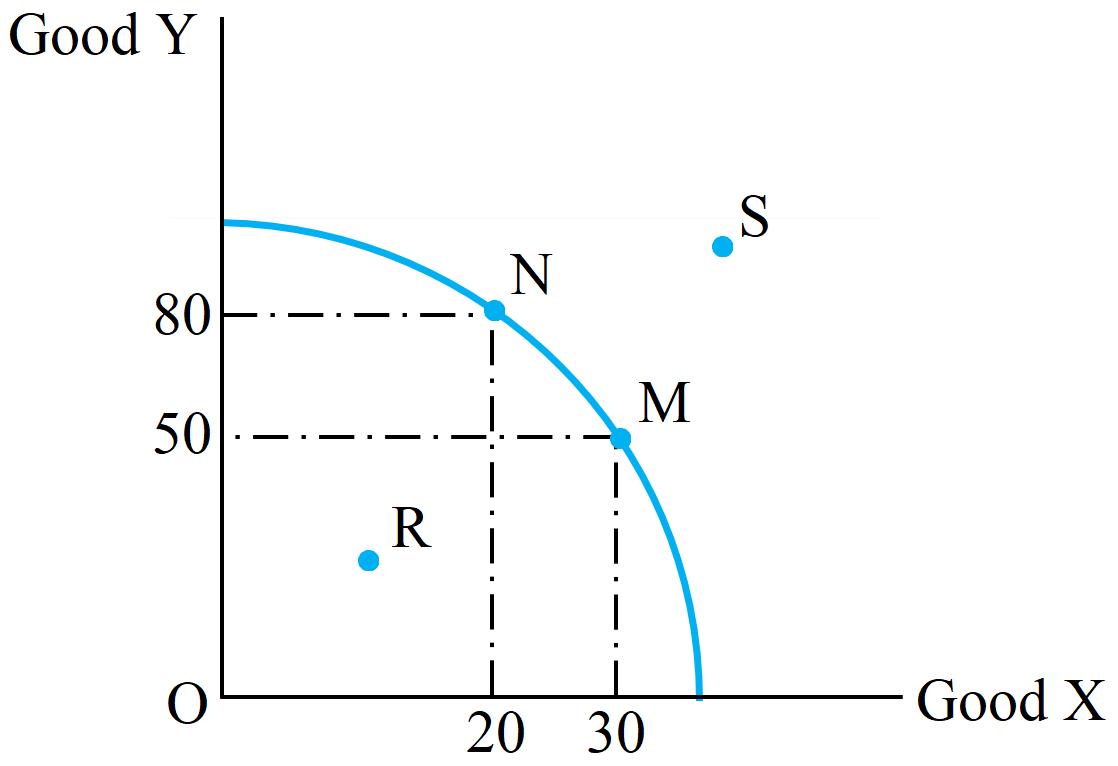
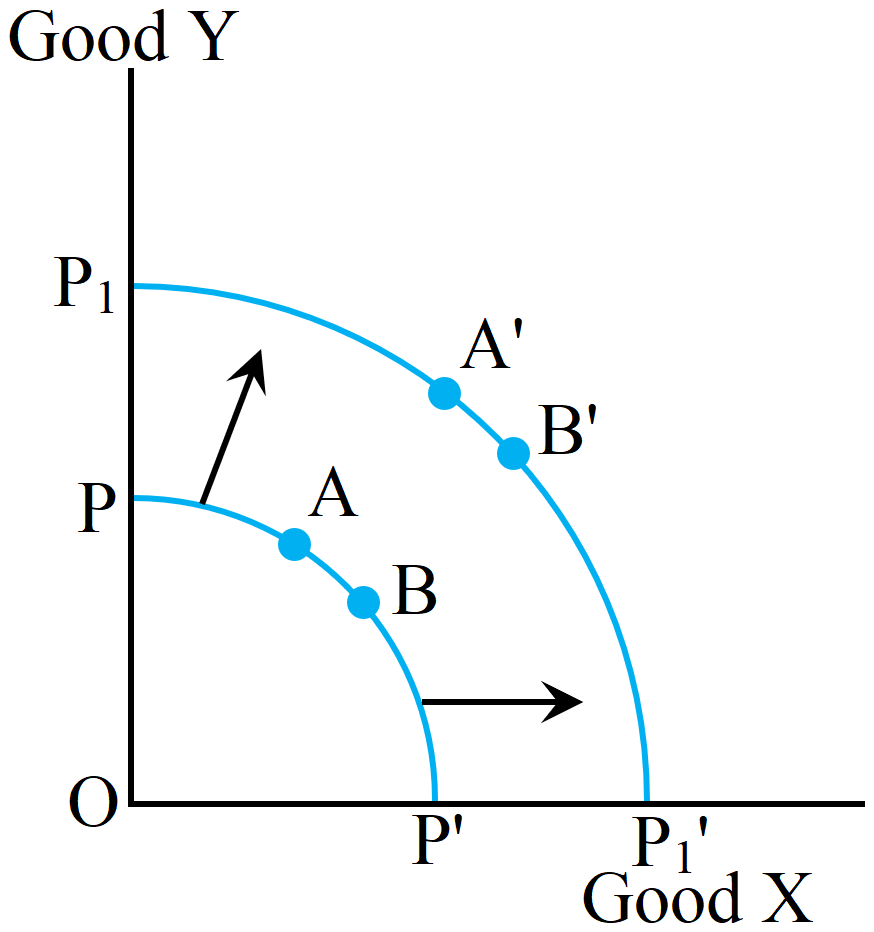
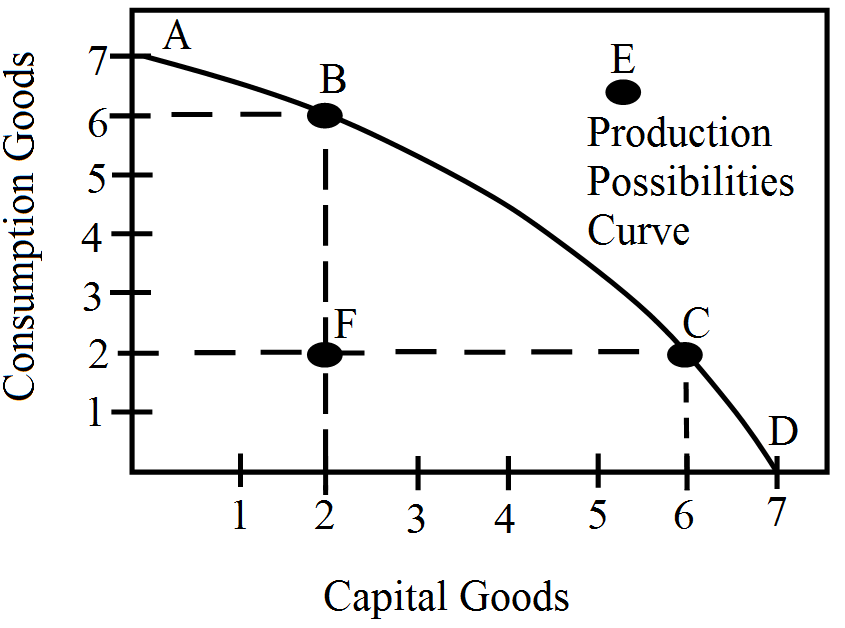
When the resources are destroyed or there is a use of outdated technology, then production of an economy goes down and as a result production possibility curve will shift to left.
$\text{MRT}=\frac{\text{Units of One Good Sacrificed}}{\text{More Units of other Good Produced}}$
$\text{MRT}=\frac{\text{Units of One Good Produced}}{\text{More Units of other Good Sacrificed}}$
$\text{MRT}=\frac{\text{Units of One Good Sacrificed}}{\text{Less More Units of other Good Produced}}$
$\text{None of the obove.}$
| Production of Cricket Bats (thousand) | 0 | 1 | 2 | 3 | 4 | 5 |
| Production of Sarees (in lakh) | 75 | 70 | 62 | 50 | 30 | 0 |
Explanation:
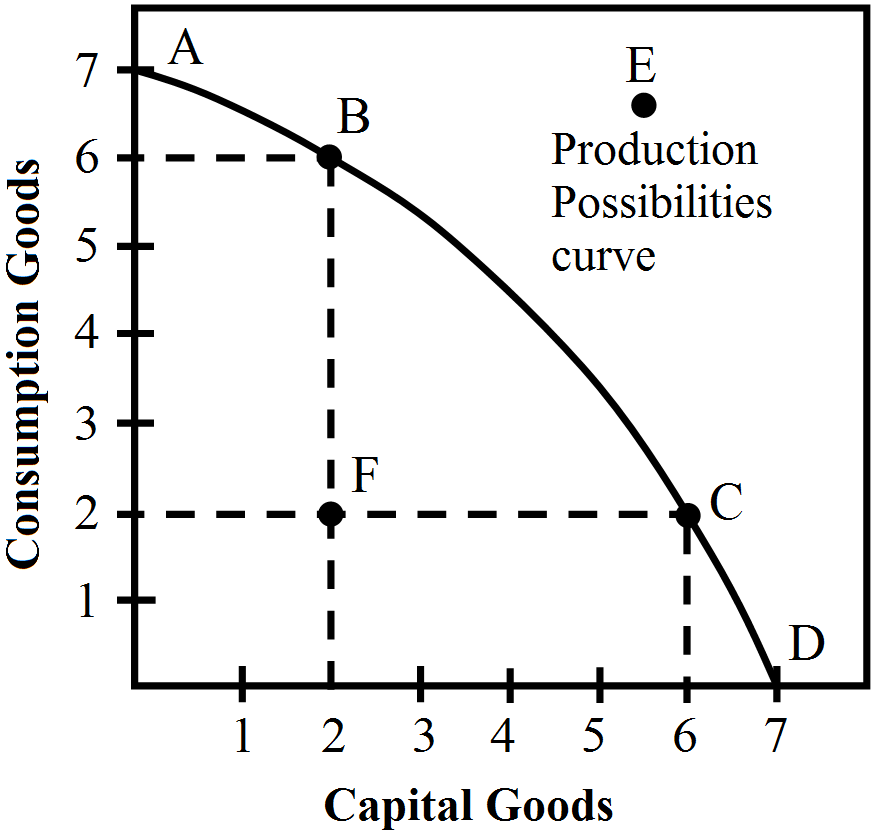
The production possibility curve will shift rightward under the following two conditions:
Explanation:
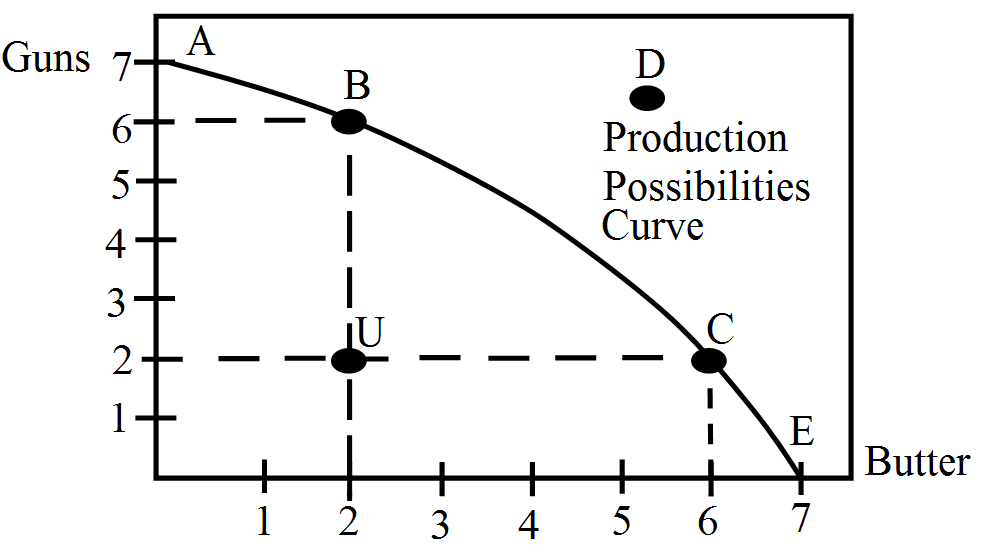
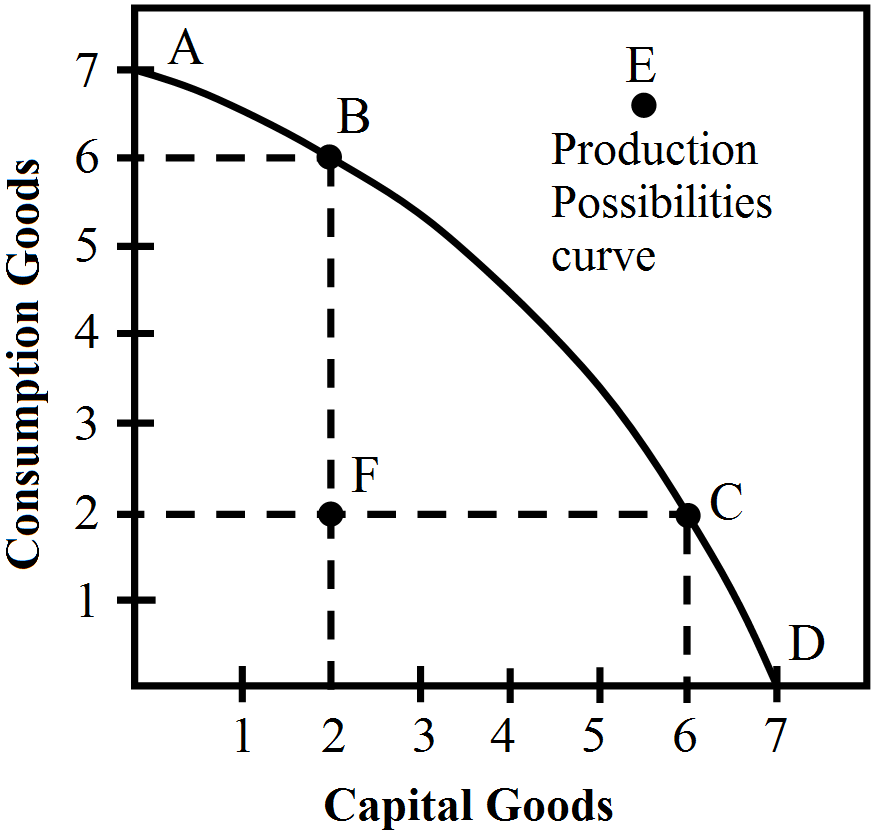
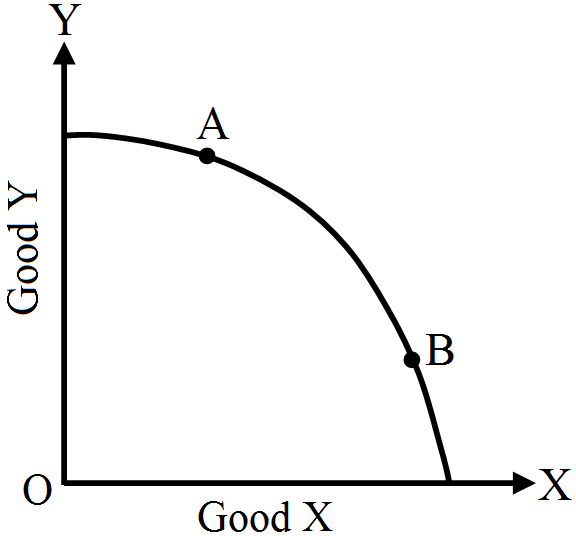
Production possibility curve is concave to the origin because of increasing MRT, i.e. increasing marginal opportunity cost which implies that for producing an additional unit of a good, sacrifice of units of other good goes on increasing.
Explanation:
Opportunity cost of producing 1500kg pulses is production of 1000kg rice sacrificed.
| Goods A | 0 | 1 | 2 | 3 | 4 |
| Goods B | 50 | 45 | 40 | 35 | 30 |
Explanation:
In the above schedule, the MRT is 5 units of goods 'B' sacrificed to produce 1 unit of goods ‘A’. MRT is constant therefore production possibility curve is a straight line negatively sloped.