72 questions · self-marked practice — reveal the answer and mark yourself.

| S.No. | Primary Succession | Seconday Succession |
| 1. | It begins with areas where no living organisms ever existed. | It begins in areas where natural biotic communities have been destroyed. |
| 2. | Establishment of a biotic community is very slow. | Establishment of a biotic community is faster. |
| Example Newly cooled lava/bare rocks/newly created ponds or reservoir. | Example Abandoned farm lands/burnt or cut forests/lands that have been flooded. |


To remove particulate matter.
Depends upon - plant species inhabiting a particular area, environmental factors availability of nutrients, photosynthetic capacity of plants.
| Detritivore | Decomposer |
| Detritivore is an organism that breaks down the detritus into smaller particles in the process, called fragmentation, e.g. Earthworm. | Decomposer is an organism which by secreting enzymes degrades the detritus into simpler inorganic substances, e.g. Some bacteria and some fungi. |
Terrestrial ecosystem: Forest, grassland, desert, etc.
Aquatic ecosystem: Pond, lake, river, wetland, estuary, etc.
Man-Made ecosystem: A manmade ecosystem is an artificial biological system that is managed and sustained by people.

| S.No. | Carnivores | Consumers |
| 1. | A carnivore meaning "meat eater" is an organism that derives its energy and nutrient requirements from a diet consisting mainly or exclusively of animal tissue, whether through predation or scavenging. | Consumers in a food chain are living creatures that eat organisms from a different population. First, it is necessary to understand these two classifications, heterotrophs and autotrophs, consumers and producers respectively. |
| 2. | A carnivore at the top of the food chain, not preyed upon by other animals. | it can also only eat plants (producers) being located in the first level of the food chain above the producers. (primary, secoundary, tertiary). |

$6\text{CO}_2+12\text{H}_2\text{O}\xrightarrow{\text{Light}}\text{C}_6\text{H}_{12}\text{O}+6\text{H}_2\text{O}+6\text{O}_2$
These complexes are called photosynthetic unit or photosystem or pigment system.
| S. No. | Seral stage | Climax community |
| (i) | It is the sequential replacement and establishment of species in the process of succession. | It is the community which gets established at the terminal stage of succession. |
| (ii) | The species composition changes from time to time. | The species are stable and species composition do not change. |
| (iii) | Simple food chains and food webs are found. | Complex food chains and food webs are found. |
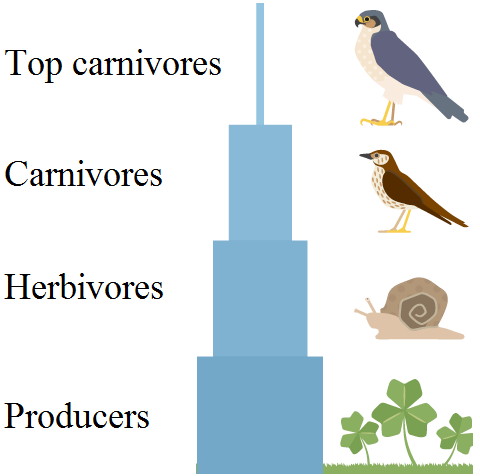
Primary consumers: The consumers that feed on plants direcdy, are called primary consumers or herbivores.
Secondary consumers: Those animals, which ear other animals, who ear plants are called secondary consumers. These are also referred ro as primary carnivores.
Tertiary consumers: These are animals who feeds on secondary consumers for their nutrition. These are also referred to as secondary carnivores.
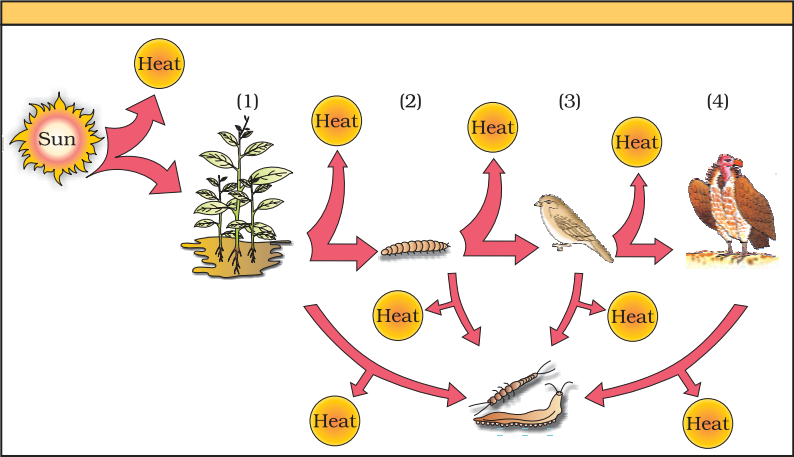
Therefore, due to this interdependence of food/energy between organisms, the chains or webs are formed in the ecosystem.
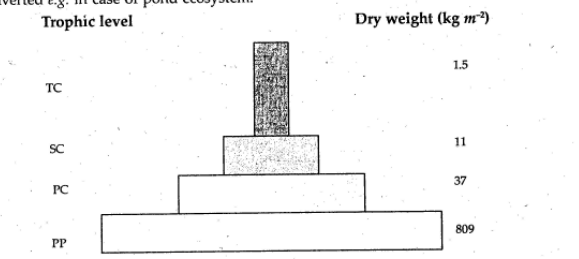
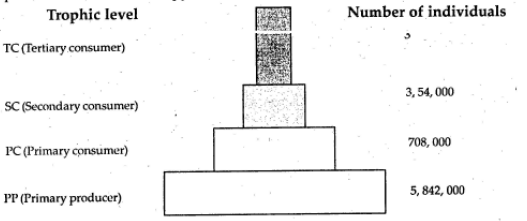
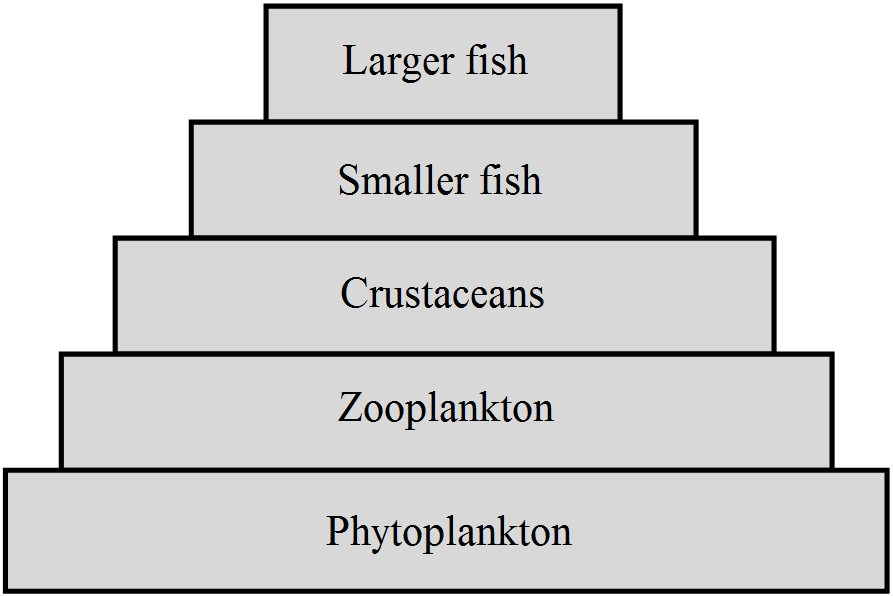
It is a graphic presentation of aquatic food chain in terms of numbers of producers and consumers at each level.

Both the hydrarch and xerarch lead to mesic conditions of forest.
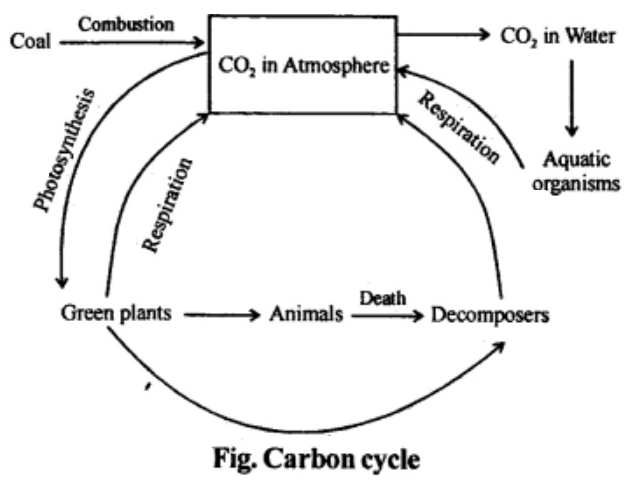
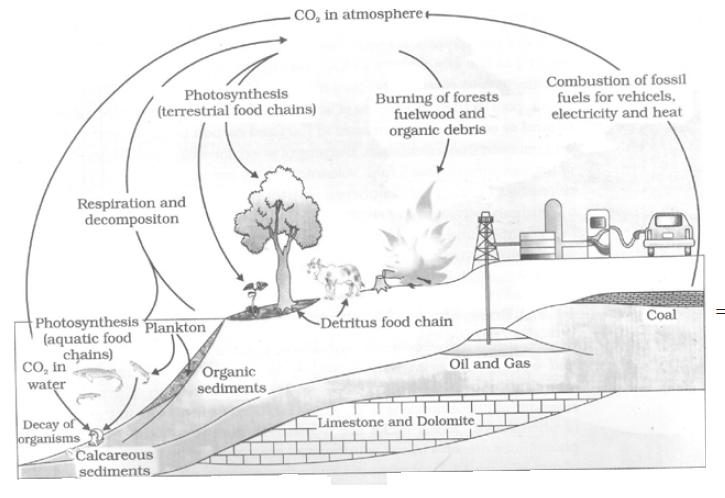
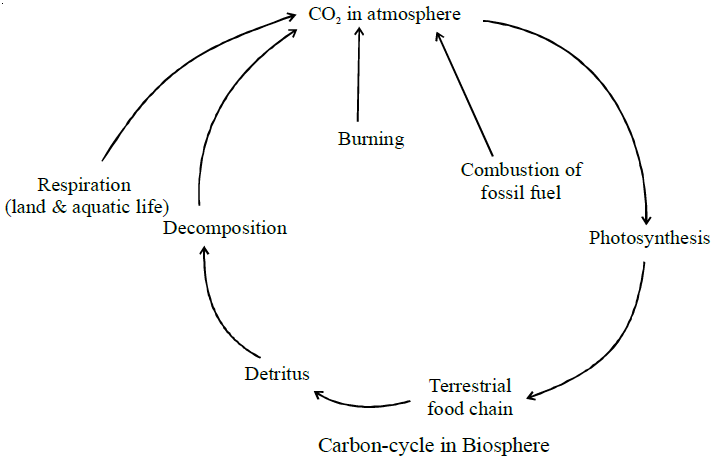
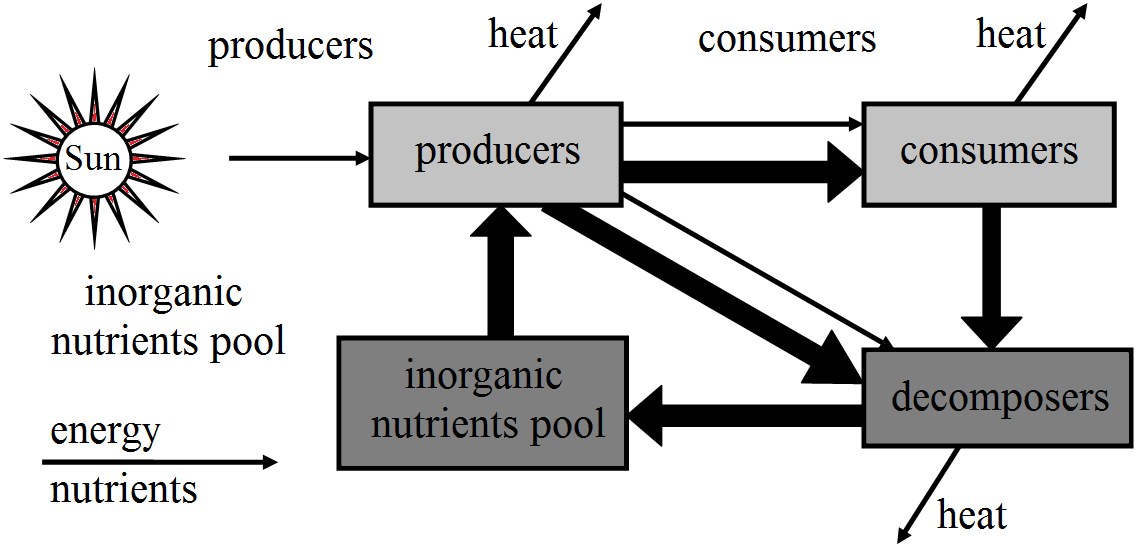
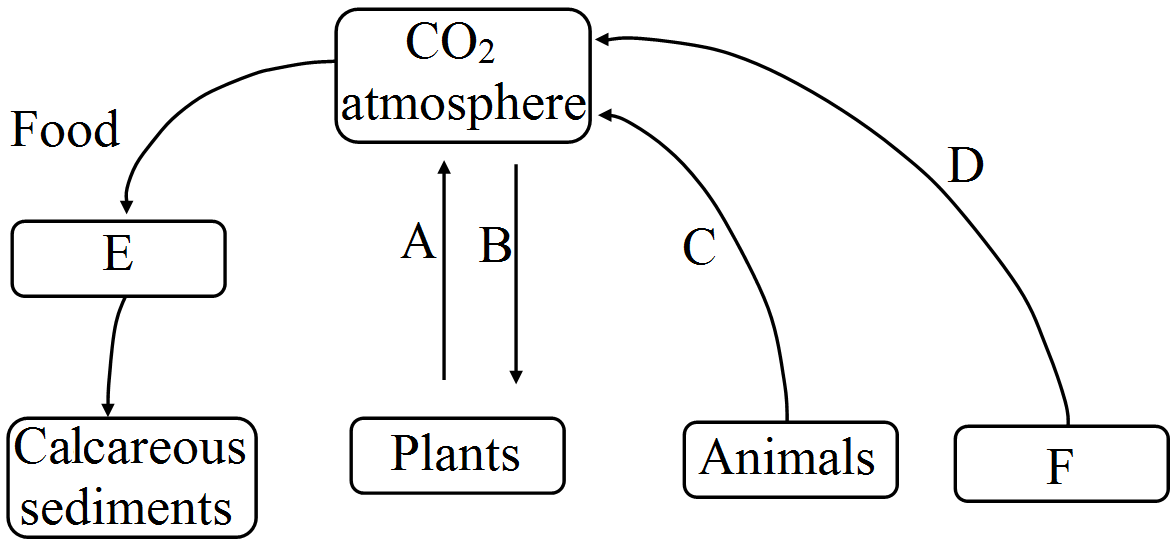
The nutrients, which are present in the ecosystem never get lost, they are recycled again and again indefinitely. The movement of nutrient elements through the various components of an ecosystem is called as nutrient cycling, or also called biogeochemical cycles; (ro-living' geo-rocks, air, water).
Nutrient cycles are of two types based on their reservoir (i.e. storehouse): Gaseous cycle and sedimentary cycle' In both the gaseous and sedimentary cycle, environmental factors like temperature, pH' soil nature and moisture can regulate the rate of release of nutrients into the atmosphere. The function of the reservoir is to meet the deficit, which occurs due to imbalance in the rate of influx and efflux.
Do the above statements mean one and the same thing. If your answer is yes, give reasons. And if your answer is ‘no’ explain the meaning of each expression.
Ecological succession is of two types:
Primary succession: It begins in areas where no living organisms ever existed. Therefore, the establishment of a biotic community is very slow, e.g., newly cooled lava, bare rock, newly created pond or reservoir.
Secondary succession: It begins in areas where natural biotic communities have been destroyed, e.g., abandoned farm lands, buried or cut forests. Since soil is available, it is a faster process.
| S. No. | Pioneer community | Climax community |
| (i) | The species which invade a bare area or land to initiate succession is called pioneer community. | The last or final stage in a succession constitute the climax community. |
| (ii) | The pioneer species have high reproductive rate. | The climax species have low reproductive rate. |
| (iii) | The pioneer species have short life span. | The climax species have long life span. |
| (iv) | They are replaceable. | They are stable and not replaced. |
Difference:
| Sere | Seral Community |
| A sere refers to the entire sequence of communities of communities that successively change in a given area. | Each of the communities that gets establihsed between the pioneer and climax communities,is called a seral community. |
The rate of decomposition is controlled mainly by the following two factors:
Properties:
Primary succession on rocks: