Question 14 Marks
Given below is the pattern of temperature in a person suffering from a non-viral disease transmitted by mosquitoes. Study the graph and answer the questions that follow:
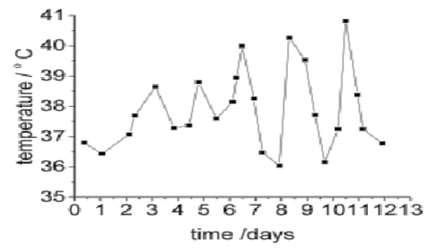
A. Explain the factor(s) responsible for this pattern of temperature.
B. How does this pathogen multiply in the human body?
C. How is this infection transmitted to humans?
OR
D. Which stages of the life cycle of this pathogen are completed in the mosquito's gut?
A. Explain the factor(s) responsible for this pattern of temperature.
B. How does this pathogen multiply in the human body?
C. How is this infection transmitted to humans?
OR
D. Which stages of the life cycle of this pathogen are completed in the mosquito's gut?
Answer
View full question & answer→A. The rupture of RBCs associated with the release of toxic substance haemozoin is responsible for the chills and fever/recurring every 3 - 4 days.
B.
- The parasite reproduces asexually in liver cells, bursting the cell and releasing into the blood.
- Parasite further reproduces asexually in red blood cells. Released parasite infects new red blood cells. Sexual stages (gametocytes) develop in red blood cells.
C. The infection is caused by the bite of the female Anopheles mosquito which introduces the sporozoites in the human body.
D. Fertilisation and development take place in the mosquito's gut.
B.
- The parasite reproduces asexually in liver cells, bursting the cell and releasing into the blood.
- Parasite further reproduces asexually in red blood cells. Released parasite infects new red blood cells. Sexual stages (gametocytes) develop in red blood cells.
C. The infection is caused by the bite of the female Anopheles mosquito which introduces the sporozoites in the human body.
D. Fertilisation and development take place in the mosquito's gut.