Question 14 Marks
Read the following text carefully and answer the questions that follow:
A pathogen is defined as an organism causing disease to its host, with the severity of the disease symptoms referred to as virulence. Pathogens are taxonomically widely diverse and comprise viruses and bacteria as well as unicellular and multicellular eukaryotes. The immune system of a person is suppressed. He was found positive for a pathogen in the diagnostic test ELISA.
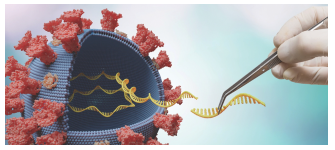
i. Name the disease, the patient is suffering from. (1)
ii. Which pathogen is identified by ELISA test? (1)
iii. Which cells of the body are attacked by the pathogen? (2)
OR
Suggest preventive measures of the infection. (2)
A pathogen is defined as an organism causing disease to its host, with the severity of the disease symptoms referred to as virulence. Pathogens are taxonomically widely diverse and comprise viruses and bacteria as well as unicellular and multicellular eukaryotes. The immune system of a person is suppressed. He was found positive for a pathogen in the diagnostic test ELISA.
i. Name the disease, the patient is suffering from. (1)
ii. Which pathogen is identified by ELISA test? (1)
iii. Which cells of the body are attacked by the pathogen? (2)
OR
Suggest preventive measures of the infection. (2)
Answer
View full question & answer→i. The patient is suffering from AIDS (Acquired Immuno Deficiency Syndrome).
ii. HIV (Human Immunodeficiency Virus) identified by the ELISA.
iii. Helper T-cells, macrophages, B-lymphocytes are attacked by the pathogen.
OR
Preventive measures:
a. People should be educated about AIDS transmission.
b. Disposable needles and syringes should be used.
c. Sexual habits should be changed immediately.
d. High-risk groups should be discouraged from donating blood.
e. Routine screening may be done.
ii. HIV (Human Immunodeficiency Virus) identified by the ELISA.
iii. Helper T-cells, macrophages, B-lymphocytes are attacked by the pathogen.
OR
Preventive measures:
a. People should be educated about AIDS transmission.
b. Disposable needles and syringes should be used.
c. Sexual habits should be changed immediately.
d. High-risk groups should be discouraged from donating blood.
e. Routine screening may be done.