In which one of the following, both autogamy and geitonogamy are prevented?
- AWheat
- ✓Papaya
- CMaize
- DCastor
Answer: B.
View full solution →586 questions across 1 question group — pick any mix to generate a BIOLOGY paper with step-by-step answer keys.
One sample from each question group in this chapter. Select any group above to see the full set with answer keys.
Answer: B.
View full solution →Answer: A.
View full solution →Answer: D.
View full solution →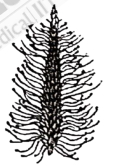
Answer: D.
View full solution →$A$. The flowers of Vallisneria are colourful and produce nectar.
$B$. The flowers of water lily are not pollinated by water.
$C$. In most of water-pollinated species, the pollen grains are protected from wetting.
$D$. Pollen grains of some hydrophytes are long and ribbon like.
$E$. In some hydrophytes, the pollen grains are carried passively inside water.
Choose the correct answer from the options given below.
Answer: C.
View full solution →Pick question groups from the list above, set marks and difficulty, and export a branded PDF with step-by-step answer keys. First 3 chapters free — no signup.