Question 15 Marks
Attempt any five of the following:
(a) What is the structural feature characterising reducing sugars?
(b) What type of linkage is present in polysaccharides?
(c) Give examples of fat soluble vitamins.
(d) The two strands in DNA are not identical but are complementary. Explain.
(e) Write uses of B-Complex.
(f) Name the disaccharide which on hydrolysis gives two molecules of glucose.
(g) Name purines present in DNA?
(a) What is the structural feature characterising reducing sugars?
(b) What type of linkage is present in polysaccharides?
(c) Give examples of fat soluble vitamins.
(d) The two strands in DNA are not identical but are complementary. Explain.
(e) Write uses of B-Complex.
(f) Name the disaccharide which on hydrolysis gives two molecules of glucose.
(g) Name purines present in DNA?
Answer
View full question & answer→Attempt any five of the following:
(i) The reducing sugars have free aldehydic or ketonic groups.
(ii) Glycosidic linkage
(iii)Fat soluble vitamins are absorbed along with fats in the diet and are stored in body's fatty tissue and in the liver. Vitamin A, D, E and K are fat soluble vitamins.
iv)In the helical structure of DNA, the two strands are held together by hydrogen bonds between specific pairs of bases. Cytosine forms hydrogen bond with guanine, while adenine forms hydrogen bond with thymine. As a result, the two strands are complementary to each other.
(v) It is required for making red blood cells, muscles.
(vi)The disaccharide which gives two molecules of glucose on hydrolysis is maltose.
(vii)Adenine and guanine
(i) The reducing sugars have free aldehydic or ketonic groups.
(ii) Glycosidic linkage
(iii)Fat soluble vitamins are absorbed along with fats in the diet and are stored in body's fatty tissue and in the liver. Vitamin A, D, E and K are fat soluble vitamins.
iv)In the helical structure of DNA, the two strands are held together by hydrogen bonds between specific pairs of bases. Cytosine forms hydrogen bond with guanine, while adenine forms hydrogen bond with thymine. As a result, the two strands are complementary to each other.
(v) It is required for making red blood cells, muscles.
(vi)The disaccharide which gives two molecules of glucose on hydrolysis is maltose.
(vii)Adenine and guanine


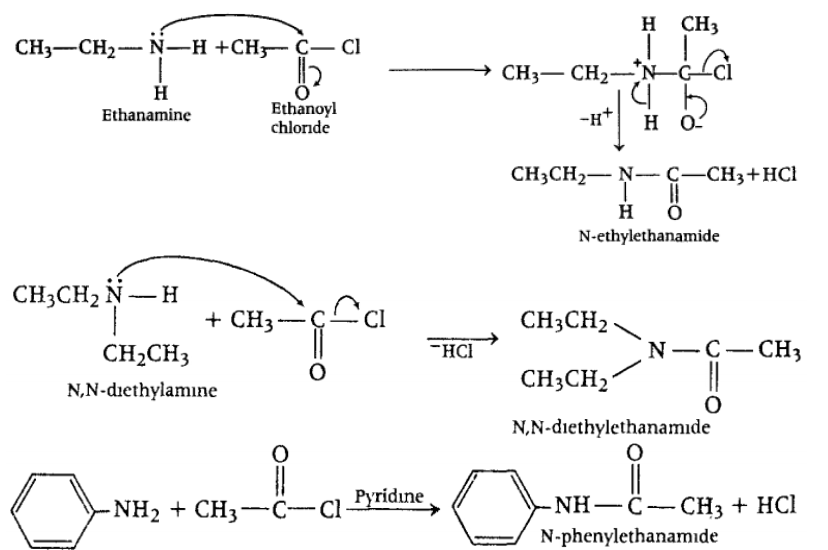
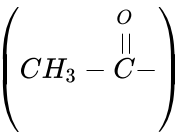 into the molecule is called acetylation of amines.