Question 14 Marks
Consider the following equations of curves $x^2 = y$ and $y = x.$ On the basis of above information, answer the following questions.
- The point$(s)$ of intersection of both the curves is $($are$).$
- $(0, 0)(2, 2)$
- $(0, 0)(1, 1)$
- $(0, 0)(-1, -1)$
- $(0, 0)(-2, -2)$
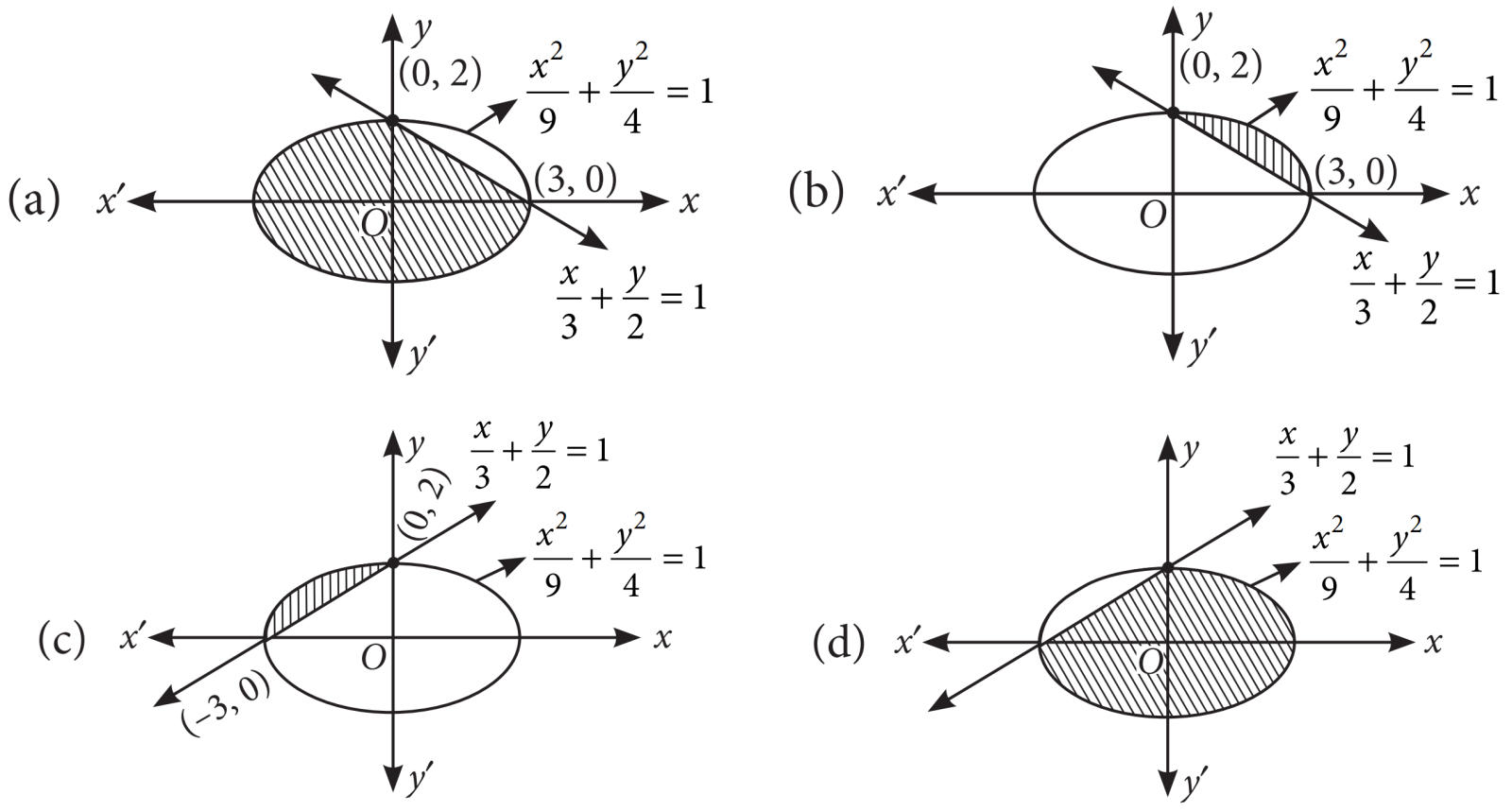
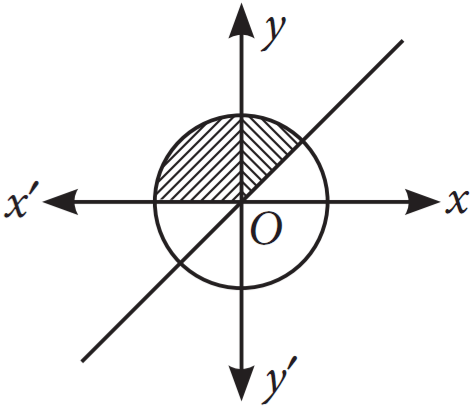
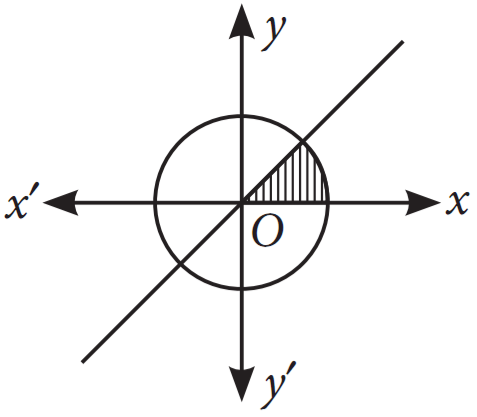
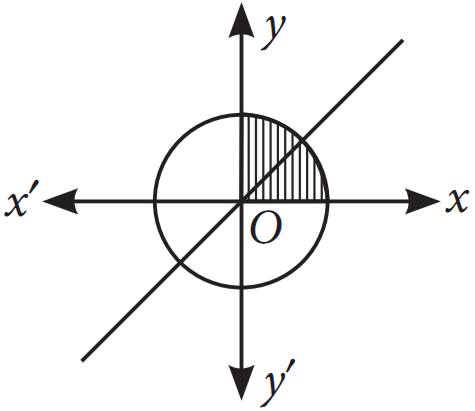
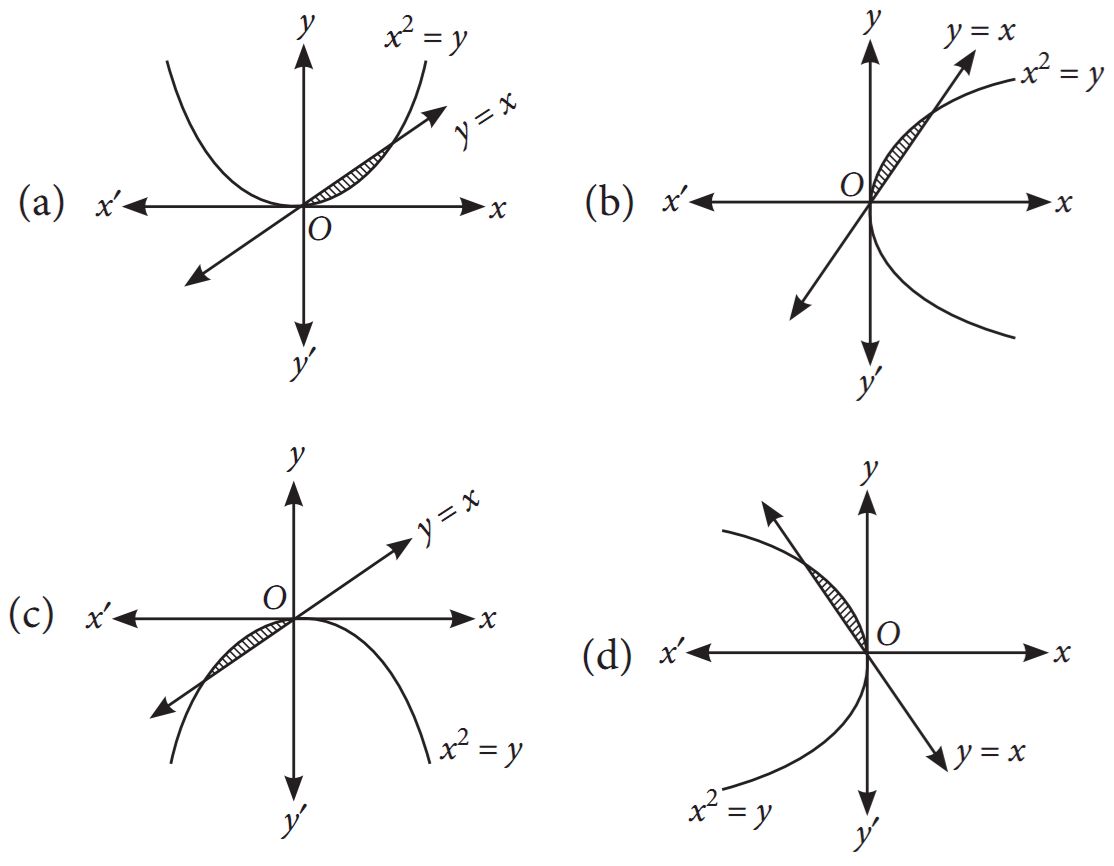
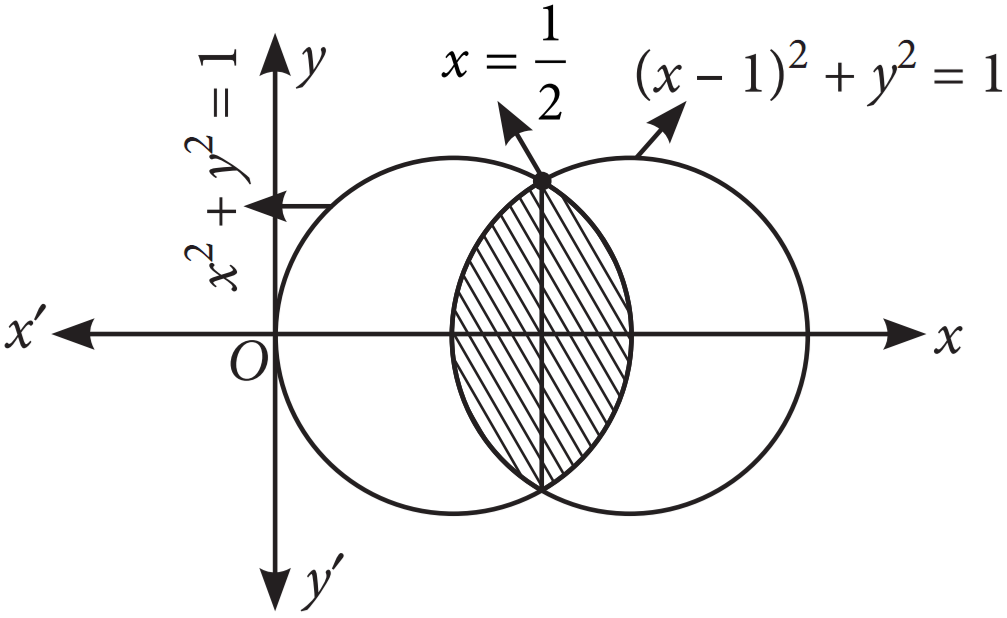
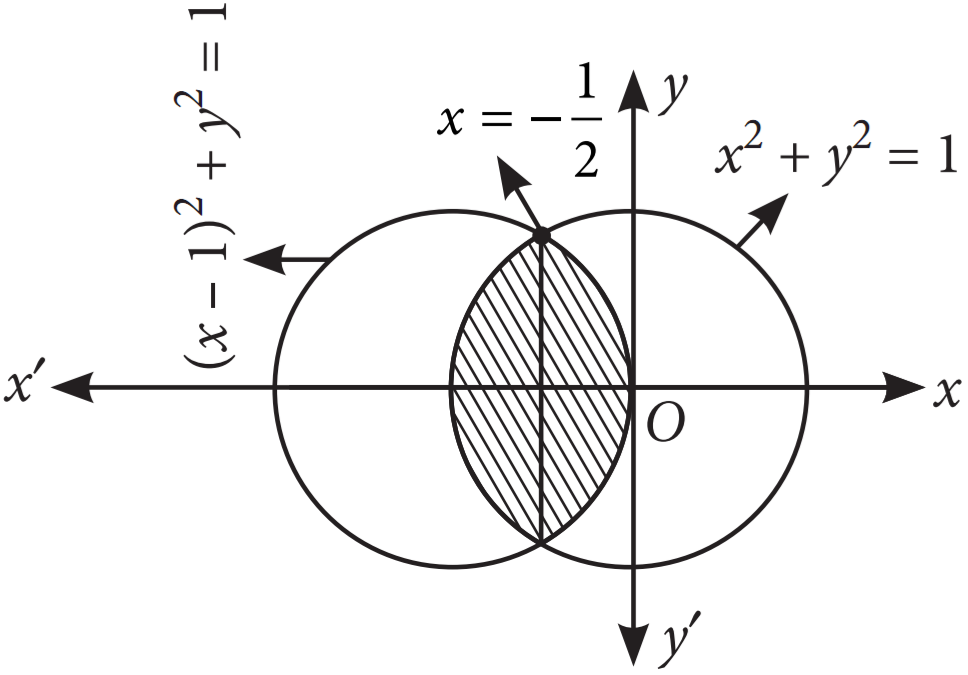
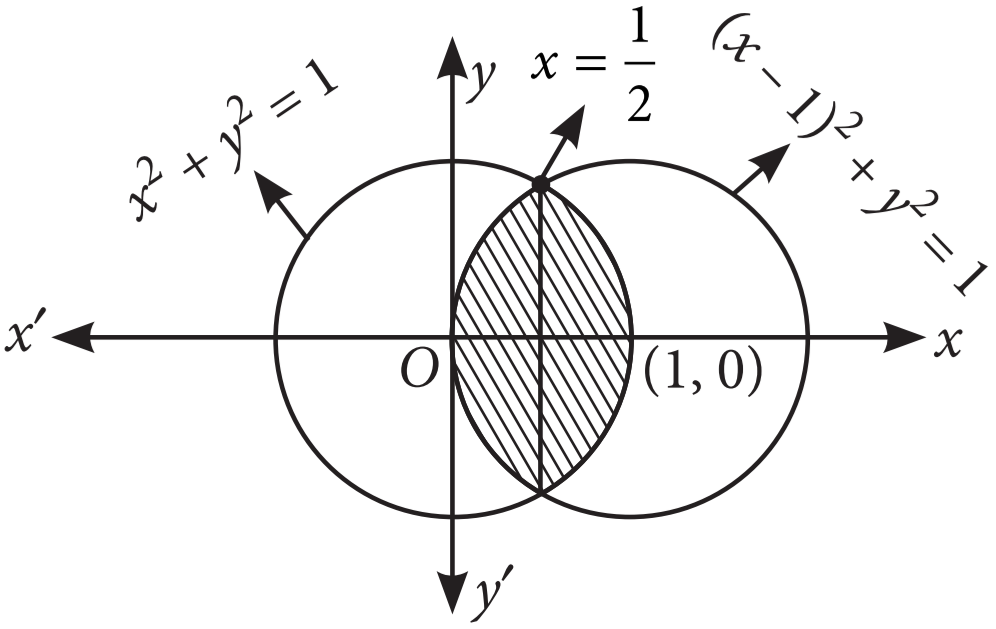
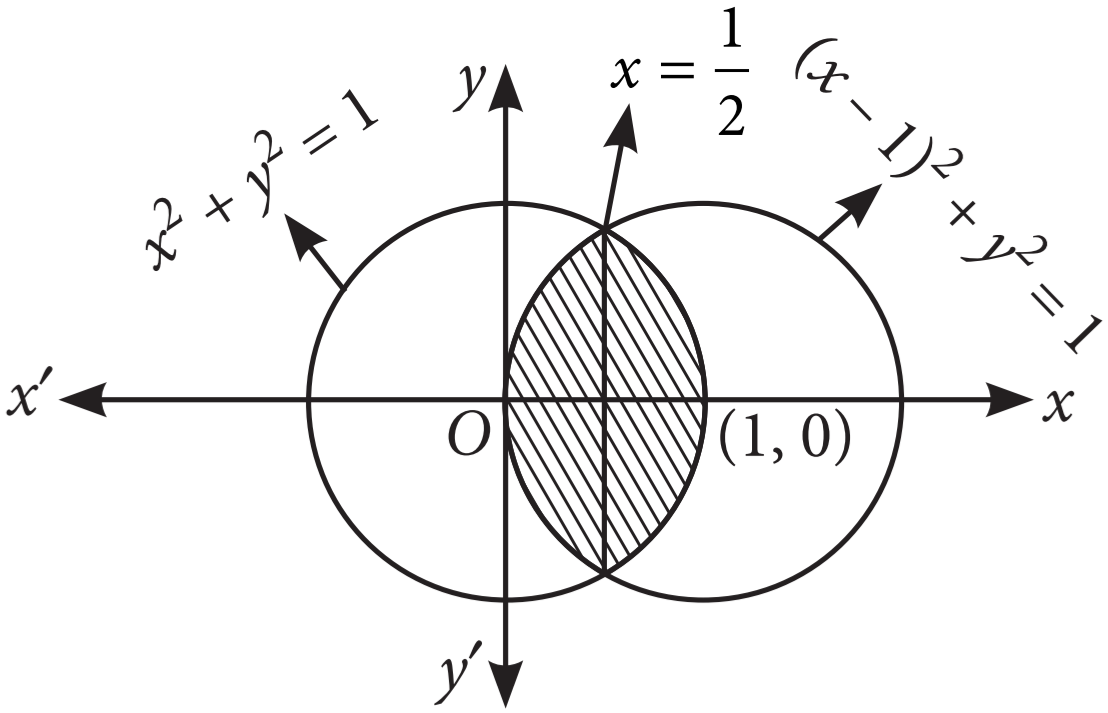
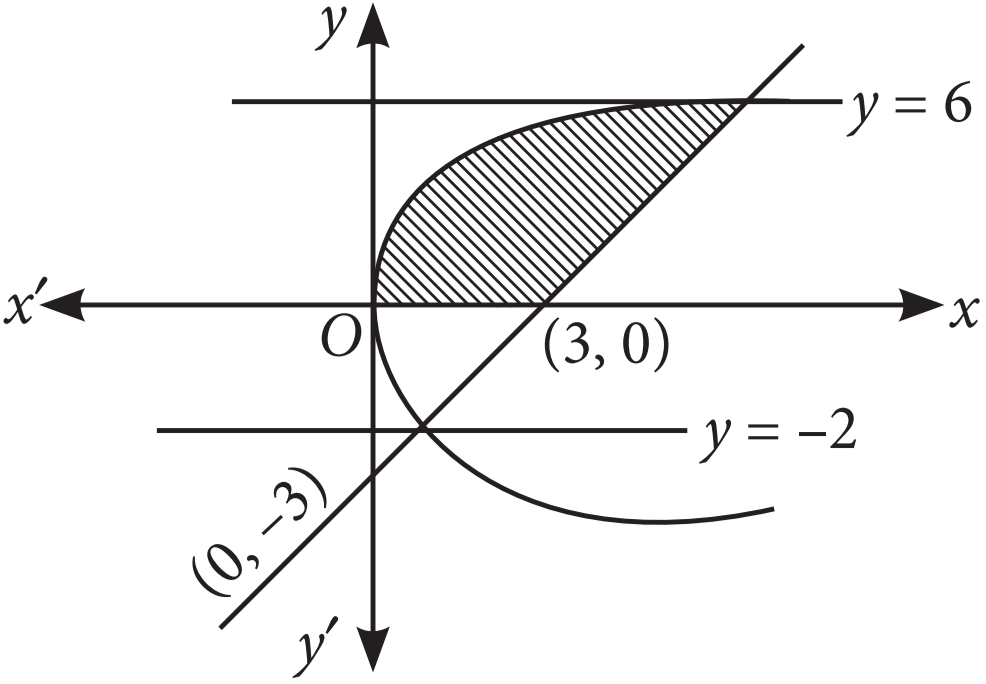
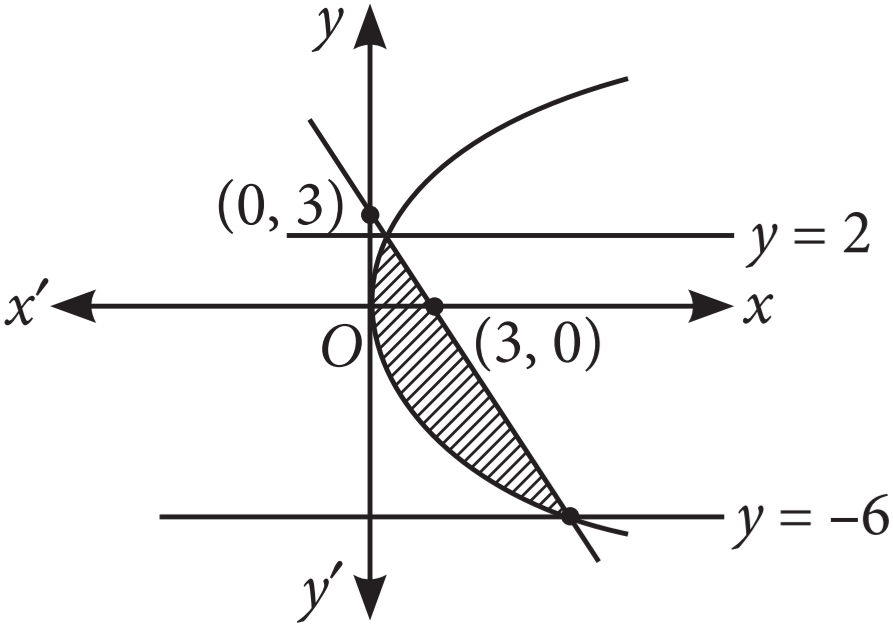
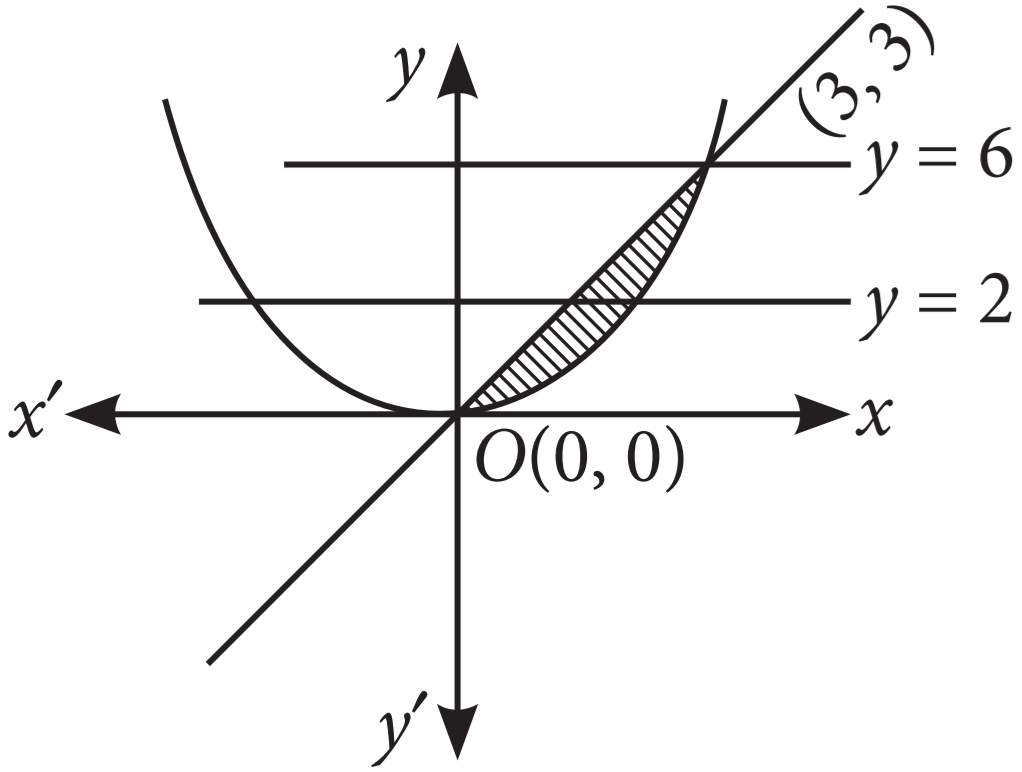
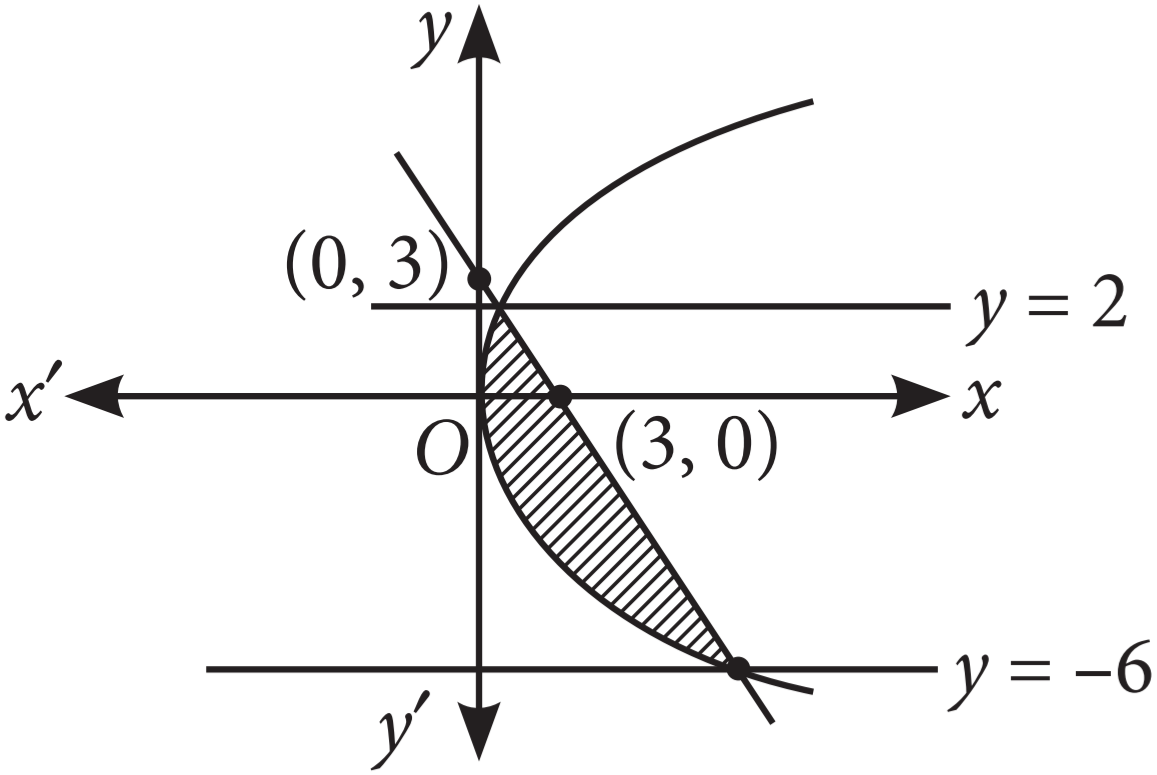
- Area bounded by the curves is represented by which of the following graph?
- The value of the integral $\int\limits_{1}^{0}\text{x}\ \text{dx}$ is.
- $\frac{1}{4}$
- $\frac{1}{3}$
- $\frac{1}{2}$
- $1$
- The value of the integral $\int\limits_{0}^{1}\text{x}^2\ \text{dx}$ is.
- $\frac{1}{4}$
- $\frac{1}{3}$
- $\frac{1}{2}$
- $1$
- The value of area bounded by the curves $x^2 = y$ and $x = y$ is.
- $\frac{1}{6}\text{ sq}.\text{unit}$
- $\frac{1}{3}\text{ sq}.\text{unit}$
- $\frac{1}{2}\text{ sq}.\text{unit}$
- ${1}\text{ sq}.\text{unit}$
Answer
From $(i)$ and $(ii), x^2 = x$
$\Rightarrow x^2 - x = 0$
$\Rightarrow x(x - 1) = 0$
$\Rightarrow x = 0, 1$
From $(ii) y = 0, 1$
Required points of intersection are $(0, 0), (1, 1)$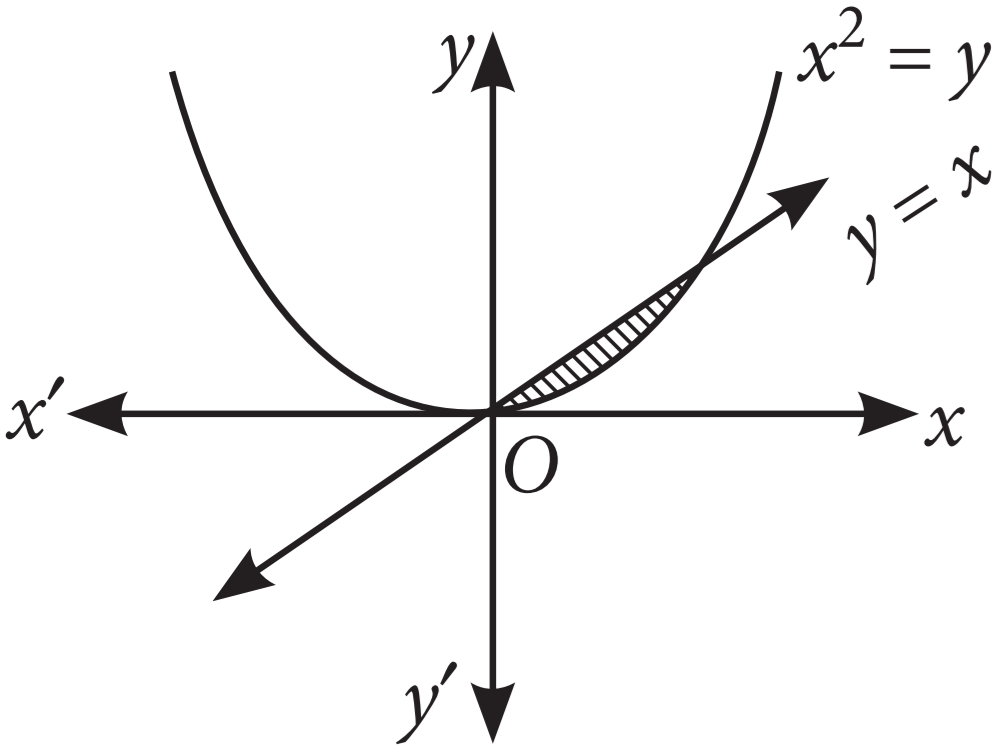
$=\frac{1}{2}-\frac{1}{3}-\frac{1}{6}\text{ sq.units}$
View full question & answer→- $(c)\ (0, 0)(-1, -1)$
From $(i)$ and $(ii), x^2 = x$
$\Rightarrow x^2 - x = 0$
$\Rightarrow x(x - 1) = 0$
$\Rightarrow x = 0, 1$
From $(ii) y = 0, 1$
Required points of intersection are $(0, 0), (1, 1)$
- $(a) $
- $(c)\ \frac{1}{2}$
- $(b)\ \frac{1}{3}$
- $(a)\ \frac{1}{6}\text{ sq}.\text{unit}$
$=\frac{1}{2}-\frac{1}{3}-\frac{1}{6}\text{ sq.units}$
 Based on the above information, answer the following questions.