Sample QuestionsAlgebra questions
One sample from each question group in this chapter. Select any group above to see the full set with answer keys.
If $x < -1,$ then $x^2$
Answer: C.
View full solution →Solve: $(3x - 5)^2 + (3x + 5)^2 = (18x + 10) (x - 2)$
- ✓
$\frac{-35}{13}$
- B
$\frac{-25}{13}$
- C
$\frac{-15}{13}$
- D
$\frac{-45}{13}$
Answer: A.
View full solution →The side of an equilateral triangle is l. Its perimeter is.
Answer: C.
View full solution →If $\text{x}-\frac{1}{\text{x}}=3$ then the value of $\frac{3\text{x}^2-3}{\text{x}^2+2\text{x}-1}$ is.
- ✓
$\frac{9}{5}$
- B
$\frac{8}{5}$
- C
$\frac{7}{5}$
- D
$\frac{6}{5}$
Answer: A.
View full solution →“Variable” means that it:
Answer: A.
View full solution →Directions: In the following questions, the Assertions $(A)$ and Reason(s) $(R)$ have been put forward. Read both the statements carefully and choose the correct alternative from the following:
Assertion (A): The rule, which gives the number of matchsticks required to make the matchstick pattern $S,$ is 5n
Reason (R): n is an example of a variable. Its value is not fixed; it can take any value $1, 2, 3, 4,….$ We wrote the rule for the number of matchsticks required using the variable n.
- ✓
Both $A$ and $R$ are true and $R$ is the correct explanation of $A$
- B
Both $A$ and $R$ are true but $R$ is not the correct explanation of $A$
- C
$A$ is true but $R$ is false
- D
$A$ is false but $R$ is true
Answer: A.
View full solution →Directions: In the following questions, the Assertions $(A)$ and Reason(s) $(R)$ have been put forward. Read both the statements carefully and choose the correct alternative from the following:
Assertion (A): The rule, which gives the number of matchsticks required to make the matchstick pattern $A,$ is $3n.$
Reason (R): n is an example of a variable. Its value is not fixed; it can take any value $1, 2, 3, 4,….$ We wrote the rule for the number of matchsticks required using the variable n.
- ✓
Both $A$ and $R$ are true and $R$ is the correct explanation of $A$
- B
Both $A$ and $R$ are true but $R$ is not the correct explanation of $A$
- C
$A$ is true but $R$ is false
- D
$A$ is false but $R$ is true
Answer: A.
View full solution →Directions: In the following questions, the Assertions $(A)$ and Reason(s) $(R)$ have been put forward. Read both the statements carefully and choose the correct alternative from the following:
Assertion (A): The rule, which gives the number of matchsticks required to make the matchstick pattern $L,$ is $2n.$
Reason (R): For $n = 1$, the number of matchsticks required $= 2 \times 1 = 2$
- ✓
Both $A$ and $R$ are true and $R$ is the correct explanation of $A$
- B
Both $A$ and $R$ are true but $R$ is not the correct explanation of $A$
- C
$A$ is true but $R$ is false
- D
$A$ is false but $R$ is true
Answer: A.
View full solution →Directions: In the following questions, the Assertions $(A)$ and Reason(s) $(R)$ have been put forward. Read both the statements carefully and choose the correct alternative from the following:
Assertion (A): The rule, which gives the number of matchsticks required to make the matchstick pattern $U$, is $4n.$
Reason (R): For $n = 2$, the number of matchsticks required $= 2 \times 2 = 4$
- A
Both $A$ and $R$ are true and $R$ is the correct explanation of $A$
- B
Both $A$ and $R$ are true but $R$ is not the correct explanation of $A$
- C
$A$ is true but $R$ is false
- ✓
$A$ is false but $R$ is true
Answer: D.
View full solution →Directions: In the following questions, the Assertions $(A)$ and Reason(s) $(R)$ have been put forward. Read both the statements carefully and choose the correct alternative from the following:
Assertion (A): The rule, which gives the number of matchsticks required to make the matchstick pattern $F$, is $2n$
Reason (R): For $n = 3$, the number of matchsticks required $= 2 \times 3 = 6$ etc.
- A
Both $A$ and $R$ are true and $R$ is the correct explanation of $A$
- B
Both $A$ and $R$ are true but $R$ is not the correct explanation of $A$
- C
$A$ is true but $R$ is false
- ✓
$A$ is false but $R$ is true
Answer: D.
View full solution →If the side of an equilateral triangle is $15y,$ then its perimeter is $45y.$
View full solution →In the matchstick pattern

the number of matchsticks $= 2x$ number of

. View full solution →The area of a rectangle of length $x \ cm$ and breadth $=(x - 7) \ cm$ is $x(x - 7) sq \ cm.$
View full solution →The area of the square whose side is of length $(m + 3)$ units, is $(m + 3)\times (m - 3)$ sq units.
View full solution →The equations $2x + 1 = 3$ and $6x + 2 = 8$ have the same solution.
View full solution →If the length of a side of a regular hexagon is $1.$ then its perimeter is$………….. (6l, 1, l + 6)$
View full solution →$\frac{y}{8}+6$ is an algebraic………… (expression, equation)
View full solution →$x$ multiplied by $5$ and then $2$ added to the product is written as$…………. ( x + 5 + 2, 5x +2, x+5 \times 2)$
View full solution →$5$ added to $x$ is written as$………… \left(\frac{5}{x}, 5 x, x+5\right)$
View full solution →$x =…………$ satisfies the equation $x + 3 = 8. (8. 5. 3)$
View full solution →Leela is Radha's younger sister. Leela is $4$ years younger than Radha. Can you write Leela's age in terms of Radha's age? (Assuming Radha's age to be $x$ years)
View full solution →A bird flies $1$ kilometre in one minute. Can you express the distance covered by the bird in terms of its flying time in minutes$?$ (Use t for flying time in minutes.)
View full solution →We already know the rule for the pattern of letters $L, C$ and $F.$ Some of the letters from $Q.1$ (given above) give us the same rule as that given by $L.$ Which are these$?$ Why does this happen$?$
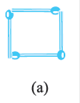
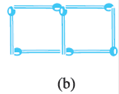
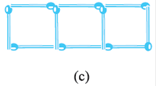
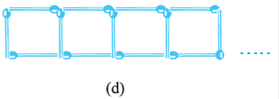
View full solution →Find the rule which gives the number of matchsticks required to make the matchstick pattern. Use a variable to write the rule.
A pattern of letter $A$ as
 .
. View full solution →Find the rule which gives the number of matchsticks required to make the matchstick pattern. Use a variable to write the rule.
A pattern of letter $S$ as
 .
. View full solution →Mother has made laddus. She gives some laddus to guests and family members; still $5$ laddus remain. If the number of laddus mother gave away is $l,$ how many laddus did she make $?$
View full solution →Radha is drawing a dot Rangoli (a beautiful pattern of lines joining dots) with chalk powder. She has $9$ dots in a row. How many dots will her Rangoli have for r rows? How many dots are there if there are $8$ rows? If there are $10$ rows?
View full solution →The teacher distributes $5$ pencils per student. Can you tell how many pencils are needed, given the number of students? (Use s for number of students.)
View full solution →If there are $50$ mangoes in a box, how will you write the total number of mangoes in terms of the number of boxes? (use b for the number of students.)
View full solution →Cadets are marching in a parade. There are $5$ cadets in a row. What is the rule, which gives the number of cadets, given the number of rows? (Use $n$ for the number of rows.)
View full solution →If a figure gives a matchstick pattern of triangles. Find the general rule that gives the number of matchsticks in terms of the number of triangles.
$i.\ $
$ii.\ $
$iii.\ $
$iv.\ $
View full solution →View full solution →