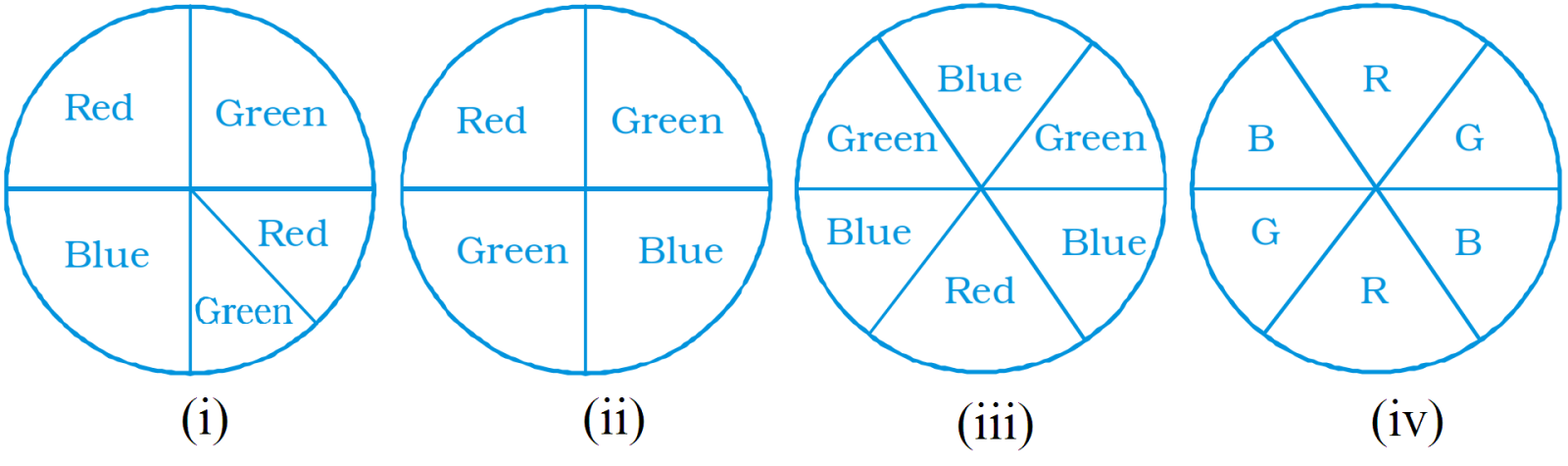
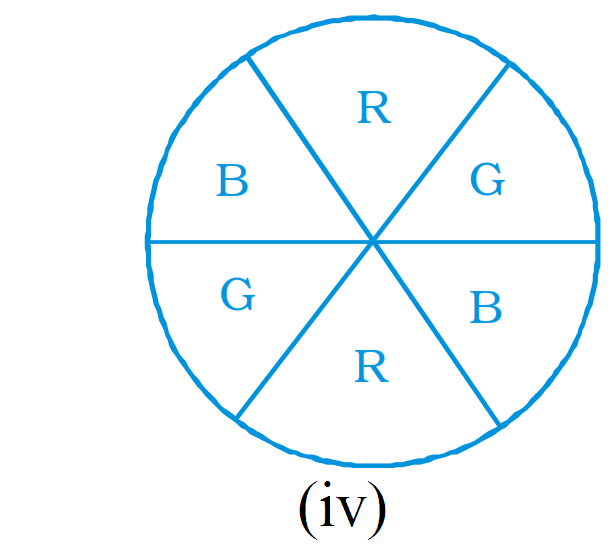
- ✓Equally likely.
- BMutually exclusive.
- CRandom outcomes.
- DNone of these.
When a dice is thrown, outcomes $1, 2, 3, 4, 5, 6$ are equally likely.
50 questions · timed · auto-graded
When a dice is thrown, outcomes $1, 2, 3, 4, 5, 6$ are equally likely.
|
Class interval Age (in years)
|
Number of Persons
|
|
$15-20$
|
$12$
|
|
$20-25$
|
$20$
|
|
$25-30$
|
$42$
|
|
$30-35$
|
$20$
|
|
$35-40$
|
$6$
|

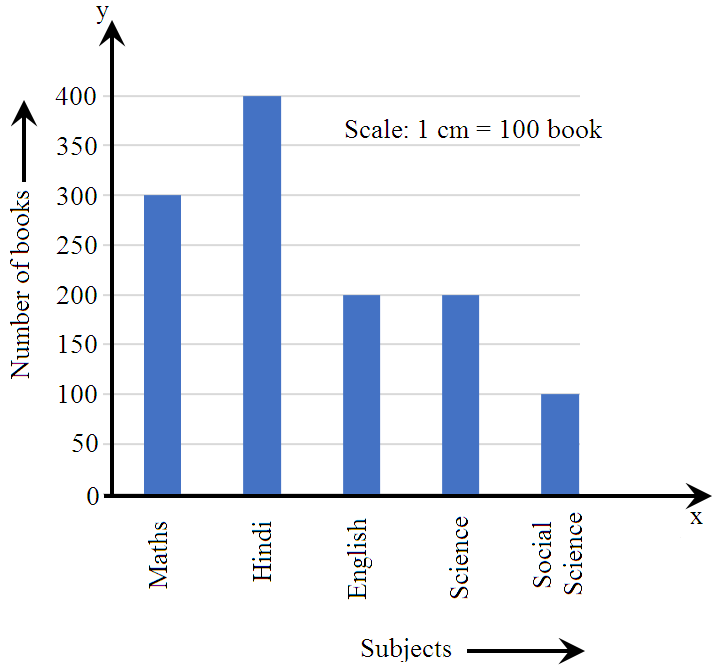
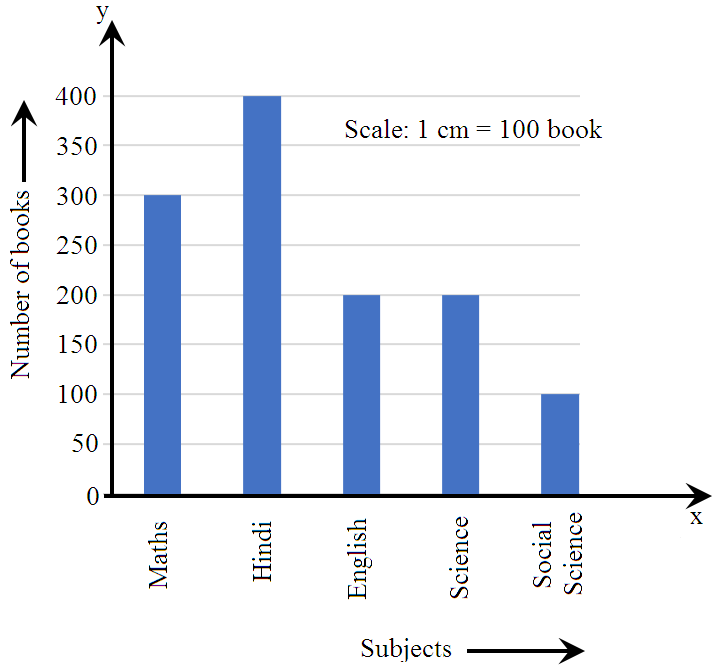
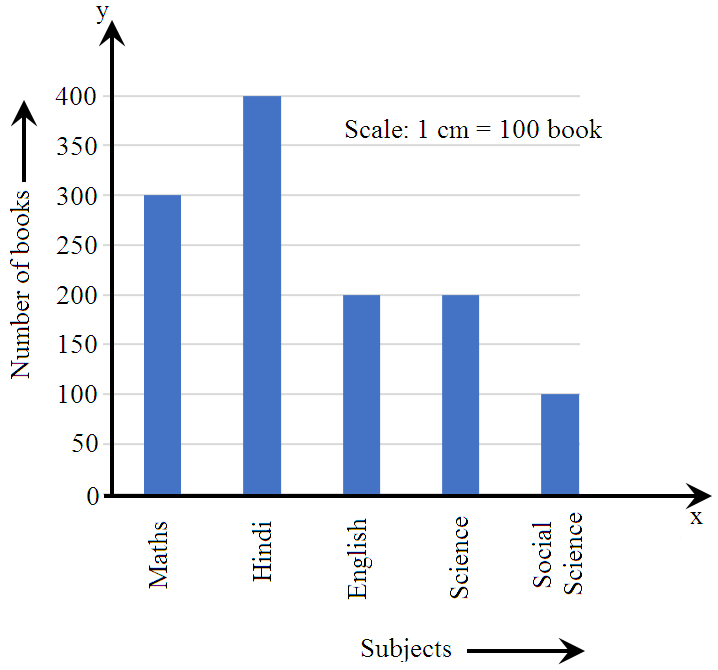
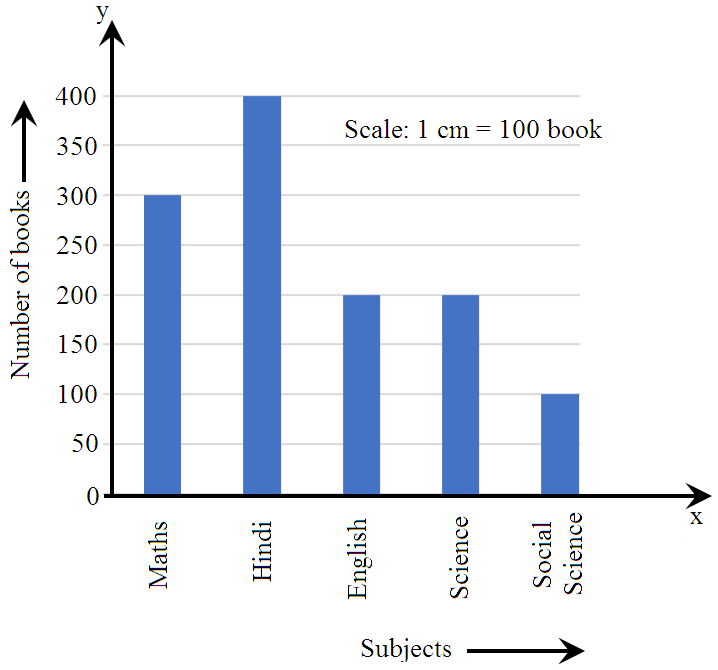
English → $200$
Science → $200$
Rolling an unbiased dice results in $6$ outcomes. All have equal probability of showing up.
Tossing a fair coin results in $2$ outcomes. Both have equal probabilities of showing up.
Drawing a card from from a well shuffled pack of $52$ cards can have $52$ outcomes in total with equal probabilities.
Hence, above all are example of random experiment.
|
Class interval Age (in years)
|
Number of Persons
|
|
$15-20$
|
$12$
|
|
$20-25$
|
$20$
|
|
$25-30$
|
$42$
|
|
$30-35$
|
$20$
|
|
$35-40$
|
$6$
|


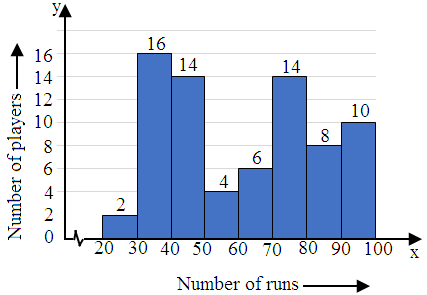
Required number $= 8 + 10 = 18$

|
Daily wages
|
Number of works
|
|
$290-325$
|
$5$
|
|
$325-360$
|
$2$
|
|
$360-395$
|
$4$
|
|
$395-430$
|
$6$
|
|
$430-465$
|
$7$
|
|
$465-500$
|
$5$
|
|
Class interval Age (in years)
|
Number of Persons
|
|
$15-20$
|
$12$
|
|
$20-25$
|
$20$
|
|
$25-30$
|
$42$
|
|
$30-35$
|
$20$
|
|
$35-40$
|
$6$
|

Number of red balls in the bag = favourable outcomes $= 5$
Total number of balls in the bag $= 5 - 4 = 9$
Probability (getting a red ball) $=\frac{\text{favourable outcomes}}{\text{Total outcomes}}$
P (red ball) $=\frac{5}{9}$
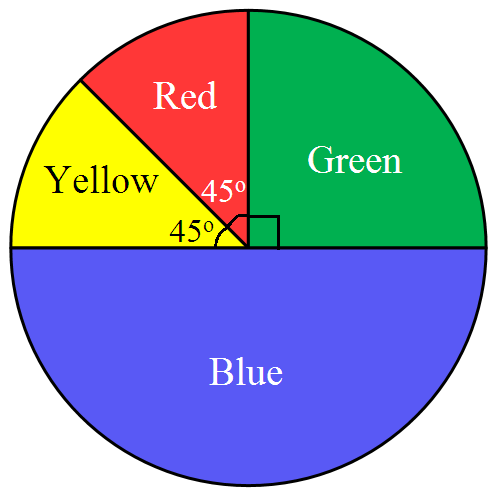
Number of students liking together yellow and green colours is $(14 + 20)\%$ i.e. $34\%$, which is approximately the same as those for red $(35\%).$
Number of possible outcomes is 36,
i.e. $(1, 1), (1, 2), (1, 3), (1, 4), (1, 5), (1, 6)$
$(3,1), (3, 2), (3, 3), … (3, 6)$
$(4, 1), (4, 2), … (4, 6)$
$(5, 1), (5, 2), … (5, 6)$
$(6,1), (6, 2), … (6, 6)$
A pie chart is in the shape of a circle.
Hence, the sum of all central angles is equal to the complete angle of a circle, which is $360^\circ .$
Thus, in any pie chart the sum of the central angles is $360^\circ .$

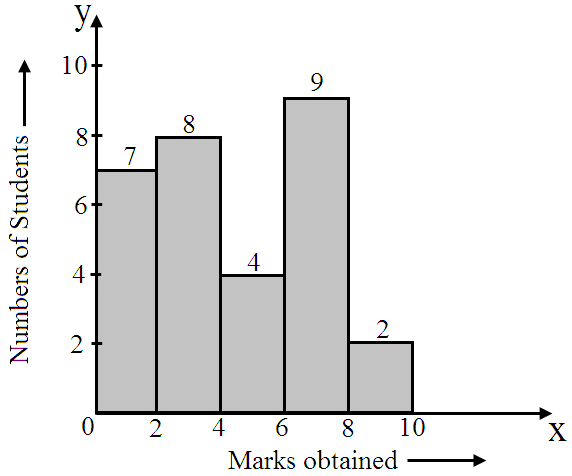
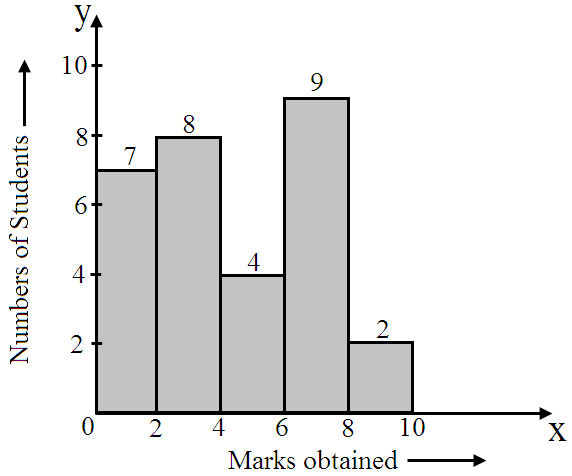
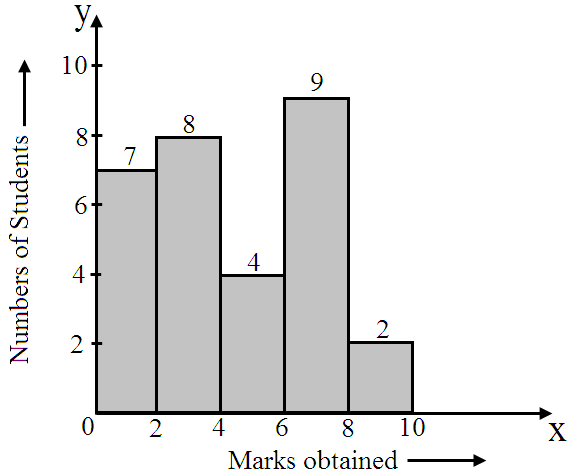
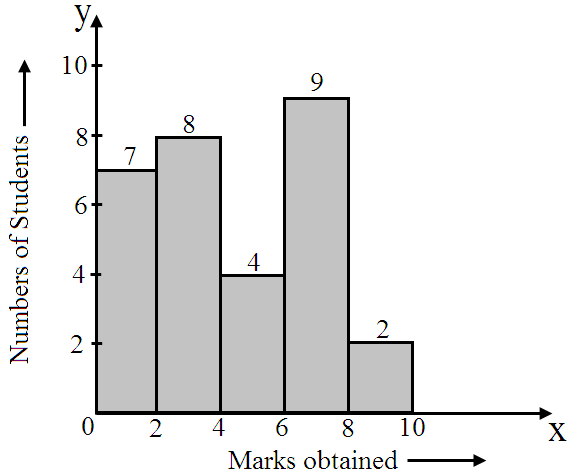
Required number $= 7 + 8 = 15$


Required number $= 4 + 2 = 6$

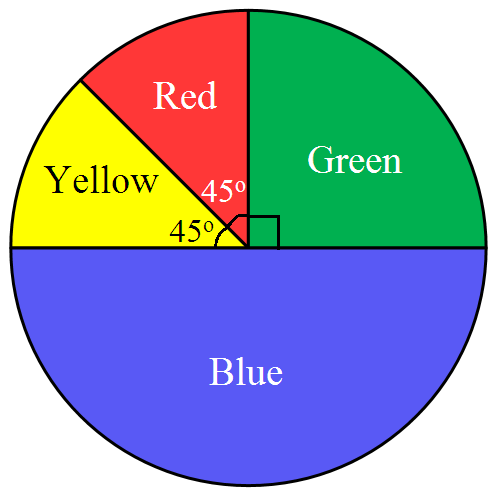
Central angle for blue $= 180^\circ $
Central angle for green $= 90^\circ $
$\therefore$ Difference $= 180^\circ - 90^\circ = 90^\circ $
If total number of votes $= 400$
Then, number of votes in favour of ‘Others’ $= 6\%$ of 400 $=\frac{6}{100}\times400$
$=\frac{3}{50}\times400$
$=24$

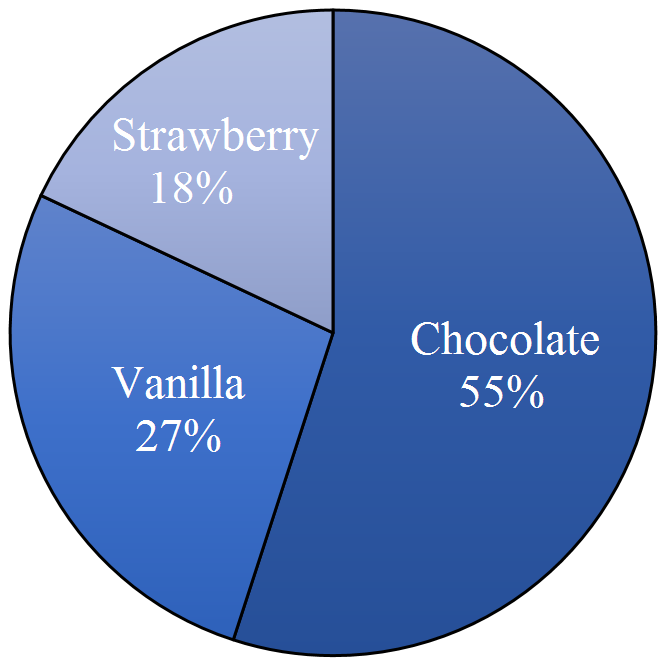
So, angle of the sector $\frac{27}{100}\times360^\circ = 97.2^\circ$
The probability of a sure event is $1.$
Expenditure done on conveyance
$= 6 \times 1000 = Rs. 6000$
Expenditure done on rent $= 4 \times 1000$
$= Rs. 4000$
$\therefore$ Difference $= Rs. 6000 – Rs. 4000$
$= Rs. 2000.$
The event that is sure to happen is called a certain event and probability of such an event is $1$ as this event is bound to happen.


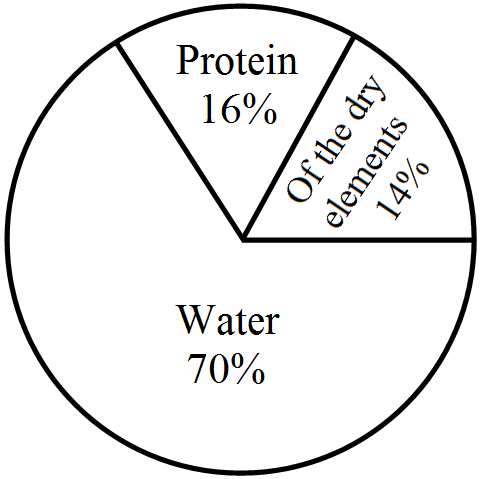
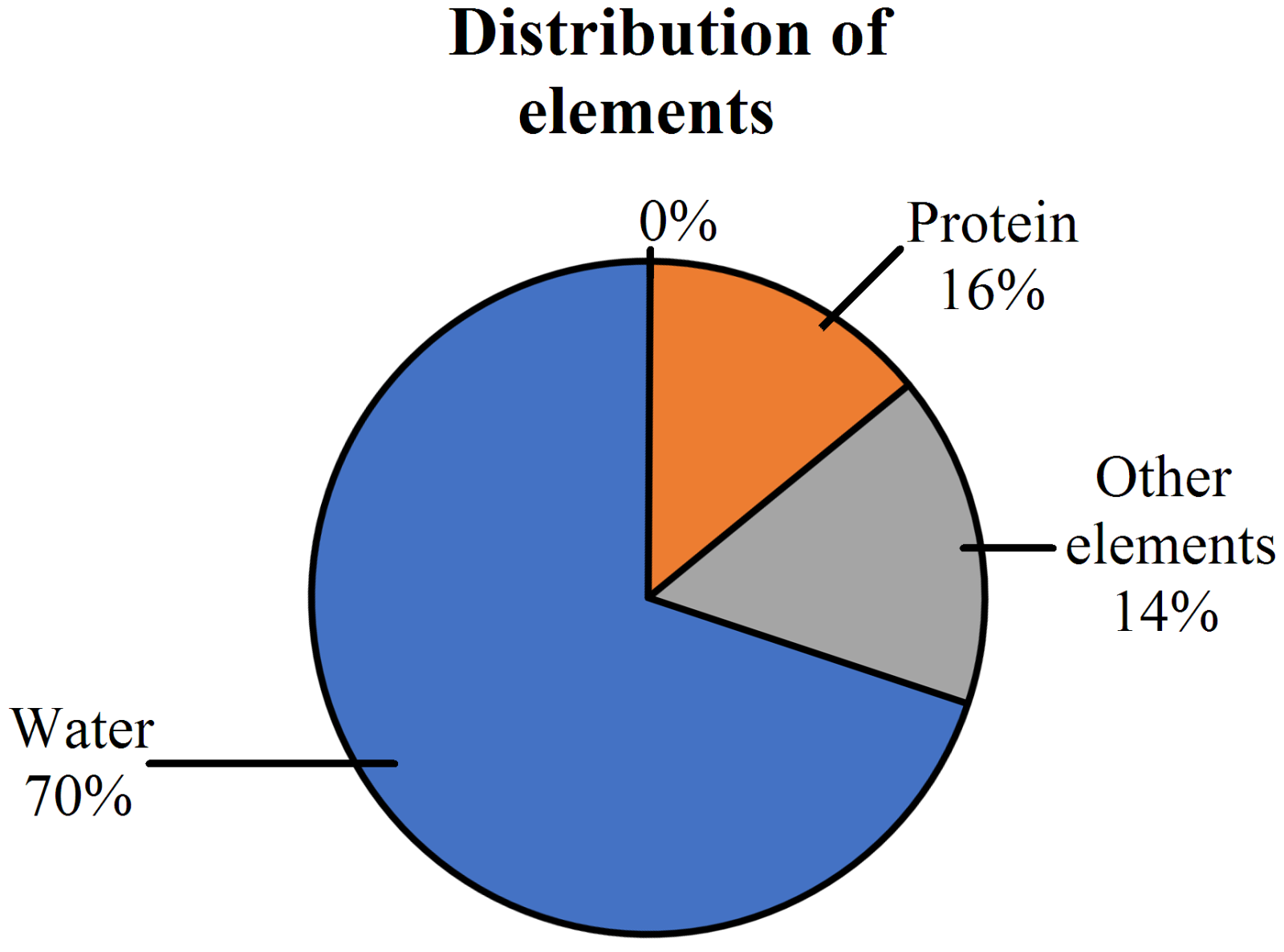
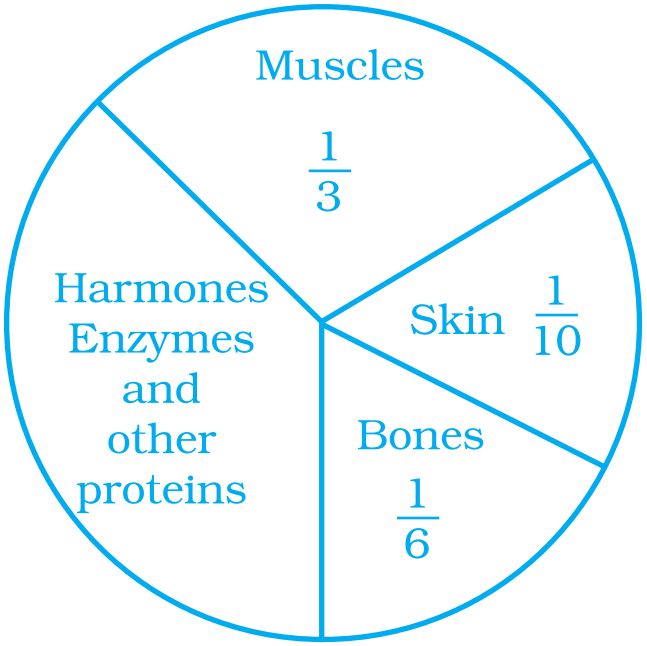
Percentage of protein and other constituents in human body $= 16\% + 14\% = 30\%$
So, angle of the sector $= \frac{30}{100}\times 360^\circ = 108^\circ$
|
Range of Marks Obtained
|
Number of students
|
|
$250–300$
|
$10$
|
|
$300–350$
|
$12$
|
|
$350–400$
|
$14$
|
|
$400–450$
|
$13$
|
|
$450–500$
|
$11$
|
The last class has the upper limit of $500$, which is the upper limit for the whole table.

Blue → $180^\circ $

Distribution of protein in muscles $=\frac{1}{3}$
Distribution of protein in bones $=\frac{1}{6}$
Ratio of distribution of proteins in the muscles to that of proteins in the bones.
$=\frac{1}{3}:\frac{1}{5}$
$=\frac{1}{3}\times\frac{1}{5}$
$=2:1$
$\frac{5000}{1000} = 5\ cm$ is the hight of the bar corresponding to food.
Let the required number of students be $x.$
Then we have:
$\Rightarrow\frac{\text{x}}{1650}\times48$
$\Rightarrow\text{x}=\Big(48\times\frac{\text{1650}}{360}\Big)$
$\Rightarrow\text{x}=220$
Hence, the number of students who opted for arts stream is $220.$
$\frac{6000}{1000} = 6\ cm$ is the hight of the bar corresponding to conveyance.

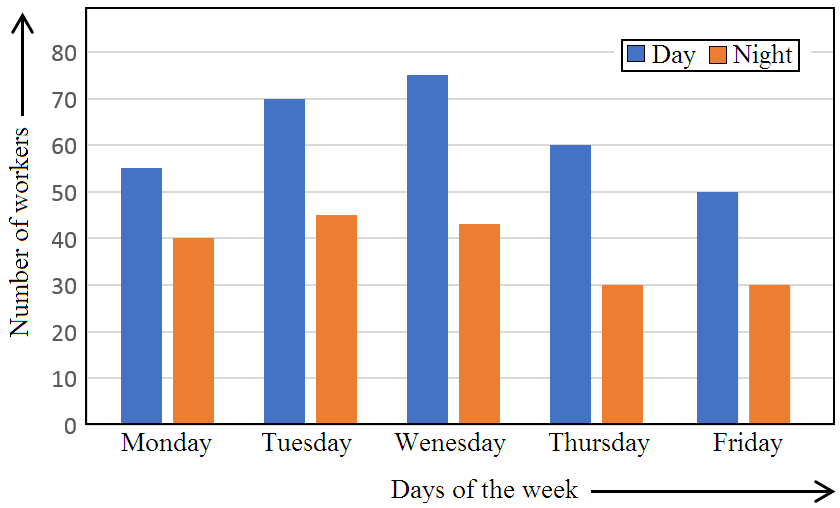
On tuesday the number of workers in both the shift $= 70 + 45 = 115$
On thursday the number of workers in both the shift $= 60 + 30 = 90$
The total number of workers on both the days taken together $= 115 + 90 = 205$

Required difference $= 9 - 8 = 1$
The range of a data set is the difference between the highest and lowest value in a data set.
Data is $6, 14, 20, 16, 6, 5, 4, 18, 25, 15, 5$
The largest value of data set $= 25$
The smallest value of data set $= 4$
Range $= 25 - 4 = 21$

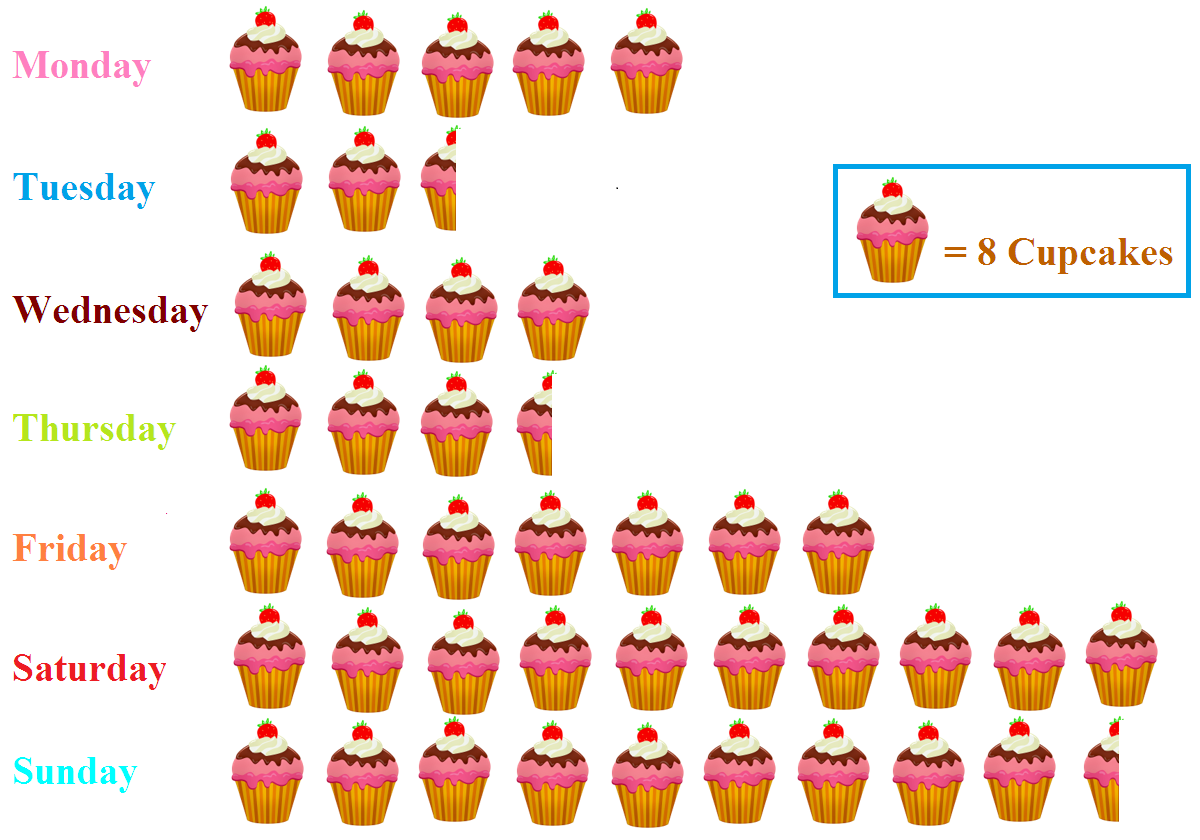
Number of cupcakes on monday $= 5 \times 8 = 40$
Number of cupcakes on tuesday $= 2\times8+\frac{1}{2}\times8 = 16 + 4 = 20$
The difference between the number of cupcakes sold on monday and tuesday $= 40 - 20 = 20$