Question 14 Marks
Give examples to show that friction is both a friend and a foe.
Answer
View full question & answer→Following are some examples that show friction is friend:
$i.$ We are able to write because of friction between ball point of pen and the paper surface.
$ii.$ We are able to walk because of friction.
$iii.$ We are able to write with chalk on blackboard because of friction.
$iv.$ We are able to drive the automobile because of friction between the tyres and the road.
$v.$ We are able to fix a nail in the wall because of friction.
Following are some examples that show friction is foe:
$i.$ Soles of shoes and tyres wear out because of friction.
$ii.$ Friction wears out the materials whether they are screws or ball bearings.
$iii.$ Steps of foot over$-$bridges at railway stations get worn$-$out because of friction.
$iv.$ Machines get heated up because of friction.
$v.$ When a tyre deflates, it is difficult to move the vehicle because of increased friction between the tyre and road surface.
$i.$ We are able to write because of friction between ball point of pen and the paper surface.
$ii.$ We are able to walk because of friction.
$iii.$ We are able to write with chalk on blackboard because of friction.
$iv.$ We are able to drive the automobile because of friction between the tyres and the road.
$v.$ We are able to fix a nail in the wall because of friction.
Following are some examples that show friction is foe:
$i.$ Soles of shoes and tyres wear out because of friction.
$ii.$ Friction wears out the materials whether they are screws or ball bearings.
$iii.$ Steps of foot over$-$bridges at railway stations get worn$-$out because of friction.
$iv.$ Machines get heated up because of friction.
$v.$ When a tyre deflates, it is difficult to move the vehicle because of increased friction between the tyre and road surface.
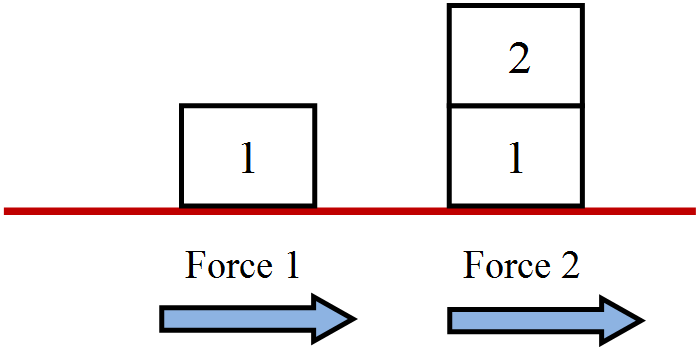
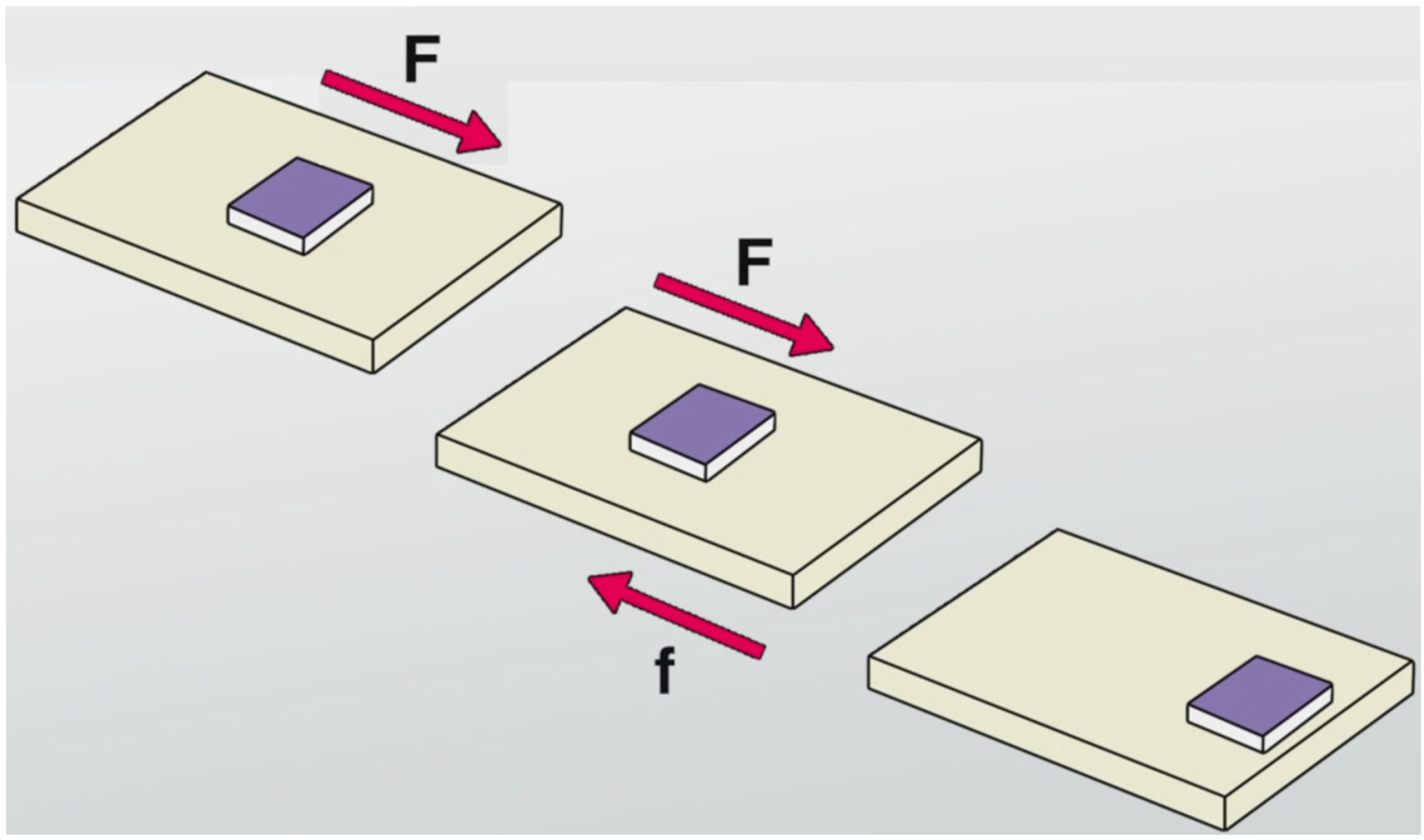
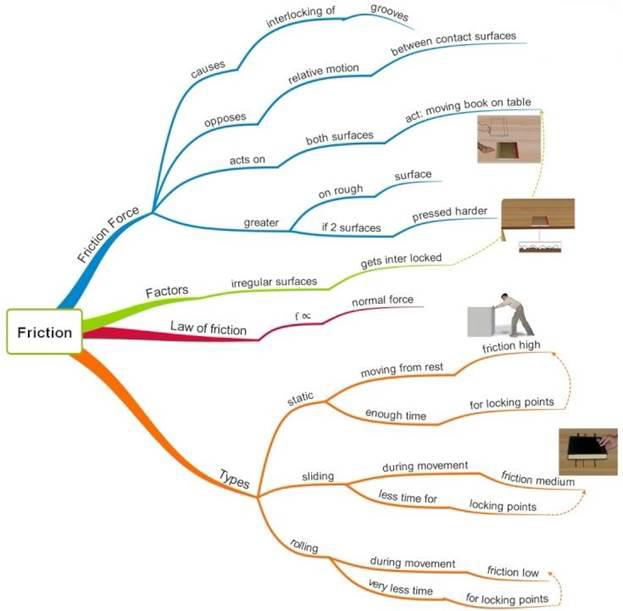
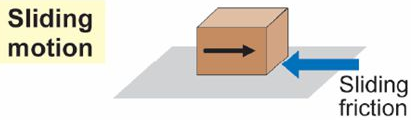
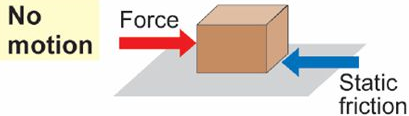
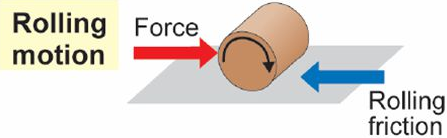
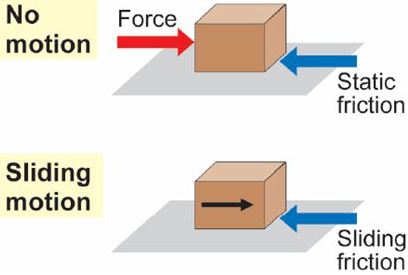 The static friction is greater than sliding friction because more force is required to remove the object from rest state into dynamic state. Once the object comes into motion, it is easier to keep the object moving by applying comparatively lesser force.
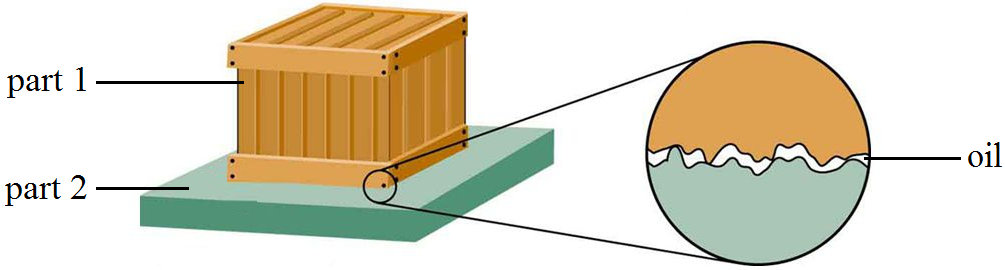
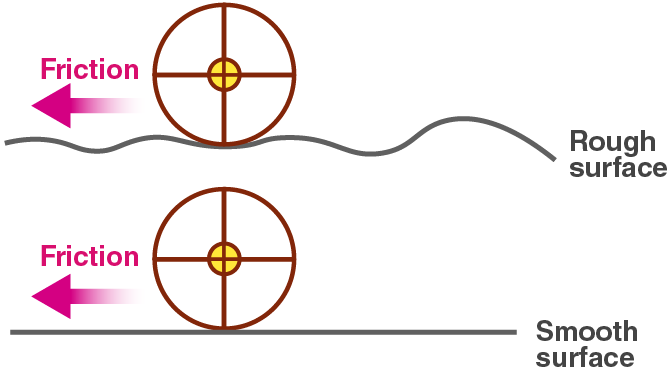 If the surface is smooth, then the surfaces in contact have very less interlockings and the thus the friction is less. Thus, the object is able to move easily due to less friction.