Questions

questions in details [4 marks ]

🎯

Test yourself on this topic

22 questions · timed · auto-graded

Question 14 Marks
Describe the construction of a kaleidoscope.
Answer
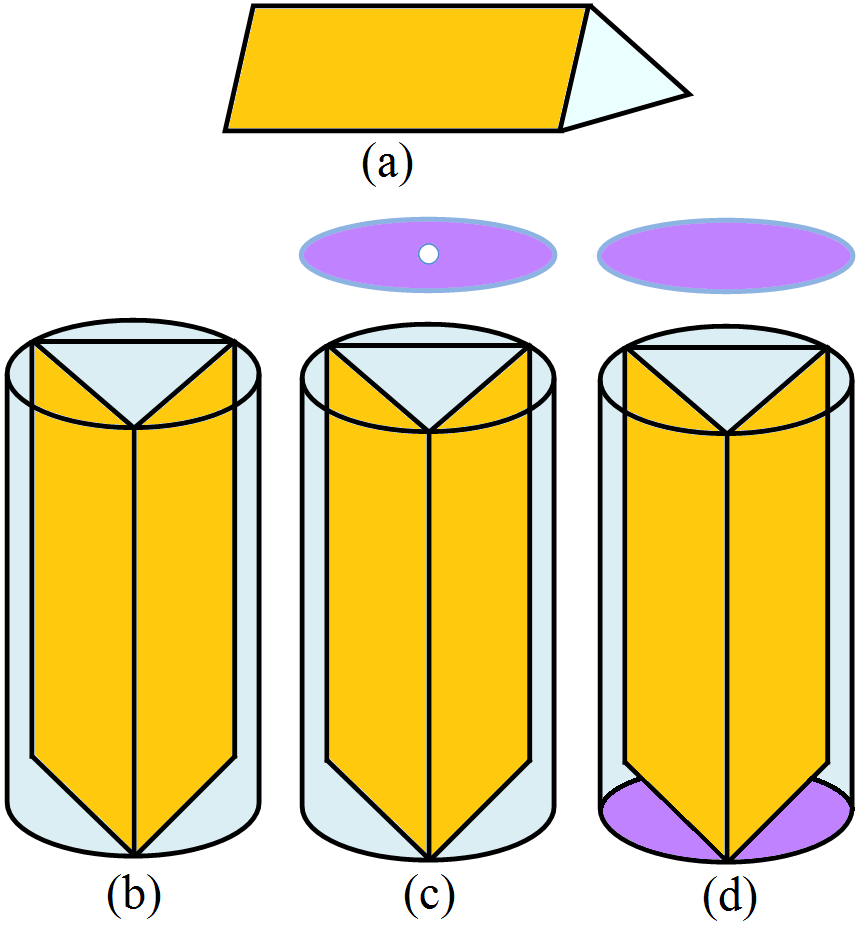
Three rectangular mirror strips of dimensions $15\ cm \times 4\ cm (l \times b)$ are joined together to form a prism $(fig a)$. This prism is fixed into a circular cardboard tube. The circular cardboard tube should be slightly longer that the prism $(fig b)$. This circular tube is now closed at one end with a cardboard disc. This disc has a hole in it through which we can see $(fig c)$ .At the other end of the circular tube, a plane glass plate is fixed. It is important that this glass plate touches the prism mirrors. On this glass plate, several small and broken pieces of coloured glass are placed. This end is now closed by a round glass plate allowing enough space for the coloured glass pieces to move $(fig d)$.
View full question & answer
Question 24 Marks
Describe an activity to show that the incident ray, the reflected ray and the normal at the point of incidence lie in the same plane.
Answer
Take a plane mirror and place it on the table. Now, take a paper sheet having a hole at its centre. Do take care that the light in the room is not bright. Hold the paper sheet normal to the table. Take another sheet and place it on the table such that it makes contact with the vertical mirror. Draw a normal line on the second sheet from the mirror. Now, pass light from a torch through the small hole such that the light ray falls on the normal at the bottom of the mirror. When the ray from this hole is incident on the mirror, it gets reflected in a certain direction. One can easily observe that the incident ray, the reflected ray and the normal to the mirror at point of incidence are on the sheet placed on the table. This proves that the incident ray, the reflected ray and the normal at the point of incidence lie in the same plane.
View full question & answer
Question 34 Marks
Mention against each of the following whether regular or diffused reflection will take place when a beam of light strikes. Justify your answer in each case.
$a.$ Polished wooden table.
$b.$ Chalk powder.
$c.$ Cardboard surface.
$d.$ Marble floor with water spread over it.
$e.$ Mirror.
$f.$ Piece of paper.
Answer
Polished wooden table: Regular reflection Polishing a wooden table will smooth its surface and will have no irregularities. Hence, regular reflection will take place.
Chalk powder: Diffused reflection Chalk powder when spread on a surface will result in an irregular surface. Hence, diffused reflection will take place.
Cardboard surface: Diffused reflection Cardboard surface is an irregular surface. Hence, diffused reflection will take place.
Marble floor with water spread over it: Regular reflection Marble floor with water makes the marble a smooth surface. Hence, regular reflection will take place.
Mirror: Regular reflection Mirror is an example of smooth surface. Hence, regular reflection will take place.
Piece of paper: Diffused reflection A piece of paper is an example of irregular surface. It might look smooth, but there are many irregularities present on its surface. Hence, diffused reflection will take place.
View full question & answer
Question 44 Marks
Differentiate between regular and diffused reflection. Does diffused reflection mean the failure of the laws of reflection?
Answer

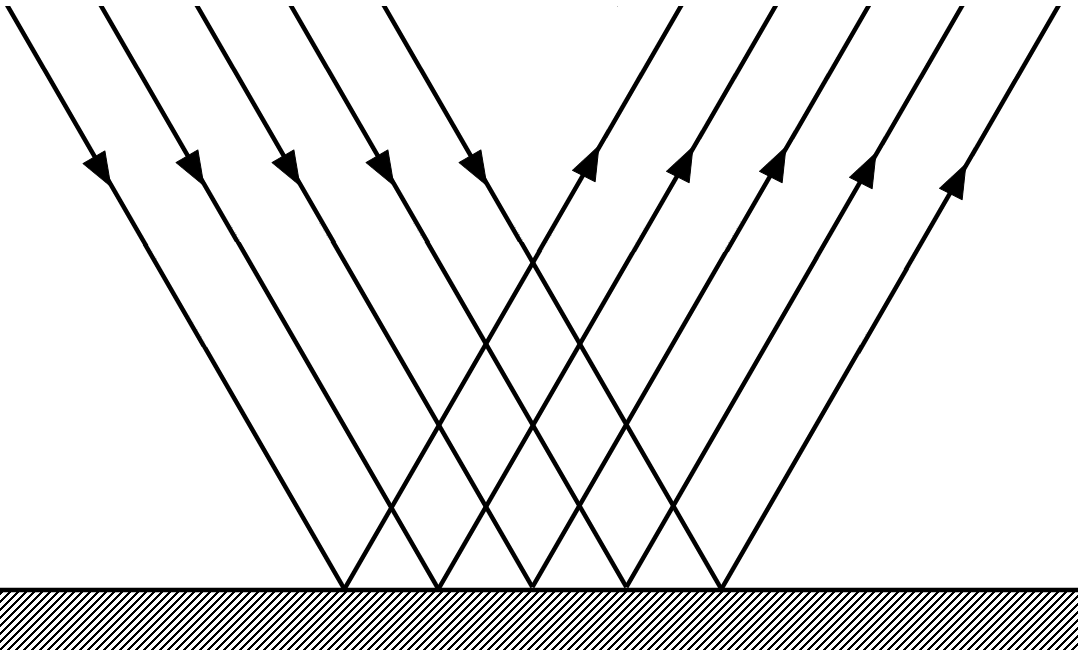
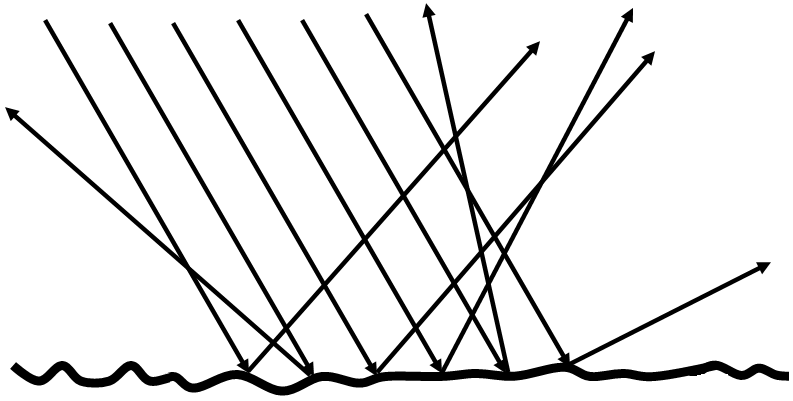
The differences between regular and diffused reflection are:
Regular reflection
Diffused reflection
Reflection from a smooth surface is called a regular reflection.
Reflection from a rough surface is called a diffused reflection.
The reflected rays in regular reflection moves in a parallel direction.
The reflected rays in diffused reflection moves in random direction.
For example: Reflection by a plane mirror.
For example: Reflection by a road surface.
View full question & answer
Question 54 Marks
Explain how you can take care of your eyes.
Answer
To protect our eyes, the given points should be taken into account:
$i.$ Visit an eye specialist regularly.
$ii.$ Avoid reading in dim light and very bright light.
$iii.$ Avoid direct exposure of sunlight to the eye.
$iv.$ Clean your eyes with cold water quickly if dust particles or small insects enter your eye. Do not rub your eyes.
$v.$ Maintain a distance of at least $25\ cm$ between the book and your eyes while reading.
View full question & answer
Question 64 Marks
State the characteristics of the image formed in a plane mirror.
Answer
Characteristics of the image formed by a plane mirror are:
$-$The images formed by a plane mirror are virtual and erect.
$-$Image formed is of the same size as the object.
$-$Image is laterally inverted.
$-$Image is far behind the mirror as the object is in front of the mirror.
View full question & answer
Question 74 Marks
Briefly explain the term persistence of vision.
Answer
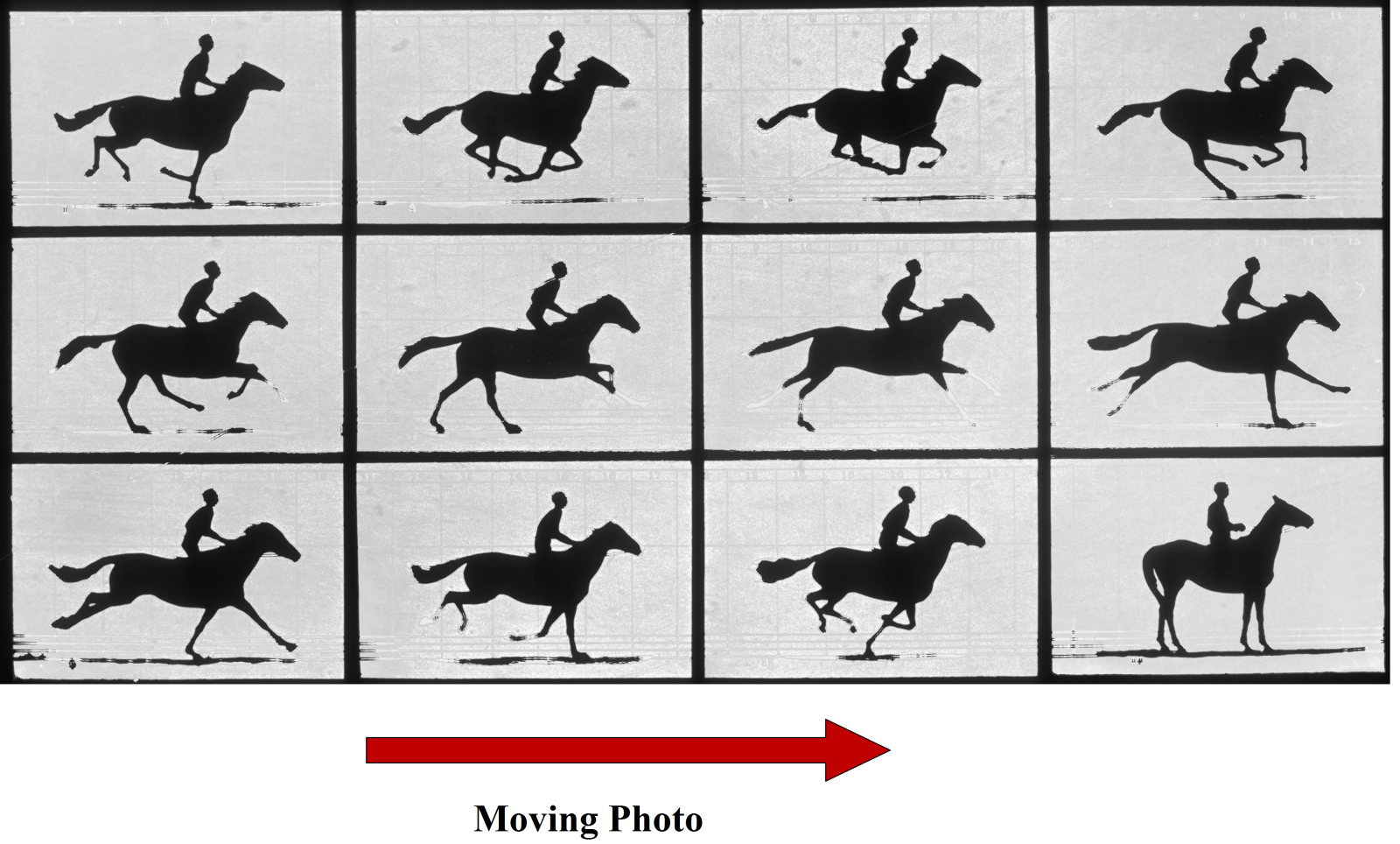
Persistence of vision is a phenomenon of the eye by which an image is thought to persist for about one-sixteenth $\Big(\frac1{16}\Big)^\text{th}$ part of a second on retina after the actual image is formed.
It is the ability eyes to keep seeing the object an image for a fraction of a second after the object has disappeared from view. For example, while seeing a movie which is a collection of the frame (frame my photo). Each frame (photo) is moving so fast that our eye cannot differentiate between two consecutive photos. When the speed of frames moving is reduced to below $16$ frames (photo) per second, we can easily differentiate between two consecutive images.


While seeing the above moving photo our eye persist as a movie clip.
View full question & answer
Question 84 Marks
What is night blindness? What causes night blindness?
Answer
The following factors cause night blindness:
$1.$ The deficiency of Vitamin A $($retinol$)$ in the diet of a person for a considerable time can lead to the disease called night blindness.
$2.$ The disorder in which the rod cells in the retina gradually lose their ability to respond to the light.
$3.$ It can also happen due to cataract, or clouding of the eye's lens.
$4.$ Usher syndrome can also cause night blindness, which is a genetic condition that affects both hearing and vision.
$5.$ Nearsightedness or blurred vision can also cause night blindness.
View full question & answer
Question 94 Marks
Explain the laws of reflection with the help of a diagram.
Answer
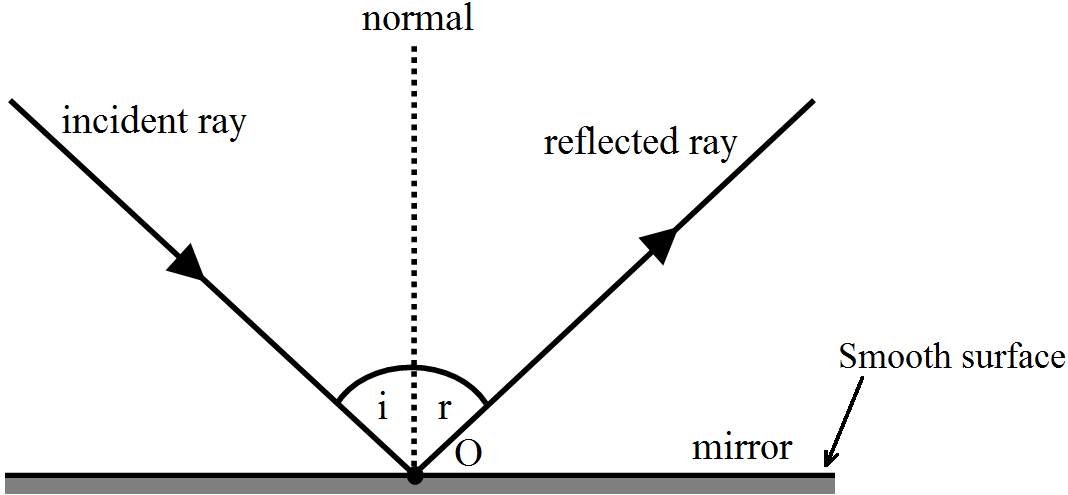
According to Law of Reflection,
$i.$ The angle of the incident light ray is equal to the angle of the reflected light ray:
When a ray of light strikes on the smooth surface it gets reflected. We draw a perpendicular line at the point of incidence, this line is called normal ray. The angle between the incident ray and normal ray is called angle of incident and angle between the reflected ray and normal ray is called angle of reflection. Both the angle is equal.
$ii.$ The incident ray, the normal ray at the point of incidence and the reflected ray all lie in the same plane. $($The same plane means the same side of the mirror$)$

In the above figure, at point $O$ all the three rays normal, incident and reflected are coinciding i.e. lies in the same plane.
View full question & answer
Question 104 Marks
A man stands 10m in front of a large plane mirror. How far must he walk before he is $5m$ away from his image?
Answer
The object distance is equal to image distance in a plane mirror.For the distance of man from his image to be $5m$
The distance of man from mirror + distance of image from the mirror $= 5m$
Since object distance = image distance
Therefore, $2 \times $ distance of man from the mirror $= 5m$
Distance of man from the mirror $=\frac52=2.5\text{m}$
The man is $10m$ from the mirror at the starting, so he will have to walk $10 - 2.5 = 7.5m$ towards the mirror for being $5m$ away from his image.
View full question & answer
Question 114 Marks
Name the part of the eye:
$a.$ Which controls the amount of light entering the eye.
$b.$ Which converges light rays to form the image.
$c.$ On which image is formed.
$d.$ Which carries the image to brain.
$e.$ Which changes the curvature $($or thickness$)$ of eye$-$lens to focus objects lying at various distances.
Answer
$a.$ Iris controls the amount of light entering the eye by constricting and dilating the pupil in bright and dim light respectively.
$b.$ Lens. The lens may diverge or converge the light rays to form an image.
$c.$ Retina. An upside-down image is formed on the retina.
$d.$ Optic nerve carries the image to brain in form of electric impulses.
$e.$ Ciliary muscle changes the lens shape to focus objects lying at various distances.
View full question & answer
Question 124 Marks
Soldiers use the periscope while sitting in a bunker. Why?
Answer
Periscope is used by a soldier while sitting in a bunker to see the things outside. Periscope make use of two plane mirror.
Additional Information: Periscope: A periscope is an instrument which helps in viewing the objects which are not in the line of sight of the observer. It is used in the submarines to look at objects above the water surface. The principle behind periscope is reflection between two parallel plane mirrors. It consists of long cylindrical hollow tube bent at right angles and two plane mirrors are kept parallel and facing each other. The mirror is fixed at $45$ degrees with the framework at the top and the bottom of the tube.
Let see the simple structure of periscope:
View full question & answer
Question 134 Marks
State the characteristics of the image of the image formed in a plane mirror.
Answer
Characteristics of the image:
$i.$ The image formed by a plane mirror is a virtual image. $($i.e. cannot be formed on a screen$).$
$ii.$ The image formed by a plane mirror is an erect image. $($Upside$).$
$iii.$ Size of image and object is the same.
$iv.$ The distance between image $\&$ mirror is the same as the distance between object $\&$ mirror.
$v.$ The image formed is a laterally inverted image i.e., right$-$hand side of the object seems to be the left$-$hand side and vice$-$versa.
Now extend all the reflected ray in the backward direction. The point $(A')$ where all the line meet is called Image point $(A')$.
The image formed by a plane mirror is virtual means we cannot take on a screen. $($We cannot place screen behind the mirror$).$
View full question & answer
Question 144 Marks
How is the phenomenon of reflection used in making a kaleidoscope? What are the applications of a kaleidoscope?
Answer
Kaleidoscope is a cylinder with three mirrors containing loose, coloured objects such as beads or pebbles and bits of glass. As the viewer looks into one end, light entering the other end, creates a colourful pattern due to reflection. It works on the principle of multiple reflection, where several mirrors are placed at an angle $($usually $60^\circ)$ to one another. Typically, these are three rectangular mirrors set at $60^\circ$ to each other so that they form an equilateral triangle. The $60^\circ$ angle creates seven duplicate images of the objects, $5$ at $60^\circ$ and $2$ at $90^\circ$. As the tube is rotated, the tumbling of the coloured objects present varying colours and patterns. Its applications are given below:
$i.$ It is used for decoration purposes, toys, etc.
$ii.$ Kaleidoscope is also useful for designers and artists to get idea for new patterns to design wallpapers, jewellery and fabrics.
View full question & answer
Question 154 Marks
Draw a labelled diagram of the human eye. Label the following parts on this diagram: Cornea, Iris, Pupil, Ciliary muscles, Eye-lens, Retina, Optic nerve, Blind spot.
View full question & answer
Question 164 Marks
Which of the following will cause regular reflection of light and which diffuse reflection of light?
$i.$ Polished wooden table.
$ii.$ Chalk powder.
$iii.$ Cardboard.
$iv.$ Mirror.
$v.$ Paper.
$vi.$ Marble floor with water spread over it.
Answer
Polished wooden table: Regular reflection since the surface is polished $($plane$).$
Chalk powder: Diffused reflection will occur because the surface of chalk powder is uneven.
Cardboard: Diffused reflection of light since cardboard has an uneven surface.
Mirror: Regular reflection since the surface of a mirror is plane.
Paper: Diffused reflection since the surface of paper is uneven.
Marble floor with water spread over it: regular reflection as the floor with water will behave as a plane surface.
View full question & answer
Question 174 Marks
Draw a diagram to show the reflection of light from a plane mirror. Label the following on the diagram:
$a.$ Plane mirror.
$b.$ Incident ray.
$c.$ Reflected ray.
$d.$ Point of incidence.
$e.$ Angle of reflection.
$f.$ Normal.
$g.$ Angle of incidence.
View full question & answer
Question 184 Marks
What are the functions of the following parts of the eye?
$i.$ Iris.
$ii.$ Eye$-$lens.
$iii.$ Ciliary muscles.
$iv.$ Retina.
$v.$ Optic nerve.
Answer
Functions of parts:
IRIS: The muscles of the iris dilate and constrict the pupil and thus increases and reduces the amount of light reaching the retina.
EYE-LENS: Lens focuses the light rays passing through it onto the retina and thus creates a clear image of the objects in sight.
CILIARY MUSCLES: The ciliary muscle fibers affect the zonular fibers in eye and thus change the lens shape and thus changes the converging power.
RETINA: Retina receives the light focused by the lens, the photoreceptors In the retina $($rods and cones$)$ convert this light into signals and the signals are then passed onto the brain for viewing.
OPTIC NERVE: The optic nerve transmits signals from photoreceptors in the retina to the brain through electric impulses.
View full question & answer
Question 204 Marks
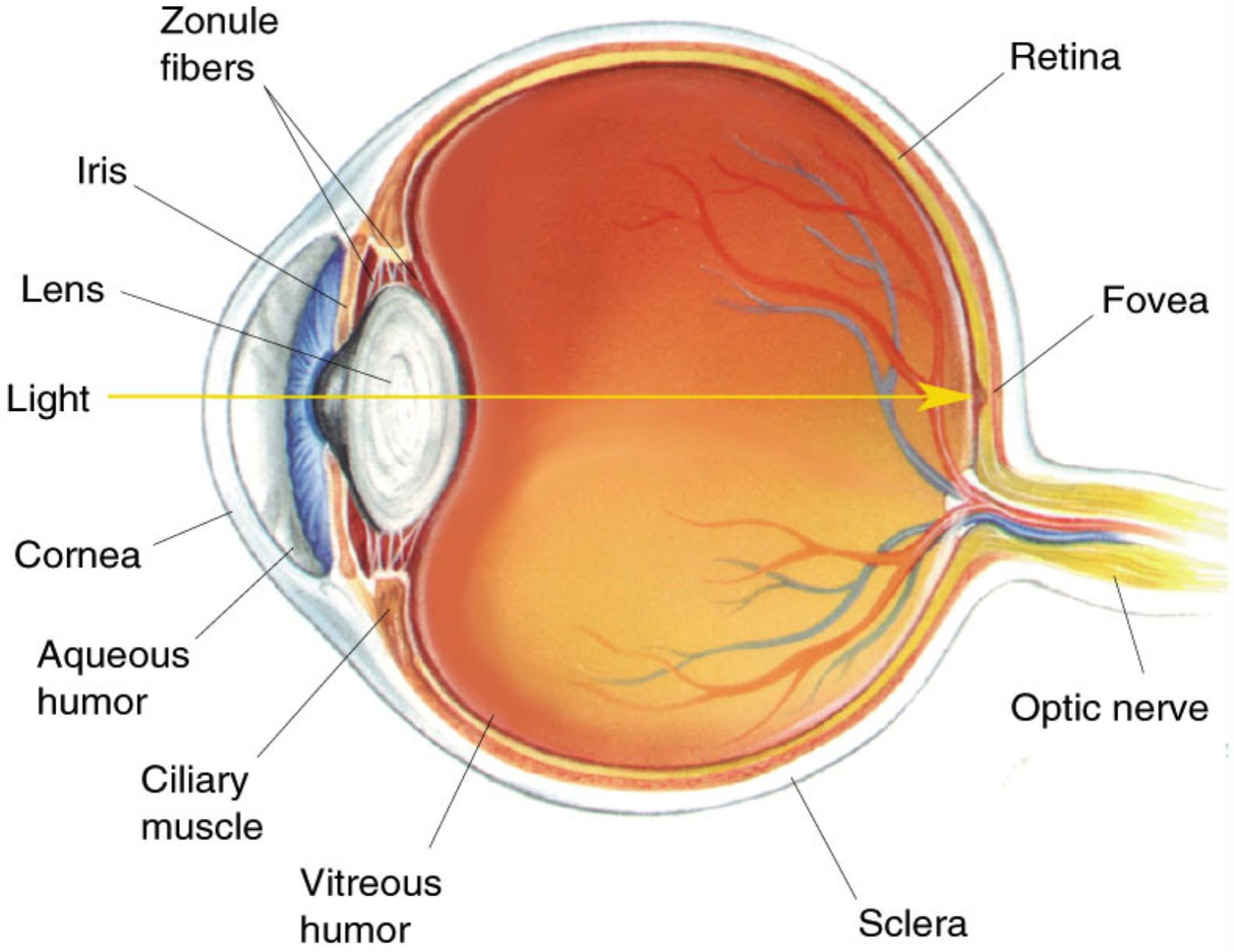
Write the names of the main parts of the human eye.
Answer
The main parts of the human eye are:
IRIS: The muscles of the iris dilate and constrict the pupil and thus increases and reduces the amount of light reaching the retina.
RETINA: Retina receives the light focused by the lens, the photoreceptors In the retina (rods and cones) convert this light into signals and the signals are then passed onto the brain for viewing.
LENS: Lens focuses the light rays passing through it onto the retina and thus creates a clear image of the objects in sight.
PUPIL: Pupil controls the amount of light that enters the eye. It is controlled by the iris.
CORNEA: Cornea acts as the outermost layer of the eye. It protects the eye with the eyelids.
CILIARY MUSCLES: The ciliary muscle fibers affect the zonular fibers in eye and thus change the lens shape and thus changes the converging power.
OPTIC NERVE: The optic nerve transmits signals from photoreceptors in the retina to the brain through electric impulses.
View full question & answer
Question 214 Marks
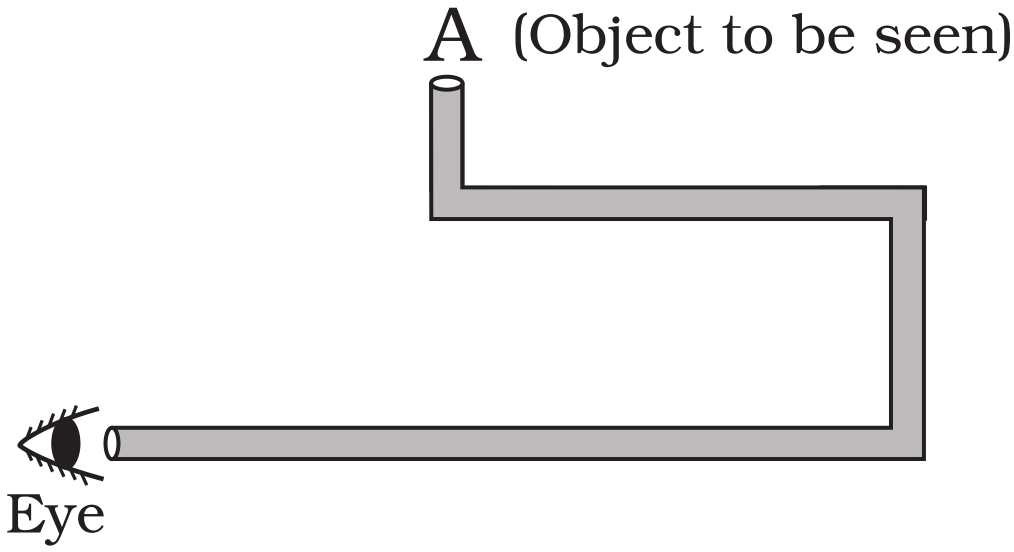
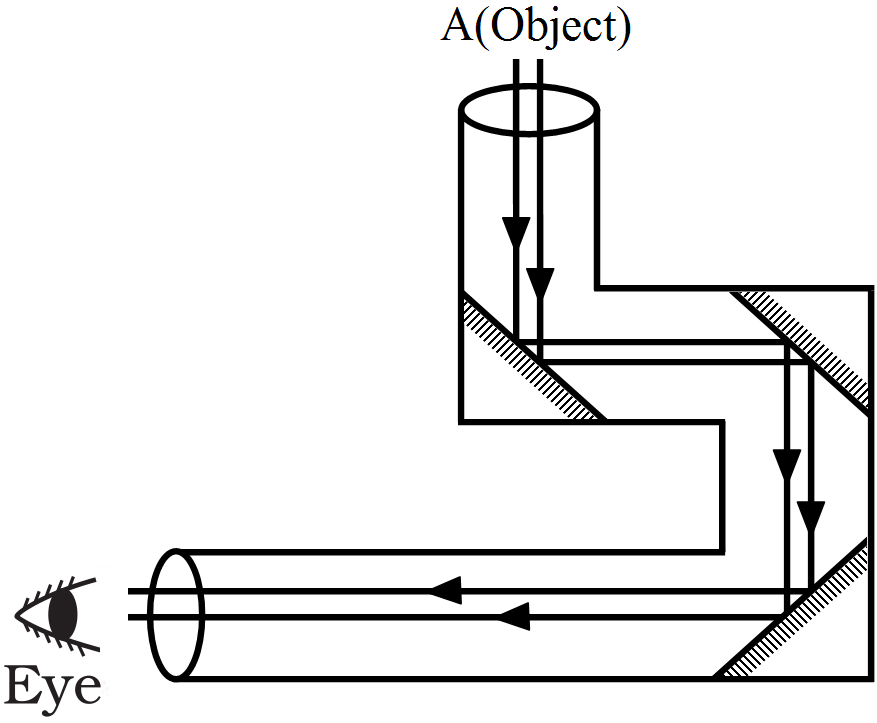
Boojho planned an activity to observe an object A through pipes as shown in Figure, so that he could see objects which he could not directly see.

$a.$ How many mirrors should he use to see the objects?
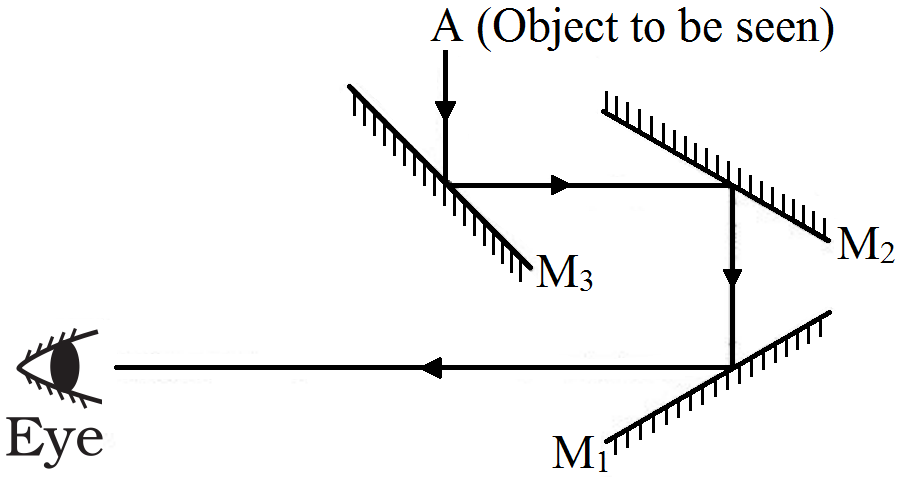
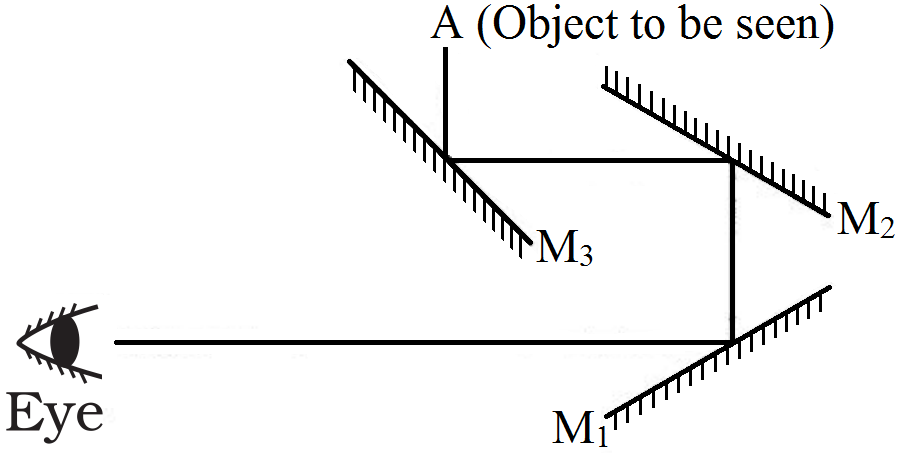
$b.$ Indicate the positions of the mirrors in the figure.
$c.$ What must be the angle with respect to the incident light at which he should place the mirrors?
$d.$ Indicate the direction of rays in the figure.
$e.$ If any of the mirrors is removed, will he be able to see the objects?
Answer
$a.$ He should use three plane mirrors to see the objects.
$b.$ Positions of the mirrors are as shown in the figure.

$c.$ Mirrors should be placed at an angle of $45^\circ $ with respect to the incident light. So, that the rays can move forward.
$d.$ Direction of rays is shown in the figure.
Or,
In place of Fig. $(i)$ and Fig. $(ii)$ we may also use this combine figure for answer of $Q$ $20.$ $(b)$ and $(d)$.

$e.$ He will not be able to see the objects if any of the mirrors is removed, because he will not get the reflected rays to move forward for further reflection to reach our eyes.
View full question & answer
Question 224 Marks
Fill in the blanks in the following: A person $1\ m$ in front of a plane mirror seems to be ____ __ $m$ away from his image.
Answer
A person $1\ m$ in front of a plane mirror seems to be $2\ m$ away from his image.
Expalantion:
(Object distance and image distance are the same from a plane mirror. The image of a person $1\ m$ in front of a mirror is $1\ m$ back to the mirror. Hence, the image is $1 + 1 = 2\ m$ away from the person).
View full question & answer