Questions · Page 1 of 5

M.C.Q. [I MARKS]

🎯

Test yourself on this topic

50 questions · timed · auto-graded

MCQ 11 Mark
Choose the most appropriate answer.
The number of nuclei present in a zygote is:
  • A
    None
  • One
  • C
    Two
  • D
    Four
Answer
Correct option: B.
One
The number of nuclei present in a zygote is one.
View full question & answer
MCQ 21 Mark
A tadpole develops into an adult frog by the process of:
  • A
    Fertilization.
  • Metamorphosis.
  • C
    Embedding.
  • D
    Budding.
Answer
Correct option: B.
Metamorphosis.
The transformation of the larva into an adult through drastic changes is called metamorphosis. Metamorphosis occurs in frog and silk moth.
View full question & answer
MCQ 31 Mark
Choose the most appropriate answer.
Internal fertilisation occurs:
  • In female body.
  • B
    Outside female body.
  • C
    On male body.
  • D
    Outside male body.
Answer
Correct option: A.
In female body.
Internal fertilization occurs in the female body.
View full question & answer
MCQ 51 Mark
Which of the following statements is true about asexual reproduction?
  • New individuals are produced without the fusion of gametes.
  • B
    New individuals involves the fusion of male and female gametes.
  • C
    It is a mode of reproduction which occurs only in plants.
  • D
    New individuals are produced by the fusion of dissimilar gametes.
Answer
Correct option: A.
New individuals are produced without the fusion of gametes.

Reproduction without the fusion of gametes is known as asexual reproduction. The offspring are genetically identical.

View full question & answer
MCQ 61 Mark
Which of these organisms reproduce in the same way as yeast?
  • Hydra
  • B
    Amoeba
  • C
    Starfish
  • D
    Flatworm
Answer
Correct option: A.
Hydra

Hydra reproduces by budding.

View full question & answer
MCQ 71 Mark
Which of the following is not a part of the human male reproductive system?
  • A
    Tests.
  • Oviducts.
  • C
    Seminal vesicles.
  • D
    Afoetus.
Answer
Correct option: B.
Oviducts.

Oviducts is not a part of male reproductive system. It is a part of female reproductive system.

View full question & answer
MCQ 81 Mark
Read the given statements.
$i. \text{IVF}$ is a treatment for infertility when a woman is able to produce ovum however, problems of the Fallopian tube make fertilisation difficult.
$ii.$ Asexual reproduction is a rapid and easier method of multiplication
$iii.$Unicellular organisms reproducing by binary fission are referred to as 'immortals' because actual death of the parent does not occur.
$iv.$ Metamorphosis is the transformation of an adult animal to larval form.

Which of the given statements are correct?

  • A
    $(ii)$ and $(iv)$ only
  • B
    $(ii), (iii)$ and $(iv)$ only
  • $(i), (ii)$ and $(iii)$ only
  • D
    $(i), (ii), (iii)$ and $(iv)$
Answer
Correct option: C.
$(i), (ii)$ and $(iii)$ only
Metamorphosis is the transformation of a larval form into an adult form through drastic changes. It occurs in amphibians $($like frogs$)$ and insects $($such as silk moth, butterfly, cockroach, etc.$).$
View full question & answer
MCQ 91 Mark
Which of the following organs contains seminiferous tubules?
  • A
    Kidney
  • B
    Ovary
  • Testes
  • D
    Brain
Answer
Correct option: C.
Testes

Testes contain seminiferous tubules.

View full question & answer
MCQ 101 Mark
Consider the following statements and choose the correct one:
  • A
    Hydra is a simple multicellular animal.
  • B
    Hydra reproduces by the process of budding.
  • C
    Asexual reproduction involves only a single parent, so fertilization is not necessary in asexual reproduction.
  • All the above.
Answer
Correct option: D.
All the above.
View full question & answer
MCQ 121 Mark
The substances that are transported through umbilical cord
  • A
    Urea.
  • B
    Antibodies.
  • C
    Carbon dioxide.
  • All of these.
Answer
Correct option: D.
All of these.
Umbilical cord transports urea, antibodies and carbon dioxide.
View full question & answer
MCQ 131 Mark
Which of the following organisms reproduces by binary fission?
  • A
    Hydra.
  • B
    Yeast.
  • Amoeba.
  • D
    Sea anemone.
Answer
Correct option: C.
Amoeba.
Amoeba, a unicellular organism reproduces by binary fission.
View full question & answer
MCQ 141 Mark
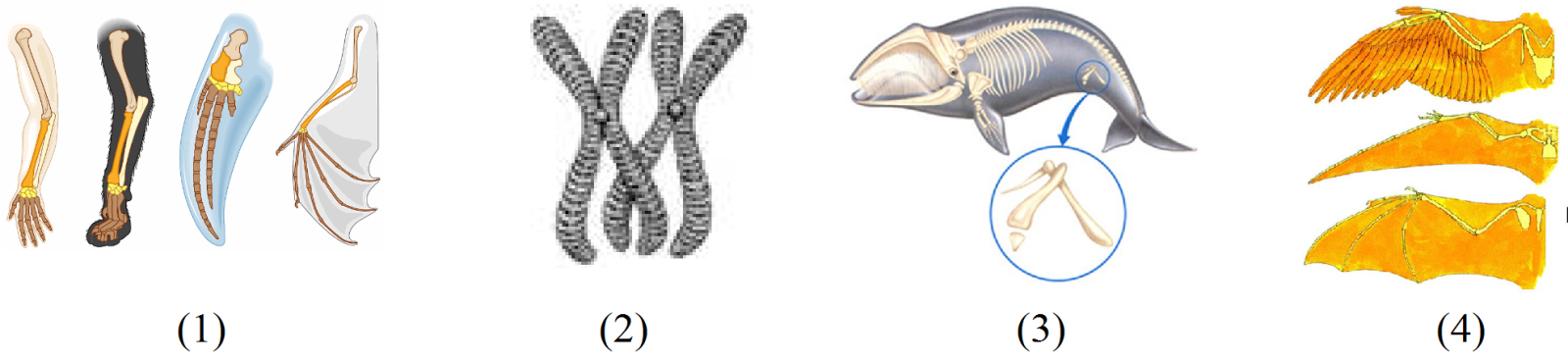
Which one of the following are homologues organ?
  • $1, 2$
  • B
    $2, 3$
  • C
    $3, 4$
  • D
    $4, 1$
Answer
Correct option: A.
$1, 2$
View full question & answer
MCQ 151 Mark
Which of the following statements is incorrect regarding the female reproductive system?
  • A
    If the ovum released from the ovaries is not fertilised, then it is shed along with blood during menstruation.
  • B
    Menopause occurs in the females at an age of $45-50$ years.
  • Vagina of female reproductive system is a primary sex organ.
  • D
    Development of breasts in females is the accessory sex character.
Answer
Correct option: C.
Vagina of female reproductive system is a primary sex organ.
In females, ovaries are primary sex organs.
View full question & answer
MCQ 161 Mark
Which of the following structures has an internal wall lined with fingerlike projections?
  • A
    Ovary
  • B
    Vagina
  • Fallopian tube
  • D
    Uterus
Answer
Correct option: C.
Fallopian tube

The fallopian tubes have an internal wall lined with fingerlike projections.

View full question & answer
MCQ 171 Mark
According to the second law of inheritance: inheritance of more than one pair of traits is a cross, simultaneously, the ratio of each phenotype in the seed in regeneration is:
  • A
    $4 : 2 : 2 : 1$
  • B
    $1 : 2 : 2 : 1$
  • C
    $1 : 3 : 3 : 1$
  • $9 : 3 : 3 : 1$
Answer
Correct option: D.
$9 : 3 : 3 : 1$
View full question & answer
MCQ 181 Mark
Asexual reproduction is:
  • A
    A fusion of specialized cells.
  • B
    A method by which all types of organisms reproduce.
  • A method producing generally identical offsprings.
  • D
    A method in which more than one parent are involved.
Answer
Correct option: C.
A method producing generally identical offsprings.
Asexual reproduction is a method producing generally identical offspring.
View full question & answer
MCQ 191 Mark
The animals which lay eggs are known as $...........$
  • Oviparous animals.
  • B
    Viviparous animals.
  • C
    Domestic animals.
  • D
    Wild animals.
Answer
Correct option: A.
Oviparous animals.
View full question & answer
MCQ 201 Mark
Which of the following is the site of fertilisation in humans?
  • A
    Vagina
  • B
    Ovary
  • Fallopian tube
  • D
    Uterus
Answer
Correct option: C.
Fallopian tube

Fertilisation is the fusion of male and female gametes. In human beings, it takes place in the fallopian tube of the female reproductive system.

View full question & answer
MCQ 211 Mark
Refer to the given figure. Identify the labelled parts $(P - S)$ and select the correct option.
  • $P$
    $Q$
    $R$
    $S$
    Site of gamete production
    Site of fertilisation
    Site of embryo development
    Passage of sperm
  • B
    $P$
    $Q$
    $R$
    $S$
    Site of gamete production
    Passage of sperm
    Site of embryo development
    Site of fertilisation
  • C
    $P$
    $Q$
    $R$
    $S$
    Site of embryo development
    Sita of gamete production
    Site of fertilisation
    Passage of sperm
  • D
    $P$
    $Q$
    $R$
    $S$
    Site of fertilisation
    Site of gamete production
    Site of embryo development
    Passage of sperm
Answer
Correct option: A.
$P$
$Q$
$R$
$S$
Site of gamete production
Site of fertilisation
Site of embryo development
Passage of sperm
View full question & answer
MCQ 221 Mark
Reproduction is essential for living organisms in order to:
  • A
    Keep the individual organisms alive.
  • B
    Fulfill their energy requirements.
  • C
    Maintain growth.
  • Continue the species for ever.
Answer
Correct option: D.
Continue the species for ever.
Reproduction is one of the important characteristics of living things. The ability of organism to produce young ones of its own kind is called reproduction. It is essential for the continuity of species.
View full question & answer
MCQ 231 Mark
Which of the following is/are present in the milt of frog?
  • A
    Embryo
  • B
    Ovum
  • Spermatozoa
  • D
    Both $(A)$ and $(C)$
Answer
Correct option: C.
Spermatozoa
Spermatozoa are present in the mil of frog.
View full question & answer
MCQ 241 Mark
Which of the following is the function of substance that is secreted bv cowper's gland?
  • A
    Protecting sperms.
  • Serving as a lubricant.
  • C
    Turning the semen alkaline.
  • D
    Helping the sperm in penetrating the ovum.
Answer
Correct option: B.
Serving as a lubricant.
The function of the secretions of cowpers gland is to serve as a lubricant.
View full question & answer
MCQ 251 Mark
Aquatic animals in which fertilisation occurs in water are said to be:
  • A
    Viviparous without fertilisation.
  • Oviparous with external fertilisation.
  • C
    Viviparous with internal fertilisation.
  • D
    Oviparous with internal fertilisation.
Answer
Correct option: B.
Oviparous with external fertilisation.
The aquatic animals in which fertilisation occurs in water are oviparous with external fertilisation. They lay eggs and release sperms outside body in the water for fertilisation to take place. The young one top is formed outside the body in water from the zygote formed inside eggs.
View full question & answer
MCQ 261 Mark
Which of the following animal does not show metamorphosis?
  • Fish.
  • B
    Frog.
  • C
    Silk moth.
  • D
    Mosquito.
Answer
Correct option: A.
Fish.
Frog, silk moth and mosquito undergo metamorphosis whereas fish does not show metamorphosis.
View full question & answer
MCQ 271 Mark
Feeling the tremors of an earthquake, a scared resident of thirteenth floor of a multistoreyed building starts climbing down the stairs rapidly. Which hormone initiated this action?
  • A
    Oxytocin
  • B
    Thyroxine
  • Adrenaline
  • D
    Progesterone
Answer
Correct option: C.
Adrenaline
The adrenal gland is called the gland of emergency because it releases the hormone, epinephrine or adrenaline, which prepares the body to act when we are in stressful or potentially dangerous situation. Hence, it is also known as the fight-or flight hormone.
View full question & answer
MCQ 281 Mark
Which of the following is $NOT$ true of the process of reproduction?
  • Unicellular organisms cannot reproduce.
  • B
    Reproduction is the process of producing young animals or plants.
  • C
    Reproduction is one of the life processes of living things.
  • D
    Reproduction is of two types, sexual and asexual reproduction.
Answer
Correct option: A.
Unicellular organisms cannot reproduce.
All living organisms reproduce.
View full question & answer
MCQ 291 Mark
Which of the following is/are types of asexual reproduction?
  • A
    Budding
  • B
    Binary fission
  • C
    Spore formation
  • All the above
Answer
Correct option: D.
All the above
Budding, binary fission, spore formation are types of asexual reproduction.
View full question & answer
MCQ 301 Mark
The male gamete is called the $...........$
  • A
    Zygote
  • B
    Eggs
  • Sperm
  • D
    Ovaries
Answer
Correct option: C.
Sperm
Female gamete in humans is called ova/egg. It is produced by the ovaries. The male gamete called sperm fuses with the egg to form a zygote.
View full question & answer
MCQ 311 Mark
A Paramecium reproduces by dividing itself into two daughter cells. This process is
called:
  • A
    Budding
  • B
    Vegetative propagation
  • C
    Regeneration
  • Binary fission
Answer
Correct option: D.
Binary fission

Binary fission is a type of asexual reproduction seen in unicellular organisms. In this method, first the nucleus divides followed by cytoplasmic division. This forms two daughter cells from one parent cell. Therefore, Paramecium dividing itself to form two daughter cells represents binary fission.

View full question & answer
MCQ 321 Mark
Every month $..........$ mature egg $(s)$ can be released from human ovary:
  • $1$
  • B
    $2$
  • C
    $3$
  • D
    $4$
Answer
Correct option: A.
$1$
View full question & answer
MCQ 331 Mark
In human beings, the correct sequence of events during reproduction is:
  • Gamete formation, fertilization, zygote, embryo.
  • B
    Embryo, zygote, fertilization, gamete formation.
  • C
    Fertilization, gamete formation, embryo, zygote.
  • D
    Gamete formation, fertilization, embryo, zygote.
Answer
Correct option: A.
Gamete formation, fertilization, zygote, embryo.
In human beings, the process of reproduction starts by the formation of male and female gametes respectively in the male and female reproductive systems. This is followed by the fusion of these gametes inside the female body, a process called fertilization. The fertilized product of this process is termed as a zygote. The fusion forms a zygote, which divides repeatedly to form the embryo. The embryo gets implanted in female uterus for further development to form foetus. Thus, the correct sequence is gamete formation, fertilization, zygote and embryo. Hence, your answer should be option $(a)$.
View full question & answer
MCQ 341 Mark
Sets of reproductive terms are given below. Choose the set that has an incorrect combination.
  • A
    Sperm, testis, sperm duct, penis.
  • B
    Menstruation, egg, oviduct, uterus.
  • Sperm, oviduct, egg, uterus.
  • D
    Ovulation, egg, oviduct, uterus.
Answer
Correct option: C.
Sperm, oviduct, egg, uterus.
Set $(c)$ has an incorrect combination. This is because it has parts of both male and female reproductive system.
Sperm is the male gamete while oviduct, egg and uterus are parts of female reproductive system.
View full question & answer
MCQ 351 Mark
The number of modes by which animals reproduce are:
  • Two
  • B
    Three
  • C
    Four
  • D
    None of these
Answer
Correct option: A.
Two
View full question & answer
MCQ 371 Mark
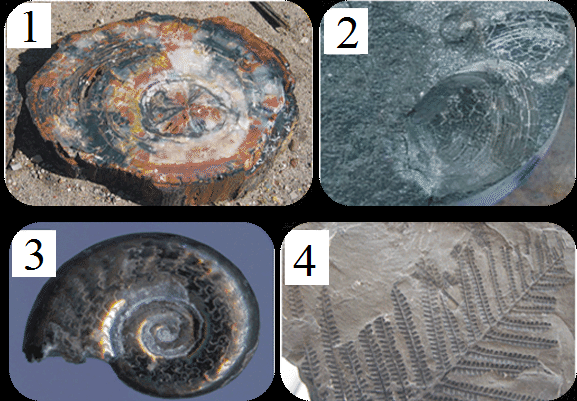
Which one of the following is a fossil?
  • A
    $1, 2$
  • B
    $2, 3$
  • C
    $3, 4$
  • All of these
Answer
Correct option: D.
All of these
View full question & answer
MCQ 381 Mark
Characterstics that are transmitted from parents to offsprings during sexual reproduction show:
  • A
    Only similarities with parents.
  • B
    Only variations with parents.
  • Both similarities and variations with parents.
  • D
    Neither similarities nor variations with parents.
Answer
Correct option: C.
Both similarities and variations with parents.
Characters that are transmitted from parents to offspring during sexual reproduction show both similarities and variations with parents.
View full question & answer
MCQ 391 Mark
If the trait $X$ exists in $10\%$ of a population of an asexually reproducing species, and a trait $Y$ exists in $60\%$ of the same population, which trait is likely to have arisen earlier?
  • A
    $X$
  • $Y$
  • C
    $XY$
  • D
    Both $X$ and $Y$
Answer
Correct option: B.
$Y$
View full question & answer
MCQ 411 Mark
Animals exhibiting external fertilisation produce a large number of gametes. Pick the appropriate reason from the following:
  • A
    The animals are small in size and want to produce more off-springs.
  • B
    Food is available in plenty in water.
  • To ensure better chance of fertilisation.
  • D
    Water promotes production of large number of gametes.
Answer
Correct option: C.
To ensure better chance of fertilisation.
The fertilization which takes place outside the female body is called external fertilization. In external fertilization the female animal eggs are fertilized by sperm outside her body. External fertilization is very common in aquatic animals such as frog, fish and star-fish etc. Animals exhibiting external fertilisation produce a large number of gametes to ensure better chance of fertilisation.
View full question & answer
MCQ 421 Mark
Which of the following statements about the human female egg cell is incorrect?
  • A
    It is produced when a female reaches puberty.
  • B
    The two ovaries in a female alternately produce the egg cells.
  • C
    One egg cell is usually produced by a female every 28 days.
  • An egg cell can live in the body of a female for about a month.
Answer
Correct option: D.
An egg cell can live in the body of a female for about a month.
An egg cell can live in the body for only $6-8$ hours or $1$ day. This process takes about two weeks on average, beginning with a woman’s menstrual period. Once the egg is mature, it’s released from the ovary in a process known as ovulation. The egg then travels down the fallopian tube toward the uterus. The egg is only viable for about $24$ hours once it’s been released. Sperm can live inside a woman’s body for less than $5$ days. A released egg lives for less than $24$ hours. The highest pregnancy rates have been reported when the egg and sperm join together within $4$ to $6$ hours of ovulation.
View full question & answer
MCQ 431 Mark
Which of the following statements about reproduction in humans is correct?
  • A
    Fertilization takes place externally.
  • B
    Fertilization takes place in the testes.
  • C
    During fertilization, egg moves towards the sperm.
  • Fertilization takes place in the human female.
Answer
Correct option: D.
Fertilization takes place in the human female.

Fertilization in humans take place in the female body. The sperms of men are introduced by penis into female’s body through vagina. The sperms then pass through the uterus and reach to oviducts. It is here, that sperms combines with egg to forms zygote (i.e. Fertilization occurs).

View full question & answer
MCQ 441 Mark
One of the following occurs reproductive system of flowering plants well as that of humans. This is:
  • A
    Sperm ducts.
  • B
    Anther.
  • Ovary.
  • D
    Style.
Answer
Correct option: C.
Ovary.

Ovary is the structure that occurs in the reproductive system of flowering plants as well as of humans. In both of them, it produces female gametes called egg.

View full question & answer
MCQ 451 Mark
Reproduction is essential for living organisms in order to:
  • A
    Maintain growth
  • Continue their species
  • C
    Fulfil their energy requirement
  • D
    Keep the individual organism alive
Answer
Correct option: B.
Continue their species
The production of new individuals from their parents is known as reproduction. Reproduction is essential for living organisms in order to continue the species.
View full question & answer
MCQ 461 Mark
The multicellular organism which reproducts by buddings is:
  • A
    Amoeba.
  • B
    Yeast.
  • C
    Paramecium.
  • Hydra.
Answer
Correct option: D.
Hydra.
Hydra is a multicellular organism which reproduce by budding.
View full question & answer
MCQ 471 Mark
Namita is completed her science chapter where she wrote some statements. She wants to know whether the statements are correct or not? Namita wants to take help from you:
  • A
    The newly born (or newly hatched) animal is called young one.
  • B
    The production of new organism from a single parent without the involvement of sex cells is called a sexual reproduction.
  • C
    The production of new organisms from two parents by making use of their sex cells is called sexual reproduction.
  • None of the above.
Answer
Correct option: D.
None of the above.
View full question & answer
MCQ 481 Mark
Asexual reproduction is:
  • A
    A fusion of specialized cells.
  • B
    A method by which all types of organisms reproduce.
  • A method producing generally identical off-springs.
  • D
    A method in which more than one parent are involved.
Answer
Correct option: C.
A method producing generally identical off-springs.
Asexual reproduction is the simplest method of reproduction. It takes only in those animals whose bodies have a simple structure. In asexual reproduction the young one or offspring produced is an exact copy of the parent. Asexual reproduction is a method producing generally identical off-springs.
View full question & answer
MCQ 491 Mark
In human beings, the correct sequence of events during reproduction is:
  • Gamete formation, fertilisation, zygote, embryo.
  • B
    Embryo, zygote, fertilisation, gamete formation.
  • C
    Fertilisation, gamete formation, embryo, zygote.
  • D
    Gamete formation, fertilisation, embryo, zygote.
Answer
Correct option: A.
Gamete formation, fertilisation, zygote, embryo.

In human beings, sexual reproduction takes place by the combination of gametes, i.e. sperm and egg, formed in male and female, respectively. The fusion of gametes is called fertilisation. The fusion forms a zygote, which divides repeatedly to form the embryo. The embryo gets implanted in female uterus for further development to form foetus.

View full question & answer