PET is the acronym for ______.
- APolyester
- BPolyester and terylene
- ✓Polyethylene terephthalate
- DPolyetheneterylene
Answer: C.
View full solution →101 questions across 9 question groups — pick any mix to generate a Science paper with step-by-step answer keys.
MCQ
17 Q→02Fill in the blanks.
21 Q→03Assertion & Reason
3 Q→04TRUE & FALSE
16 Q→05Answer In One word.
17 Q→06[ 2 Marks Questions ]
16 Q→07Match The Following
4 Q→08[3 Marks Question]
5 Q→09[4 Marks Question]
2 Q→One sample from each question group in this chapter. Select any group above to see the full set with answer keys.
Answer: C.
View full solution →Answer: D.
View full solution →Answer: A.
View full solution →Answer: C.
View full solution →Answer: B.
View full solution →Answer: A.
View full solution →Answer: A.
View full solution →Answer: A.
View full solution →
| 1. | Mix water, starch, vinegar and glycerin in a cooking pot. |
| 2. | Let the article cool for 24 hours before we use it. |
| 3. | Shape material to form a cup or bowl. |
| 4. | Continuously mix on medium heat until the liquid turns clear. |
| 5. | When the liquid begins to bubble it is ready to be taken off the stove. |
| 6. | Spread the gel onto aluminium foil and cool. |
| A | B |
| Nylon | Thermoplastic |
| PVC | Thermosetting plastic |
| Bakelite | Fibre |
| Teflon | Wood pulp |
| Rayon | Non-stick cookwares |
| 1. | Plastic bags | (a) | Polyvinyl chloride |
| 2. | PVC | (b) | Natural fibre |
| 3. | Melamine | (c) | Non-bio degradable |
| 4. | Wood | (d) | Thermosetting plastic |
| 1. | Nylon | (a) | Artificial silk |
| 2. | PET | (b) | Artificial wool |
| 3. | Rayon | (c) | Parachute |
| 4. | Acrylic | (d) | Polyester |
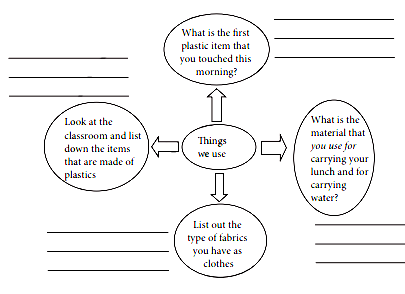
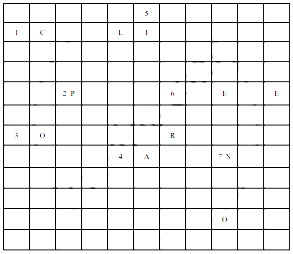
| 1. | Mix water, starch, vinegar and glycerin in a cooking pot. |
| 2. | Let the article cool for 24 hours before we use it. |
| 3. | Shape material to form a cup or bowl. |
| 4. | Continuously mix on medium heat until the liquid turns clear. |
| 5. | When the liquid begins to bubble it is ready to be taken off the stove. |
| 6. | Spread the gel onto aluminium foil and cool. |
Pick question groups from the list above, set marks and difficulty, and export a branded PDF with step-by-step answer keys. First 3 chapters free — no signup.