Question 17 Marks
Write a short note on different types of clocks.
Answer
View full question & answer→Types of clocks based on display:
- Analog clocks: It looks like a classic clock. It has three hands to show the time.
a. Hours Hand: It is short and thick. It shows 'hour'.
b. Minutes Hand: It is long and thin. It shows 'minute'.
c. Seconds Hand: It is long and very thin. It shows 'second'. It makes one rotation in one minute and 60 rotations in one hour.
Analog clocks can be driven either mechanically or electronically.
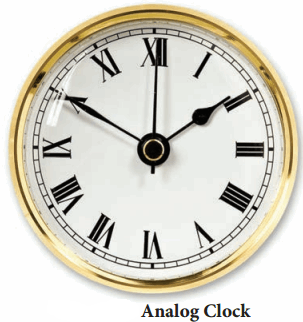
Analog clock
- Digital clocks:
a. A digital clock displays the time directly. It shows the time in numerals or other symbols. It may have 12 hours or 24 hours display.
b. Recent clocks are showing Date, Day, Month, Year, Temperature, etc.
c. Digital clocks are often called Electronic Clocks.
Différent types of clocks based on working mechanism:
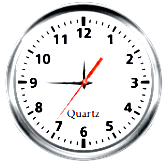
Quartz Clock
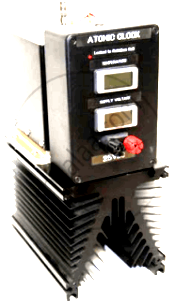
- Atomic Clock:
a. These clocks are making use of periodic vibrations occurring within the atom.
b. These clocks have an accuracy of one second in every $10 b$ seconds.
c. Atomic clocks are used in Global Positioning System (GPS), Global Navigation Satellite System (GLONASS), and International time distribution services.
- Analog clocks: It looks like a classic clock. It has three hands to show the time.
a. Hours Hand: It is short and thick. It shows 'hour'.
b. Minutes Hand: It is long and thin. It shows 'minute'.
c. Seconds Hand: It is long and very thin. It shows 'second'. It makes one rotation in one minute and 60 rotations in one hour.
Analog clocks can be driven either mechanically or electronically.
Analog clock
- Digital clocks:
a. A digital clock displays the time directly. It shows the time in numerals or other symbols. It may have 12 hours or 24 hours display.
b. Recent clocks are showing Date, Day, Month, Year, Temperature, etc.
c. Digital clocks are often called Electronic Clocks.
Différent types of clocks based on working mechanism:
Quartz Clock
- Atomic Clock:
a. These clocks are making use of periodic vibrations occurring within the atom.
b. These clocks have an accuracy of one second in every $10 b$ seconds.
c. Atomic clocks are used in Global Positioning System (GPS), Global Navigation Satellite System (GLONASS), and International time distribution services.