Questions · Page 2 of 6

M.C.Q (1 Marks)

MCQ 511 Mark
In which condition the gene ratio remains constant for any species?
  • A
    Sexual selection.
  • Random mating.
  • C
    Mutation.
  • D
    Gene flow.
Answer
Correct option: B.
Random mating.
View full question & answer
MCQ 521 Mark
Darwin’s finches provide an excellent evidence in favour of evolution. This evidence comes from the field of:
  • Biogeography
  • B
    Anatomy
  • C
    Embryology
  • D
    Palaeontology
Answer
Correct option: A.
Biogeography
View full question & answer
MCQ 531 Mark
In $1953 \ \text{S.L.}$ Miller created primitive earth conditions in the laboratory and gave experimental evidence for origin of first form of life from preexisting non$-$living organic molecules. The primitive earth conditions created include:
  • A
    Low temperature, volcanic storms, atmosphere rich in oxygen.
  • B
    Low temperature, volcanic storms, reducing atmosphere.
  • C
    High temperature, volcanic storms, non$-$reducing atmosphere.
  • High temperature, volcanic storms, reducing atmosphere containing $\mathrm{CH}_4, \mathrm{NH}_3$ etc.
Answer
Correct option: D.
High temperature, volcanic storms, reducing atmosphere containing $\mathrm{CH}_4, \mathrm{NH}_3$ etc.
View full question & answer
MCQ 541 Mark
The presence of gill slits, in the embryos of all vertebrates, supports the theory of:
  • A
    Biogenesis
  • Recapitulation
  • C
    Metamorphosis
  • D
    Organic evolution
Answer
Correct option: B.
Recapitulation
View full question & answer
MCQ 551 Mark
The extinct human who lived $1,00,000$ to $40,000$ years ago, in Europe, Asia and parts of Africa, with short stature, heavy eye brows, retreating for heads, large jaws with heavy teeth, stocky bodies a lumbering gait and stooped posture was:
  • A
    Cro$-$magnon humans.
  • B
    Rampithecus.
  • C
    Homo habilis.
  • Neanderthal human.
Answer
Correct option: D.
Neanderthal human.
View full question & answer
MCQ 561 Mark
Jurassic period of the Mesozoic era is characterized by:
  • A
    Radiation of reptiles and origin of mammal$-$like reptiles.
  • B
    Dinosaurs become extinct and angiosperms appear.
  • C
    Flowering plants and first dinosaurs appear.
  • Gymnosperms are dominant plants and first birds appear.
Answer
Correct option: D.
Gymnosperms are dominant plants and first birds appear.
View full question & answer
MCQ 571 Mark
"Continuity of germplasm" theory was given by:
  • A
    Devries
  • Weismann
  • C
    Darwin
  • D
    Lamarck
Answer
Correct option: B.
Weismann
View full question & answer
MCQ 581 Mark
Which type of homology exists between arm and leg of man and horse?
  • Phylogenetic
  • B
    Sexual
  • C
    Serial
  • D
    None of the above
Answer
Correct option: A.
Phylogenetic
View full question & answer
MCQ 591 Mark
Coenozoic era is known as:
  • A
    Age of Amphibia and Lycopods.
  • B
    Age of Marine Invertebrate.
  • C
    Age of Reptiles and gymnosperms.
  • Age of Mammals and Modern flora.
Answer
Correct option: D.
Age of Mammals and Modern flora.
View full question & answer
MCQ 601 Mark
First mammals appeared in the period:
  • Triassic
  • B
    Jurassic
  • C
    Cretaceous
  • D
    Tertiary
Answer
Correct option: A.
Triassic
Triassic period, in geologic time, the first period of the Mesozoic era. It began $252$ million years ago.
Reptiles increased in diversity and number, and the first dinosaurs appeared during this period along with the appearance of first mammals.
View full question & answer
MCQ 611 Mark
Animal husbandry and plant breeding programmes are the examples of:
  • A
    Reverse evolution.
  • Artificial selection.
  • C
    Mutation.
  • D
    Natural selection
Answer
Correct option: B.
Artificial selection.
Animal husbandry and plant breeding programmes need human intervention and desirable characters are introduced in plants and animals through manipulation. Hence, these are examples of artificial selection.
View full question & answer
MCQ 621 Mark
Which one of the following is the direct ancestor of modern man?
  • A
    Australopithecus
  • B
    Ramapithecus
  • Homo erectus
  • D
    Homo habilis
Answer
Correct option: C.
Homo erectus
View full question & answer
MCQ 631 Mark
The chance of elimination of genes from a small population is an example of:
  • A
    Selection pressure
  • B
    Speciation
  • C
    Adaptation
  • Genetic drift
Answer
Correct option: D.
Genetic drift
A small population is not in Hardy Weinberg Equilibrium and may lose alleles due to Genetic Drift.
View full question & answer
MCQ 641 Mark
Eobionts are also called:
  • A
    Pre $–$ cells
  • B
    Protocells
  • C
    Protobionts
  • All of the above
Answer
Correct option: D.
All of the above
View full question & answer
MCQ 651 Mark
Common origin of man and chimpanzee is best shown by:
  • Banding pattern in chromosomes number $3$ and $6.$
  • B
    Cranial capacity.
  • C
    Binocular vision.
  • D
    Dental formula.
Answer
Correct option: A.
Banding pattern in chromosomes number $3$ and $6.$
View full question & answer
MCQ 661 Mark
Which primitive man lived on earth at the end of pleistocene era?
  • A
    Australopithecus
  • B
    Zinzanthropus
  • Neanderthal man
  • D
    Atlantic man
Answer
Correct option: C.
Neanderthal man
View full question & answer
MCQ 671 Mark
The theory of spontaneous generation stated that:
  • Life can arise from non$-$living things only.
  • B
    Life arises spontaneously, neither from living nor from the non$-$living.
  • C
    Life can arise from both living and non$-$living.
  • D
    Life arose from living forms only.
Answer
Correct option: A.
Life can arise from non$-$living things only.
View full question & answer
MCQ 681 Mark
Hardy$-$Weinberg equilibrium is known to be affected by gene flow, genetic drift, mutation, genetic recombination and:
  • A
    Evolution
  • B
    Limiting factors
  • C
    Saltation
  • Natural selection
Answer
Correct option: D.
Natural selection
View full question & answer
MCQ 691 Mark
'Homo erectus' is the zoological name of:
  • A
    Cro$-$Magnon man
  • Pecking man
  • C
    Nut$-$cracker man
  • D
    Neanderthal man
Answer
Correct option: B.
Pecking man
View full question & answer
MCQ 701 Mark
Palaentological evidences for evolution refer to the:
  • Fossils.
  • B
    Homologous organs.
  • C
    Development of embryo.
  • D
    Analogous organs.
Answer
Correct option: A.
Fossils.
View full question & answer
MCQ 711 Mark
According to fossils discovered up to present time origin and evolution of man was started from:
  • A
    France
  • B
    Java
  • Africa
  • D
    China
Answer
Correct option: C.
Africa
View full question & answer
MCQ 721 Mark
Appearance of antibiotic$-$resistant bacteria is an example of:
  • Pre$-$existing variation in the population.
  • B
    Divergent evolution.
  • C
    Transduction.
  • D
    Adaptive radiation.
Answer
Correct option: A.
Pre$-$existing variation in the population.
View full question & answer
MCQ 731 Mark
Single step large mutation leading to speciation is also called.
  • A
    Founder effect.
  • Saltation.
  • C
    Branching descent.
  • D
    Natural selection.
Answer
Correct option: B.
Saltation.
View full question & answer
MCQ 741 Mark
Artificial selection to obtain cows yielding higher milk output represents.
  • A
    Stabilizing selection as it stabilizes this character in the population.
  • Directional as it pushes the mean of the character in one direction.
  • C
    Disruptive as it splits the population into two, one yielding higher output and the other lower output.
  • D
    Stabilizing followed by disruptive as it stabilizes the population to produce higher$-$yielding cows.
Answer
Correct option: B.
Directional as it pushes the mean of the character in one direction.
View full question & answer
MCQ 751 Mark
The English scientist who worked on origin of life and then settled in India was:
  • A
    L. Pasteur
  • B
    Urey
  • C
    Oparin
  • Haldane
Answer
Correct option: D.
Haldane
View full question & answer
MCQ 761 Mark
Which one is irrelevant to evolution of man?
  • A
    Perfection of hand for tool making.
  • B
    Change of diet from hard nuts$/$ roots to soft food.
  • C
    Increased ability to communicate or develop community behaviour.
  • Loss of tail.
Answer
Correct option: D.
Loss of tail.
View full question & answer
MCQ 771 Mark
Adaptation is a type of:
  • A
    Convergent evolution
  • B
    Satabilizing selection
  • Adaptive radiation
  • D
    Speciation
Answer
Correct option: C.
Adaptive radiation
View full question & answer
MCQ 781 Mark
A population is in Hardy$-$ weinberg equilibrium for a gene with only two alleles. If the gene frequency of an allele $A$ is $0.7,$ the genotype frequency of $Aa$ is:
  • A
    $0.21$
  • $0.42$
  • C
    $0.36$
  • D
    $0.7$
Answer
Correct option: B.
$0.42$
View full question & answer
MCQ 791 Mark
The brain capacity of Homo erectus was:
  • $800$ to $1300\ cc$
  • B
    $1650\ cc$
  • C
    $650\ cc$
  • D
    $1400\ cc$
Answer
Correct option: A.
$800$ to $1300\ cc$
View full question & answer
MCQ 801 Mark
Radiations with successful adaptations in case of insects is a result of:
  • A
    Genetic divergence
  • B
    Micro$-$evolution
  • Macro$-$evolution
  • D
    Mega$-$evolution
Answer
Correct option: C.
Macro$-$evolution
View full question & answer
MCQ 811 Mark
Change of frequency of alleles in a population results in evolution. This statement is proposed in:
  • A
    Darwin's theory.
  • B
    Lamarck's theory.
  • Hardy$-$Weinberg principle.
  • D
    de Vries theory.
Answer
Correct option: C.
Hardy$-$Weinberg principle.
View full question & answer
MCQ 821 Mark
Man evolved in:
  • A
    Triassic period
  • B
    Jurassic
  • C
    Permian period
  • Pliocene
Answer
Correct option: D.
Pliocene
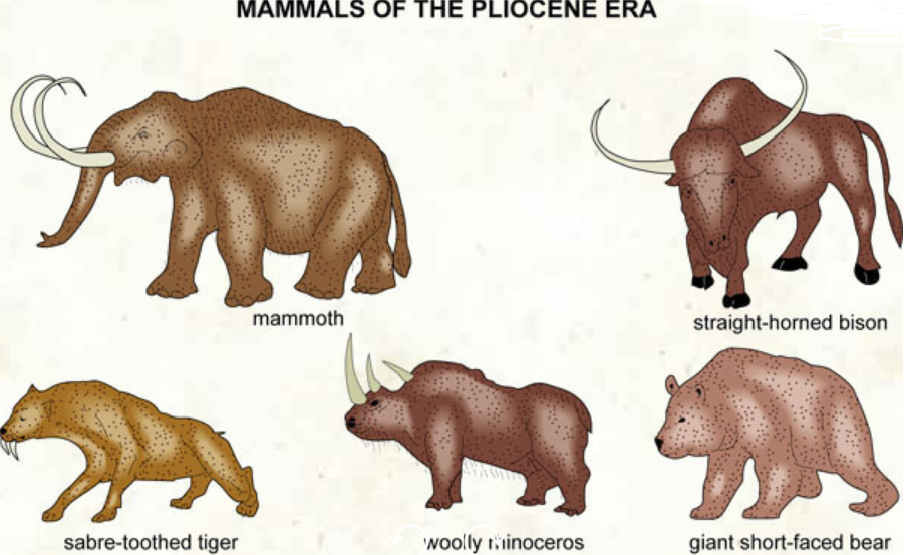
The Pliocene epoch extends from $5.332$ million to $2.588$ million years before present. Man evolved in this era.

View full question & answer
MCQ 831 Mark
In recent years, $\text{DNA}$ sequences $($nucleotide sequence$)$ of maternal $\text{DNA}$ and $\text{Y}-$chromosomes were considered for the study of human evolution, because.
  • A
    They can be studied from the samples of fossil remains.
  • B
    They are small and, therefore, easy to study.
  • They are uniparental in origin and do not take part in recombination.
  • D
    Their structure is known in greater detail.
Answer
Correct option: C.
They are uniparental in origin and do not take part in recombination.
View full question & answer
MCQ 841 Mark
Hardy Weinberg law is applicable to:
  • Genetic equilibrium
  • B
    Small population
  • C
    Non$-$random mating
  • D
    None of the above
Answer
Correct option: A.
Genetic equilibrium
View full question & answer
MCQ 851 Mark
Theory of inheritance of acquired characters was given by:
  • A
    Wallace
  • Lamarck
  • C
    Darwin
  • D
    Devries
Answer
Correct option: B.
Lamarck
View full question & answer
MCQ 861 Mark
Which one among the following is an example for homology?
  • A
    Eye of octopus and mammals.
  • B
    Tuber of sweet potato and potato.
  • C
    Flippers of penguins and dolphins.
  • Thorns and tendrils of Bougainvillea and Cucurbita.
Answer
Correct option: D.
Thorns and tendrils of Bougainvillea and Cucurbita.
View full question & answer
MCQ 871 Mark
During origin of life, nucleoprotein gave most probably the first sign of:
  • Life
  • B
    Amino Acids
  • C
    Soil
  • D
    Sugar
Answer
Correct option: A.
Life
View full question & answer
MCQ 881 Mark
An old view about evolution states that the organisms were created by a super organism in the same condition as they exist now. This theory is called as:
  • Theory of special creation.
  • B
    Theory of natural selection.
  • C
    Lamarck's theory of evolution.
  • D
    Theory of spontaneous generation.
Answer
Correct option: A.
Theory of special creation.
View full question & answer
MCQ 891 Mark
The bones of forelimbs of whale, bat, cheetah and man are similar in structure, because:
  • A
    One organism has given rise to another.
  • They share a common ancestor.
  • C
    They perform the same function.
  • D
    The have biochemical similarities.
Answer
Correct option: B.
They share a common ancestor.
Similarity in structural design indicates towards a common ancestry.
View full question & answer
MCQ 901 Mark
Parallelism is:
  • A
    Adaptive divergence.
  • B
    Adaptive divergence of widely separated species.
  • C
    Adaptive convergence of widely different species.
  • Adaptive convergence of closely related groups.
Answer
Correct option: D.
Adaptive convergence of closely related groups.
View full question & answer
MCQ 911 Mark
Select the correct statement from the following options:
  • A
    Mutations are random and directional.
  • B
    Darwinian variations are small and direction less.
  • Fitness is the end result of the ability to adapt and get selected by nature.
  • D
    All mammals have evolved vivipary as an adaptation.
Answer
Correct option: C.
Fitness is the end result of the ability to adapt and get selected by nature.
View full question & answer
MCQ 921 Mark
Similarity developed in distantly related groups as an adaptation to the same function is called as:
  • Convergent evolution
  • B
    Connecting link
  • C
    Missing link
  • D
    Divergent evolution
Answer
Correct option: A.
Convergent evolution
Convergent evolution means distantly related groups have different forms of structures or adaptation for performing similar functions.
View full question & answer
MCQ 931 Mark
Wings of mosquito, bats, birds is $...........$ evolution.
  • Convergent
  • B
    Divergent
  • C
    Adaption
  • D
    Parallel
Answer
Correct option: A.
Convergent
View full question & answer
MCQ 941 Mark
Palaentological evidences for evolution refer to the:
  • A
    Development of embryo.
  • B
    Homologous organs.
  • Fossils.
  • D
    Analogous organs.
Answer
Correct option: C.
Fossils.
View full question & answer
MCQ 951 Mark
Archeopteryx, a transitional fossil between birds and reptiles was discovered from the rocks of following period:
  • Jurassic
  • B
    Archeozoic era
  • C
    Cretaceous
  • D
    Triassic
Answer
Correct option: A.
Jurassic
Archaeopteryx, intermediate between reptiles and birds, originated towards the close of Jurassic period.
View full question & answer
MCQ 961 Mark
Darwin in his ‘Natural Selection Theory’ did not believe in any role of which one of the following in organic evolution?
  • Discontinuous variations.
  • B
    Parasites and predators as natural enemies.
  • C
    Survival of the fittest.
  • D
    Struggle for existence.
Answer
Correct option: A.
Discontinuous variations.
View full question & answer
MCQ 971 Mark
First cell produced on earth is:
  • Protobiont
  • B
    Protozoa
  • C
    Metazoa
  • D
    None of the above
Answer
Correct option: A.
Protobiont
First cells produced were simple aggregates of organic compounds, called protobionts, which are thought to be precursors of prokaryotes.
View full question & answer
MCQ 981 Mark
The bones of forelimbs of whale, bat, cheetah and man are similar in structure, because:
  • They share a common ancestor.
  • B
    One organism has given rise to another.
  • C
    They perform the same function.
  • D
    The have biochemical similarities.
Answer
Correct option: A.
They share a common ancestor.
View full question & answer
MCQ 991 Mark
Coacervates were experimentally produced by:
  • A
    Urey and Miller
  • B
    Jacob and Monod
  • C
    Fischer and Huxley
  • Sidney Fox and Oparin
Answer
Correct option: D.
Sidney Fox and Oparin
View full question & answer
MCQ 1001 Mark
One of the following is a link between plants and animals.
  • Euglena
  • B
    Bacteria
  • C
    Paramecium
  • D
    Trichonympha
Answer
Correct option: A.
Euglena
View full question & answer