MCQ
$0.1\, M$ formic acid solution is titrated against $0.1 \,M \,NaOH$ solution. What would  be the difference in $pH$ between $1/5$ and $4/5$ stages of neutralization of acid ?
  • A
    $2 \log \,3/4$
  • B
    $2 \log\, 1/5$
  • C
    $\log\, 1/3$
  • $2 \log \,4$

Answer

Correct option: D.
$2 \log \,4$
d
When acetic acid is titrated with NaOH it will behaave as Buffer solution.

We know in case of acidic buffer $\mathrm{pH}=\mathrm{pK}_{\mathrm{a}}+\log \frac{[\mathrm{Salt}]}{[\mathrm{Acid}]}$

$\mathrm{pK}_{\mathrm{a}}$ of acetic acid $=4.77$

In case of $\frac{1}{5}$ th Titration $-$

$[$ Salt $]=\frac{x}{5}$

[Acid $]=\frac{4 x}{5}$

$\mathrm{pH}_{1}=4.77+\log \frac{1}{4}$

In case of $\frac{4}{5}$ th Titration -

$\mathrm{pH}_{2}=4.77+\log \frac{4}{1}$

Difference in $\mathrm{pH}=2 \log 4$

Need a full question paper?

Generate a complete, print-ready paper with questions like this in minutes — across 16+ boards, with answer keys.
Start Generating Free

Similar questions

The $IUPAC$ name of $NC - CH_2 - CH_2 - COOH$ is
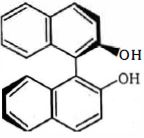
The binaphthol $(Bnp)$ is
The correct order regarding electronegativity of hybrid orbitals of carbon is
An organic compound contains $78 \,\%$ (by $wt.$) carbon and remaining percentage of hydrogen. The right option for the empirical formula of this compound is : [Atomic wt. of $\mathrm{C}$ is $12, \mathrm{H}$ is 1$]$
The hydrogen-like species $\mathrm{Li}^{2+}$ is in a spherically symmetric state $\mathrm{S}_1$ with one radial node. Upon absorbing light the ion undergoes transition to a state $\mathrm{S}_2$. The state $\mathrm{S}_2$ has one radial node and its energy is equal to the ground state energy of the hydrogen atom.

$1.$ The state $S_1$ is

$(A)$ $1 \mathrm{~s}$ $(B)$ $2 \mathrm{~s}$ $(C)$ $2 \mathrm{p}$ $(D)$ $3 \mathrm{~s}$

$2.$ Energy of the state $S_1$ in units of the hydrogen atom ground state energy is

$(A)$ $0.75$ $(B)$ $1.50$ $(C)$ $2.25$ $(D)$ $4.50$

$3.$ The orbital angular momentum quantum number of the state $S_2$ is

$(A)$ $0$ $(B)$ $1$ $(C)$ $2$ $(D)$ $3$

Give the answer question $1,2$ and $3.$

Which acid is not an arrhenius acid
Which is the most precise designation of stereochemistry for the products formed  in the electrophilic addition of $DBr$ to $1$ -methylcyclohexene? ($D = {}^2H$, an isotope of  hydrogen) 
What is $[H^+]$ in $mol/L$ of a solution that is $0.20\, M$ in $CH_3COONa$ and $0.10\, M$ in $CH_3COOH$ $?$ $K_a$ for $CH_3COOH = 1.8 \times 10^{-5}$
The most important method of preparation of hydrocarbons of lower carbon number is
What will be $\Delta S$ for reaction: $2A + 3B \to 4C + 5D$

$\Delta S_A^o = 100\frac{J}{{mol \times k}}$   $\Delta S_C^o = 200\frac{J}{{mol \times k}}$

$\Delta S_B^o = 120\frac{J}{{mol \times k}}$   $\Delta S_D^o = 150\frac{J}{{mol \times k}}$