Question

Image

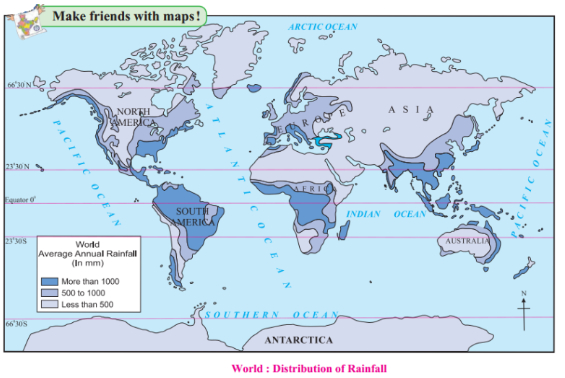
1.Which region experiences more rainfall?
2.What is the reason for low rainfall in the Central Peninsular India?
3.Why does the eastern part of Central African continent gets less rainfall than the western part despite its location close to the equator?
4.Why does the amount of high rainfall in the western part of the European continent reduce in the eastern part?
5.Why is rainfall more only in the eastern coast of Australia?
Answer

1.The tropical region experiences more rainfall.
2.The Central Peninsular India falls on the leeward side of the Western Ghats and hence a rain shadow region is formed here.
3.

  • Eastern part of the African Continent is a rain shadow region of westerly monsoon winds whereas the western part lies on the windward side and gets more rain.
  • The eastern part of Africa also comes under the influence of the North east trade winds but still receive less rains as they are dry winds originating from the land.

4.There are many mountain ranges in the western part of Europe. These obstruct the rain-bearing clouds coming from the west and therefore the amount of rainfall received is high in the west and it reduces towards the east.
5.The eastern part of Australia is a mountainous region. The winds blowing from the Pacific Ocean are obstructed by these mountains resulting in orographic rainfall towards the east and the formation of a rain shadow zone towards the west.

Need a full question paper?

Generate a complete, print-ready paper with questions like this in minutes — across 16+ boards, with answer keys.

Start Generating Free

Similar questions

Image

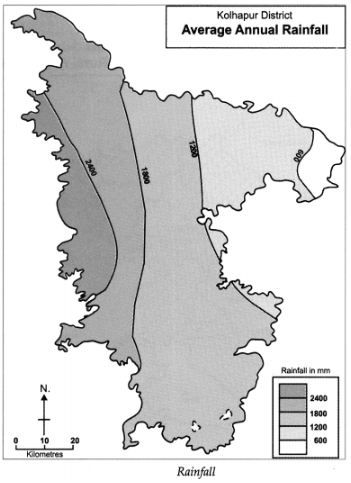
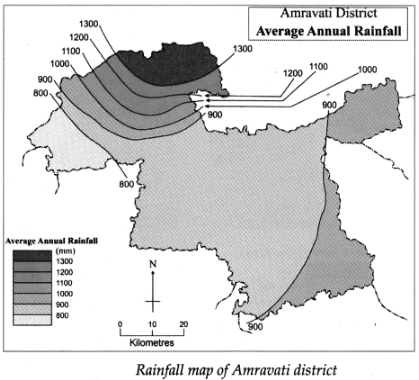
1.In which part of the district is the rainfall more?
2.In which direction is the rainfall decreasing?
3.What is the lowest value of the rainfall in the district?
4.What is the highest value of the rainfall in the district?
5.What is the amount of rainfall in the central part of the district?


Image
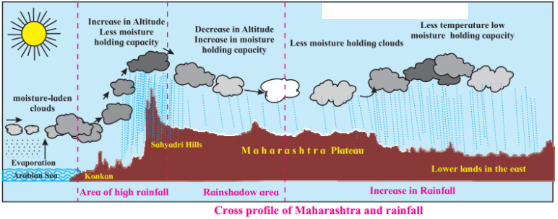
1.What type of rainfall occurs in Maharashtra?
2.Where will the rain shadow area lie in Maharashtra?
3.Think about the figure and estimate the rainfall of your district.

Image

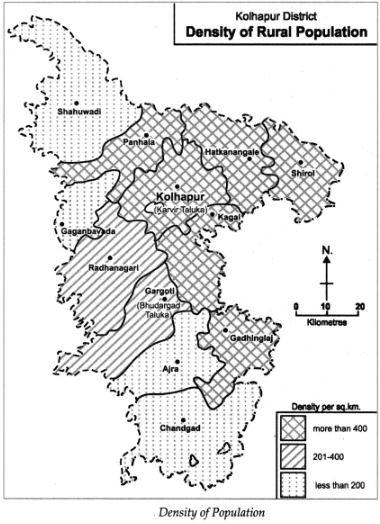
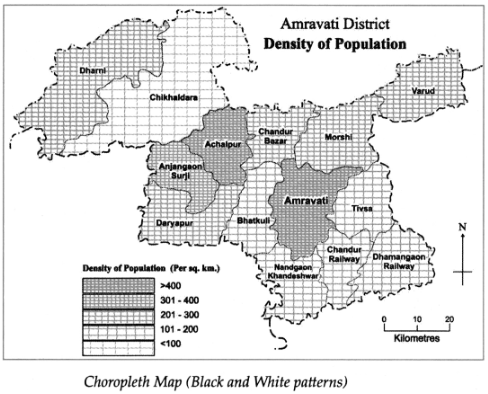
1.In which direction is the density of population decreasing?
2.Name the talukas with a population density less than 200.
3.Name the talukas having population density between 200 and 400.
4.Name the talukas with a population density more than 400.
5.In which direction are the talukas having a higher density of population located in the district?
6.Which method has been used in the making of this map?


Image

1.In which direction is the rainfall more in the district?
2.In which direction is the rainfall decreasing?
3.Which class shows low rainfall category in the district?
4.Which class shows high rainfall category in the district?
5.Which class shows high rainfall category in the district?


Image

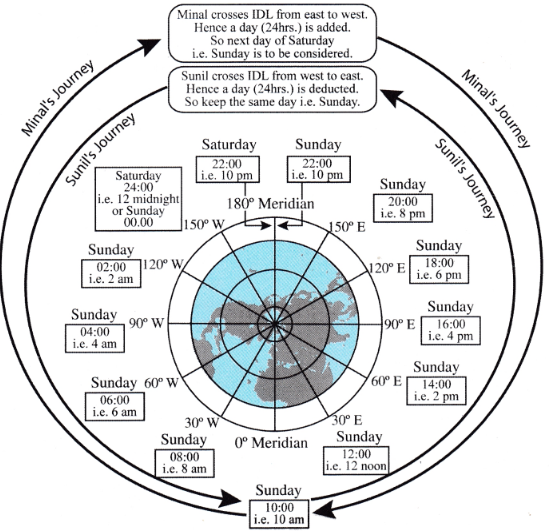
1.Which meridian is used to determine world standard Time (GMT)?
2.Which meridian determines Indian Standard Time (1ST)?
3.What is the time difference between the GMT and the IST?


Image

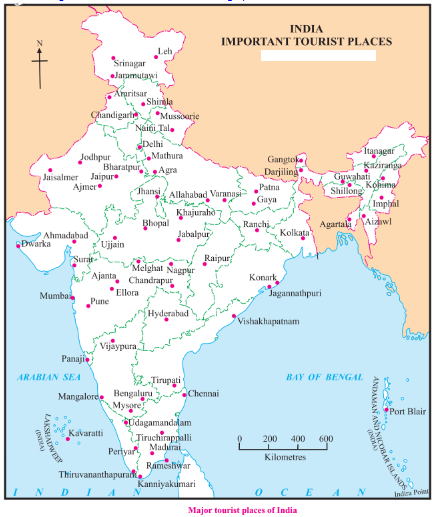
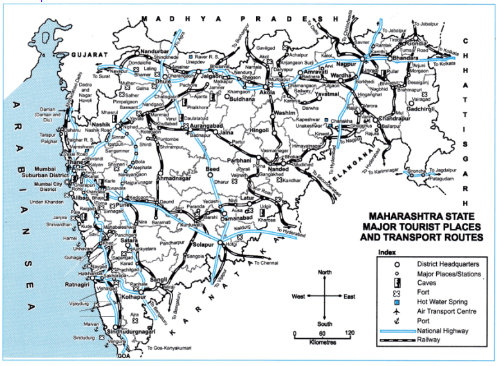
1.Out of these, which tourist places1 do you know? Make a list.
2.For what are the selected places famous?
3.Make a list of religious and historical sites from the map.
4.Make a list of hill stations, places having sanctuaries and places along the coasts.
5.Correlate the physiography and tourist places in India.

Image

1.Name the talukas having population density between 301 and 400 persons per sq km.
2.What is the density of the Amravati taluka?
3.Name the talukas having population density less than 300 persons per sq km.
4.Which taluka has a population density of less than 100 persons per sq km?
5.Which Talukas have a population density of more than 400 persons per sq km?


Image

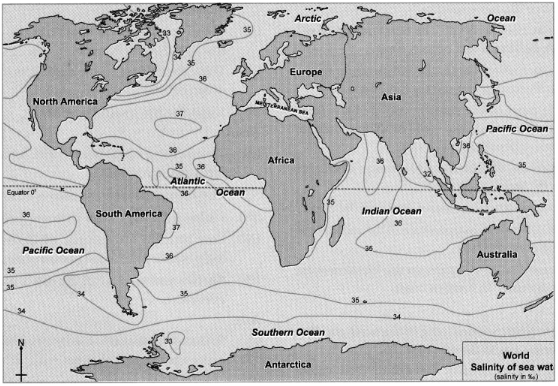
1.What is the salinity around the tropics?
2.Which region has the least salinity?
3.Which ocean has salinity more than 37%o?
4.What are the reasons of differences in salinity on a global level?


Image

1.Name the ports of Konkan coast and is there any connectivity of ports with tourism?
2.Name some of the caves in Maharashtra.


Image

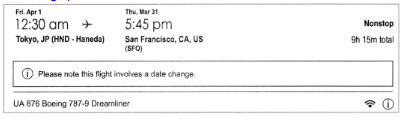
1.From which country will the plane take off and where will it go?
2.What is the duration of the flight?
3.What is the day, date and time given at the starting point and destination of the flight?
4.What special note is given on the air ticket?
5.What could be the reason behind giving such a note?
6.During this flight, will the plane cross the IDL? If yes, then from which direction to which direction?
7.What did you understand by reading the ticket?