MCQ
$2\, gm$ acetic acid and $3\, gm$ sodium acetate are present in $100\, ml$. aqueous solution then what will be the $pH$ of solution if ionisation constant of acetic acid is $1.8 \times 10^{-5}$
  • A
    $3.7$
  • B
    $4.98$
  • $4.78$
  • D
    $4.08$

Answer

Correct option: C.
$4.78$
c

Need a full question paper?

Generate a complete, print-ready paper with questions like this in minutes — across 16+ boards, with answer keys.

Start Generating Free

Similar questions

On the basis of Bohr's model, the radius of $3^{rd}$ orbit is
The largest oxidation number exhibited by an element depends on its outer electronic configuration. With which of the following outer electronic configurations the element will exhibit largest oxidation number?
The frequency of an electromagnetic radiation is $2 \times {10^6}\,Hz$. What is its wavelength in metres (Velocity of light $ = 3 \times {10^8}\,m{s^{ - 1}}$)
Which one of the following conditions will favour maximum formation of the product in the reaction

$\mathrm{A}_{2}(\mathrm{g})+\mathrm{B}_{2}(\mathrm{g}) \rightleftharpoons \mathrm{X}_{2}(\mathrm{g}) \Delta_{r} \mathrm{H}=-\mathrm{X} \mathrm{kJ} ?$
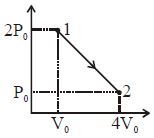
A liquid confined inside an adiabatic container is taken from state $1$ to state $2$ by single stage process as shown, then $\Delta H$ is
For reaction $2Cl(s) \to C{l_2}(s)$, the signs of $\Delta H$ and $\Delta S$ respectively are
The type of hybridisation and number of lone pair$(s)$ of electrons of $Xe$ in $XeOF_4$ respectively are
Zinc sulphate contains $22.65\%$ of zinc and $43.9\%$ of water of crystallization. If the law of constant proportions is true, then the weight of zinc required to produce $20\, g$ of the crystals will be ............. $\mathrm{g}$
If $C + {O_2} \to C{O_2} + 94.2\,kcal$ ${H_2} + \frac{1}{2}{O_2} \to {H_2}O + 68.3\,kcal$$C{H_4} + 2{O_2} \to C{O_2} + 2{H_2}O + 210.8\,kcal$ then the possible heat of methane will be......$kcal$
By fractional distillation, those liquids whose boiling points differ can be separated in pure form :