MCQ
.
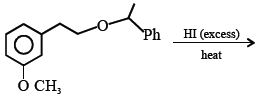
- A
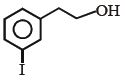
- ✓
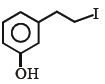
- C
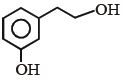
- D
Generate a complete, print-ready paper with questions like this in minutes — across 16+ boards, with answer keys.
$\mathrm{V}^{2+}(\mathrm{aq})+2 \mathrm{e}^{-} \rightarrow \mathrm{V} \ \ \ \ \mathrm{E}^0=-1.19 \mathrm{~V} $
$\mathrm{Fe}^{3+}(\mathrm{aq})+3 \mathrm{e}^{-} \rightarrow \mathrm{Fe} \ \ \ \ \mathrm{E}^0=-0.04 \mathrm{~V} $
$\mathrm{Au}^{3+}(\mathrm{aq})+3 \mathrm{e}^{-} \rightarrow \mathrm{Au} \ \ \ \ \mathrm{E}^0=+1.40 \mathrm{~V} $
$\mathrm{Hg}^{2+}(\mathrm{aq})+2 \mathrm{e}^{-} \rightarrow \mathrm{Hg} \ \ \ \ \mathrm{E}^0=+0.86 \mathrm{~V}$
The pair$(s)$ of metals that is$(are)$ oxidized by $\mathrm{NO}_3^{-}$in aqueous solution is$(are)$
$(A)$ $\mathrm{V}$ and $\mathrm{Hg}$ $(B)$ $\mathrm{Hg}$ and $\mathrm{Fe}$
$(C)$ $\mathrm{Fe}$ and $\mathrm{Au}$ $(D)$ $Fe$ and $V$
Which of the following structures best represents the intermediate responsible for this process?