Question
$2\text{y}-\frac12=-\frac13$

Answer

$2\text{y}-\frac12=-\frac{1}{3}$ Adding $\frac12$ to both sides,
we get $\text{2y}-\frac{1}{2}+\frac12=-\frac13+\frac12$
$\text{y}=\frac{-2+3}{6}$
$\text{2y}=\frac{1}{6}$ Dividing both sides by $2$,
we get $\frac{2\text{y}}{2}=\frac{16}{2}$
$\text{y}=\frac{1}{12}$
Verification: Substituting $\text{y}=\frac{1}{12}$ in $L.H.S$. we get
$\text{L.H.S.}=2\frac{1}{12}-\frac12$
$=\frac16-\frac12$
$=\frac{1-3}{6}$
$=\frac{-2}{6}$
$=-\frac{1}{3},$ and R.H.S. $=-\frac13$
$L.H.S. = R.H.S.$
Hence, verified.

Need a full question paper?

Generate a complete, print-ready paper with questions like this in minutes — across 16+ boards, with answer keys.

Start Generating Free

Similar questions

In a "magic square", the sum of the numbers in each row, in each column and along the diagonal is the same. Is this a magic square?
$\frac{4}{11}$ $\frac{9}{11}$ $\frac{2}{11}$
$\frac{3}{11}$ $\frac{5}{11}$ $\frac{7}{11}$
$\frac{8}{11}$ $\frac{1}{11}$ $\frac{6}{11}$
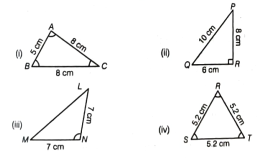
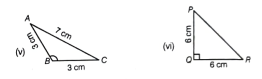
Look at following figures and classify each of the triangles according to its
(a) sides $\quad$ (b) angles
Image
Image
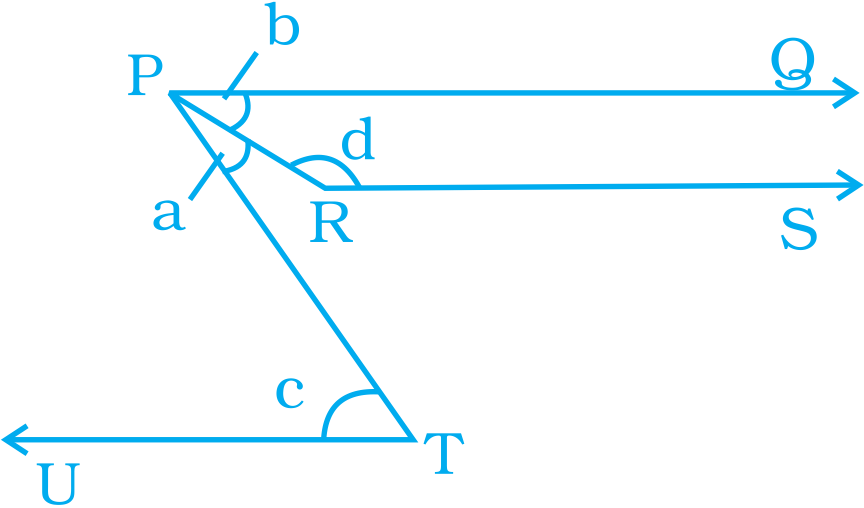
In Fig. $PQ, RS$ and $UT$ are parallel lines.
$i.$ If $c = 570$ and $\text{a}=\frac{\text{c}}{3}$, find the value of $d$.
$ii.$ If $c = 750$ and $\text{a} = \frac{2}{5}\text{c}$, find $b.$
The following table gives the route length (in thousand kilometres) of the Indian Railways in some of the years:
Year1960-611970-711980-811990-912000-2001
Route length (in thousand kilometres)5660617498
Represent the above data with the help of a bar graph.
Divide the sum of $\frac{-13}{5}$ and $\frac{12}{7}$ by the product of $\frac{-31}{7}$ and $\frac{1}{2}.$
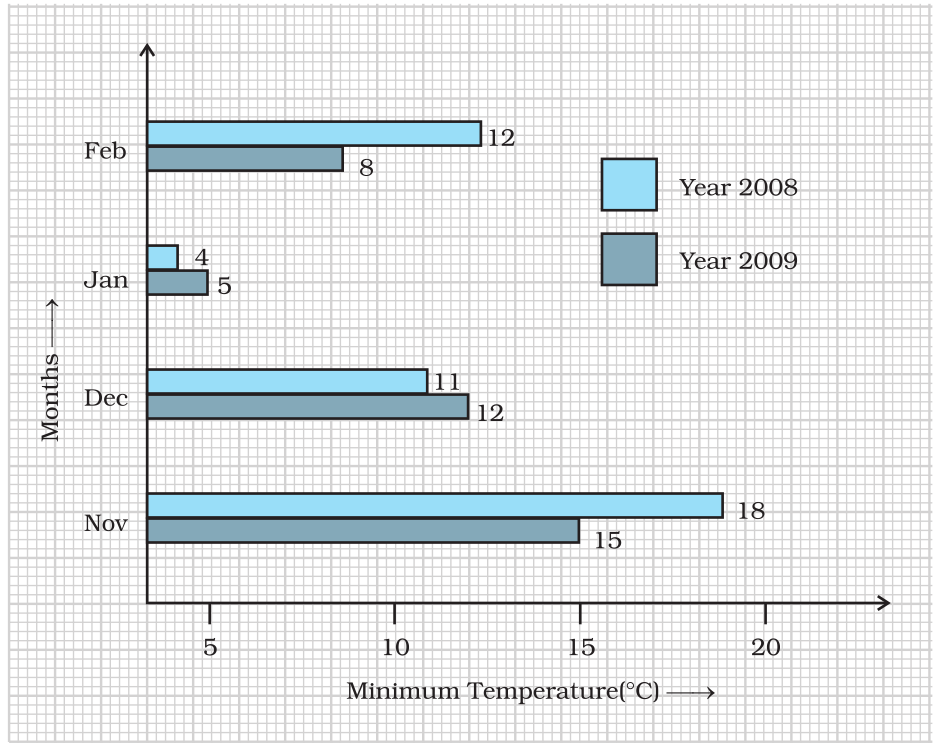
Study the double bar graph given below and answer the questions that follow
:
$a.$ What information is compared in the above given double bar graph?
$b.$ Calculate the ratio of minimum temperatures in the year $2008$ to the year $2009$ for the month of November.
$c.$ For how many months was the minimum temperature in the year $2008$ greater than that of year $2009$? Name those months.
$d.$ Find the average minimum temperature for the year $2008$ for the four months.
$e.$ In which month is the variation in the two temperatures maximum?
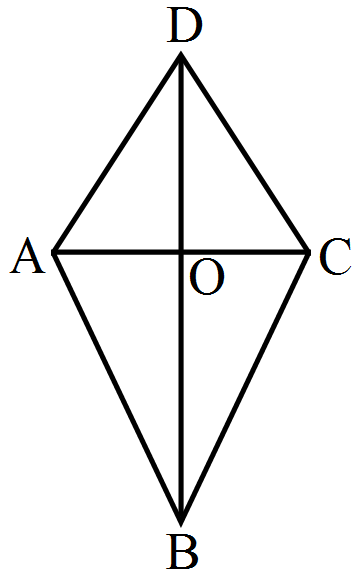
Calculate the area of the quadrilateral $ABCD$ as shown in Figure, given that $BD = 42\ cm, AC = 28\ cm, OD = 12\ cm$ and $\text{AC}\bot\text{BO}.$
Construct 4 pairs of parallel lines in different orientations.
Below is a list of $10$ tallest buildings in India. This list ranks buildings in India that stand at least $150m  ( 492 \ ft.)$ tall, based on standard height measurement. This includes spires and architectural details but does not include antenna marks. Following data is given as per the available information till $2009$. Since new buildings are always under construction, go on$-$line to check new taller buildings. Use the information given in the table about sky scrapers to answer
the following questions:
Name City Height Floors Year
Planet Mumbai $181m$ $51$ $2009$
$\text{UB}$ Tower Bengalaru $184m$ $20$ $2006$
Ashok Towers Mumbai $193m$ $49$ $2009$
The Imperial $I$ Mumbai $249m$ $60$ $2009$
The imperial $II$ Mumbai $249m$ $60$ $2009$
$\text{RNA}$ Mirage Mumbai $180m$ $40$ $2009$
Oberoi Woods Tower $I$ Mumbai $170m$ $40$ $2009$
Oberoi Woods Tower $II$ Mumbai $170m$ $40$ $2009$
Oberoi Woods Tower $III$ Mumbai $170m$ $40$ $2009$
$\text{MVRDC}$ Mumbai $156m$ $35$ $2002$
$a.$ Find the height of each storey of the three tallest buildings and write them in the following table:
Building Height Number of Storeys Height of Each Storey


$b$. The average height of one storey for the buildings given in $(a)$ is $..........$
$c.$ Which city in this list has the largest percentage of skyscrappers? What is the percentage?
$d.$ What is the range of data?
$e.$ Find the median of the data.
$f.$ Draw a bar graph for given data.
Draw an $\angle\text{BAC}$ of measure $50^\circ $ such that $AB = 5cm$ and $AC = 7cm$. Through $C$ draw a line parallel to $AB$ and through $B$ draw a line parallel to $AC$, intersecting each other at $D$. Measure $BD$ and $CD.$